A Chinese Christian debunks the official propaganda: there is no religious liberty under the Communist Party rule.
by Vivian Ren
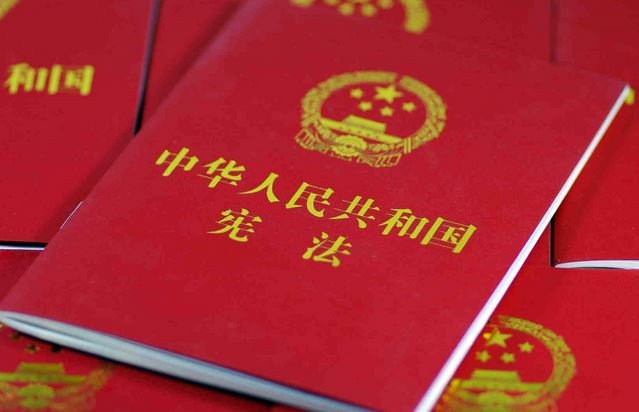
In China, religious freedom is often portrayed as a harmonious ideal. Article 36 of the Chinese Constitution explicitly states: “Citizens have freedom of religious belief.” However, this clause is immediately followed by the stipulation that “the state protects normal religious activities.” The term “normal” has become a double-edged sword wielded by the government, arbitrarily defining what is lawful and what is unlawful.
In recent years, from house churches to groups labeled “xie jiao,” countless believers pursuing pure faith have faced surveillance, arrests, and imprisonment. This is not merely a matter of differing beliefs, but the manipulation of souls by power.
Looking back at history, China’s religious landscape underwent dramatic changes after 1949. Christian organizations, either created by overseas missionary societies or local Christian organizations, had been autonomously managed by these entities or local believers. However, they were forcibly severed from international ties and placed under the unified control of the state-established China Christian Council and the China Christian Patriotic Movement Committee. Churches not affiliated with this “Three-Self” movement were deemed illegal, and during the Cultural Revolution, they were banned entirely. Churches were demolished or repurposed, forcing believers underground.
After the reform and opening-up, while religious activities were gradually permitted, house churches remained in a legal gray area and frequently faced suppression. Protestantism, Buddhism, Taoism, Islam, and Catholicism—the five officially recognized religions—must affiliate with corresponding state-controlled associations and remain under state supervision.
Unregistered gatherings, such as worship services in rented apartments or prayer and Bible study meetings, risk dispersal at best and fines, detention, or even imprisonment at worst.
The 2018 Regulations on Religious Affairs revision further tightened controls, mandating that all religious activities be confined to places approved by authorities and prohibited from being disseminated in schools, communities, or online platforms. Many house church Weibo accounts, WeChat groups, and social media accounts have been banned, while street evangelism or park preaching is prohibited. More politically charged is the “Sinicization of religion” policy, which ties faith to socialist values: churches must display national flags, sing revolutionary songs, post portraits of leaders, and even require pastors to quote official speeches in their sermons.

Hundreds of church crosses were dismantled in Shandong, Zhejiang, Anhui, and other regions. Officials termed this “rectifying illegal constructions,” but believers recognize it as forced reeducation of faith.
Particularly alarming is the government’s definition of “xie jiao,” often translated as “evil cults” but in fact meaning “organizations spreading heterodox teachings.” Under Article 300 of China’s Criminal Code, those who organize or “utilize xie jiao to undermine law enforcement” face criminal penalties. Yet the “xie jiao” criteria remain ambiguous, determined by public security and religious management authorities, and “undermining law enforcement” means being active in a “xie jiao” in any capacity.
Typically, this includes unregistered groups, “distorted” doctrines, tightly organized structures, or suspected “disturbance of public order.” As of 2025, public security departments have publicly listed active xie jiao groups, including Falun Gong, The Church of Almighty God, and the Shouters (the Local Church). These groups are often legally registered overseas—for example, the Local Church has official branches in North America and Taiwan—yet are deemed threats within China. Believers may face interrogation, forced confessions, arrest, or sentencing merely for gathering to read scripture. The Church of Almighty God freely publishes materials and films in the United States and Europe, yet its Chinese adherents face frequent arrests.

Recent events further highlight the systematic nature of persecution. On October 9, 2025, authorities launched coordinated raids targeting the Beijing Zion Church, arresting believers in Beijing, Shanghai, Shandong, and other locations. Pastor Jin Mingri, founder of Zion Church, and his co-workers were detained in Beihai, Guangxi, with church equipment confiscated. At the time of this writing, approximately 23 members remained detained.
Founded in 2007, Zion Church is dedicated to enabling believers to worship God freely, without political interference. In 2018, the Beijing authorities abruptly shut down the Zion Church, confiscated its property, and subjected hundreds of believers to threats and persecution. Pastor Jin was also barred from leaving China for seven years, separating him from his family in the United States. Yet, the church has grown from 1,500 members in 2018 to over 10,000 today, with more than 100 gathering points across 40 cities. This operation has been described by Pastor Bob Fu, founder of the China Aid Association, as “the largest planned persecution of China’s urban independent house churches in forty years.”
The international community has strongly condemned these actions. U.S. Secretary of State Marco Rubio called for the release of the leaders and the guarantee of religious freedom; former Vice President Mike Pence also publicly voiced his support. In contrast, the U.S. Constitution protects religious freedom, and believers need not fear surveillance or arrest. Yet faith has become a risk in China: disobeying the Party may cost one their liberty.
We urge global attention for these silent victims. Religious freedom must not remain a hollow promise on paper, but a right believers can safely exercise. Only through sustained exposure can such persecution be halted.

Uses a pseudonym for security reasons.