Visitors to the important Paris exhibition would not learn about his esoteric connections. But they can find them in his paintings.
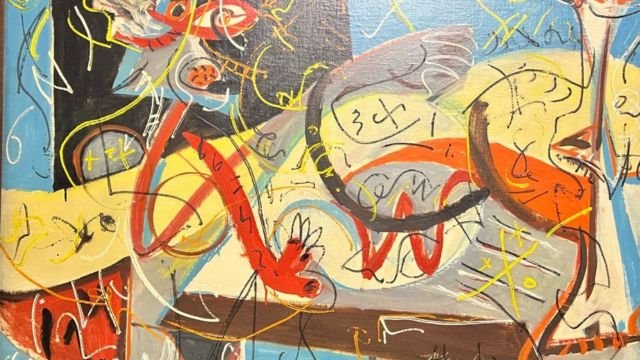

Visitors to the important Paris exhibition would not learn about his esoteric connections. But they can find them in his paintings.
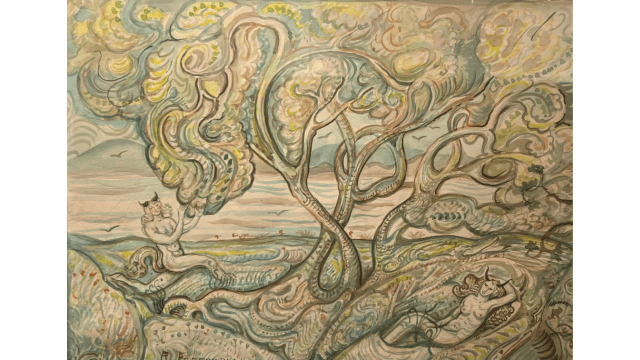
Il tema dell’androgino ha una lunga storia nella cultura occidentale e arriva a Ferenzona tramite i Rosa+Croce e la Società Teosofica.
The theme of the androgyne has a long history in Western culture and came to Ferenzona through the Rosicrucians and the Theosophical Society.
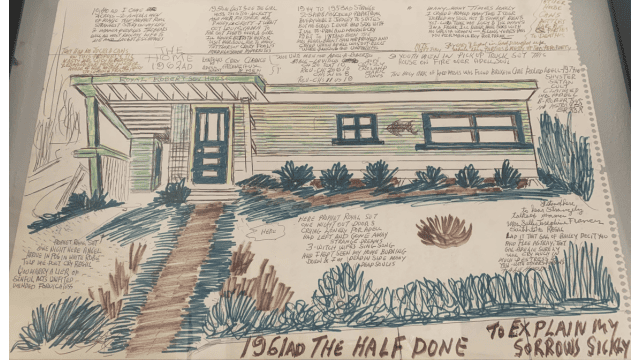
The work of the Louisiana outsider painter owes much to his schizophrenia but is also uniquely related to popular millennialism and UFO lore.
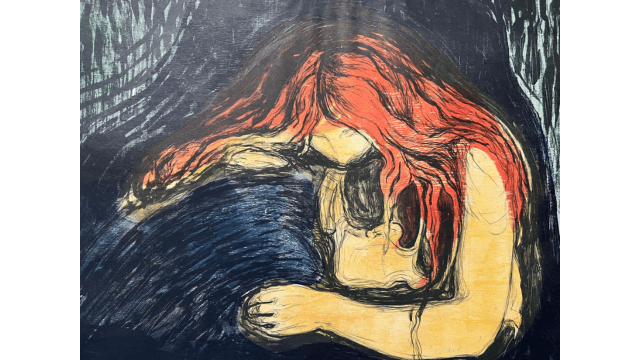
The most visited exhibition of 2024 in Italy offers an opportunity to revisit the Norwegian painter’s interests in Spiritualism, Theosophy, and the demonic.

The Bavarian painter produced the most famous portraits of Masters Koot Hoomi and Morya—reportedly not through entirely natural means.
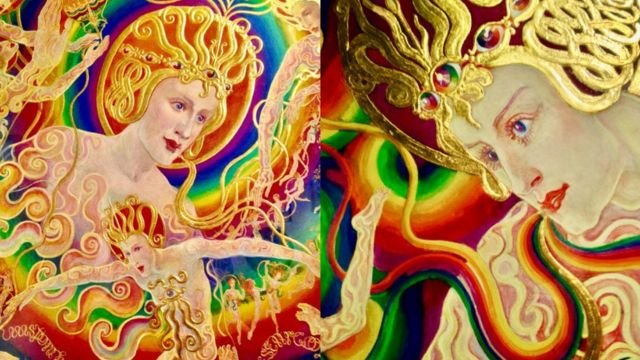
The British artist claimed that she did not paint anything. A spirit called J.P.F. did, using her as a mere tool.

An exhibition in Paris on the artist and one in Réunion about esoteric writer Jules Hermann incite the rediscovery of the one-time-Surrealist genius from Mauritius.

A Chinese billionaire who cooperates with the CCP bought for several millions a work of art consisting in a fresh banana fixed on a wall with duct tape—and said he will just eat it.

Il pittore tardo-simbolista italiano può essere compreso solo riconoscendo i suoi legami con i Rosacroce la teosofia e una forma di esoterismo cristiano.