In an exclusive interview, the former camp worker describes worsening abuses, transnational pressure, and the urgent need for global accountability.
by Massimo Introvigne
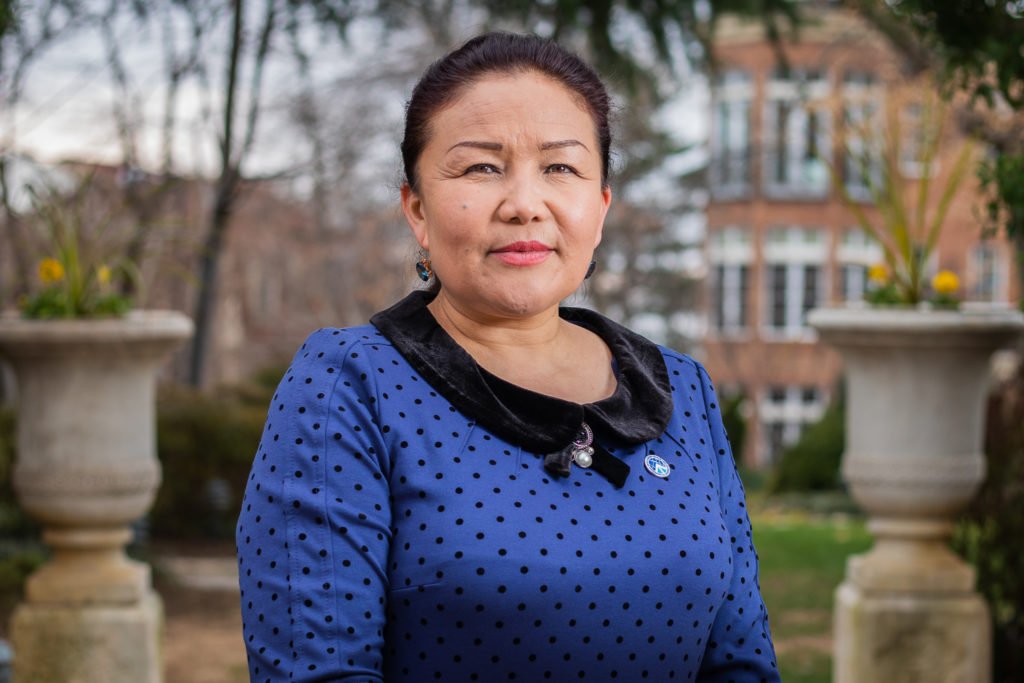
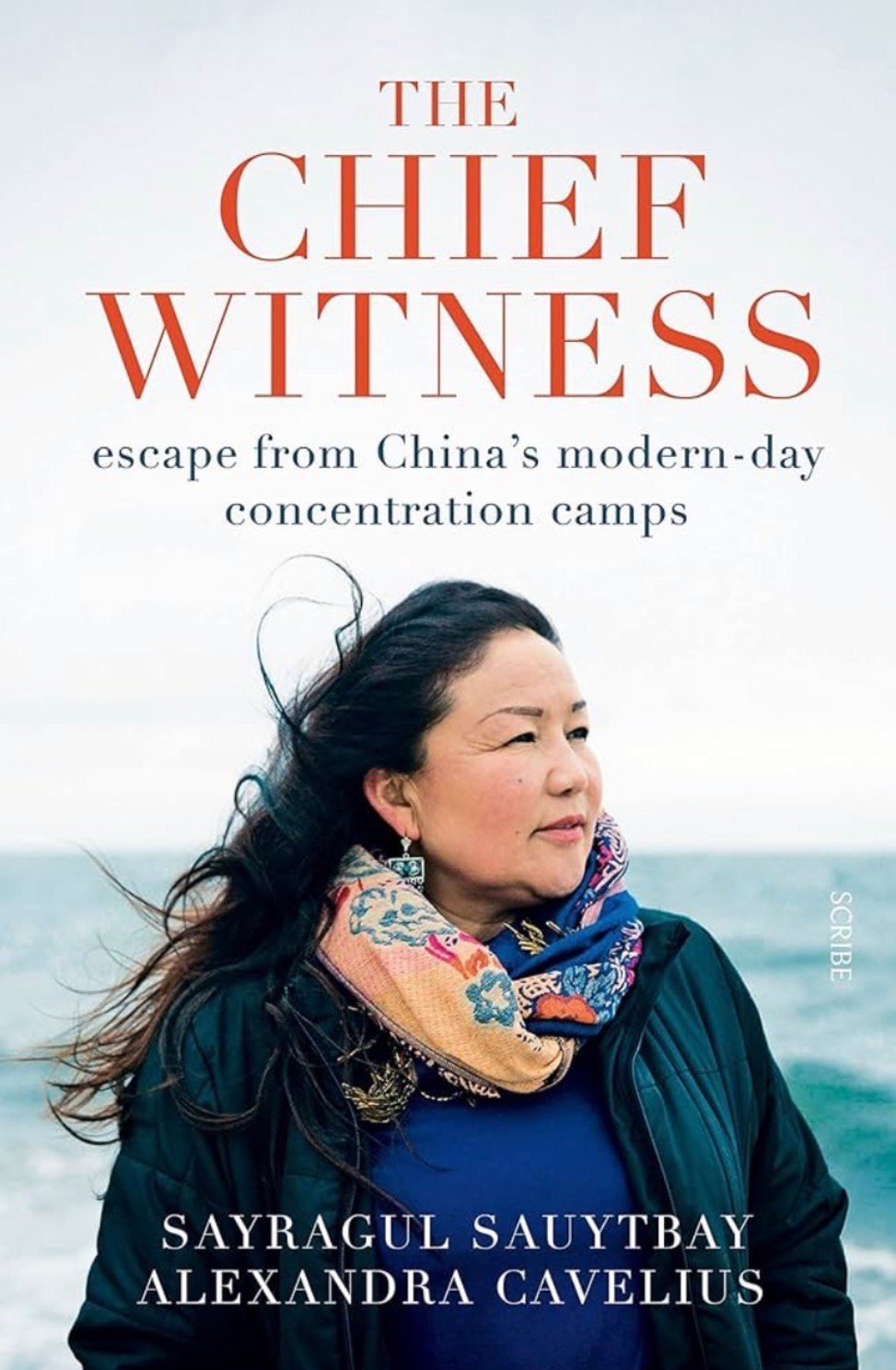
“Bitter Winter” has repeatedly covered the story of Sayragul Sauytbay, an ethnic Kazakh and the only person known to have worked inside an internment camp in Xinjiang (which its non-Han inhabitants prefer to call East Turkestan or East Turkistan) and spoken publicly about it. Feeling threatened in Kazakhstan, she obtained asylum in Sweden, where she now lives with her husband and children—and where “Bitter Winter” reached her for this exclusive interview. Needless to say, “Bitter Winter” allows its interviewees to candidly express their political opinions without necessarily endorsing them.
BW: Since the publication of your book “The Chief Witness,” how has your understanding of your own story evolved as you’ve become an international advocate?
S: My understanding of my role has shifted from a survivor to a global messenger and leader for a nation under erasure. In my capacity as the Vice President of the East Turkistan Government in Exile, I have seen how this book creates vital platforms to defend human rights. As the readership grows, so does global awareness of the CCP’s crimes. Because my speaking time at international forums is often limited, this book serves as my extended testimony. It provides the harrowing details and systemic evidence that a short speech cannot cover. It has bridged language barriers and built a natural community of supporters who treat the book as a tool for advocacy. Many readers now gift this book to others, ensuring that the story of East Turkistan is not just heard but understood as a call to action for our people’s liberation.
BW: You often describe Uyghurs and other Turkic peoples as living under a Chinese “total surveillance state.” What developments since 2021 worry you the most?
S: The situation has evolved from mass incarceration to a permanent, high‑tech colonial occupation. What worries me most today is the Chinese state’s mass kidnapping of our children. Nearly one million children have been stolen from their families and confined in boarding schools, which are, in reality, indoctrination centers designed to sever their connection to their Uyghur and Kazakh identities. I am also deeply concerned by the recently codified Ethnic Unity Law. This legislation effectively legalizes the destruction of our individual cultures and languages by mandating assimilation into a singular “Chinese” identity and gradually eradicating us as distinct peoples. Furthermore, evidence from researchers like Ethan Gutmann confirms that 25,000 to 50,000 Uyghur and Kazakh people are being killed annually for the CCP’s organ trade, and the expansion of this organ‑harvesting industry into East Turkistan is a calculated horror. The CCP has moved to legalize these atrocities through local regulations, signaling a long‑term intent to erase our nations entirely.
BW: Many governments now acknowledge crimes against humanity against Uyghurs and other Turkic peoples. What concrete actions do you believe the international community still refuses to take?
S: Acknowledgment without accountability is merely a performance. The international community still refuses to take the only steps that will stop the CCP, which are complete economic and political isolation and holding them accountable through international institutions like the International Criminal Court (ICC). We see a glaring double standard in global politics. When Russia invaded Ukraine, the international community acted with speed to impose sanctions, and the ICC issued an arrest warrant for Vladimir Putin. Why is the same energy not applied to Xi Jinping, who is overseeing the longest ongoing genocide of the 21st century? The passage of the Ethnic Unity Law in March 2026 shows that the CCP is emboldened; they are now putting their genocidal intentions directly into their statutes because they do not fear international consequences. Governments must move beyond concern and implement a total ban on all products produced through slave labor, which funds the colonization and occupation of East Turkistan. Furthermore, global bodies must stop treating this as a domestic human rights issue and recognize it for what it is: the result of decades of illegal colonial occupation. We need support for our case before the ICC to prosecute those responsible for genocide. We also need formal recognition and support for our right to self‑determination. We specifically call on the international community to support our case at the ICC and our struggle for decolonization and the restoration of independence. Anything less than dismantling the CCP’s economic influence and pursuing criminal prosecution is a form of complicity.
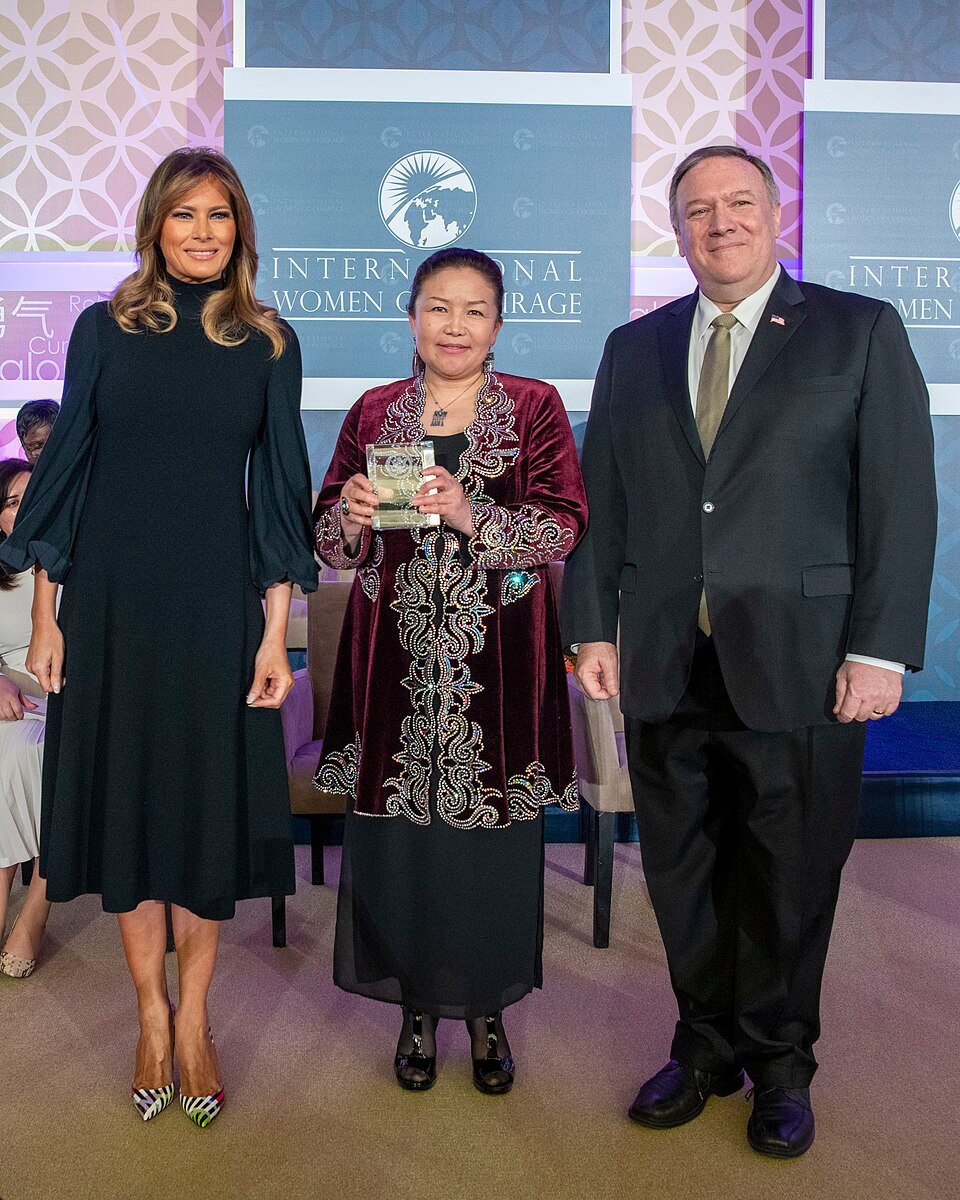
BW: You have met political leaders, activists, and survivors around the world. Which encounters have most shaped your current mission?
S: My meetings with leaders in the U.S. and Europe have been pivotal, but they have also revealed the gap between political rhetoric and actual bravery. For instance, while the U.S. has formally recognized the ongoing genocide, we see a dangerous trend of high‑level engagement, such as President Trump’s planned visits to Beijing. Such visits send a damaging signal that risks legitimizing these atrocities and emboldening Xi Jinping’s regime at a time when it should face consequences. These encounters have taught me that we cannot simply beg for better treatment under Chinese rule. My mission is shaped by the realization that we are an anti‑colonial movement seeking the restoration of our national sovereignty. We do not just want the camps to close; we want the colonizers to leave our land, for that is the only way to ensure the freedoms, human rights, and very existence of our people.
BW: How has life in Sweden influenced your activism, your sense of safety, and your ability to speak freely?
S: Sweden has provided me with the democratic foundation to reclaim my dignity as a human being. Learning the Swedish language has allowed me to integrate and speak directly to European society. Most importantly, the freedom of speech I enjoy here has provided the ultimate platform to bring the struggle of East Turkistan to the global stage. Here, I can speak the truths that the CCP tried to bury in the camps.
BW: The CCP continues to target dissidents abroad. How do you navigate the psychological pressure of transnational repression today?
S: I have learned to transform every threat and every bit of CCP pressure into a source of strength. Their desperation proves that my work is effective. To manage the psychological weight, I turn to music by writing and performing lyrics that keep my spirit alive. Walking by the sea and staying physically active are my ways of resisting the stress they try to impose on me. I am also sustained by the global community of justice‑loving people who support me. Because of them, I know I am never alone in this fight.
BW: What role do you believe the diaspora—Uyghurs, Kazakhs, and others—should play in preserving culture and resisting erasure?
S: The diaspora must be the living archive of our nation. I propose four pillars for our resistance. First, we must establish unified education through online platforms for both children and adults to ensure our language is not lost. Second, we must create cultural infrastructure by building physical centers where our traditions are practiced and passed down. Third, we should pursue economic autonomy by investing in factories to produce our national clothing and artifacts, ensuring our cultural symbols remain accessible. Finally, we must organize youth exchanges and annual global gatherings for the next generation to build a unified foundation for our future state.
BW: Your testimony has inspired many women worldwide. What message do you want to send specifically to women living under authoritarian regimes?
S: We must stand tall and never stop fighting for our rights. No matter how terrifying the regime, we must never abandon the dream of freedom. Women are not merely a vulnerable group; we are the most resilient warriors, as history has shown repeatedly. As mothers and life‑givers, we carry a deep love that is the only force capable of overcoming the CCP’s hatred. If we persist and never stop, we will finally have the opportunity to protect our rights. Opportunities are everywhere; they only depend on our continued perseverance.
BW: As more evidence emerges about forced labor and supply‑chain abuses, what responsibilities do you think fall on global consumers and corporations?
S: The international community must stop using the sanitized term “forced labor” and call it what it truly is: state‑sponsored slavery and the commodification of a people’s suffering. The CCP is using the enslavement of Uyghurs, Kazakhs, and other Turkic peoples to lower production costs and dominate global markets, effectively making the rest of the world the financial sponsors of our genocide. Now that the Ethnic Unity Law has mandated the total submission and even mass transfer of our people out of our country to various places in China to serve the state’s economic goals, there is no such thing as a “clean” supply chain coming out of China, let alone East Turkistan. Corporations that continue to operate in China or source materials from our occupied land are not just passive observers; they are active accomplices who profit from the blood and tears of our people. They have a moral and legal obligation to pursue total divestment. We call on global consumers to launch a total boycott of any brand that remains complicit in this slave trade. Profits stained by genocide are illegitimate and inhumane. These corporations must be held economically and legally accountable for their roles in the mass exploitation and erasure of our nation. To buy these products is to pay for the very shackles that hold our people.
BW: Looking ahead, what would justice look like for your people, and what steps do you believe could realistically lead there?
S: True justice is not merely the absence of genocide; it is the total restoration of our sovereignty. Justice means the full independence and restoration of the East Turkistan Republic, ending the illegal Chinese colonial rule that began with the 1949 invasion. In this future, our people—including Uyghurs, Kazakhs, Kyrgyz, and others—will be the sole masters of our own destiny. The road to justice requires three non‑negotiable steps. First, the international community must formally recognize East Turkistan as an occupied territory, not a province or so‑called autonomous region of China. Second, there must be an immediate, unconditional release of all detainees and the return of the stolen generation of children from state‑run facilities. Third, we must move toward sovereign, democratic statehood through a process of decolonization. High‑level political friendliness or trade deals with China, absent these conditions, are a betrayal of humanity that only empowers the CCP’s imperialist ambitions. The world must understand that there is no guarantee of human rights without the restoration of our political rights. Supporting East Turkistan’s independence is the only way to permanently end the genocide and protect the security of the global community. Our goal is not reform under China; it is total decolonization and the recovery of our independence.
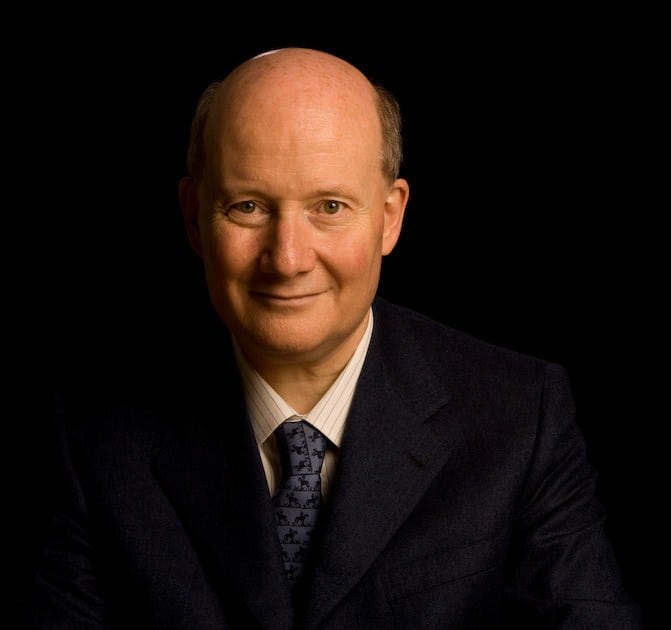
Massimo Introvigne (born June 14, 1955 in Rome) is an Italian sociologist of religions. He is the founder and managing director of the Center for Studies on New Religions (CESNUR), an international network of scholars who study new religious movements. Introvigne is the author of some 70 books and more than 100 articles in the field of sociology of religion. He was the main author of the Enciclopedia delle religioni in Italia (Encyclopedia of Religions in Italy). He is a member of the editorial board for the Interdisciplinary Journal of Research on Religion and of the executive board of University of California Press’ Nova Religio. From January 5 to December 31, 2011, he has served as the “Representative on combating racism, xenophobia and discrimination, with a special focus on discrimination against Christians and members of other religions” of the Organization for Security and Co-operation in Europe (OSCE). From 2012 to 2015 he served as chairperson of the Observatory of Religious Liberty, instituted by the Italian Ministry of Foreign Affairs in order to monitor problems of religious liberty on a worldwide scale.