The Investigation Bureau developed like an ulcer inside the Ministry of Finance, causing long-lasting damage.
by Massimo Introvigne
Article 2 of 2. Read article 1.
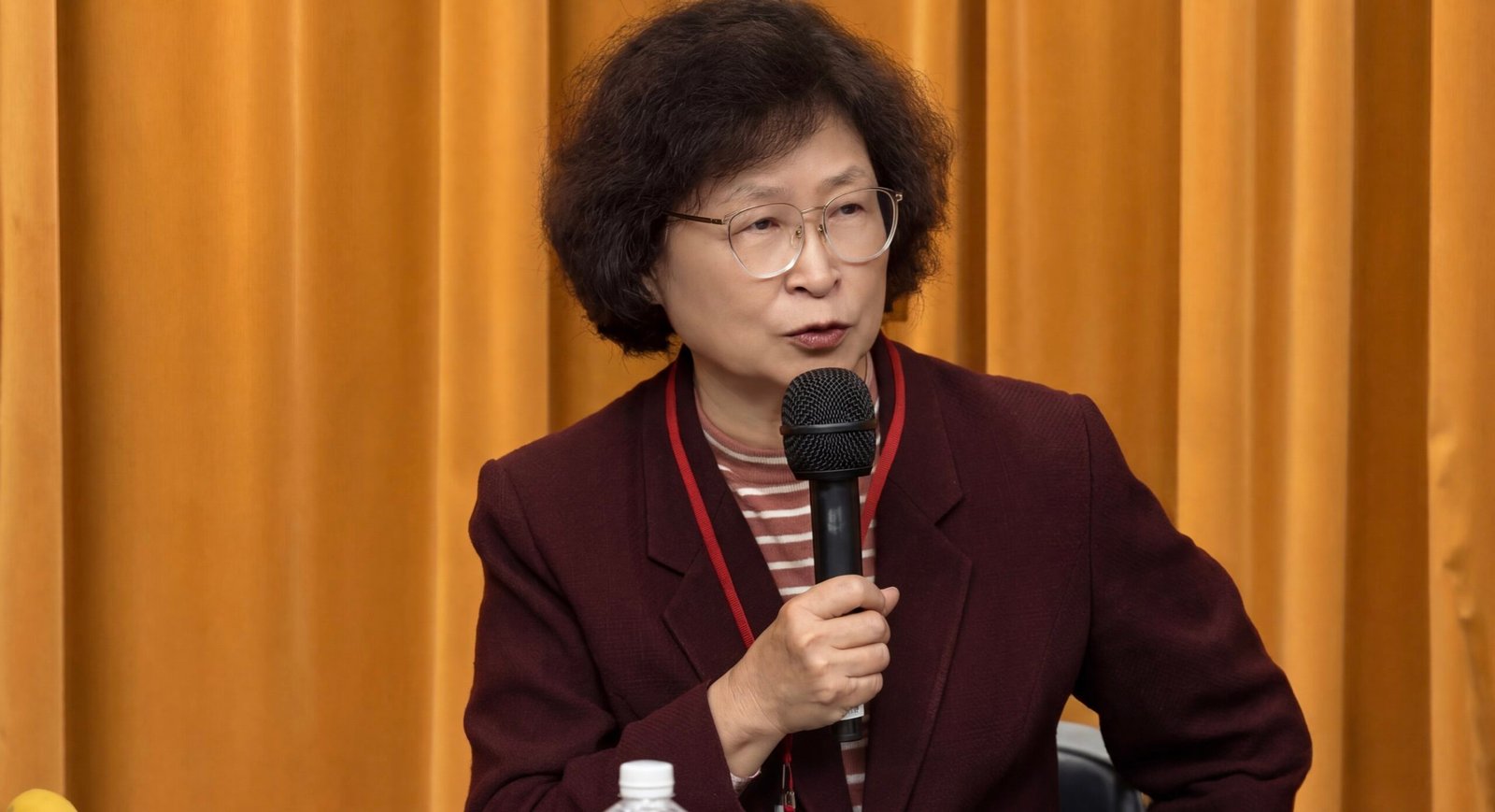
The legal core of the “Public Trial for All Citizens” October episode devoted to the Tai Ji Men case was a recorded lecture by Chang Kuei-mei, a former member of the Control Yuan, who had come prepared after doing what she called “a lot of homework.” Her subject was a 1997 letter that the Tai Ji Men side had obtained (initially, internal documents could not be accessed under the rules then in force). Sent by the Taipei City Field Office of the Ministry of Justice Investigation Bureau to Examination Section 3 of the NTB’s Taipei office, the letter supplied the figure on which Tai Ji Men’s taxes were calculated. Chang argued that the letter, and the NTB’s acceptance of it, amounted to an administrative disposition, and that both the indictment and the court decisions on the 1992 bill rested on it. Overturning it would change everything.
She then gave three reasons why the disposition was void. The first concerned the “vertical” division of labor. The chief of Section 3 signed on behalf of the bureau, bypassing the director above him. Most Taiwanese professors, Chang conceded, hold that violating an internal delegation chart, which is a mere administrative rule, does not make an act illegal. She noted, however, that courts have occasionally found such violations illegal because they breach the constitutional principle of equal treatment. To make matters worse, Section 3 handled commodity tax, while income tax belonged to Section 2.
The second reason was “horizontal” and, in Chang’s opinion, the strongest. The Investigation Bureau belongs to the Ministry of Justice and has no authority to determine taxes. An agency that does another agency’s job, she said, produces acts that are void from the outset, as if the Ministry of Foreign Affairs started handling the business of the Ministry of the Interior. She politely disagreed with a scholar who had suggested seeking a constitutional interpretation. The rules themselves, she explained, violate nothing. They were applied in a way that no law ever authorized, so the remedy lies with the ordinary courts.
The third reason concerned evidence. Even reading the facts generously, as a case of assistance between agencies of the kind Article 19 of the Administrative Procedure Act allows, the NTB still had a duty to investigate. It did nothing of the sort and copied the Investigation Bureau’s figure down to the last dollar. In administrative litigation, the agency bears the burden of proof, and it never met it. Chang concluded with Article 111 of the Administrative Procedure Act: a void act does not become valid with the passage of time. Arguments about statutes of limitations and retroactivity, which have occupied Tai Ji Men’s lawyers and supporters for years, therefore become irrelevant.
How did a few pages from the Investigation Bureau become a tax bill? The program’s answer came from Shih Yueh-sheng, the NTB tax officer whose testimony was used against Tai Ji Men and who, years later, publicly confessed that he had been pressured. In a video recorded before his death, he recalled asking Hou Kuan-jen where the figures came from. The answer was vague. “Let’s not talk about it,” the prosecutor said, and when Shih asked what he intended to do, he replied, “We are just going to do so.” Shih concluded that his involvement had been “just a setup,” staged by a prosecutor who “directed the whole scene, which brought him fame.” A retired tax officer added that the practice was routine. He once received a case from the Investigation Bureau and prepared letters to verify it, only to be scolded by his supervisor: “It’s an Investigation Office case. What are you investigating?” Checking the data, the supervisor feared, might look like colluding with the taxpayers.
The last part of the program featured excerpts from the forum marking the 19th anniversary of Tai Ji Men’s acquittal, where nearly thirty scholars and experts spoke. Chen Chih-lung, a retired National Taiwan University law professor who chairs the Taiwan Association for Financial and Economic Criminal Law Research, offered the episode’s most memorable metaphor. The tax system, he said, is like a stomach, and the Investigation Bureau lives inside the Ministry of Finance like H. pylori, the bacterium that causes ulcers, “throwing the whole tax system into chaos.” According to Chen, Liu Chan-hua of the Taipei City Field Office wrote the few pages that Chien Chen-shou, the NTB section chief, copied verbatim into a tax decision. Unless the Ministry of Finance declares such cases void from the outset, he warned, Taiwan will have no tax system worth the name, and Minister of Finance Chuang Tsui-yun and her colleagues will remain figureheads while “the real minister is the director of the Investigation Bureau.”
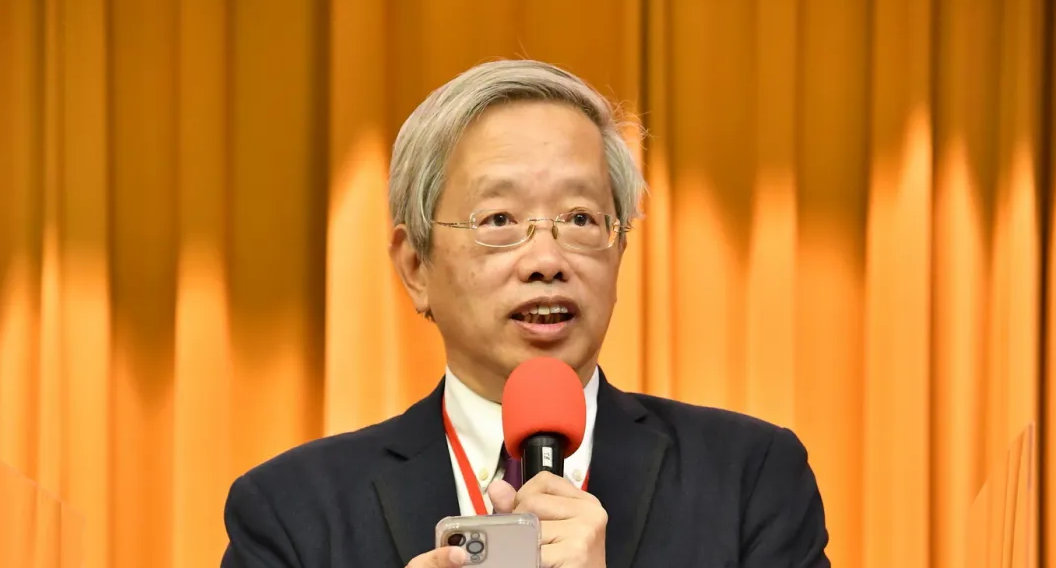
Other speakers were less colorful and equally severe. One professor reminded the audience that only Ministry of Finance examiners may determine the elements of taxation, while prosecutors, the Investigation Bureau, and the police hold judicial police powers only, and called taxation of fictitious income with no evidence of cash flow “the most serious administrative abuse.” Professor Teng Chien-yuan observed that today’s officials blame their predecessors and refuse responsibility, so the case drags on. Huang Chin-tang, a former Member of the Examination Yuan, noted that criminal investigators command the most powerful tools the state has, from searches to wiretaps to detention, and still found nothing. The tax authority, he argued, should defer to the facts established by the final criminal judgment, and in a case of this size political appointees should step in and give instructions.
Certified public accountant Tu Yi-hsuan summarized her diagnosis in one word: “Incompetent.” She listed the Supreme Court acquittal, the Control Yuan reports of 2002 and 2009, the 7,401 statements, and Supreme Administrative Court Judgment No. 422 of 2018, and asked why, with all this evidence, the matter remains unresolved. Taiwan incorporated the two United Nations human rights covenants into domestic law in 2009, she recalled, and has no shortage of laws. What its law enforcement lacks is conscience. She also identified a structural flaw that concerns every citizen. Even after the government admits that one of its decisions was wrong, correcting it depends on its goodwill, since no legal obligation compels it. Emily added Tu’s proposal to create mechanisms of accountability for delayed revocations and state compensation for their victims.
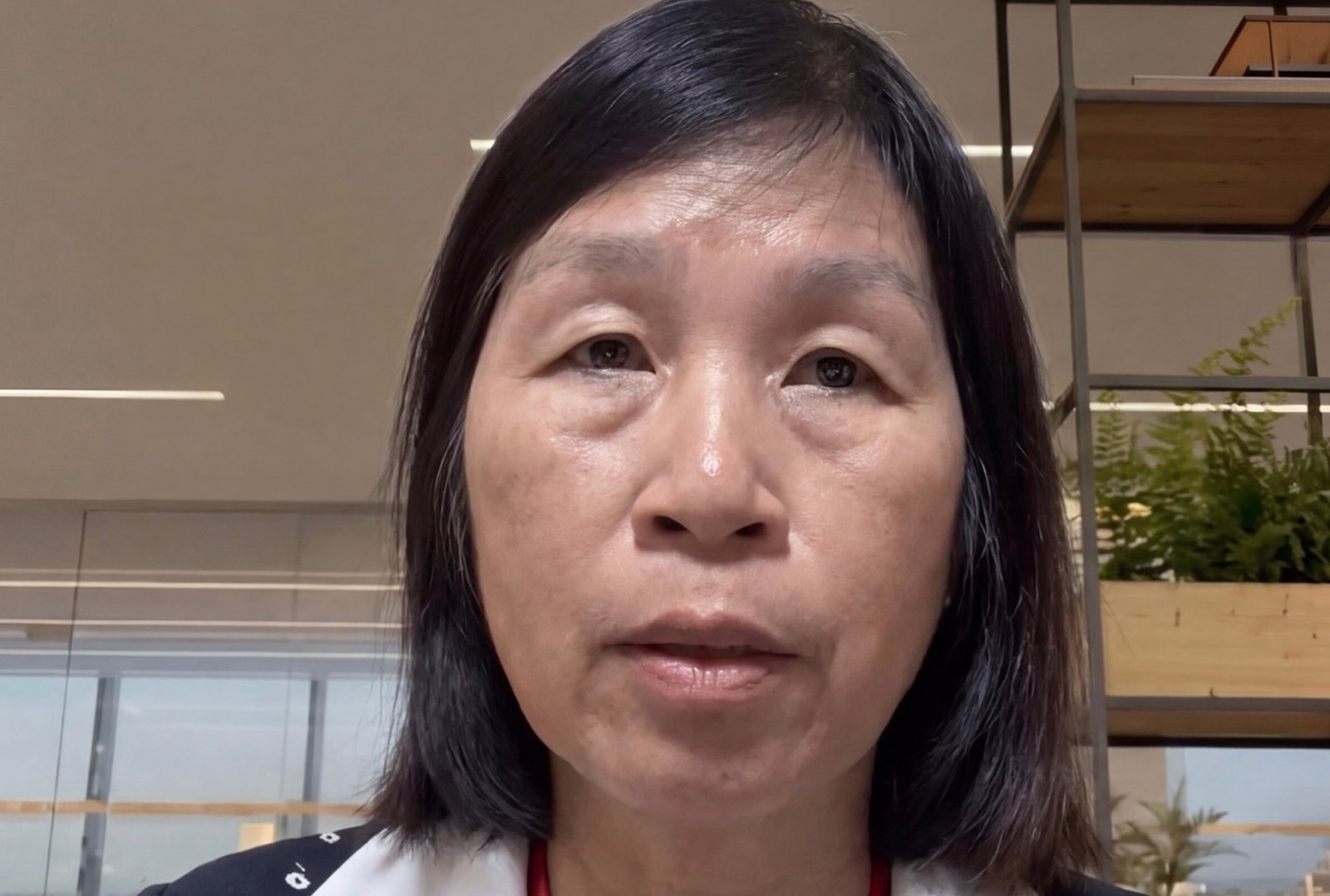
In their closing remarks, the two guests brought the discussion back to ordinary life. Hsu Shu-hui, who teaches her children to obey the law and admit their mistakes, asked how a prosecutor with no evidence could send armed police and journalists into a family home without warning and take people away. “Making mistakes is not frightening,” she said. “Admitting them is the true expression of conscience.” The land illegally auctioned, she added, should be returned to Tai Ji Men immediately. Jin Yi-zhen insisted that people must pay taxes according to law and the government must tax according to law, and that a tax bill “must not become anyone’s ATM.” Her warning to viewers was the most effective line of the afternoon: any case discussed on the program could become, tomorrow, “the groundless tax bill falling from the sky into your own hands.”
The program’s title promises a trial, and in a sense it delivered one. The prosecution presented its witnesses, the documents were read into the record, and the defendant, a 1992 tax bill born from a letter its authors had no power to write, had no credible defense. The only missing element is a judge willing to pronounce the verdict that scholars, former officials, and the Control Yuan have been suggesting for years. The jury, which is Taiwan’s public, seems increasingly ready.

Massimo Introvigne (born June 14, 1955 in Rome) is an Italian sociologist of religions. He is the founder and managing director of the Center for Studies on New Religions (CESNUR), an international network of scholars who study new religious movements. Introvigne is the author of some 70 books and more than 100 articles in the field of sociology of religion. He was the main author of the Enciclopedia delle religioni in Italia (Encyclopedia of Religions in Italy). He is a member of the editorial board for the Interdisciplinary Journal of Research on Religion and of the executive board of University of Pennsylvania Press’ Nova Religio. From January 5 to December 31, 2011, he has served as the “Representative on combating racism, xenophobia and discrimination, with a special focus on discrimination against Christians and members of other religions” of the Organization for Security and Co-operation in Europe (OSCE). From 2012 to 2015 he served as chairperson of the Observatory of Religious Liberty, instituted by the Italian Ministry of Foreign Affairs in order to monitor problems of religious liberty on a worldwide scale.