The Pope proclaimed admirable principles that are antithetical to Xi Jinping’s thought. However, his diplomatic efforts with China did not yield the results he had hoped for.
by Massimo Introvigne

Pope Francis’ death leads many to reflect on his pontificate from the point of view of the relationships with China. They cannot be separated from a broader view of Francis’ policies and teachings. I believe his most admirable legacy is his last encyclical, “Dilexit nos.” It includes a part describing the elimination of God and religion from society as a grave sin, and one that makes it impossible to achieve peace and respect for all citizens. Clearly, these principles are antithetical to Xi Jinping’s idea of making religions simple mouthpieces for an atheistic regime, misleadingly called “Sinicization.” While non-specialized media did not pay much attention to “Dilexit nos,” this magnificent text will guide Catholics for years. It may also serve as a template to interpret Francis’ teachings in different fields.
Francis’ diplomacy with China is a different story. On October 22, 2024, the 2018 Vatican-China Agreement was renewed for the third time, for another four years rather than two as in previous cases. A press release from the Holy See described the results achieved as “fruitful,” although the original Italian word was translated in the English version as “effective.”
Immediately, two reactions greeted the renewal of the agreement. Chinese (and non-Chinese) critics of the agreement, including the circle of retired Hong Kong bishop, the ultra-ninety-year-old Cardinal Joseph Zen Ze-Kiun, saw the renewal as the final sign of a “betrayal” and a “sell-out” of the Vatican to Xi Jinping’s regime. Those who supported the agreement (or worked to get it signed) from the outset presented the four-year renewal as an absolute triumph, as in the case of an article in the newspaper of the Italian Catholic Bishops “Avvenire” on October 23, 2024, by Agostino Giovagnoli, a member of the Community of Sant’Egidio, who was instrumental in negotiating the agreement, and always one of the most ardent supporters of appeasement with China.
This agreement defines Pope Francis’ policy toward China, which differs from that of his predecessors John Paul II and Benedict XVI, who were much less willing to give in to the Chinese regime’s demands, even if they were not closed to the possibility of dialogue. Has Pope Francis failed or even “betrayed” Chinese Catholics, as Cardinal Zen believes, or has he achieved a historic “triumph” that only the future will reveal, as Giovagnoli asserts?

In my opinion, both positions are one-sided and excessive. While loving and respecting Cardinal Zen’s extraordinary life and witness, I do not think categories such as “betrayal” and “sellout” are adequate interpretative tools to define how Pope Francis dealt with a highly complicated situation. Indeed, Pope Francis has never been a supporter of Xi Jinping’s thinking on religion, which marginalizes it as a minor part of society. Not to mention, given China’s policies of forced abortion that continue even after the end of the one-child policy, that Francis has repeatedly compared abortions to organized crime murders, at the risk of getting into trouble with some Western countries.
It is also important to remember that while other Western diplomats represent governments accountable to their voters, this is not the case with the Vatican. The Pope is elected by a small group of cardinals, not by the members of the Church. This means, among other things, that Vatican diplomats, as has always been the case throughout history, can afford to think in terms of decades or even centuries, not the few years that separate a country from its next elections. I am convinced that some of them sincerely believe that in the very long term, the agreement will indeed be “fruitful” or “effective.” And to argue that predictions or hopes about what will happen in decades or centuries are wrong is pointless. No one can know how things will turn out in the long term. Moreover, the “non-renewal” of the agreement would have caused problems for former underground Catholics who “re-emerged” after the signing of the first document in 2018. Now they cannot return to clandestinity without serious personal risk.
But I also disagree with those who celebrate Francis’s China policy as a triumph. I know that Chinese bishops have been allowed to participate in events in the Vatican, including the last Synod, and that Vatican representatives have been allowed to visit China. I do not rule out possible positive effects of these trips. However, the adverse effects must also be considered, in terms of legitimizing a regime that even the timid United Nations has declared guilty of “crimes against humanity” and that several parliaments of democratic countries have censured for its “genocide” of the Uyghurs. The price to pay for these trips was Francis’ minimal and almost imperceptible references to the genocide in Xinjiang, the destruction of Tibetan culture, the disappearance of democracy in Hong Kong, and the persecution of all unauthorized religions in China.
John Paul II and Benedict XVI reminded ultra-conservative Catholics, such as Archbishop Marcel Lefebvre, who would have been satisfied with religious freedom for Catholics alone, that they were wrong. Religious freedom, they said, is indivisible, as it is a fundamental human right, not a privilege of a single Church. During Francis’ pontificate, many have wondered whether these teachings apply to China.

There is no real religious freedom in China, not even for Catholics. Yes, churches affiliated with the Chinese Patriotic Catholic Association are open, but they were open even before the agreement was signed in 2018. Besides the fact that minors are not allowed to participate in their activities, they were already functioning normally then. But even then, there is a price to pay. “Bitter Winter,” which publishes reports from China that are not based on regime propaganda, regularly describes priests being forced to sing the praises of the CCP and Xi Jinping and to organize pilgrimages to revolutionary museums and monuments rather than Marian shrines.
One result is that the number of faithful attending Catholic churches loyal to the regime is not increasing but decreasing. As for the priests and faithful “conscientious objectors” who reject the 2018 Vatican-China Agreement and continue to refuse to join the Patriotic Association, whose numbers are growing, there is no trace of the “respect” for them that was called for in Vatican guidelines published in 2019. When they are identified, they often end up in prison.
That not everything is working well, even about the appointment of Catholic bishops, which is after all the subject of the agreement, was demonstrated by the 2023 saga of the new bishop of Shanghai, perhaps the most important diocese in China. The Holy See officially stated that it had learned that Bishop Shen Bin had been transferred to Shanghai “from the media.” For the sake of the agreement, Bishop Shen Bin was legitimized “ex post” by the Pope and even invited to a Vatican conference in Rome. But this was not a minor incident. It was repeated in the case of Bishop Ji Weizhong, who, according to a statement by the Chinese authorities on July 19, 2024, was “elected” bishop of Lüliang. Unfortunately, a diocese of Lüliang, whose creation Beijing had requested, did not even exist on that date. Here too, Francis’ Vatican then “remedied” the situation by announcing that it had recognized the new diocese and the new bishop on January 20, 2025, the day he was publicly consecrated.

I believe that the clearest sign that, so far, the agreement between Pope Francis’ Church and Beijing is not really “fruitful” is the regular consultation of the official website of the Chinese Catholic Church, which is called “patriotic” and recognized by the government (and now also by the Vatican). Unlike any other official Catholic website, even after the 2018 agreement, there was almost no news about the Pope’s teachings, activities, or documents. But there is a lot of news about “red” pilgrimages to historic sites of the Communist Party and about the duty of Catholics to study the documents of the CCP and Xi Jinping.
No one can say now what fruits Pope Francis’s policy on China will bear in the long or very long term. In the short term, it has not been “fruitful.” Perhaps Francis’ successor will change the policy. In this case, he may be guided by the deceased Pope’s exemplary teachings about the role of religion in a just society and the respect due to all citizens, rather than by the diplomacy with China carried out in his name.
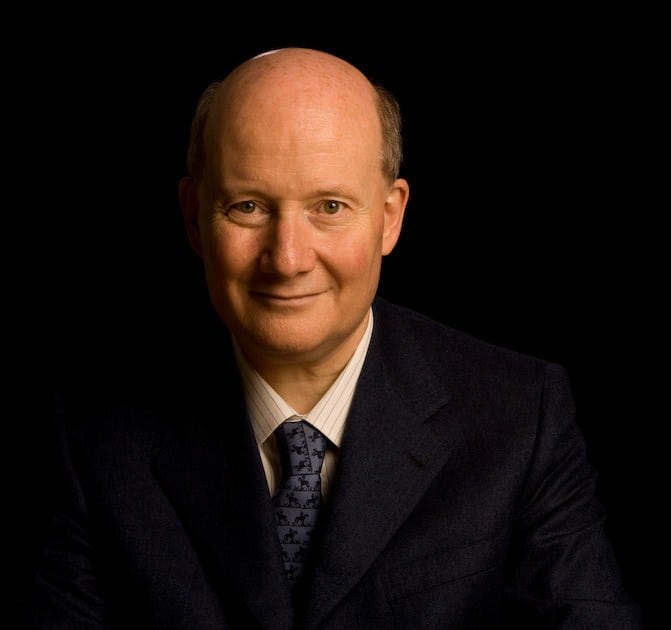
Massimo Introvigne (born June 14, 1955 in Rome) is an Italian sociologist of religions. He is the founder and managing director of the Center for Studies on New Religions (CESNUR), an international network of scholars who study new religious movements. Introvigne is the author of some 70 books and more than 100 articles in the field of sociology of religion. He was the main author of the Enciclopedia delle religioni in Italia (Encyclopedia of Religions in Italy). He is a member of the editorial board for the Interdisciplinary Journal of Research on Religion and of the executive board of University of California Press’ Nova Religio. From January 5 to December 31, 2011, he has served as the “Representative on combating racism, xenophobia and discrimination, with a special focus on discrimination against Christians and members of other religions” of the Organization for Security and Co-operation in Europe (OSCE). From 2012 to 2015 he served as chairperson of the Observatory of Religious Liberty, instituted by the Italian Ministry of Foreign Affairs in order to monitor problems of religious liberty on a worldwide scale.