In the case of Maria Bibi, the Federal Constitutional Court declared a child an adult, a minor a wife, and a conversion a passport out of the law.
by Massimo Introvigne
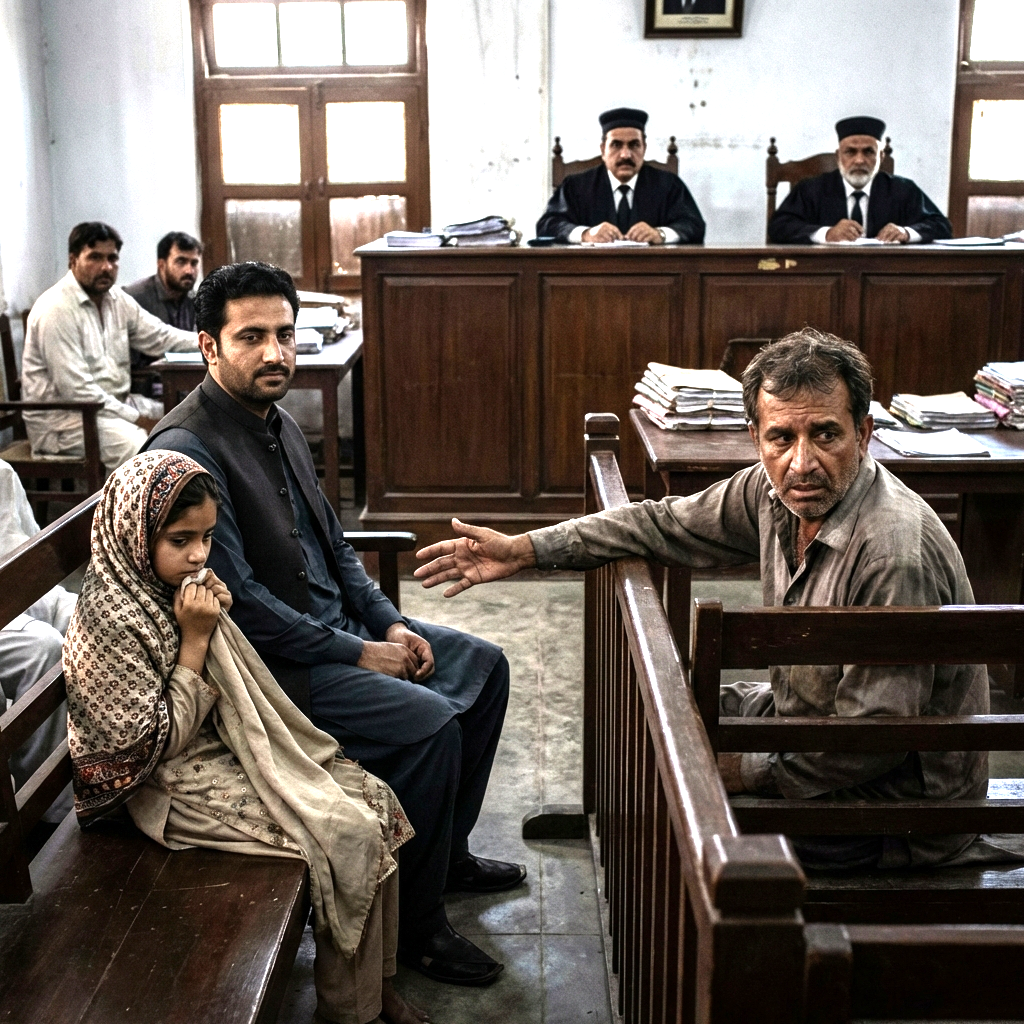
Pakistan’s Federal Constitutional (Shariat) Court, in a decision dated February 3 whose grounds have been published on March 25, has decided that a Christian girl, whose official documents show her age as about thirteen, was capable of marrying a Muslim man, converting to Islam, and rejecting her parents’ custody. The judgment, issued by a two-judge panel led by Justice Syed Hasan Azhar Rizvi, shows how protections for minors can be undermined through selective skepticism and faith in appearances.
The case involves Maria Bibi, a Christian minor from Lahore. Her father, Shahbaz Masih, sought her recovery through habeas corpus after she disappeared and was later found married to a Muslim man, Shehryar Ahmad. The father claimed that his daughter was a child who had been abducted, forcibly converted, and married in violation of the Child Marriage Restraint Act of 1929. The law clearly states that girls under sixteen cannot be married, and those who help facilitate such marriages break the law. Pakistan has ratified the Convention on the Rights of the Child, and its Constitution includes several provisions aimed at protecting minors’ dignity and rights. This should have been an easy case.
The Court, however, viewed things differently. It acknowledged the official birth records from both the Union Council and the national database, which indicate Maria’s birth year as 2012. It pointed out inconsistencies in her statements and the suspiciously late registration of her birth. It even accepted the father’s claim that she was 12 years and 9 months old at the time of marriage as plausible. Yet, after laying out the evidence, the Court chose to disregard it.
Instead, the judges focused on Maria’s physical appearance, the uncertainty of birth certificates in Pakistan, and her statement under Section 164 of the Criminal Procedure Code, where she claimed she married of her own free will. The Court prioritized this statement over age requirements, documentary evidence, and the goal of child marriage laws. The logic appeared to be that if a minor asserts she is not a minor, the law should step aside.

The ruling goes further. Maria’s conversion to Islam, validated through an affidavit attached to the nikahnama and a local Darul Afta certificate, was deemed proof of her new religious identity. There was no inquiry into coercion, no evaluation of her capacity, and no consideration of the power imbalance between a thirteen-year-old girl and an adult man. The Court highlighted that Islamic law does not automatically void marriages involving minors unless a statute explicitly states otherwise. Since the Child Marriage Restraint Act criminalizes such marriages but does not void them, the Court determined that Maria’s marriage remains valid.
In essence, a marriage that the law forbids is both illegal and valid. A minor who cannot legally marry is still considered a lawful wife. A child whose rights the Constitution should protect can override those protections with a single statement. And a conversion viewed as invalid for any adult under similar circumstances becomes unquestioned when a frightened teenager declares it in a courtroom.
The ruling effectively creates a loophole for child marriage: if the girl converts, if she appears physically mature, or if she echoes the right phrases in court, the protections against child marriage vanish. This legal reasoning rewards abductors for acting quickly and using pressure tactics while punishing parents for trying to recover their children.
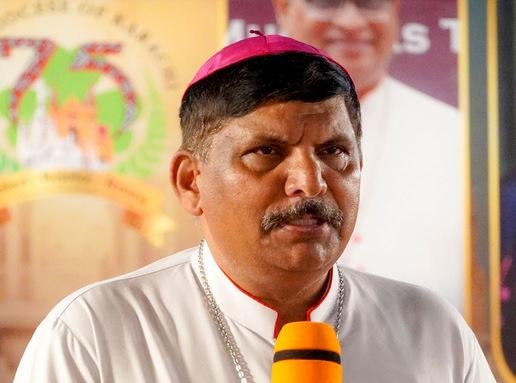
Reactions have been swift and intense. The Catholic Church in Pakistan, represented by the Justice and Peace Commission of the Archdiocese of Karachi, condemned the ruling as a betrayal of constitutional rights. The Bishop of Faisalabad, Indrias Rehmat, shared the alarm, pointing to serious gaps in Pakistan’s laws: child marriages are not declared void, marriage registration is not mandatory, and there are no clear guidelines for custody of minor girls.
Civil society groups were equally direct. The Minority Rights March of Karachi described the ruling as “shocking and outrageous,” insisting that Maria is a victim of kidnapping and child marriage and remains at risk of further abuse.
The Court’s decision, however, seems untroubled by these concerns. It treats legal protections as optional, constitutional rights as decorative, and international obligations as irrelevant. The verdict showcases how personal law can be used to bypass civil law, how subjective claims can override factual evidence, and how the judiciary can fail to protect the most vulnerable.
The Maria Bibi ruling will be remembered not just for its outcome but for the precedent it establishes. It tells abductors and forced conversion networks that the law can be easily manipulated: get a conversion certificate, provide a consent statement, and ensure the girl appears older than her actual age. The rest is bureaucratic formality.
For Pakistan’s minorities, particularly its Christian and Hindu communities, the message is chilling. Their daughters can be declared adults at thirteen, Muslims by affidavit, and wives through a judicial ruling. Their parental rights can be ignored, their evidence dismissed, and their appeals rejected at every level of the judiciary. The law that should protect them becomes a tool that legitimizes their loss.
The tragedy of Maria Bibi is not just that a child has been robbed of her childhood; it is that the highest court, responsible for safeguarding rights, has chosen to reinterpret those rights out of existence. In a country where forced conversions and child marriages are documented issues, the Court has provided a guide for future violations.
The ruling serves as a stark reminder that in Pakistan, the fight for child protection is not only against abductors and predators, but increasingly against the legal system itself.

Massimo Introvigne (born June 14, 1955 in Rome) is an Italian sociologist of religions. He is the founder and managing director of the Center for Studies on New Religions (CESNUR), an international network of scholars who study new religious movements. Introvigne is the author of some 70 books and more than 100 articles in the field of sociology of religion. He was the main author of the Enciclopedia delle religioni in Italia (Encyclopedia of Religions in Italy). He is a member of the editorial board for the Interdisciplinary Journal of Research on Religion and of the executive board of University of California Press’ Nova Religio. From January 5 to December 31, 2011, he has served as the “Representative on combating racism, xenophobia and discrimination, with a special focus on discrimination against Christians and members of other religions” of the Organization for Security and Co-operation in Europe (OSCE). From 2012 to 2015 he served as chairperson of the Observatory of Religious Liberty, instituted by the Italian Ministry of Foreign Affairs in order to monitor problems of religious liberty on a worldwide scale.