The proposed legislation is a direct challenge to the ICCPR. It would allow the government to destroy the religions it perceives as politically hostile.
by Massimo Introvigne
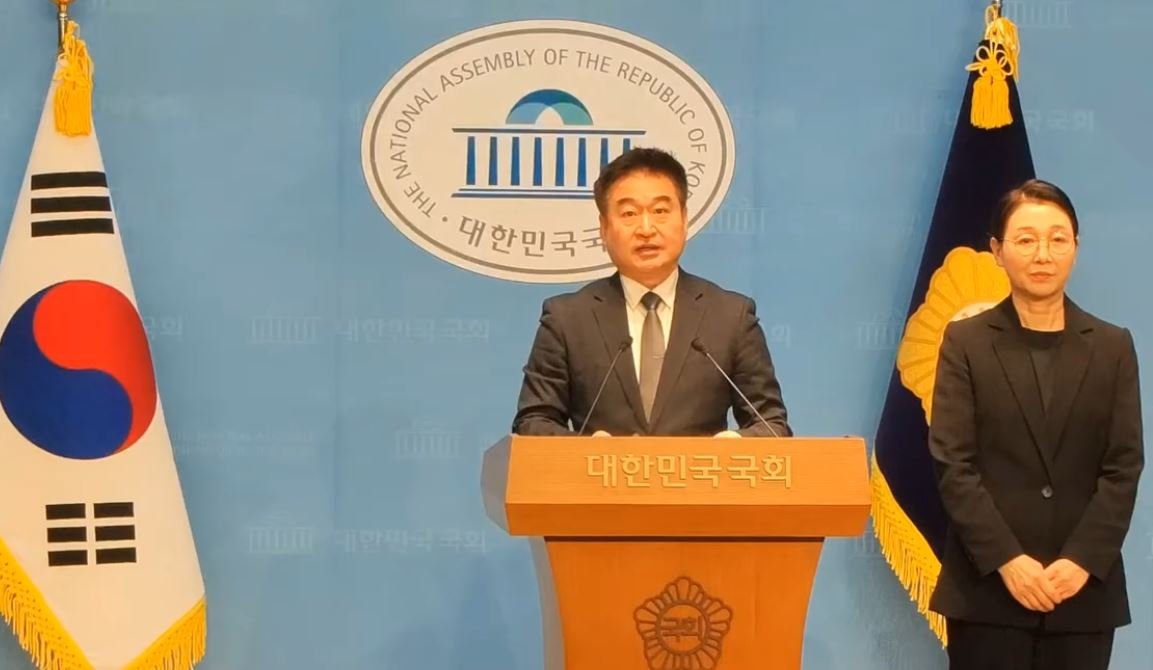
South Korea is approaching a moment that will define the future of religious liberty in the country for decades to come. The government-backed proposal to amend the Civil Code—popularly dubbed the “Church Dissolution Act”—has now reached the decisive stage of parliamentary deliberation. Following directives issued personally by President Lee Jae Myung, on January 9, 2026, Representative Choi Hyuk-jin, acting as the lead sponsor, submitted the Civil Code Amendment Bill No. 2215932 to the National Assembly, together with 11 lawmakers. If enacted, it would grant the state unprecedented authority to audit, suspend, and ultimately dissolve religious corporations, while absorbing their assets into public ownership.
The administration insists that the measure is necessary to curb “political interference” by religious bodies. Yet the bill’s scope is far broader than its stated targets. It applies to all religious organizations, from the largest denominations to the smallest congregations. In effect, it would place the fate of millions of believers under the government’s direct control.
This is not simply another regulatory reform. It is a structural shift in the relationship between the state and religion—one that directly contradicts the International Covenant on Civil and Political Rights (ICCPR), to which South Korea is a party, and which imposes strict limits on when and how governments may restrict religious freedom.
The proposed amendment would authorize the government to conduct compulsory inspections of religious bodies, summon their leaders for questioning, and revoke their legal status on grounds such as “political involvement.” These terms are undefined, elastic, and easily weaponized.
Even more alarming is the provision allowing the state to seize the assets of dissolved organizations. Decades of donations, property built by congregants, and the material infrastructure of religious life could be absorbed by the government with little recourse. For any religious community, this is the equivalent of a civil death sentence.
The rhetoric used to justify the bill is equally troubling. Officials claim they are defending the “separation of church and state,” but their interpretation inverts the principle entirely. The classical meaning—enshrined in democratic constitutions worldwide—is that the state must refrain from interfering in religion. The proposed law, however, empowers the state to supervise, discipline, and extinguish religious bodies at will.
Article 18 of the ICCPR protects freedom of religion and belief. It allows restrictions only when they are precise and foreseeable, prescribed by law, and necessary for public safety, public order, public health, public morals, or the fundamental rights and freedoms of others. Even in these cases, limitations should be proportional to the aim pursued.
The proposed South Korean law fails this test on every point.
First, the grounds for dissolution are so vague that they cannot be considered precise or foreseeable, as required by international human rights law.
Second, the measure is not “necessary.” South Korea already possesses a full arsenal of criminal, civil, and administrative tools to prosecute wrongdoing by religious leaders or organizations. Dissolution is not a last resort; it is an unnecessary escalation.
Third, the bill does not pursue any of the ICCPR’s legitimate aims. “Political involvement” is not a recognized ground for restricting religious freedom. In fact, the ICCPR explicitly protects the right of religious individuals and groups to participate in public life.
Finally, the bill violates the ICCPR’s principle of proportionality, which requires that restrictions on fundamental rights be the least intrusive means available. Dissolving an entire religious corporation—and confiscating its assets—is the most extreme measure imaginable. It is grossly disproportionate to any alleged misconduct by individual members or even to collective political activism that would displease a government.
The political context surrounding the bill makes its dangers even clearer. The proposal was introduced shortly after the president publicly invoked Japan’s first-degree decision to dissolve the Unification Church as a model to emulate, without considering the international criticism of that verdict, including by the United Nations. Besides, the Japanese decision is based on the excessive donations the church allegedly solicited. This problem does not exist in Korea, but some churches are accused of political involvement.
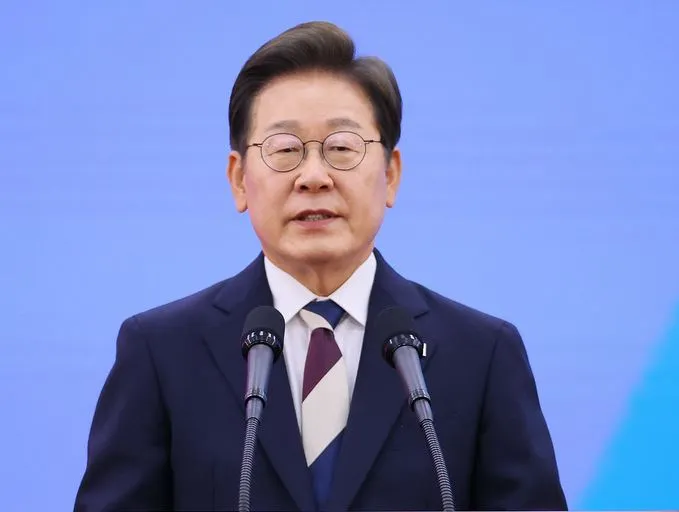
The President explicitly explained he was targeting two “heretical” movements he perceives as enemies of his party and of his religious allies, the Unification Church and Shincheonji, but the law is drafted so broadly that it could be applied to any religious body whose teachings or political views displease the administration.
This is precisely why international human rights law prohibits states from dissolving religious organizations except in the most extreme circumstances. Once the power exists, it is almost impossible to prevent its misuse.
If the law is enacted, a constitutional challenge is inevitable. South Korea’s Constitution guarantees freedom of religion, but the courts will be forced to decide whether that guarantee still has substantive meaning.
The stakes could not be higher. The proposed law, in simple terms, gives the state the authority to decide which religions may continue to exist. It transforms religious liberty from a fundamental right into a conditional privilege.
South Korea has long been admired for its democratic institutions and its commitment to human rights. But democracy is not defined only by elections. It is determined by the limits placed on state power—especially in matters of conscience.
If the “Church Dissolution Act” becomes law, South Korea will join the small group of nations, led by China, that have granted themselves the authority to extinguish religious organizations perceived as not supporting the government. It would mark a profound departure from the ICCPR, from international norms, and from the country’s own constitutional tradition.
The question now is whether South Korea will reaffirm its commitment to religious freedom—or whether it will allow the state to hold the “life or death” of faith in its hands.

Massimo Introvigne (born June 14, 1955 in Rome) is an Italian sociologist of religions. He is the founder and managing director of the Center for Studies on New Religions (CESNUR), an international network of scholars who study new religious movements. Introvigne is the author of some 70 books and more than 100 articles in the field of sociology of religion. He was the main author of the Enciclopedia delle religioni in Italia (Encyclopedia of Religions in Italy). He is a member of the editorial board for the Interdisciplinary Journal of Research on Religion and of the executive board of University of California Press’ Nova Religio. From January 5 to December 31, 2011, he has served as the “Representative on combating racism, xenophobia and discrimination, with a special focus on discrimination against Christians and members of other religions” of the Organization for Security and Co-operation in Europe (OSCE). From 2012 to 2015 he served as chairperson of the Observatory of Religious Liberty, instituted by the Italian Ministry of Foreign Affairs in order to monitor problems of religious liberty on a worldwide scale.