On January 23, 2001, Chinese propaganda reported that practitioners had set themselves on fire. In fact, the government had staged the entire event.
by John W. Moran
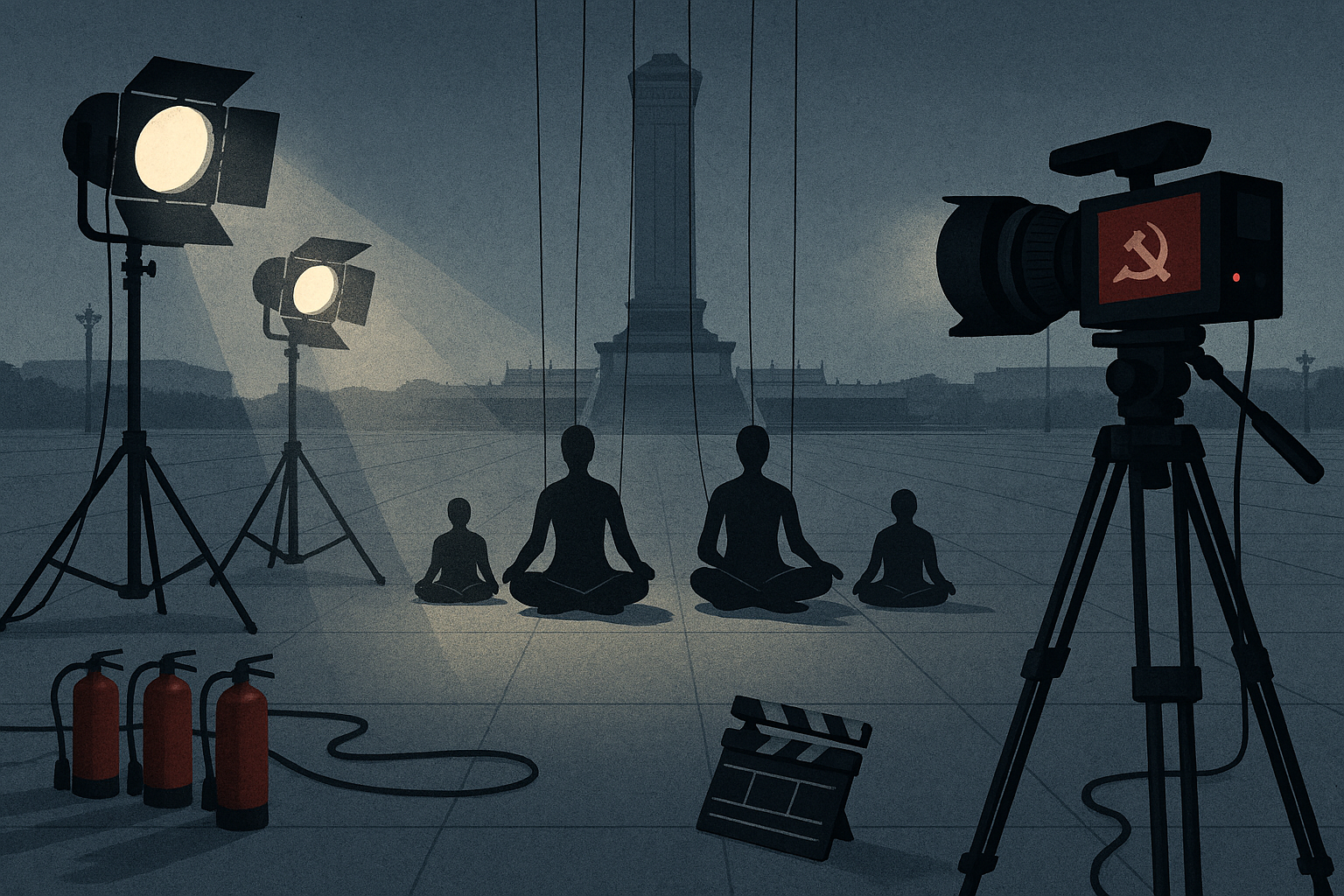
As the world grapples with the emerging dangers of disinformation and “deepfakes” powered by artificial intelligence, it is worth revisiting an earlier fabricated incident—one that relied on far more primitive technology. On January 23, 2001, the Chinese government staged the self‑immolation of five alleged Falun Gong adherents on Tiananmen Square to discredit the spiritual movement and justify its brutal crackdown. The episode offers lessons we should heed today, highlighting both the malevolence and dishonesty of the Chinese Communist Party (CCP) and the danger that simulated events can provoke visceral reactions and turn citizens against one another.
In early 2001, the CCP was struggling to suppress the Falun Gong movement. Falun Gong is a spiritual practice based on the principles of truthfulness, compassion, and forbearance. Founded in northeastern China in the early 1990s, it spread rapidly, with adherents numbering between 70 and 100 million by 1999, according to government estimates. In the late 1990s, large groups of practitioners could be seen in public parks performing the group’s slow‑movement exercises. The government initially embraced the movement, publicly praising its health benefits. By 1999, however, some CCP members began attacking Falun Gong for its spiritual teachings, which clashed with the Party’s official atheism. CCP leaders were also alarmed by Falun Gong’s rapid growth and the loyalty of its followers, which they perceived as threats to the Party’s total control of Chinese society. In July 1999, CCP General Secretary Jiang Zemin vowed to eradicate Falun Gong and launched a vicious campaign of repression. Hundreds of thousands of practitioners were rounded up and imprisoned in labor camps or “reeducation” centers, released only if they renounced the practice. Torture was common, and at least thousands died in custody. State media vilified the movement and its followers.
Yet by early 2001, more than a year after the crackdown began, the CCP remained far from achieving its goal. Millions of adherents continued to practice quietly at home, distribute literature, and spread the movement by word of mouth. Public opinion remained ambivalent or even hostile to the government’s actions. Too many Chinese citizens personally knew Falun Gong practitioners and were unconvinced that the group was dangerous or that its brutal repression was justified. The CCP needed a new tactic to turn public opinion. It settled on a gruesome propaganda event staged in the heart of Beijing.
On January 23, 2001, a small group of individuals gathered on Tiananmen Square and set themselves on fire. They mimicked—incorrectly, as it turned out—the cross‑legged “lotus” position in which Falun Gong practitioners meditate, and they shouted purported Falun Gong slogans as they ignited the flames. State media outlets were conveniently positioned to film the horrific scene, and within hours the CCP saturated television coverage with the footage, denouncing Falun Gong as a dangerous, suicidal cult. Officials even claimed that a mother had set her 12‑year‑old daughter on fire. The propaganda had its intended effect: public opinion in China largely turned against Falun Gong. Western media outlets picked up the story as well, with many repeating Beijing’s version uncritically.
But problems with the official narrative quickly became apparent to journalists who looked more closely. Falun Gong teachings explicitly state that suicide and all forms of killing or violence are sinful. The idea that these individuals were devout enough to self‑immolate for Falun Gong, yet ignorant of or willing to disregard its clear prohibition on such acts, was immediately suspect. The “Washington Post” investigated the backgrounds of the alleged self‑immolators and found that some were not known ever to have practiced Falun Gong. They did not sit in the correct lotus position, and the slogans they shouted contradicted actual Falun Gong teachings. CCP officials also suspiciously denied Western reporters any access to the alleged victims.
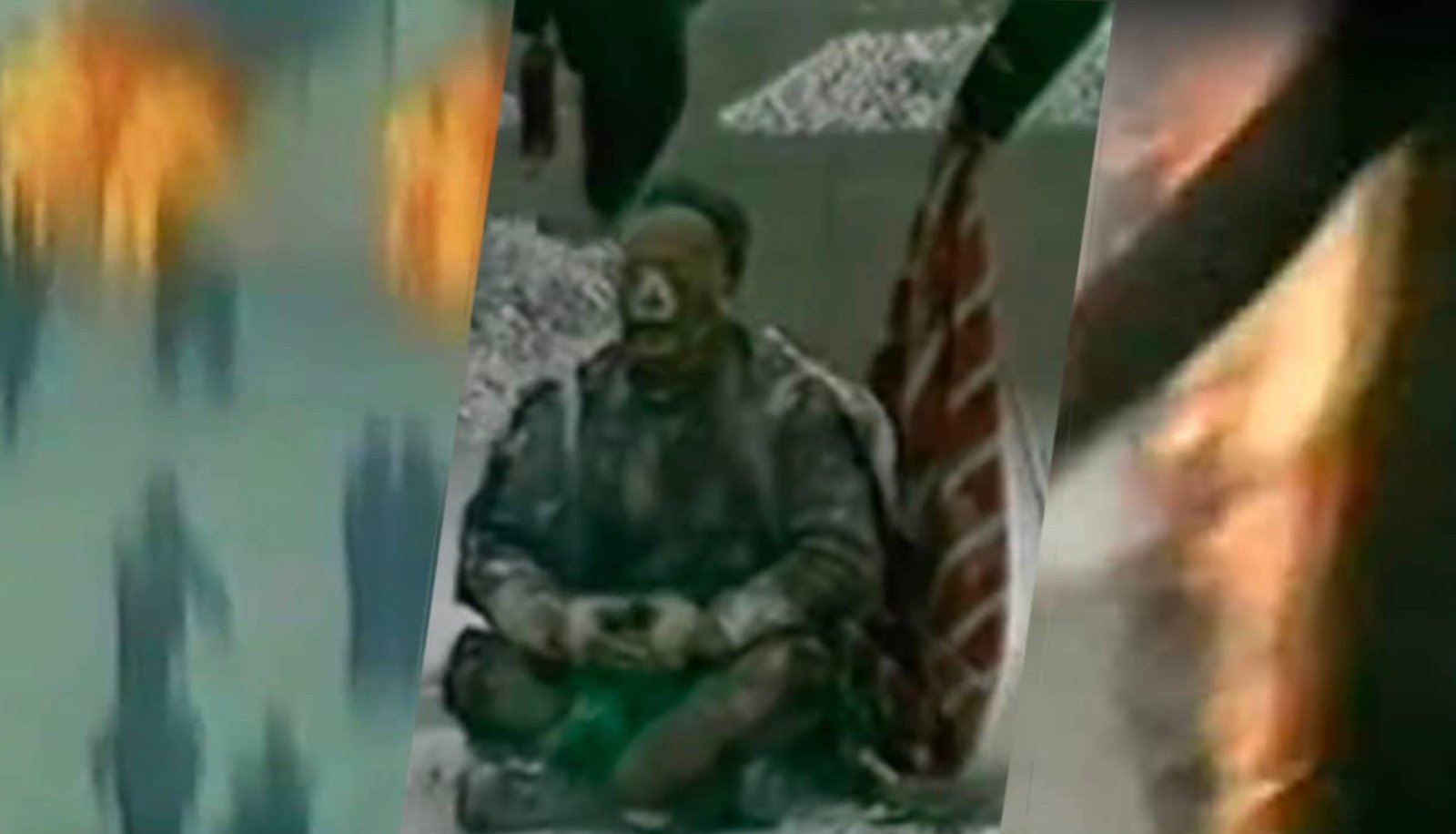
There were other signs that the government had staged the entire event. Chinese police were inexplicably on standby with fire extinguishers, ready to douse the flames almost immediately. State media photographers were conveniently positioned to capture well‑framed shots as soon as the fires were lit. The CCP falsely claimed that the footage had been taken by CNN rather than by state media. A CNN journalist present on the square reported never seeing any child victims, despite the CCP’s claim that a mother had burned her 12‑year‑old daughter. State media later released a video of the girl singing in a hospital after she had supposedly undergone a tracheotomy—an implausible recovery. Other victims were transported to a hospital only after their injuries were photographed for state television. Within two hours of the incident, state media released detailed information about the victims, their personal histories, and their alleged motivations.
For good reason, journalist Danny Schecter concluded that the event “smells like a stage‑managed incident.” China scholar Ethan Gutmann called it “an outright deception” and wrote that “the police knew what was going to happen.” In his book “The Slaughter,” Gutmann also recounted that several courageous Falun Gong practitioners were later tortured to death in Chinese jails for trying to expose the truth.
The fabricated self‑immolations on Tiananmen Square 25 years ago may seem distant, but the event has clear parallels to threats facing society today. It is well documented that Chinese state actors carried out an extensive influence operation before the 2024 U.S. presidential election. CCP operatives posed as American soldiers and other social media users to spread disinformation about controversial social issues. Their goal was not to support or attack any particular political party, but to inflame social divisions among Americans. The CCP has launched similar disinformation campaigns in Taiwan and Europe. In recent years, Chinese operatives have supplemented these efforts with artificial intelligence—a trend likely to accelerate.
The phoniness of the fiery attempted suicides on Tiananmen may have been apparent to careful observers. Even so, the incident fooled millions of Chinese citizens and succeeded in inciting hatred against Falun Gong. As AI technology rapidly advances, contemporary “deepfakes” are becoming far harder to detect. One lesson of the 2001 Tiananmen incident is that disinformation works if it is not quickly and comprehensively rebutted. It can instill fear and hatred in well‑intentioned people who believe what they see and who lack the tools to distinguish malevolent propaganda from reality. The CCP and other tyrannical governments will continue to use such tactics to sow discord and chaos in the free world if we allow them to do so.

John W. Moran is a lawyer and human rights activist. He is in private law practice as a commercial litigator in Portland, Maine and Boston, Massachusetts (USA). His human rights activism focuses on promoting freedom of belief and conscience and countering transnational repression by authoritarian governments, especially in relation to the Falun Dafa spiritual practice.