30 years of wars, in part a by-product of the 1994 genocide of the Tutsi in Rwanda, created a situation that seems impossible to solve.
by Massimo Introvigne
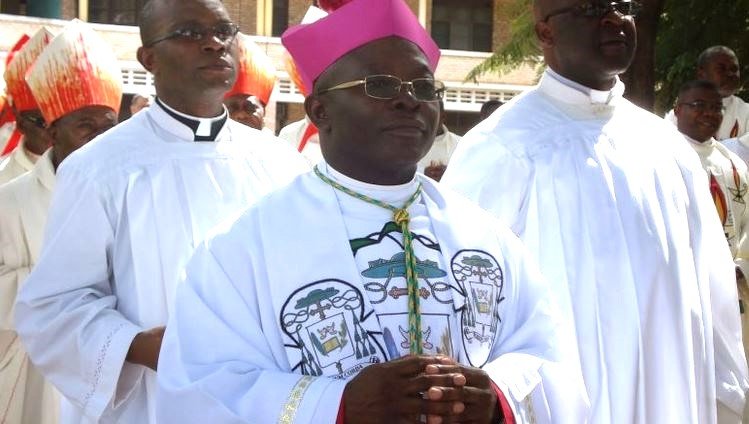
On March 26, the Catholic online newspaper “Crux” published an interview with Roman Catholic Bishop Sébastien Joseph Muyengo Mulombe of Uvira, DR Congo, which immediately ignited a heated debate in his country. The bishop reflected on the recent discovery near Uvira of a mass grave containing 171 bodies of civilians reportedly killed by the M23 rebel group, defended the Catholic Church’s stance on the crisis in Eastern Congo, and criticized Donald Trump’s “Minerals for Peace” proposal, under which the United States would guarantee stability in exchange for American access to Congo’s prized minerals. That same day, the National Episcopal Conference of Congo (CENCO) released an Easter Message condemning those who “turn to discrediting our mission, to sow discord between us, or to engage us in some kind of religious war,” and reaffirming the Catholic Church’s right to speak out on thorny political and social issues.
My interest in Congo’s troubles derives from a study I am preparing on the 1994 genocide of the Tutsis in Rwanda. “Tutsi” and “Hutu” are contested categories that scholars now tend to describe as “ethnosocial.” Most agree that the two groups—who coexist in Rwanda, Burundi, and Eastern Congo—were not simply invented by 19th and 20th-century European scholars, although colonial writers certainly exaggerated their differences. At the same time, “Hutu” and “Tutsi” were also social categories: a poorer majority of peasants (Hutu) and a wealthier minority of pastoralists (Tutsi). Before German and then Belgian colonizers imposed rigid identity cards and fixed ethnic attributions, the categories were fluid. The two groups shared the same religion and language, intermarried, and could move between the two categories by gaining or losing wealth. “Invented” or not, the rigid HutuTutsi distinction was later internalized by both groups, fueling animosity that, in the 20th century, was increasingly interpreted through Western lenses of class struggle between bourgeois Tutsis and proletarian Hutus. This interpretation conveniently ignored the existence of rich Hutus and impoverished Tutsis.
As colonialism waned, tensions exploded. In Burundi, Tutsis massacred Hutus in 1972; in Rwanda, widespread Hutu violence against Tutsis had been ongoing since 1959, driving some 300,000 Tutsis to flee to Uganda, Burundi, and Tanzania. In Uganda, many of these refugees organized into a formidable military force under the banner of the Rwandan Patriotic Front (RPF), dreaming of returning home and overthrowing the Hutu regime. In 1990, the RPF invaded Rwanda, prompting the Hutu dominated government to plan a campaign of extermination against local Tutsis, whom it regarded as a fifth column of the RPF. International pressure produced a peace and power sharing agreement between the RPF and the Rwandan government, but radical Hutus rejected it.
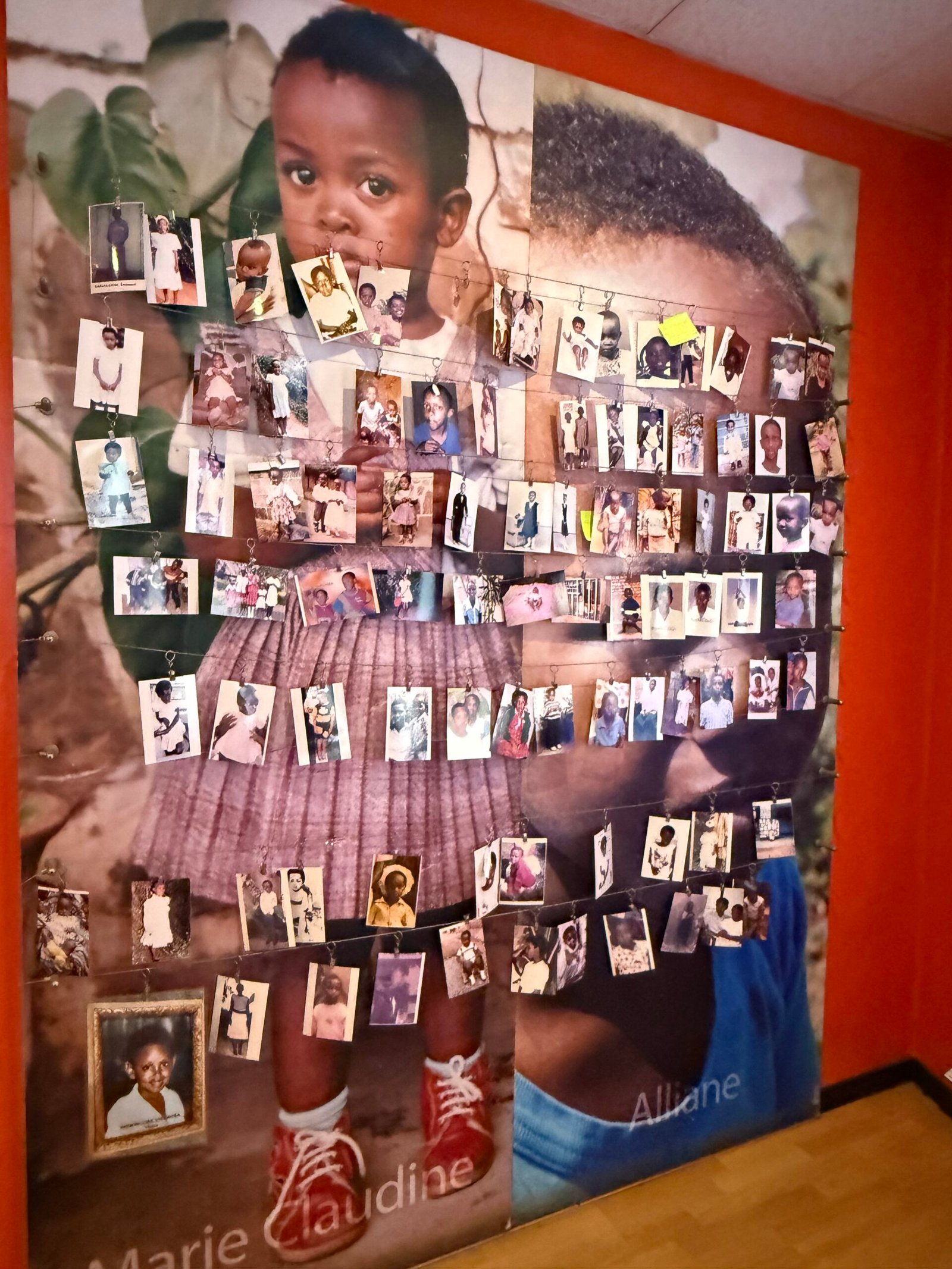
On April 6, 1994, a plane carrying Rwandan Hutu President Juvénal Habyarimana and Burundian President Cyprien Ntaryamira was shot down over Kigali. While the Rwandan government, backed by France, blamed the RPF, many believe the plane was downed by Hutu extremists intent on sabotaging the peace agreement. The genocide of the Tutsis—and of moderate Hutus who supported peace—began immediately and continued for one hundred days, killing around one million people.
The genocide created widespread chaos in Rwanda and ended only with the military victory of the RPF, which seized Kigali, restored order, and launched a difficult national reconciliation process that remains incomplete more than thirty years later. The RPF also committed atrocities during what had become a civil war, including killing three Catholic bishops—and probably another one who disappeared—who were close to the Hutu regime. Some two million Hutus (one third of Rwanda’s population) fled to neighboring countries—half of them to Eastern Congo, where Hutu (and Tutsi) communities already existed. Among the refugees were some of the genocide’s most violent perpetrators and their militias, who reorganized in Congo as the Democratic Forces for the Liberation of Rwanda (FDLR), alongside ordinary Hutu civilians who had committed no crimes.
The arrival of so many refugees in Eastern Congo exacerbated existing political and ethnic tensions in the South Kivu and North Kivu provinces. To the north lies Ituri, where the Lendu (agriculturalist)–Hema (pastoralist) divide mirrors the HutuTutsi cleavage and helps explain the alliances that emerged in the years that followed.
The genocide of the Tutsi in Rwanda was a fundamental—though not the only—cause of the two Congo wars of 1996–1997 and 1998–2002. Post-genocide Rwandan politics have been dominated by the fear that the FDLR might gain power in Eastern Congo and invade Rwanda, just as the RPF once reorganized abroad before entering Rwanda and eventually ending the genocide.
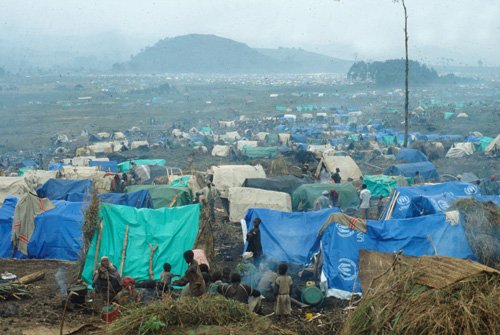
Dissatisfied with the protection that Zaire’s president, Mobutu Sese Seko, offered the FDLR, Rwanda invaded Congo in 1996, aided by several African countries with grievances against Mobutu, in what came to be called Africa’s First World War. The conflict ended with Mobutu’s fall and the rise of LaurentDésiré Kabila, a Marxist intellectual who managed to unite disparate forces through their shared hostility to Mobutu. Rwanda’s repeated defeats of the larger Congolese army surprised international observers. However, historians recalled that the Rwandan monarchy had built a formidable military machine that had defeated larger neighbors since at least the 15th century.
Kabila had won, but he increasingly resented Rwanda’s tutelage. In the following years, he tried to expel Rwanda’s military advisers, who had come to dominate the Congolese army. He played the ethnic card by denying Congolese citizenship to “immigrant” Tutsis, including the Banyamulenge of North and South Kivu, who were not recent immigrants at all but had been brought to Congo by the Belgians in the early 20th century.
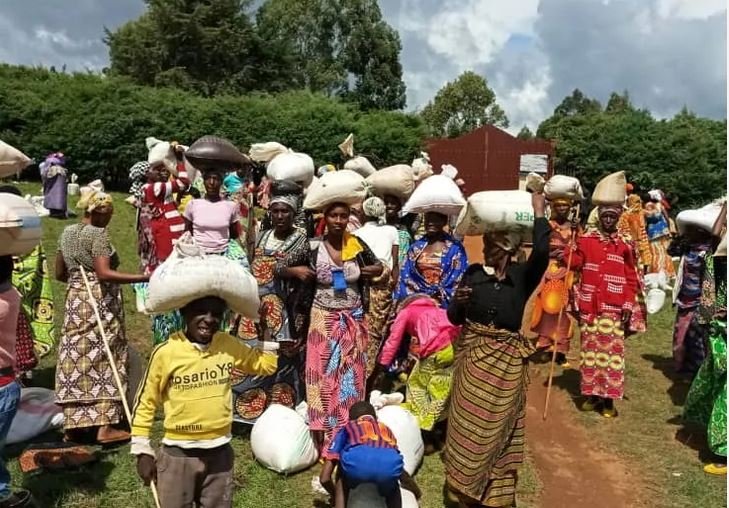
In 1998, the Banyamulenge, organized as the Rally for Congolese Democracy (RCD), rebelled and seized territory in Eastern Congo with support from Rwanda and Uganda. This marked the beginning of the Second Congo War, also known as the Great War of Africa. This time, countries that had supported Rwanda in the First Congo War—except Uganda—turned against it, including Zimbabwe and Angola, whose air forces far outmatched Rwanda’s. Rwanda continued fighting, alarmed by Kabila’s mobilization of the Hutu FDLR. Kabila was assassinated in 2001 and succeeded by his son Joseph, who was more inclined toward peace. In 2003, he signed peace treaties with both Rwanda and Uganda. Rwanda agreed to withdraw its 20,000 soldiers, and the younger Kabila promised to disarm the FDLR and form a national government representing the country’s various ethnic and political factions.
A real peace did not follow. Some Tutsis did not trust Kabila and rallied behind a charismatic RCD commander, Laurent Nkunda, who refused to disarm and launched a new insurrection against the central government, the Congrès national pour la défense du peuple (CNDP). “MaiMai” is a generic term for independent, villagebased militias in the Kivus who believe that rituals involving water (mai) protect them from bullets. Most are antiRwandan and anti-Tutsi and mobilized against Nkunda. He eventually became an embarrassment for Rwanda, which was accused of violating the peace treaties. Rwandan troops arrested Nkunda in 2009. Under an agreement signed on March 23, 2009, the Congolese government promised amnesty to the CNDP and the integration of its members into the Congolese army.
These events gave the FDLR a pretext to refuse disarmament and survive by plundering local villages. In response, yet another network of militias, the Raia Mutomboki, emerged as an antiFDLR coalition. As it often happens in Eastern Congo, the Raia Mutomboki is both an armed group and a new religious movement. Its founder, Pastor Jean Musumbu, was a minister in the African-initiated Kimbanguist Church who became famous by preparing and distributing “dawa,” a potion reputed to make those who took it immune to bullets. Musumbu was killed in 2024, and the Raia Mutomboki split into different factions. The largest one is led by Zakumba Musumbu, Pastor Jean Musumbu’s son.
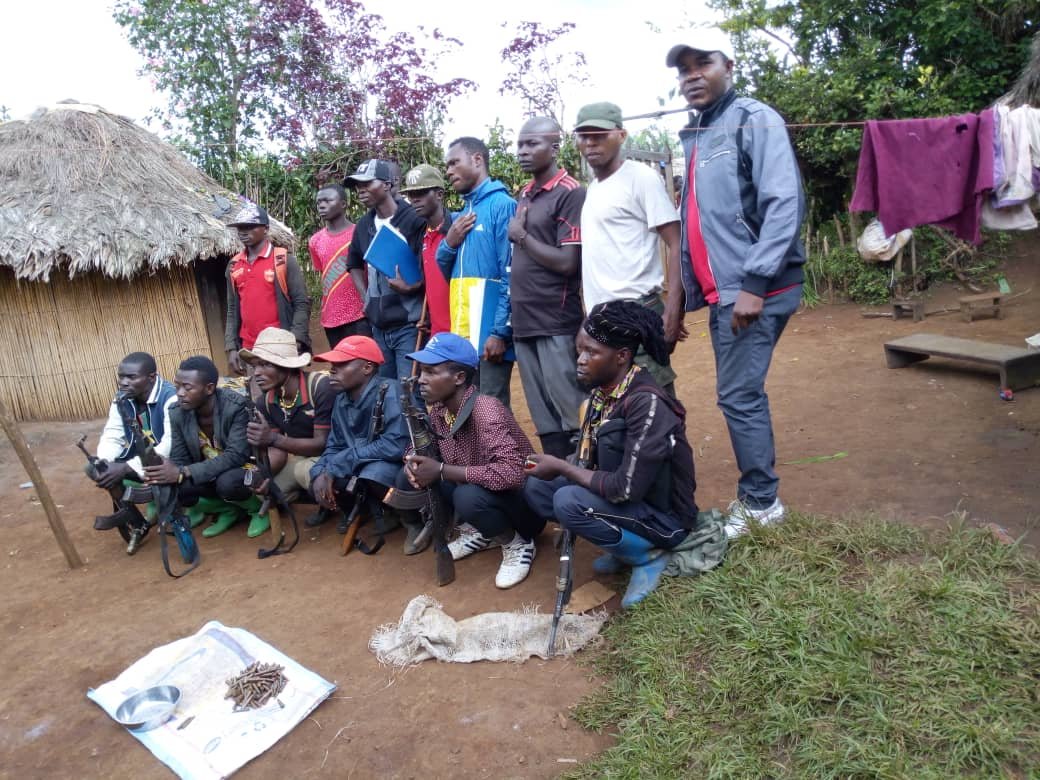
Any FDLR activity prompts Rwanda to support Tutsiled guerrillas in Eastern Congo. Thus, in 2012, the M23 movement—named after the March 23, 2009 agreement, which it claimed Congo had violated—launched a new antiFDLR insurrection with Rwandan support. Since then, M23, Rwanda, and DR Congo have signed multiple agreements, repeatedly declaring that M23 had ceased operations and that the Congolese army had disarmed the FDLR. None of these agreements held. Fighting continued. The most recent deal was promoted by U.S. Secretary of State Marco Rubio and signed in June 2025, after M23 captured the capitals of both North and South Kivu provinces, Goma and Bukavu.
To make matters worse, the Lendu and Hema continued fighting in Ituri, and atrocities escalated as CODECO (Coopérative pour le développement du Congo) evolved from an agricultural cooperative into a new religious movement blending African indigenous spirituality, antiHema rhetoric reminiscent of the ideology behind the Rwandan genocide, and Christianity, combined with the divinization of its deceased leader Innocent Ngudjolo, killed in 2020.
A new and deadly actor also entered the conflict, as the ultrafundamentalist Islamic group Allied Democratic Forces (ADF), which had operated in Uganda since the 20th century with Sudanese support, became a relevant force in North Kivu. In 2019, its main faction pledged allegiance to the Islamic State. ADF insists that the solution to Eastern Congo’s unrest is conversion to Islam, which it may impose by force on those unwilling to convert.
The alphabet soup of militias in Eastern Congo makes mapping them nearly impossible. At least 130 groups are fighting one another. Jason K. Stearns, the leading scholar of the conflict, has concluded that ideology and even ethnicity do not necessarily guide their actions. Most groups consist of young people who have never known anything but war and have no profession other than violence. Stearns argues that the war reproduces itself almost mechanically.
Rwanda’s concerns about the FDLR remain part of the picture. Decades of fighting by friendly militias backed by Rwandan soldiers have reduced the FDLR’s armed militants from 80,000 or more to about 2,000. Yet scholars close to the Rwandan government maintain that the FDLR has a large potential pool of recruits among the 500,000 Hutus—both Rwandan refugees and Congolese—living in Eastern Congo, which they argue justifies Rwandan (and M23) activism in the region. But the Hutu/Tutsi divide is not the only element of Congo’s tragedy. Stearns warns that the presence of a generation that practices war for war’s sake and the vested interests many Congolese politicians have in perpetuating instability are deeper and more intractable factors.
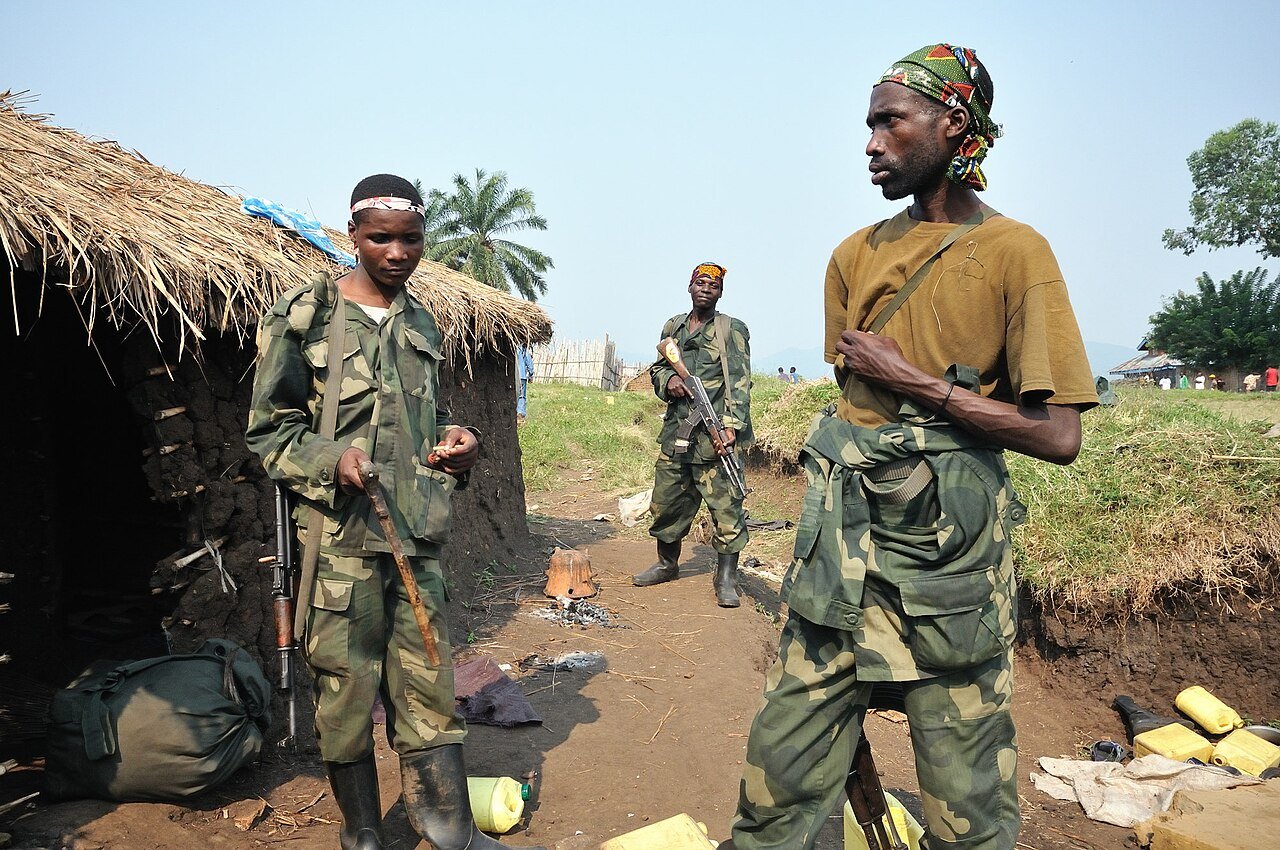
While the Rwandan genocide of the Tutsi claimed one million lives, the Congo wars and the unrest in Eastern Congo—which are directly connected to the genocide, though they have other causes as well—have so far produced five million victims and seven million refugees. One in every three women in Eastern Congo is a survivor of warrelated rape. All sides have committed horrific atrocities. The genocide mentality of the Rwandan tragedy resurfaced in massacres of Tutsi and Hema, while Rwandan troops and their allies slaughtered not only FDLR militias but also Hutu civilians. The Vatican is considering the beatification of Jesuit Archbishop Christophe Munzihirwa, killed in 1996 by Rwandan soldiers as he tried to defend these civilians.
Today, when Catholic bishops advocate for peace, they are accused by different factions of being either proM23 or supporters of corrupt politicians in Kinshasa. Perhaps their documents should be read differently. Their appeal to a conversion of hearts may seem naïve. But what other solution is available to populations that have been routinely robbed, tortured, raped, and killed by more than one hundred militias for thirty years?

Massimo Introvigne (born June 14, 1955 in Rome) is an Italian sociologist of religions. He is the founder and managing director of the Center for Studies on New Religions (CESNUR), an international network of scholars who study new religious movements. Introvigne is the author of some 70 books and more than 100 articles in the field of sociology of religion. He was the main author of the Enciclopedia delle religioni in Italia (Encyclopedia of Religions in Italy). He is a member of the editorial board for the Interdisciplinary Journal of Research on Religion and of the executive board of University of California Press’ Nova Religio. From January 5 to December 31, 2011, he has served as the “Representative on combating racism, xenophobia and discrimination, with a special focus on discrimination against Christians and members of other religions” of the Organization for Security and Co-operation in Europe (OSCE). From 2012 to 2015 he served as chairperson of the Observatory of Religious Liberty, instituted by the Italian Ministry of Foreign Affairs in order to monitor problems of religious liberty on a worldwide scale.