A quiet act of remembrance on June 4 leads to the detention of a Shandong monk long targeted for his views on faith and civic rights.
by Wang Yichi
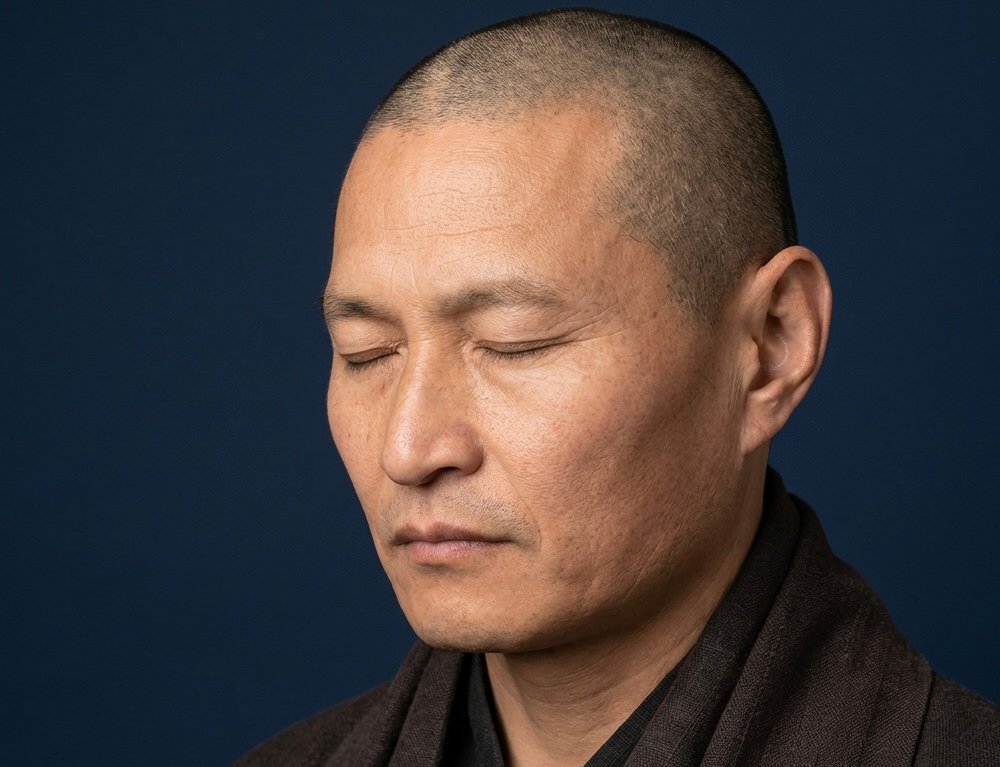
The Shandong monk known as Shi Daoguo, born Zhang Chao, was taken away in the early hours of June 5 after briefly commemorating the Tiananmen anniversary in Beijing. He had gone to Tiananmen Square the previous day, taken a photograph, and added a short poem of remembrance before posting it on his social media account. The post disappeared soon afterward. Before dawn, officers from the Zaozhuang branch of the Domestic Security Police detained him and reportedly removed him from the capital. At the time of this writing, his whereabouts remain unknown.
Shi Daoguo has lived for years under pressure from local authorities. He grew up in Shandong and worked in Beijing as a young man, where he became active in online discussions about civic responsibility. In 2014 he spent more than a month in detention after warning petitioners in the capital that police were conducting searches. He later shaved his head and began a monastic life, traveling from one temple to another. His interest in Buddhist study and his habit of helping people in difficulty drew sympathy from many, although his presence often led to pressure on temples, which were told to expel him. His movements became increasingly restricted.
In 2019 he was detained again in Shandong and later sentenced for the familiar charge of “picking quarrels and stirring up trouble.” He explained in past interviews that he had been active on overseas social media and was preparing to travel abroad when police intervened. His passport was never renewed. He also reported that he could not obtain official recognition from the state‑controlled Buddhist Association, which prevented him from residing legally in temples. Whenever he tried to stay in monasteries in provinces such as Zhejiang or Jiangxi, he was ordered to leave. He described this pattern as a method designed to push independent monks into isolation.
Shi Daoguo has repeatedly said that a monk remains a citizen and that citizens have the right to comment on public affairs. He viewed this as a moral duty. His earlier detentions did not silence him. He once remarked that paying a personal price for dignity was an honor, even when the consequences were severe.
His decision to mark the Tiananmen anniversary was consistent with his past behavior. He had often spoken about the importance of memory and compassion. The authorities reacted immediately. Forced disappearances around sensitive dates are common in China, yet the removal of a Buddhist monk for a brief act of remembrance shows how far the system extends its reach into religious life. The episode also reflects the growing effort to reshape Buddhism into a tool of political messaging, something Shi Daoguo had criticized in earlier statements.
As of today, friends and supporters have no information about his condition. His case illustrates the vulnerability of religious figures who refuse to align their conscience with official expectations. It also shows how remembrance of June 4 remains a forbidden gesture, even when expressed through a simple photograph and a poem.

Uses a pseudonym for security reasons.