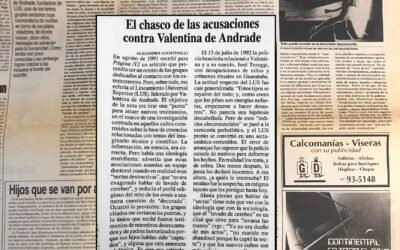
How media and private and governmental anti-cult institutions shaped and distorted the French debate on the movement.
by Massimo Introvigne
Article 4 of 4. Read article 1, article 2, and article 3.
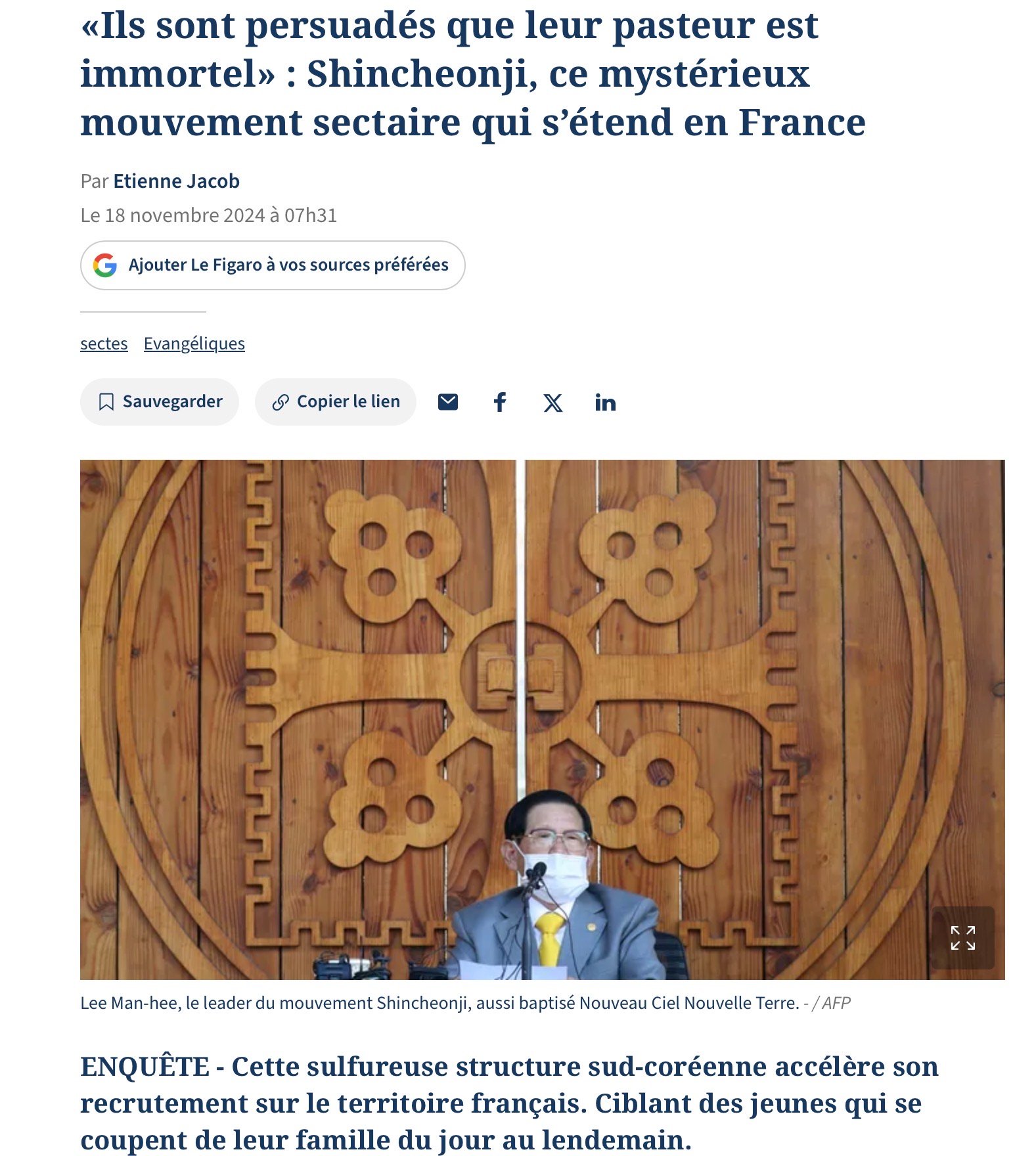
Shincheonji’s presence in France has generated a reaction that reveals more about the French environment than about the movement itself. The interviews I conducted show that most members lived their faith quietly until a wave of negative attention emerged. This attention came from journalists specialized in anti-cult campaigns, from the governmental anti-cult mission MIVILUDES, and from a small number of disgruntled ex-members. Their narratives circulated widely and created tensions in families and workplaces where none had existed. The stories collected in France illustrate how fragile the boundary is between legitimate concern and moral panic. They also show how members have tried to rebuild trust through transparency and open-door events.
The first element that emerges from the interviews is that the majority of members had no conflict with their families before the publication of hostile articles. Several told me that their relatives knew they attended Bible classes and services. They regarded it as a normal religious choice. One interviewee, E., said that her parents had never objected to her interest in Christianity. She had been searching for a deeper understanding of the Bible and had found it in Shincheonji. She said that her family accepted her decision without difficulty. This changed abruptly when they read articles portraying the movement as a dangerous “cult” (“secte” in French). She said that her mother suddenly feared that she was being manipulated. The shift was not the result of anything she had done. It was the result of what her mother had read.
Another interviewee, B., described a similar experience. He said that his mother is a member of Shincheonji and that his father reacted with hostility after reading negative reports. He said that his father accused his mother of being involved in something harmful. He said that this created tension at home. He emphasized that the conflict did not originate from the family’s own observations. It originated from external narratives. He said that his mother continued to live her life normally and that nothing in her behavior justified the accusations. The problem was the perception created by the articles.
The most dramatic case I encountered was that of a young woman, A., who was subjected to confinement and attempted deprogramming. Her story illustrates the consequences of alarmist narratives. She said that she had been studying the Bible with Shincheonji and had found the teachings meaningful. Her parents became alarmed after reading hostile material online. They decided to intervene. She said that they confined her at home, confiscated her cell phone, and brought a pastor to convince her to abandon her faith. He looked threatening and once violently squeezed her hands. She resisted. Her parents then brought a psychiatrist. She said that the psychiatrist tried to persuade her that she had been manipulated and compelled her to assume psychotropic drugs. She insisted that she had joined Shincheonji freely and that she had not been pressured. She said that the experience was traumatic. She eventually regained her freedom, but the episode left deep marks.
Cases of deprogramming are rare in France. The reason is not that hostility is absent. It is that parents who object to the religious choices of their adult children often turn to institutions rather than private actors. MIVILUDES and the police are regarded as more effective than private deprogrammers. Several interviewees said that their parents contacted MIVILUDES after reading negative articles. They said that this created fear and confusion. One interviewee said that her parents asked whether she was allowed to sleep, was allowed to eat, and was being controlled. She said that these questions made no sense in relation to her actual life. She said that she worked, studied, and lived independently. She said that the questions came from fake news circulating online.
The interviews also reveal that the media campaign had consequences for the movement’s activities. One interviewee said that the church had organized a sports day at a venue they had used the previous year. When they contacted the venue again, the management refused to rent the space. They said that they had read about Shincheonji in AFP reports about a lawsuit by hostile ex-members. The refusal was not based on any incident. It was based on the reputation created by the articles.
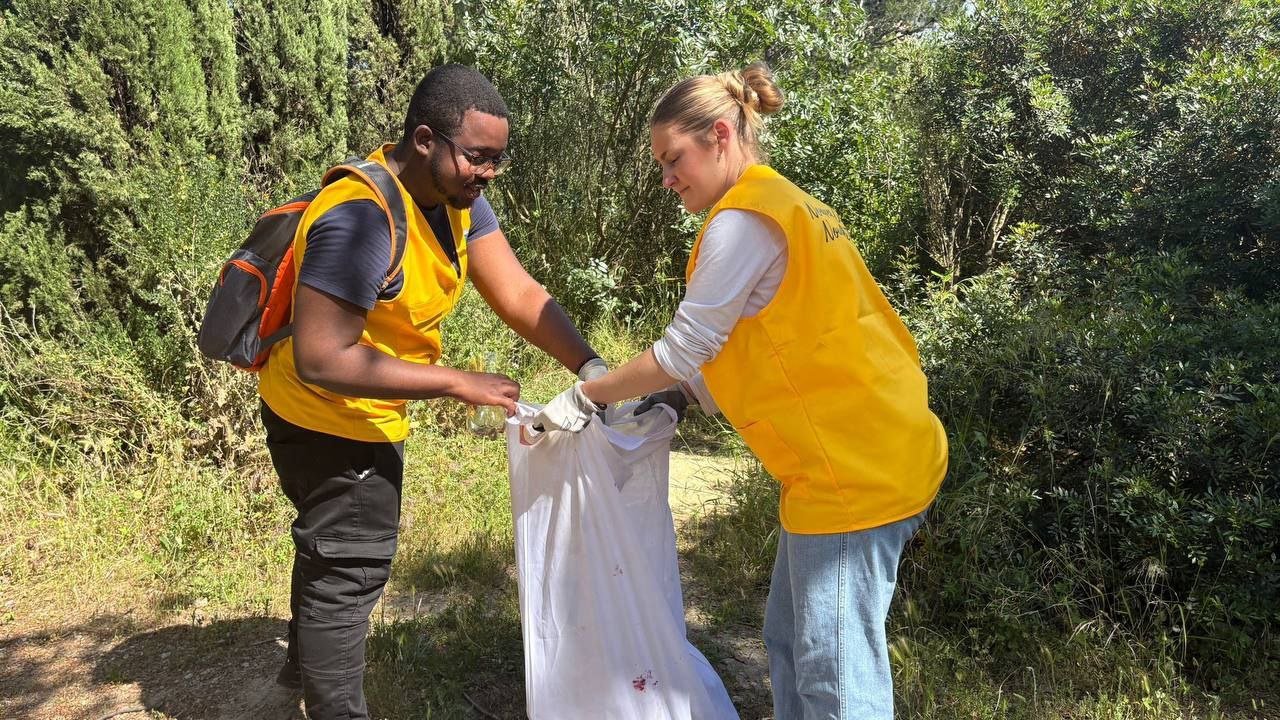
The interviews show that the accusations circulating in France often originate from Korean Protestant pastors who regard Shincheonji as competition. These pastors travel internationally and warn against the movement. Their claims are repeated by journalists and activists who do not always understand the Korean context. Apart from the inaccurate reporting about Shincheonji and COVID, one example is the accusation that the movement hides its identity when approaching people. Several interviewees said that they were told immediately that they were speaking with Shincheonji. One said that she was approached in the street and that the missionaries introduced themselves openly. Another said that she was contacted online and that the name Shincheonji was mentioned from the beginning.
These testimonies contradict the narrative that the movement systematically conceals its identity. In fact, because of virulent media campaigns, the movement once did not mention the name Shincheonji in the first contacts with perspective converts in Korea and other countries. The Korean Supreme Court ruled that the practice was unethical but not illegal. It has now been largely abandoned, as even anti-cultists have noticed—now criticizing Shincheonji because it “boldly” uses its own name. But this strategy was promptly abandoned in France, as the missionaries realized that nobody, when they arrived in 2016, had heard the name “Shincheonji” there and it did not carry negative connotations. The situation changed in later years, but the movement maintained its “open evangelization” attitude in France.
The interviews also show that the movement has responded to the negative attention by increasing transparency. Several interviewees mentioned open-door events where relatives and friends are invited to attend services and ask questions. One interviewee said that her mother had read negative articles and had become worried. She invited her to an open-door event. Her mother attended and saw the community with her own eyes. She said that this experience changed her mother’s perception. Another interviewee said that her sisters had been concerned after reading online material. They later watched Shincheonji videos, met other members of the movement, and saw that they were living a normal life. She said that this helped restore trust.
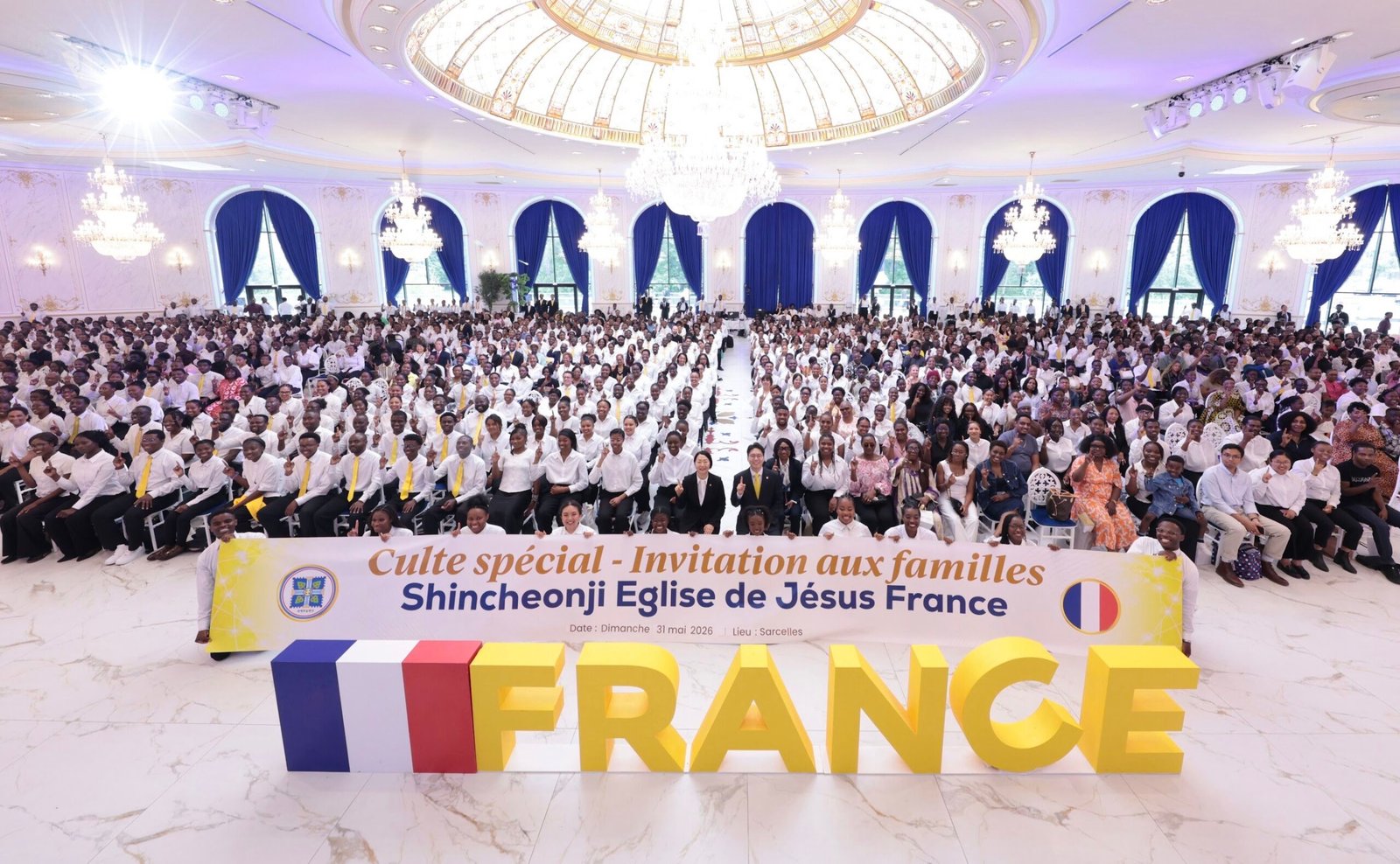
These open-door events are part of a broader effort to rebuild relationships. Several interviewees said that they had learned in Shincheonji to communicate better with their families. One said that she had been distant from her mother for years. She said that her instructor encouraged her to speak with her mother and try to understand her. She reported that this advice helped her rebuild the relationship. Another said that she had learned to be patient with relatives who were influenced by negative narratives. She said that she tried to show through her behavior that she was living a balanced life.
The interviews also reveal that the movement faces ongoing challenges. The lawsuit mentioned in the media may have serious consequences. The negative attention from MIVILUDES and journalists continues to influence public perception. Members are aware of these challenges. They speak about them with concern. They also speak about their determination to continue their activities.
The French environment is complex. It is shaped by a strong secular tradition, by a history of suspicion toward new religious movements, and by a media landscape where sensational anti-cult narratives circulate easily. Shincheonji entered this environment with little knowledge of its dynamics. The movement’s members have had to navigate a terrain where religious choice is often viewed with suspicion. They have had to explain their faith to relatives who rely on external narratives rather than personal observation. They have had to respond to accusations that do not correspond to their lived experience.
The interviews show that the members’ response has been grounded in patience and transparency. They have opened their doors. They have invited relatives to attend services. They have explained their activities. They have tried to rebuild trust. They have also continued to study the Bible, participate in community events, and maintain their daily lives. They have shown resilience in the face of misunderstanding.
This series of articles has examined the story of Shincheonji in France, its activities, and the reactions it has generated. The movement arrived in a secular country with a small team and grew through persistence and adaptation. It developed a community that studies, plays, and interacts with others. It faced suspicion and hostility. It responded with openness. The interviews reveal a movement that is shaped by the questions of its members, by their desire to understand the Bible, and by their efforts to live their faith in a challenging environment.
The French debate on Shincheonji is far from settled. It will continue to evolve as more people encounter the movement directly rather than through external narratives. What emerges from the interviews is a portrait of a community that seeks understanding rather than confrontation. It is a community that has suffered from misrepresentation but continues to build bridges. It is a community that invites others to see it as it is, not as it is portrayed.

Massimo Introvigne (born June 14, 1955 in Rome) is an Italian sociologist of religions. He is the founder and managing director of the Center for Studies on New Religions (CESNUR), an international network of scholars who study new religious movements. Introvigne is the author of some 70 books and more than 100 articles in the field of sociology of religion. He was the main author of the Enciclopedia delle religioni in Italia (Encyclopedia of Religions in Italy). He is a member of the editorial board for the Interdisciplinary Journal of Research on Religion and of the executive board of University of Pennsylvania Press’ Nova Religio. From January 5 to December 31, 2011, he has served as the “Representative on combating racism, xenophobia and discrimination, with a special focus on discrimination against Christians and members of other religions” of the Organization for Security and Co-operation in Europe (OSCE). From 2012 to 2015 he served as chairperson of the Observatory of Religious Liberty, instituted by the Italian Ministry of Foreign Affairs in order to monitor problems of religious liberty on a worldwide scale.