A perverse mechanism prevents members of the persecuted religion from voting, excluding them from the democratic process.


A perverse mechanism prevents members of the persecuted religion from voting, excluding them from the democratic process.

In een openbaar persbericht presenteerde FECRIS de verloren zaak als een overwinning, maar in haar algemene vergadering erkende de organisatie dat de zaak anders was uitgepakt.

The worst court decision justifying the persecution of Ahmadis was rendered in 1993. Nor did the situation improve later.

Both the Islamic socialist Zulfiqar Ali Bhutto and the Muslim radical General Zia-ul-Haq enacted anti-Ahmadis law that are still in force.

When a country moves from a non-democratic to a democratic regime, past wrongdoings should be acknowledged and rectified. It is not easy.
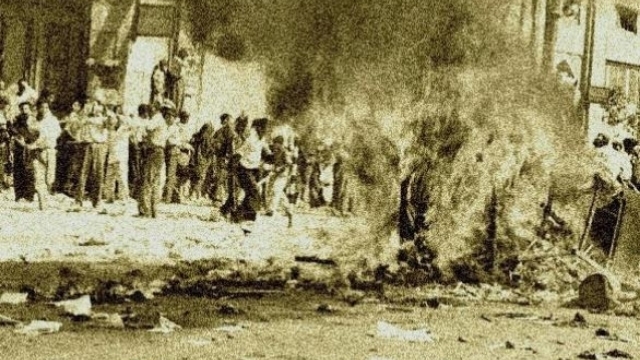
The secular nature of Pakistan came immediately under attack by political Islam. 2,000 Ahmadis were slaughtered in the riots, until martial law was imposed.

Bitter Winter starts a series on the bloody repression of Ahmadis, a large religious minority in Pakistan, investigating why it is happening.

Le journaliste Nicolas Jacquard a produit un ouvrage bien plus ambitieux que sa collègue Suzanne Privat, mais qui demeure trop lié aux anciens membres « apostats »
Journalist Nicolas Jacquard has produced a book that is much more ambitious than his colleague Suzanne Privat’s, but still relies too much on “apostate” ex-members.

The rule that two witnesses are needed refers to ecclesiastical governance only, and has nothing to do with the organization’s interaction with secular authorities.