Can China capture Taiwan’s President as the U.S. did with Maduro? Maybe not, judging from Beijing’s “anti-terrorism” operation of 2015 in the Uyghur region.
by Shohret Hoshur

After the United States captured President Nicolás Maduro, some groups expressed concern that this would set a precedent for dictatorial states and embolden Xi Jinping to attack Taiwan, possibly using similar methods to “solve” the Taiwan issue. I believe these concerns are overstated. China’s military strength, experience, and courage are often exaggerated. I illustrate this view by comparing the U.S. operation against Maduro with China’s Aksu cave operation targeting Uyghur fighters in East Turkestan (called Xinjiang by China).
In the early hours of January 3, 2026, the United States launched a combined military and law‑enforcement operation in Venezuela. U.S. forces struck targets in Caracas and other locations and captured President Nicolás Maduro and his wife, Cilia Flores.
On September 18, 2015, authorities in northwest China’s Uyghur Region launched a capture operation in Bay County, Aksu. Seventeen suspects from three families were accused of carrying out a revenge attack at the Sogan Coal Mine that left dozens dead and injured.
Operation Absolute Resolve, launched by the United States, was planned over several months. It involved more than 150 aircraft and roughly 200 U.S. troops conducting the ground raid, supported by larger naval and air forces.
China’s campaign to eliminate Uyghur separatist groups began after its occupation of East Turkestan on October 1, 1949, and has continued for decades under various “Strike Hard” campaigns. On the day of the coal mine attack, a police station in Bay Township received an emergency call reporting violence at the mine. As police approached the site, a vehicle rammed their patrol car. The suspects attacked the officers with knives, killing five and seizing their weapons. Only one officer survived by throwing himself into a nearby river. The attackers were the same group responsible for the coal mine killings, in which more than 40 security guards and workers died. The emergency call had been a trap.
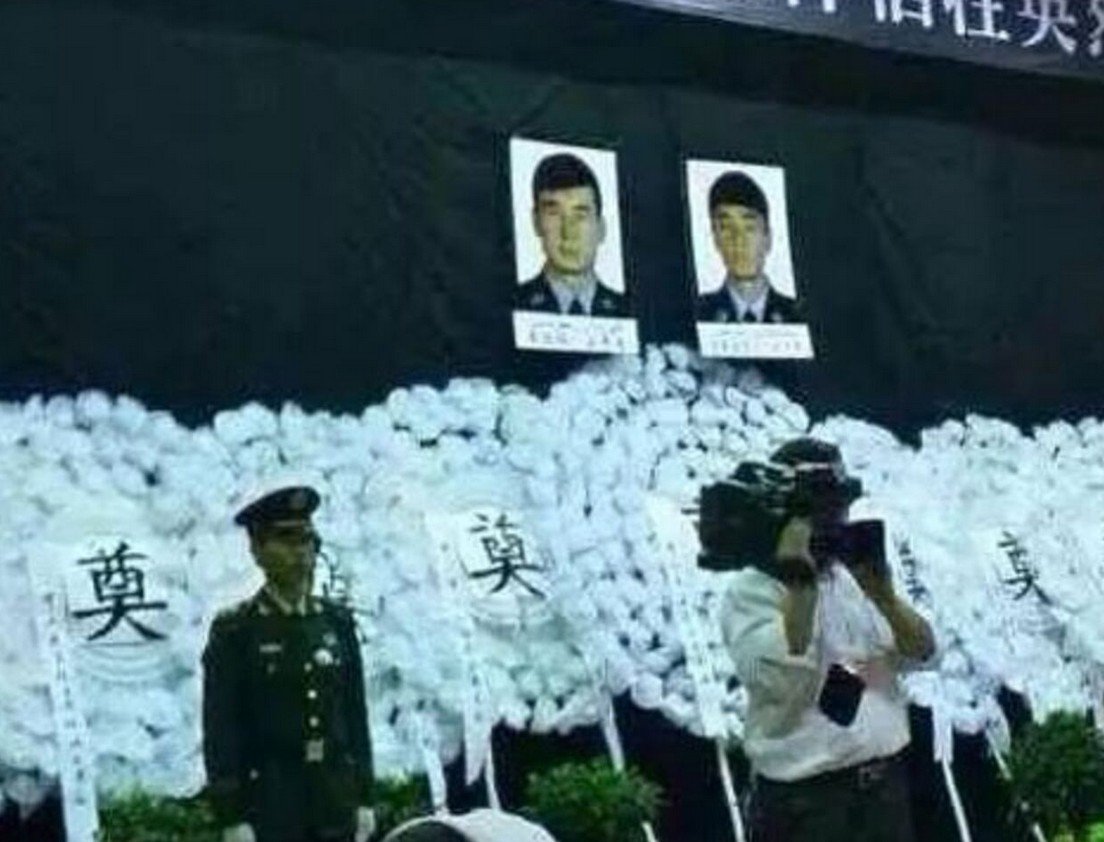
The suspects attempted to flee toward the Kyrgyzstan border. To capture them, China mobilized special forces from the county-level to the central government levels. Drones and military helicopters flew over the Aksu mountains, while thousands of police searched on the ground. Tens of thousands of farmers were forcibly mobilized to participate in guarding and search operations.
In Kanchi’s No. 1 Village alone, at least 20,000 farmers from the county’s 14 townships took turns guarding government offices, mosques, schools, and businesses around the clock. Another 50,000 farmers participated in searches of mountains and farmland.
U.S. Delta Force units, using drones, fighter jets, and special operations teams, neutralized Maduro’s guards and stormed the entrance of his compound. Within two hours and 28 minutes, U.S. forces captured Maduro and his wife and transferred them safely into U.S. custody.
After 49 days, Chinese forces finally located the Uyghur fighters’ hiding place—a cave in the mountains. However, no operators dared to enter. Authorities demanded surrender and repeatedly fired into the cave. Inside were four women and three children among the 17 alleged “terrorists.”
During the seven-day standoff, one Uyghur fighter rushed out of the cave, killed a soldier, and was immediately shot. No one else surrendered.
Once U.S. soldiers reached the entrance of Maduro’s compound, they did not hesitate. They entered immediately, searched room by room, and brought Maduro and his wife out alive and unharmed. The entire operation—from entry to extraction—took only two hours and 28 minutes.
After monitoring the cave for seven days, Chinese forces lost patience. They lacked the courage to enter and did not attempt to rescue the women and children, whom they claimed were citizens. There was no interest in capturing suspects alive for investigation or trial. Instead, Chinese forces used flamethrowers—internationally condemned weapons—to kill all 17 people inside the cave.
After transferring Maduro and his wife to New York, the United States publicly announced the operation, detailing its objectives and results. Although more than 40 Venezuelan security personnel were killed, no American personnel died. The international community openly debated the U.S. operation regarding its legality and justification.
After 56 days, China failed to capture 17 suspects alive and instead burned them to death in the cave, including women and children. China declared the operation a success but released almost no details. Casualty numbers and operational facts remain unknown. Chinese state media remained largely silent during and after the operation.
Only the U.S.-based Radio Free Asia Uyghur Service reported the incident in detail, publishing a 12-part investigative series several days later. The Uyghur‑ and English‑language reports revealed that 84 people died during the 56-day operation, including suspects, police officers, and soldiers.
This comparison shows that China’s special forces lack the courage, training, and experience required to conduct a precision capture operation against a sitting president.
In one of China’s so-called counterterrorism documentary films, the only time a “terrorist” was captured alive was when he was hiding in a cornfield. This was not because police rushed into the cornfield, but because they set the field on fire and shot at the suspect as he fled, forcing him to run out.
Therefore, we can say that China’s so-called special armed forces could capture a president only if the Taiwanese president were hiding in a cornfield under similar conditions—and that cornfield would have to be inside China.

Shohret Hoshur (who until 2025 used the pseudonym of Kok Bayraq) is a political émigré from East Turkestan (Ch. Xinjiang) and an opponent of the Sinicization of his homeland. He left China in 1995 when his journalism got him “into trouble with the authorities,”and is now living in Washington, D.C.. His unique thoughts and feelings published in Taipei Times and Global Voice comment on the ongoing Uyghur genocide.