The killing of a Uyghur worker by a Han shopkeeper sparked a revolt that kept the city outside Communist Party control for nine days.
by Abdurehim Gheni Uyghur
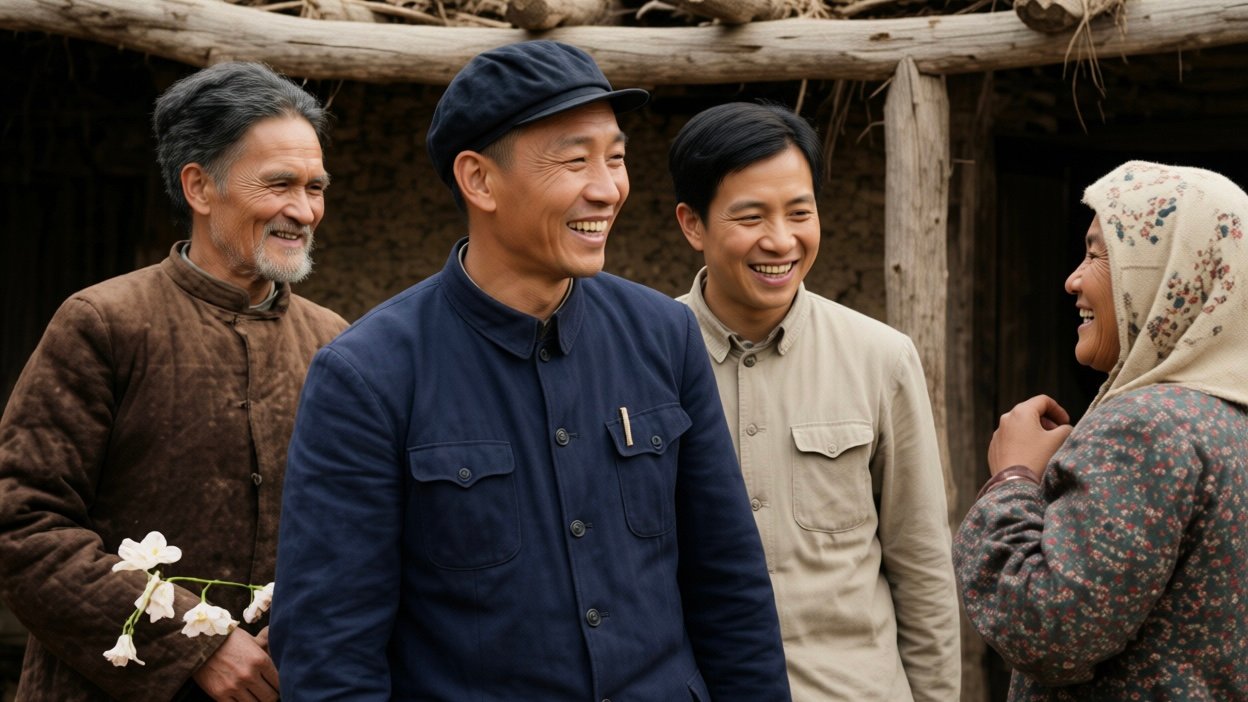
“Colonialism is not satisfied merely with holding a people in its grip and emptying the native’s brain of all form and content. By a kind of perverted logic, it turns to the past of the oppressed people, and distorts, disfigures, and destroys it” (Frantz Fanon).
Those who examine the modern history of resistance in East Turkistan usually think first of the 1990 Baren Revolution, the 1997 Ghulja Massacre, or the July 5, 2009 Ürümchi Massacre. Yet hidden in the unrecorded layers of history is a chain of events that erupted in the very first years of the Chinese Communist Party’s so-called “Reform and Opening-Up” era and set the course of colonial policies for the following forty years: the “October 30 National Resistance Movement,” which broke out in Kashgar on October 30, 1981, and whose 45th anniversary was celebrated last month.
It started from an ordinary criminal case and, in a single night, plunged an entire city into anger. The public protest that followed exposed the fragility of China’s ethnic policies in the “Reform and Opening-Up” era and the sheer hypocrisy of the so-called “regional ethnic autonomy” implemented in occupied East Turkistan.
The late 1970s brought the end of the Cultural Revolution and the so-called “yoke-loosening” policies promoted by Hu Yaobang, yet the injustices and colonial inequalities in East Turkistan remained in place. A series of serious conflicts preceded the 1981 outbreak, starting with the activities of the “East Turkistan People’s Revolutionary Party” and the “Mijit and Akhunop Uprising” of 1969, twelve years earlier. The “Mosque Incident” and the “Qotar Incident” in Akto and Kargilik, as well as the storming of an arsenal in Yengisar by young Uyghurs, were all signs of the ongoing struggle of the people of East Turkistan for liberation from Chinese domination.
Gardner Bovingdon, a political scientist and Uyghur studies scholar at Indiana University, noted in his acclaimed book “The Uyghurs: Strangers in Their Own Land” that in the early 1980s the continuous transfer of Chinese migrants into the region, the privileged institutional status of the Xinjiang Production and Construction Corps (XPCC, or Bingtuan), and the unemployment and inequality faced by Uyghurs in their own homeland had turned society into a tinderbox ready to explode.
On October 30, 1981, an incident at the Material Supply Bureau in downtown Kashgar released grievances that had been building up for years, and they soon spun out of control.
Abdusalam Tokhtam, a Uyghur contract worker, was cleaning a water tank inside the bureau compound when a Chinese shopkeeper named Ye Xin started quarreling with him about the foul smell. Abdusalam explained that he was only doing the job he had been hired for, and that any complaint should be addressed to the management. The shopkeeper went home, came back with a hunting rifle, and shot Abdusalam in the jaw, killing him on the spot.
The blatant brutality of the Chinese perpetrator and the biased, colonial-style way in which the authorities handled the case brought more than 50,000 Uyghurs into the streets to protest the injustice. The demonstration started peacefully, with the demand to “arrest and punish the murderer,” and later grew into a mass resistance movement against Chinese colonialism.
Eyewitness accounts preserve a heart-wrenching scene: “A Uyghur man inside the office smashed the windowpane with his bare hand. Although his hand was bleeding profusely, he paid no attention to it, and kept calling out the names of acquaintances among the crowd outside that was demanding the body… shouting at the onlookers, foaming at the mouth.”
The meaning of this scene ran deep. Ignoring his injured, bleeding hand, the man exposed the lawlessness, brutality, and injustice of the Chinese regime toward the local population to the outside world and to the thousands gathered in the street, paying the price for it. In other words, the movement went beyond mourning the death of one individual. It was an open wound, the spiritual outcry of a nation shouting, “Look at what is being done to us!”
That bloody hand expressed, beyond the protest against a single crime, the instinctive outburst of an entire nation that had endured injustice for years.
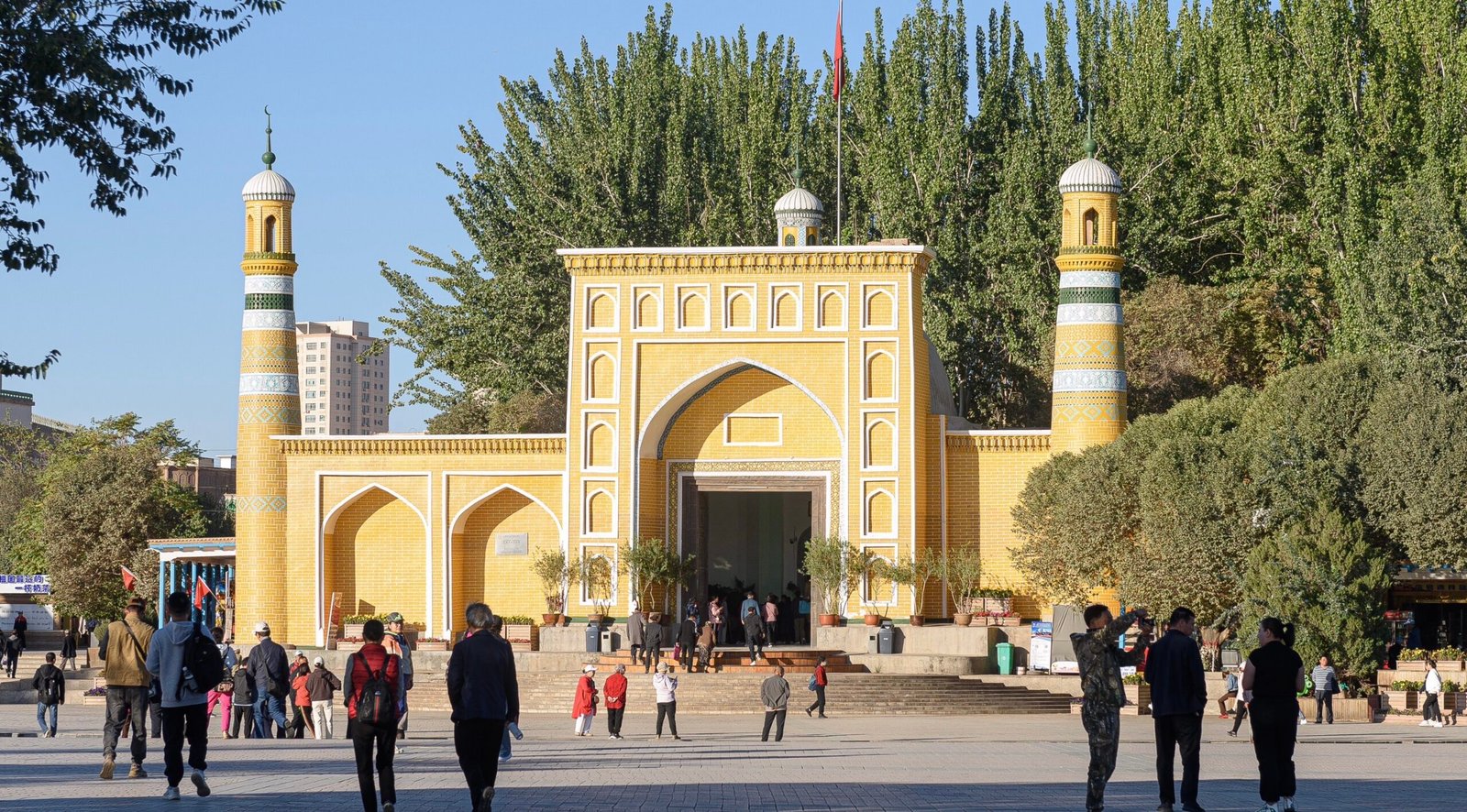
After the incident, Kashgar remained outside Chinese control—functioning as a “liberated zone”—for about nine days, until November 9. Chinese police, soldiers, and settlers did not dare to go out into the streets, and several Chinese officials resigned and fled to the interior provinces. According to historical sources, the authorities’ failure to regain control of the city quickly was due to the “Central Asian Uyghuristan Young Spark Union,” made up mostly of students and young people from Kashgar No. 1 Middle School, who had earlier circulated underground wall newspapers and slogans demanding justice and independence.
The best evidence of the event’s importance is that even the Chinese government’s own internal sources could not hide its political gravity. The official volume “History of the Struggle Against National Separatism in Xinjiang,” compiled in April 1999 by the Party History Research Office of the Xinjiang Uyghur Autonomous Region Party Committee and published by the Xinjiang People’s Publishing House, acknowledges: “Kashgar city, with a population of over 100,000, fell under the control of rioters for a time… Armed with daggers, clubs, and whips, the rioters shouted reactionary slogans such as ‘Eliminate the Hans,’ ‘Eliminate the Chinese Government,’ and ‘Long Live the Republic of Uyghuristan’… In that incident, over 600 Han Chinese were beaten… This is recorded as the most brutal anti-Han incident since the peaceful liberation of Xinjiang.”
At 2 a.m. on November 9, 17 members of the organization were arrested.
The Chinese government then brought in troops from Aksu, Atush, and Hotan, as well as regular army units from inner China, and completely surrounded Kashgar. More than 1,000 young Uyghurs were arrested and given heavy prison sentences. From that time on, official Chinese documents listed Kashgar as “one of the top ten most dangerous regions in the country.”
Western scholars and political scientists regard the 1981 Kashgar incident as a milestone revealing the failure of China’s ethnic policies in the so-called “Reform” era. James A. Millward, a professor at Georgetown University, notes in “Eurasian Crossroads: A History of Xinjiang” that the clash between the “soft policy” introduced by Hu Yaobang and the colonial reality maintained by local Chinese cadres gave hardliners within the government a pretext to argue that leniency did not work in the region.
Michael Dillon, a British sinologist, discusses the incident in “Xinjiang: China’s Muslim Far Northwest” as one of the first mass ethnic crises of China’s reform era, and as evidence that economic change could never suppress the demand for national liberation and justice. Gardner Bovingdon, in “The Uyghurs: Strangers in Their Own Land,” shows that the root causes of such explosions were the systematic transfer of large numbers of Chinese settlers into the region, which reduced Uyghurs to strangers and disenfranchised subjects in their own homeland, and the systemic inequality of Uyghurs before the law.
The national resistance movement that erupted in Kashgar on October 30, 1981, was one of the first major political crises China faced in the early years of the reform era.
Although the event is largely forgotten among Uyghurs today, its lessons for the present remain profound. It teaches us that resistance and conflict in East Turkistan grew from causes inside the region, whatever the authorities claim about foreign instigation. They were the most natural and rightful forms of resistance against the systemic injustice of the Chinese colonial government, against the policy of settling vast numbers of Chinese immigrants in East Turkistan to marginalize and disenfranchise the local people, and against a violent system that protected criminals while humiliating the local population.
A nation that forgets its history cannot step firmly into the future. Remembering the 1981 Kashgar incident, and those who smashed glass with their bare hands and cried out for justice with bleeding hands, honors a day in the past and also offers the most powerful evidence of the historical roots of the dark reality the people of East Turkistan experience today, under the most brutal genocide and policies of cultural eradication of the 21st century.
The blood and suffering left in the ancient streets of Kashgar will burn forever as a glorious torch handed down from generation to generation, an immortal epic of the dawn of freedom, truth, and justice breaking through the darkness.
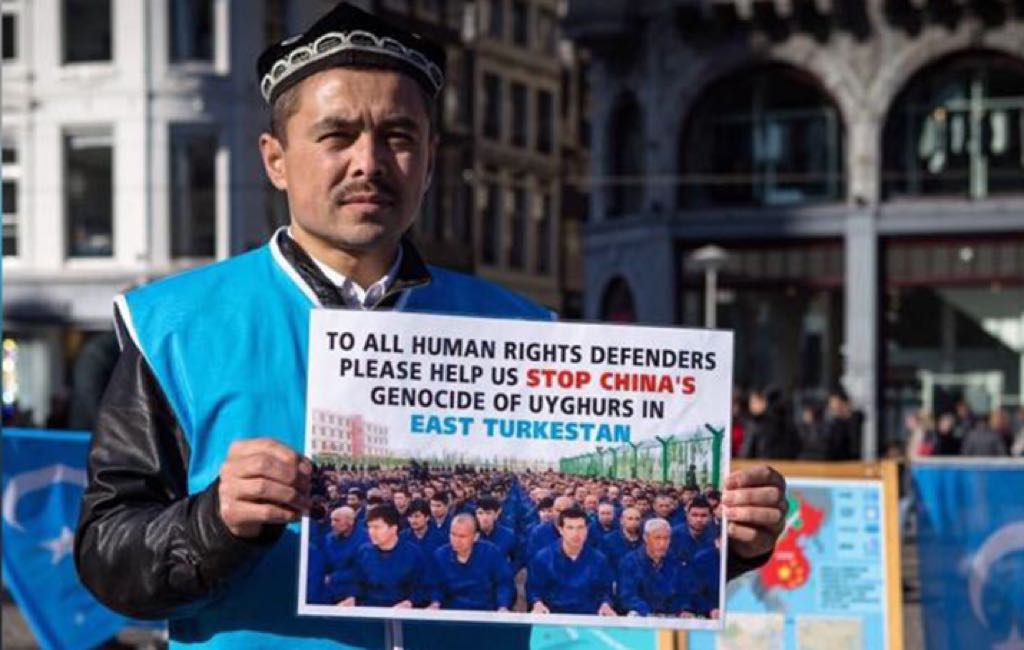
Abdurehim Gheni is a Uyghur activist living in the Netherlands who became famous for his solo protests in Dam Square in Amsterdam. He also educates tourists to the reality of the Uyghur genocide.