For two weeks in September, crowds in Zhenxiong County protected funerals and graves, defending ancestral rites the CCP has tried to erase since the 1950s.
by Zheng Liqin
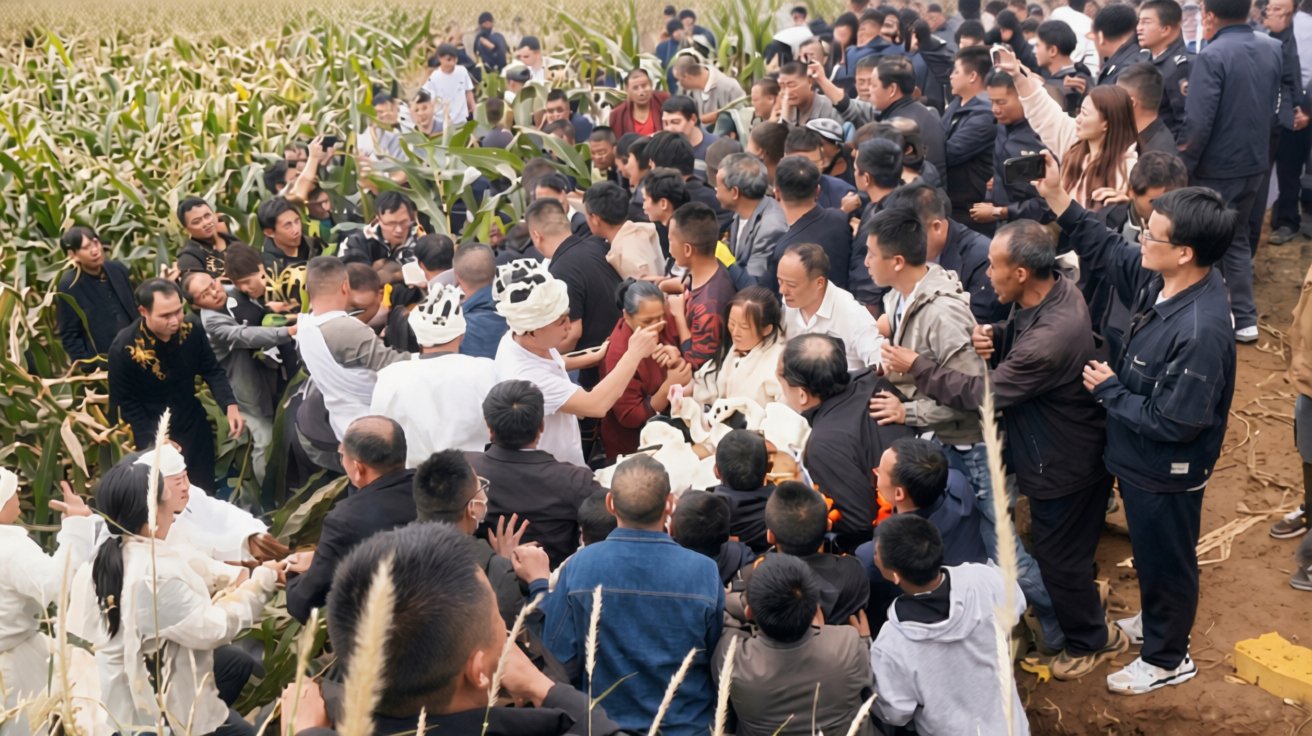
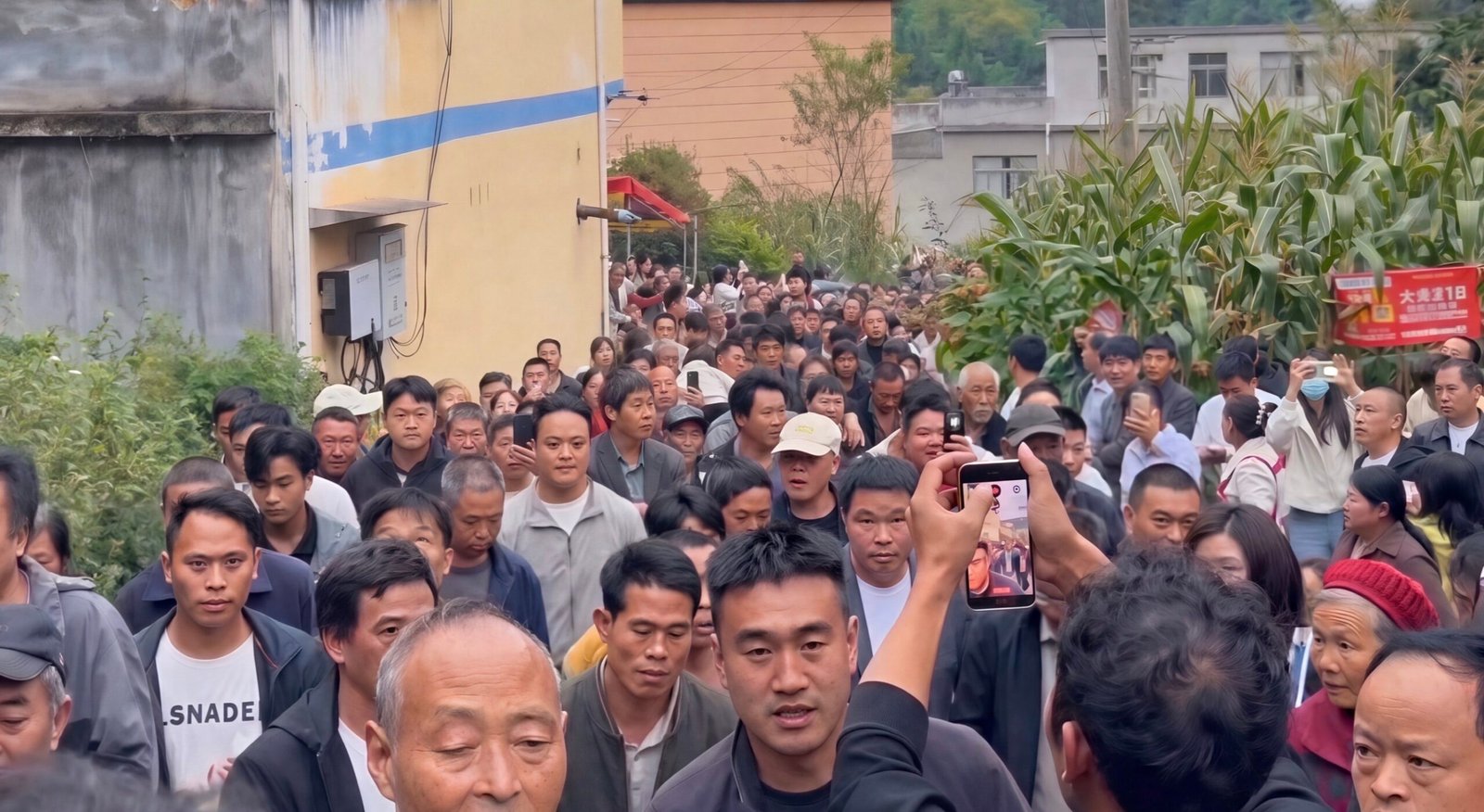
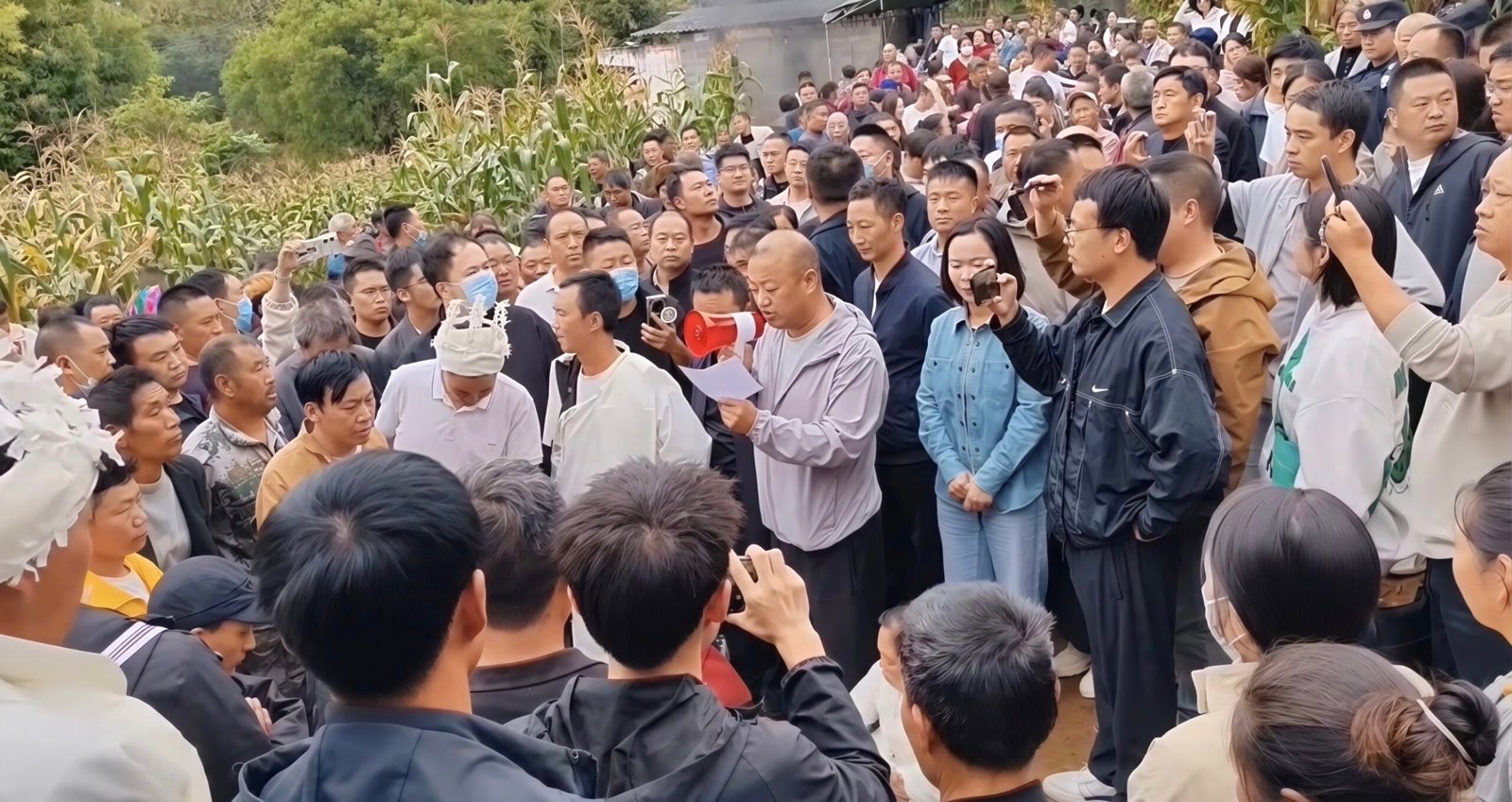
On September 11, 2026, a teenager named He Guoqiang was buried in Huangshazhuang, a hamlet of Maoba Village in Yile Town, Zhenxiong County. The county sits in the Wumeng Mountains of northeastern Yunnan, where the provinces of Yunnan, Guizhou, and Sichuan meet. The boy had died of cancer, and many in the area had followed his illness on social media. His family moved the funeral up by one day. The night before, officials had tried to take away bodies from two homes in the area, and the family feared his corpse would be next on the way to the crematorium. Once word spread that the Hes were determined to bury him, more than 10,000 people converged on the village. Some drove over 300 kilometers. The line of cars stretched for more than ten kilometers, and many abandoned their vehicles and walked the last stretch. The authorities limited themselves to flying drones over the crowd. The boy was laid in the earth, and volunteers kept watch over his grave for days, to make sure nobody would return at night to dig him up.
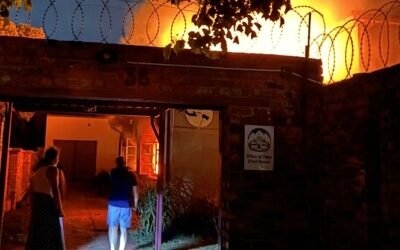
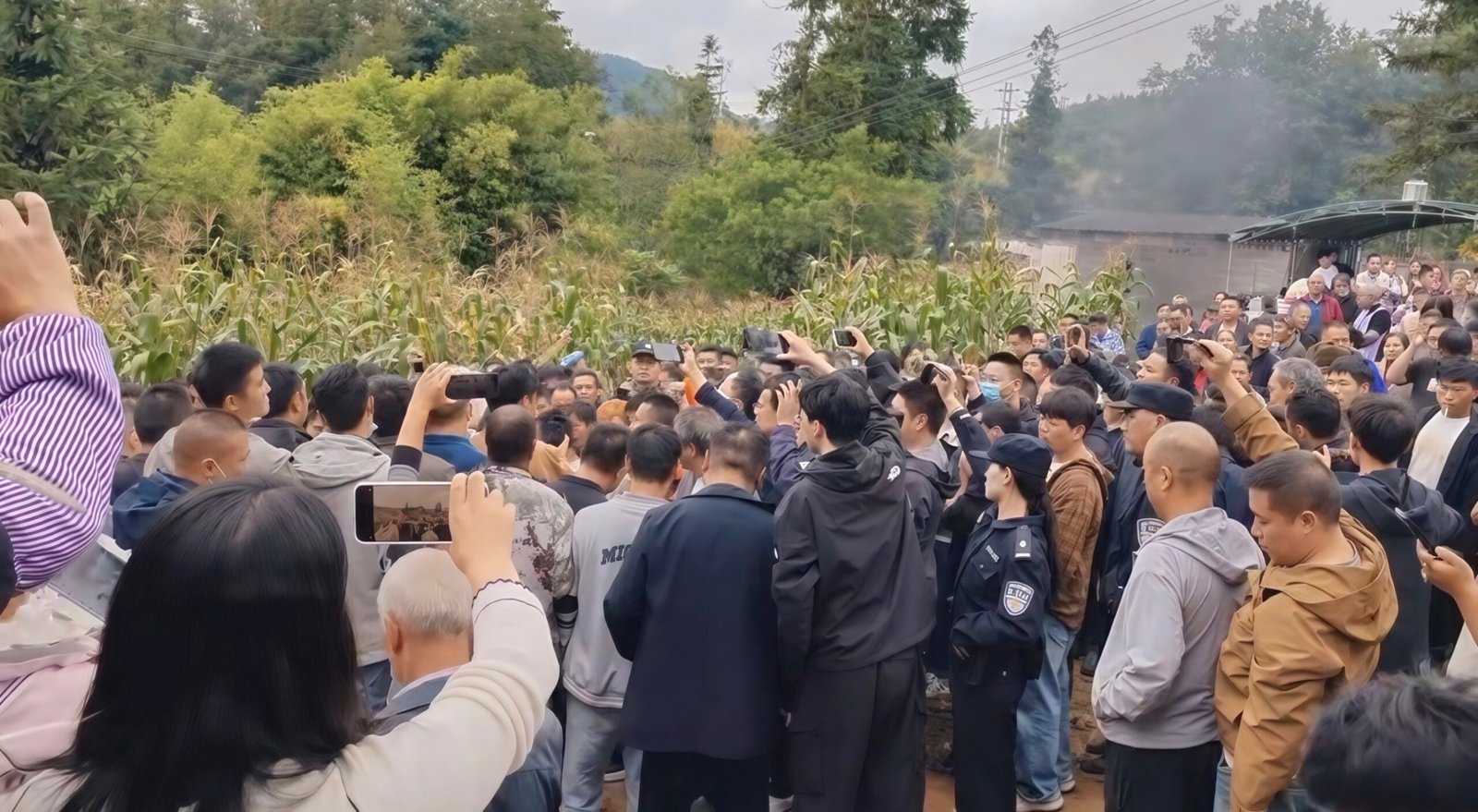
That funeral ignited the largest movement based on mass gatherings the country has seen in recent years. According to reconstruction on social media and dissident blogs, between September 10 and 24 there were 33 large rallies in at least 11 townships and subdistricts, with more than 100,000 participants overall. The climax came on September 14, with 11 gatherings in a single day across eight townships and subdistricts. In Yaoshan Village, Jianshan Township, more than 10,000 people escorted the coffin of a 93-year-old man up the mountain for a midnight burial, joined by sympathizers who had crossed over from Guizhou and Sichuan. The protests reached resettlement housing estates such as Puquan Community, whose residents had been moved out of their villages, and even the outskirts of Wufeng Subdistrict, the seat of the county government. In Luotang Village, Chishuiyuan Town, villagers chased away a police drone with fireworks. Crowds shouted “No cremation!” and “Long live the people!” In most places, officials stayed away or watched without intervening.
This was the second round of the same conflict. Zhenxiong has been subjected to compulsory cremation for years, and in 2019 the authorities designated 14 “cremation zones” within the county. Families who could barely afford the fees resisted, and in several cases officials exhumed bodies already buried and burned them. In late 2025 and early 2026, farmers in Jinsha County, across the border in Guizhou, successfully resisted forced cremation, and residents of Zhongtun and other towns in Zhenxiong followed their example. The local authorities eventually gave up and quietly tolerated burials. A new county leadership, apparently eager to show results to its superiors, revived the policy. From September 1, officials and police appeared at wakes, demanding that families surrender their dead and in some cases taking the bodies by force. This time cremation was announced as free of charge. Villagers, who have watched the Party break its promises many times, suspected that the fees would come back later, possibly doubled.
The campaign also contradicted the regime’s own legislation. The revised Regulations on Funeral and Interment Administration, in force since March 30, 2026, give officials no power to cremate a body by force. They require a Cremation Confirmation Form signed by a close relative of the deceased or by the person in charge of the funeral, and Article 9 mandates respect for the funeral customs of ethnic minorities. Zhenxiong is home to 17 minority groups, including the Yi, the Miao, and the Bai.
To understand why tens of thousands of farmers risked arrest to protect the bodies of strangers, one should look at what burial means in Chinese culture and religion. A traditional saying, “rutu wei an,” teaches that the dead find peace only once they are returned to the earth. Confucian filial piety, the backbone of Chinese family ethics, regards the body as a gift from one’s parents. The “Classic of Filial Piety” opens with the teaching that our bodies, “to every hair and bit of skin,” are received from father and mother and should not be injured. Burning the corpse of a parent has long been perceived as a supreme failure of filial duty. Ancestor veneration adds another layer. The grave is where the living keep their relationship with their forebears, where families gather at the Qingming festival to sweep the tombs and offer food and incense, and where, according to Feng Shui beliefs, a well-chosen site channels good fortune to the descendants. Imperial codes punished the violation of tombs with extreme severity, and opening a grave is still regarded as an outrage against both the dead and their family. The exhumations carried out by Zhenxiong officials in previous years explain much of the fury that exploded in September.
Minority traditions point in the same direction. Among the Miao, funeral rites include long chants by ritual specialists who guide the soul of the deceased back along the migration routes of the ancestors, and these ceremonies are tied to the presence of the body and its burial in a chosen place. The area also has a Christian history. In the early 20th century, missionaries working from Zhaotong and nearby Shimenkan in Guizhou, including the British Methodist Samuel Pollard, converted many Miao and Yi, and Christian communities survive in the region today. For Chinese Christians, burial is linked to faith in the resurrection of the body, and cremation campaigns have often clashed with their convictions as well.
The CCP has fought these beliefs since 1956, when Mao Zedong and other top leaders signed a proposal calling for cremation to replace burial nationwide. The irony that Mao’s own body was embalmed and placed in a mausoleum on Tiananmen Square has not been lost on Chinese citizens. Enforcement has come in waves, often driven by local cadres hunting for land and for points in their performance evaluations. In 2014, in Anqing, Anhui province, elderly people reportedly took their own lives to be buried before a ban on burial took effect. In 2019, officials in Jiangxi province entered homes, seized the coffins that old people had prepared for themselves, and smashed them, a campaign “Bitter Winter” reported at the time.
From September 15, the censors moved in, deleting videos and photographs of the Zhenxiong gatherings from Chinese platforms. Dissident websites and social media nonetheless documented 13 more rallies in eight townships and subdistricts until September 24, after which no further images surfaced. Several local video bloggers who had covered the protests went silent after September 14, and may have been detained or intimidated. Because of the blackout, it is impossible to say exactly when and how the movement ended. Since late September, however, no new cases of officials forcibly preventing burials have been recorded, which suggests that the county authorities have retreated for the second time in a year.
The Zhenxiong farmers obtained a result that petitions and lawsuits rarely achieve in Xi Jinping’s China. They did it by defending something the regime has never managed to uproot: the conviction, rooted in Confucian ethics, folk religion, minority rituals, and Christian faith, that the dead belong to their families and to the earth.

Uses a pseudonym for security reasons.