Decades on death row before acquittal, mobs set loose by unproven accusations, temples bulldozed: a case for the EU to rethink the GSP+ privileges it extends to Islamabad.
by Marco Respinti*
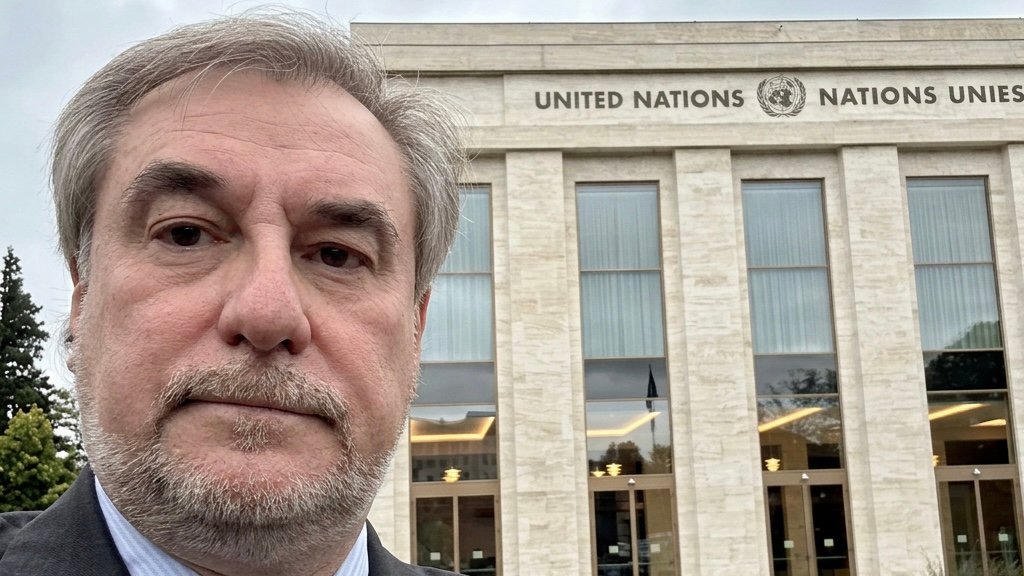
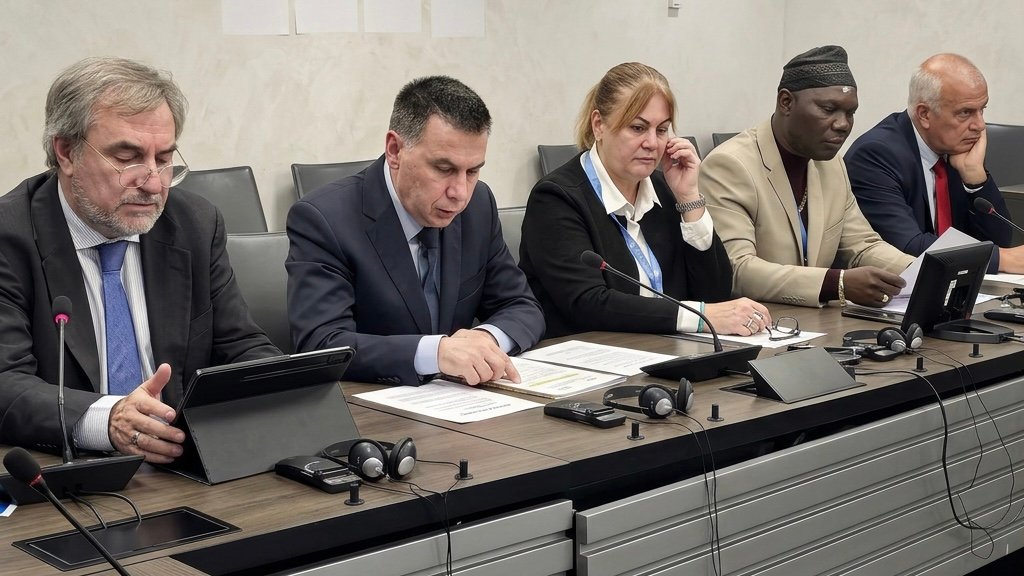
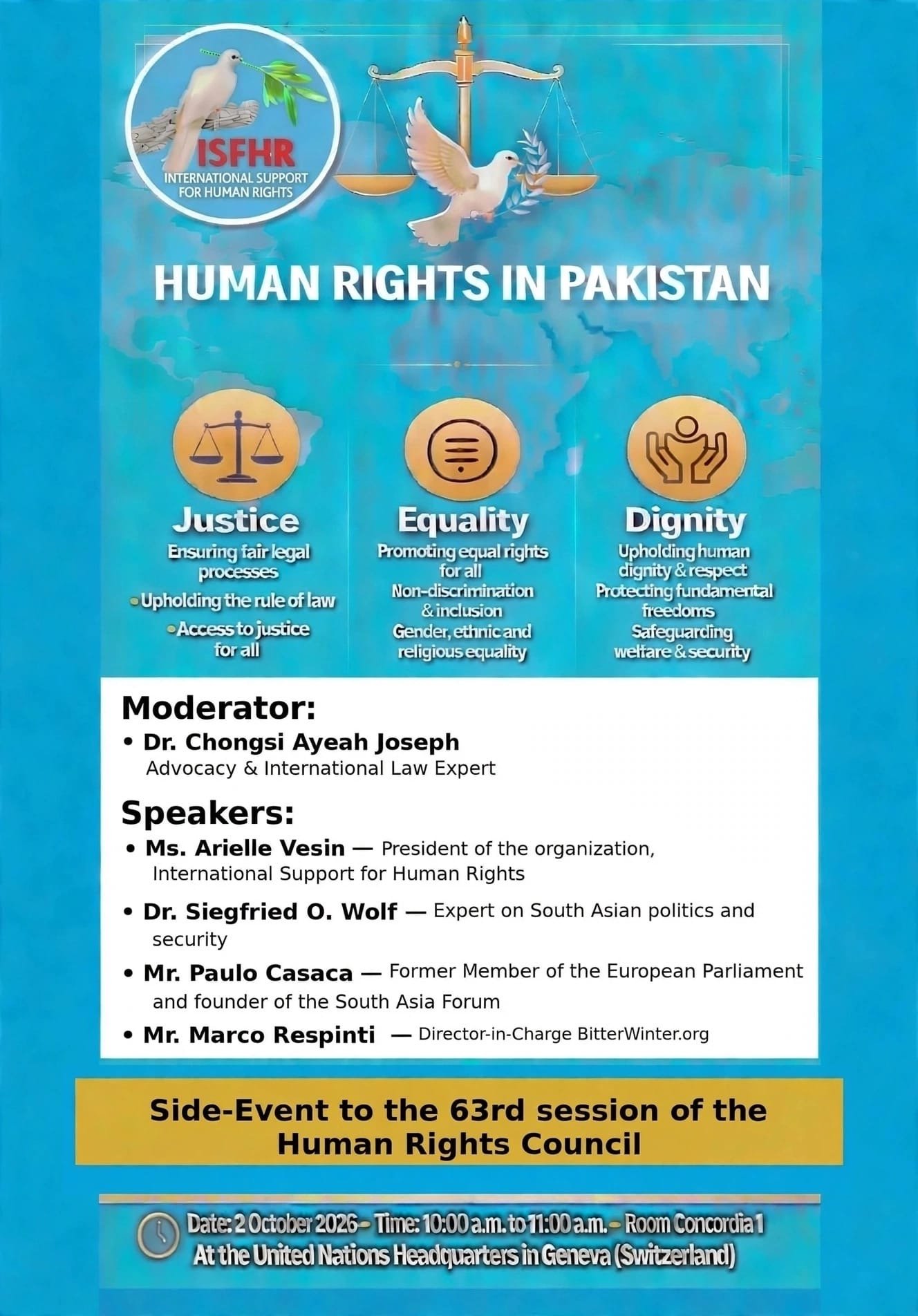
A speech delivered at the panel “Human Rights in Pakistan,” hosted by International Support for Human Rights as a side event of the 63rd session of the United Nations Human Rights Council on October 2, 2026, at the United Nations Office at Geneva, Switzerland.
In the context of today’s general topic, I shall focus on the state of religious liberty in Pakistan. The Islamic Republic of Pakistan is a constitutional democracy with an estimated population of 252 million. Muslims make up 96.5 percent of the population (85–90 percent Sunni and 10–15 percent Shi’a), while the remaining 3.5 percent belong to other religious communities, including Christians and Hindus. Ahmadi Muslims, regarded as heterodox by mainstream Islam, are an important group that deserves particular attention here: their actual number is difficult to assess, both because they are virtually indistinguishable from other Muslims and because, for security reasons, they sometimes prefer not to disclose their beliefs openly.
Article 20 of the Constitution of Pakistan, adopted in 1973 and subsequently amended several times, sets the legal framework for religious liberty in the country. It guarantees every citizen the right to profess, practice, and propagate their religion, yet it explicitly makes all these rights subject to “[…] law, public order, and morality.” The Constitution establishes Islam as the state religion and reserves the highest offices, such as those of President and Prime Minister, exclusively for Muslims.
The Ahmadis, however, constitute an exception. The Second Amendment to Pakistan’s Constitution, approved in 1974, and Ordinance XX of 1984, incorporated into Pakistan’s Penal Code, declared Ahmadis to be non-Muslims: in practice, impostors “posing” as Muslims and using Islamic terminology. This excludes them from political representation and equal voting rights. The Ahmadis’ case is therefore unique. Indeed, although they face discrimination, often violent, in other countries where Islam is the state religion or the majority faith, in Pakistan their heterodoxy is not only a theological question for clerics but also, and above all, a political measure imposed by the state: it is the state that arrogates to itself the right to discriminate on a decisive theological matter.
The weaponization of blasphemy accusations
A key element of the country’s legal structure is a set of provisions collectively known as the “blasphemy laws.” They punish blasphemy against any recognized religion, with penalties ranging from a fine to death. In practice, they are often used to punish real, presumed, or alleged blasphemous offenses against Islam attributed to Pakistani citizens of other faiths. In this way, blasphemy laws easily become a tool that the authorities and the majority religion can wield at will against opponents, dissidents, ethnic minorities, and other religious groups. In this context, Christians, Hindus, Sikhs, and groups regarded as heretical by majority Sunni Islam and by the state, such as the Ahmadis and the Baha’is, are subject to systemic discrimination and harassment.
The Centre for Social Justice-Pakistan, a non-governmental organization headquartered in Lahore, documented at least 344 people accused of blasphemy in 2024, up from 329 in 2023; 70 percent of the accused were Muslims, 14 percent Ahmadis, 9 percent Hindus, and 6 percent Christians. Many remain in prison or on death row. An accurate account should note that most of the accused were, and still are, mainstream Muslims, which shows how arbitrary the charges become in the hands of those who use them to attack opponents, and also reveals the staggering fact that, in the country, settling theological disputes through the death penalty is considered normal. Yet the shares of the other victims of this mechanism, namely Ahmadis, Hindus, and Christians, are very high relative to their absolute numbers, showing that these groups are disproportionately represented among the victims. We can easily conclude that blasphemy laws are used both to settle rivalries and as a weapon against religious liberty.
Indeed, a 2025 Human Rights Watch investigation found that blasphemy accusations have also been exploited for blackmail, land grabbing, and unlawful evictions. Human Rights Watch cited evidence of hundreds of people allegedly caught up in organized schemes built on fabricated blasphemy accusations. This is particularly important because it shows once again that the problem is not limited to theological disagreement.
We should always remember that blasphemy accusations can lead to arrest, detention, loss of employment or property, mob violence, displacement, and even extrajudicial killing.
Case studies
In its 2026 Annual Report, covering religious freedom conditions in 2025, the US Commission on International Religious Freedom (USCIRF) writes: “While Pakistani authorities acquitted several individuals accused of blasphemy throughout the year [2025], societal discrimination and years of poor treatment in prison continued to severely impact the released prisoners.”
One case in point is that of Anwar Kenneth, a Roman Catholic sentenced to death for blasphemy in 2002. He spent approximately 23 years on death row. USCIRF records that he was acquitted on June 25, 2025. His case illustrates the enormous human cost that can arise even when the accused is ultimately acquitted. A question therefore arises, and I wish to put it to this distinguished audience: “Can a justice system be considered protective of freedom of religion when an accused person can spend decades under a death sentence before being finally acquitted?”
A second emblematic case is that of Pastor Zafar Bhatti, the Protestant founder of the Jesus World Mission Church in Rawalpindi. He spent approximately 13 years in prison as a result of blasphemy proceedings. He was acquitted and released in October 2025. As USCIRF’s 2026 Annual Report reminds us, “[d]ays after his release, Bhatti succumbed to cardiac arrest after years of medical neglect.” The case illustrates another consequence of prolonged detention: even when the legal process eventually ends in acquittal, years of imprisonment cannot be undone.
Nor should we overlook the mob riots that broke out in Jaranwala, Punjab, on August 16, 2023, which the attackers justified as a response to blasphemy. They remain one of the most significant recent examples of religiously motivated violence against Christians. The violence followed allegations that the Qur’an had been desecrated. Churches and homes were attacked and set on fire. Many sources, including the US Department of State, documented that approximately 6,000 people took part in the violence, with 21 churches attacked and more than 90 Christian properties damaged. My information is drawn from an article published on August 17, 2023, by the Qatari state-funded media network Al Jazeera, which also includes video footage of the attacks.
The case subsequently took an unusual turn. In April 2025, an Anti-Terrorism Court in Faisalabad sentenced Pervaiz, alias Kodu Masih, to death in a case connected to the Jaranwala violence. Two co-defendants were acquitted. Investigators had concluded that the Christian brothers initially accused of desecrating the Qur’an had been falsely implicated. This raises important human rights questions: “How can a blasphemy allegation trigger mass violence before it has been judicially established?” And “What mechanisms exist to prevent an accusation from becoming a pretext for collective punishment?” In any case, on July 13, the first person was sentenced to 10 years in prison, while 13 others were acquitted because of flawed investigations, according to sources.
In this context, I wish to draw attention to the still-unresolved case of Junaid Hafeez, a former university lecturer and member of Pakistan’s academic community, who has been behind bars on blasphemy charges for 13 years. He stands accused of blasphemy over comments he allegedly posted on Facebook. In December 2019, after years of detention and legal proceedings, he was convicted by a court in Multan and sentenced to death. His appeal has been pending before the Lahore High Court since 2020. He faces the death penalty. The hearing in his case was scheduled for September 22, 2026, before the Lahore High Court. It did not take place and has been rescheduled for October 10, 2026. I urge everyone to pay close attention to that date.
A country of particular concern
I have already mentioned the case of the Ahmadi Muslims, but I wish to stress once again the gravity of their situation. Of course, it is neither my intention nor my interest to enter into strictly theological questions, and I will not do so. I merely wish to point out that, while hostility towards non-Muslim groups, though unjustified, nonetheless has a logic of its own, gratuitous violence against a community that observes all the religious rules of Islam and shares the same beliefs is utterly absurd. Admittedly, the Ahmadis’ Muslim persecutors argue that they violate various religious tenets, including the “Khatam an-Nubuwwah,” the Seal of Prophethood, which designates the Prophet Muhammad as the final messenger sent by God. But the Ahmadis categorically reject this accusation and explain their position in detail: there is an extensive and very explicit literature on the matter. It is legitimate for some Muslims not to embrace the Ahmadi perspective, but nothing can place the Ahmadis outside Islam, precisely because the accusations leveled against them do not stand up. To criticize the Ahmadis, as with any other individual or group, one must criticize them for what they actually affirm—not for what they do not affirm, or for what one would like them to affirm for instrumental purposes.
But, again, I do not intend to enter into a theological question that falls outside today’s topic: I merely point out that, in an Islamic country, some Muslims are regarded as second-class citizens, with fewer rights or none at all, and that, for this reason, they are subjected to violence and killed, their property looted and destroyed, their mosques damaged, and the graves of their dead shamefully desecrated. In a context where, as I have said, the state decides what constitutes religious orthodoxy, this sets an untenable standard. Public authorities have the legal power to interfere in matters of conscience, thereby restricting the freedom of citizens. This is unworthy of a democracy.
I have already mentioned the situation of Christians. The world still remembers the high-profile case of Asia Bibi, but unfortunately there are countless Asia Bibis in the country.
I now wish to recall the intolerance faced by Hindu citizens. Their temples are often attacked and destroyed. A particularly egregious case is that of the nearly 150-year-old Mari Mata Temple in Karachi, Sindh province, which was demolished with bulldozers during the night of July 14–15, 2023, on the pretext that it was old and unsafe. More recently, in August, a 100-to-125-year-old Hindu temple in the village of Siraj, in the Narowal district of Punjab province, was torn down. Minority groups and local leaders stated that religious extremists had destroyed it to expand a nearby Islamic school, while government officials claimed that the old building had collapsed because of heavy rain.
Fairness, however, requires me to give a voice to the other side as well. Local authorities and the government argue that these extreme episodes are the work of criminal gangs whose actions cannot always be prevented, stopped, or brought to justice. In other words, the police often have their hands tied or are, unfortunately, unable to intervene. This is certainly true. But far too many examples seem to tell a different story.
I wish to add another chilling fact, for which evidence is mounting internationally. There are many documented cases of the abduction and forced conversion of young Hindu and Christian women and girls. Often they are forced to marry older, sometimes much older, men, with conversion to Islam a precondition for the marriage. This remains a persistent problem, particularly in provinces such as Sindh, where victims have limited legal recourse through local authorities.
To sum up the seriousness of the situation, I refer to the USCIRF 2026 Annual Report, which designates Pakistan a Country of Particular Concern, alongside 17 other countries, including the People’s Republic of China, Iran, North Korea, and Russia.
Development: which way?
One point, however, must be made absolutely plain. Nothing I have said should be understood as interference on my part in the affairs of a sovereign country. I wish to state this emphatically. Likewise, nothing should be taken as an offense to the Islamic faith or to those who profess it. They have my utmost respect. What I have tried to describe today is the state of religious liberty, the foremost political human right, in Pakistan. As a journalist, my sole task is to portray things as they are. My hope is that Pakistanis of deep faith, whatever that faith may be, will become guarantors of the fundamental right to religious freedom for all. This is pleasing to God and to men, and every believer must take responsibility for it. However difficult it may be—and is—to guarantee the right to religious freedom for all, this is a primary responsibility of every believer, whatever their religious observance.
But I wish to conclude on a different note. We are here today at the United Nations in Geneva. We are in the heart of Europe. Even though Europe and the European Union are not always the same thing, I wish to draw the attention of this distinguished audience, and of the organizers of this important event who kindly invited me to this panel, to the GSP+.
The GSP+, or Generalised Scheme of Preferences Plus, is a special trade arrangement of the European Union that grants additional tariff preferences to vulnerable developing countries, including Pakistan, which has benefited from the scheme since January 1, 2014. Under GSP+, duties are eliminated on two-thirds of all product categories. To retain these preferences, Pakistan must continue to ratify and effectively implement 27 core international conventions on human and labor rights, environmental protection, and good governance.
In the face of systematic human rights violations, including, first and foremost, violations of religious freedom involving violence, abuse, and death, perhaps it is time for the European institutions to reconsider the terms of this extremely important concession. There are, after all, political and moral obligations that take precedence over economic agreements and the clauses they contain. Otherwise, what does it truly mean to help a developing country? Development—in which direction?

Marco Respinti is an Italian professional journalist, member of the International Federation of Journalists (IFJ), author, translator, and lecturer. He has contributed and contributes to several journals and magazines both in print and online, both in Italy and abroad. Author of books and chapter in books, he has translated and/or edited works by, among others, Edmund Burke, Charles Dickens, T.S. Eliot, Russell Kirk, J.R.R. Tolkien, Régine Pernoud and Gustave Thibon. A Senior fellow at the Russell Kirk Center for Cultural Renewal (a non-partisan, non-profit U.S. educational organization based in Mecosta, Michigan), he is also a founding member as well as a member of the Advisory Council of the Center for European Renewal (a non-profit, non-partisan pan-European educational organization based in The Hague, The Netherlands). A member of the Advisory Council of the European Federation for Freedom of Belief, in December 2022, the Universal Peace Federation bestowed on him, among others, the title of Ambassador of Peace. From February 2018 to December 2022, he has been the Editor-in-Chief of International Family News. He serves as Director-in-Charge of the academic publication The Journal of CESNUR and Bitter Winter: A Magazine on Religious Liberty and Human Rights.