Beijing’s first Ethnic Unity and Progress Publicity Week presented forced assimilation as harmony.
by Rahima Mahmut
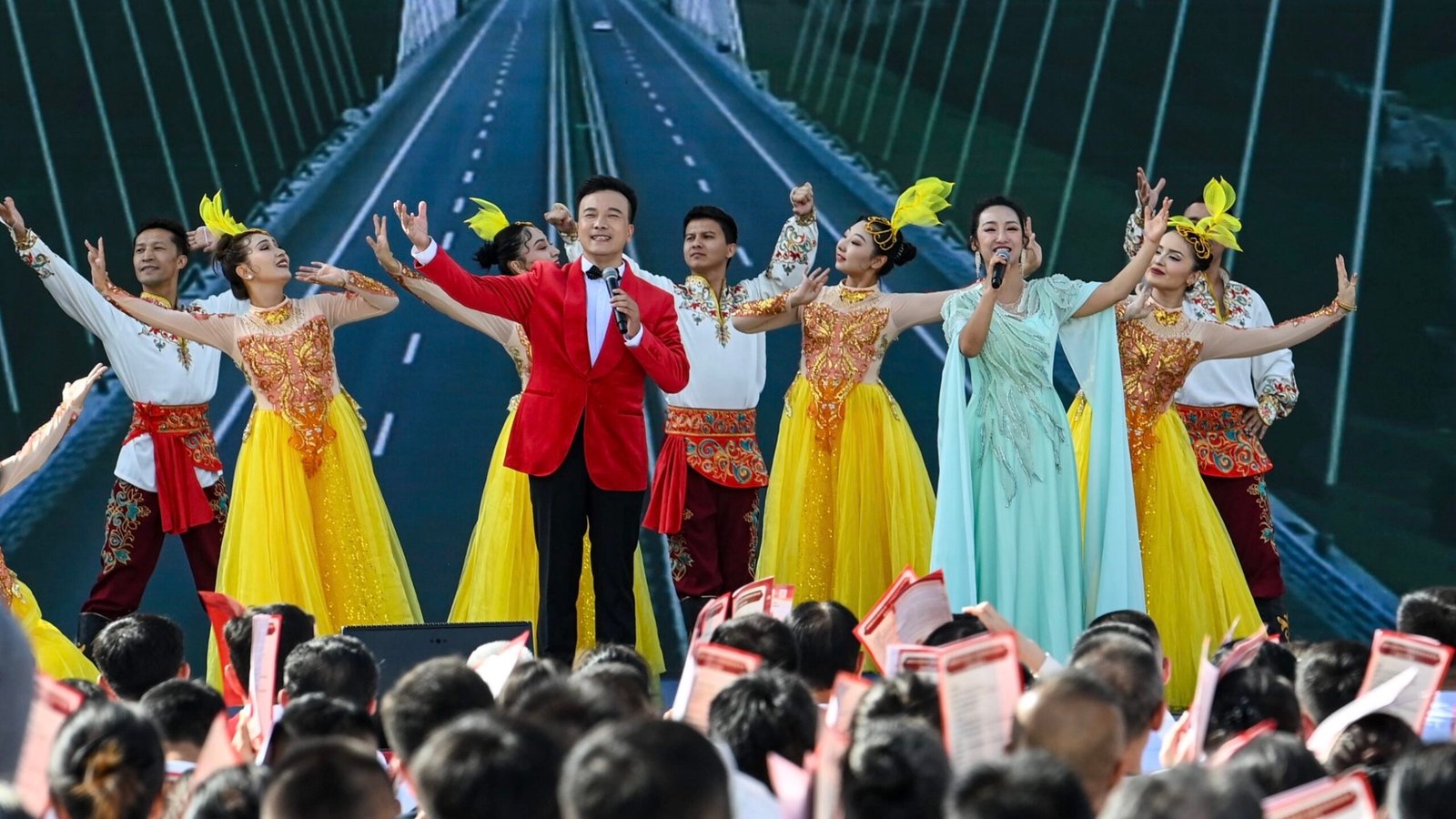
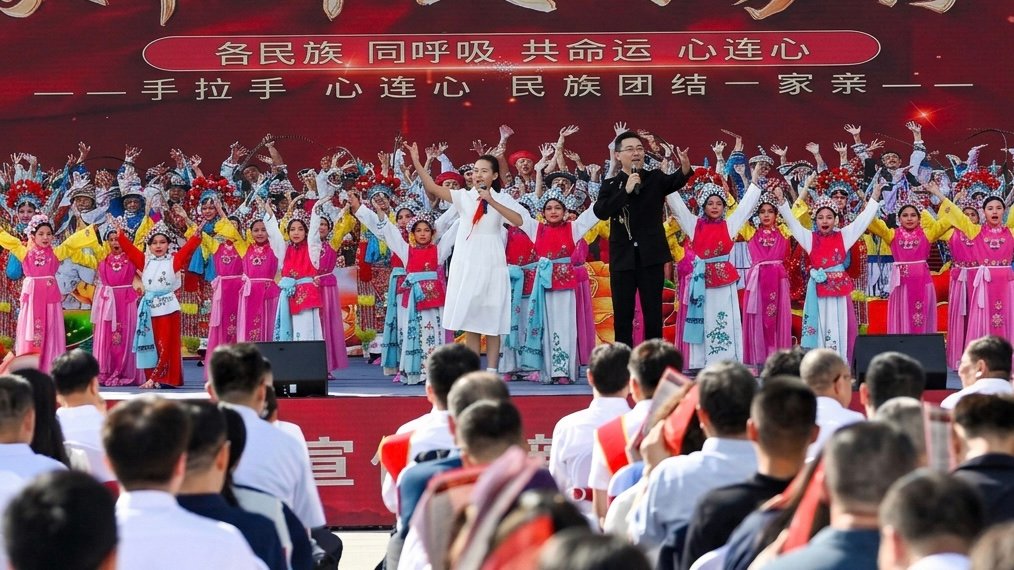
From September 21 to 27, 2026, the Chinese Communist Party held its first Ethnic Unity and Progress Publicity Week. It presented the week as a celebration of harmony among China’s 56 officially recognized ethnic groups, complete with ceremonies, school activities, official slogans, and carefully staged images of colorful costumes, traditional dances, and smiling families.
For Uyghurs, Tibetans, Southern Mongolians, and others, however, this is not a celebration of unity. It celebrates a law designed to erase distinct identities.
China’s Law on Promoting Ethnic Unity and Progress, which took effect on July 1, designates the fourth week of September as Ethnic Unity and Progress Publicity Week. Its purpose is to promote what the Communist Party calls a “Chinese nation community”: one state-approved identity, one history, one language hierarchy, and one political loyalty. The Party calls this progress. We see it as the legalization of cultural erasure.
Just days after the law took effect, Tibetan activist Lobga Rangzen died after setting himself on fire outside the United Nations in New York. His death was a devastating expression of the despair Tibetans feel as they confront Beijing’s accelerating campaign to absorb Tibet into a single, state-controlled Chinese identity. Tibetans have opposed the law because they understand its implications: the further removal of Tibetan language, religion, and culture from public life, and punishment for those who refuse to give them up.
Uyghurs understand this fear all too well.
Decades of oppression by the Chinese state have been followed, over the past ten years, by an unprecedented escalation in the Uyghur region: mass detention, forced labor, intrusive surveillance, religious persecution, family separation, and coercive birth-prevention policies. The Uyghur Tribunal concluded that the Chinese state had committed genocide, finding that widespread forced sterilization, forced abortion, and other measures to prevent Uyghur births were intended to destroy the Uyghur people in part.
Behind this legal language are lives broken beyond recognition.
Women have lost control over their bodies, their pregnancies, and their children. They have faced coercive birth control, sterilization, and abortion, as well as sexual violence in camps and prisons. Survivors have described women being taken from their cells at night by masked men and returning traumatized and sobbing. Others have recounted being forced to hold down fellow detainees before men entered secret rooms to rape them. These testimonies reveal not isolated abuses but a system in which humiliation, terror, and the destruction of bodily autonomy were used as tools of control.
Many women were left alone after their husbands, fathers, and brothers were taken away. Under the so-called “Become Family” program, state officials were sent to live in Uyghur homes, often ones where the men had already been detained. These officials entered the most private spaces of family life. There was nowhere to turn, nowhere to complain, and no one left to protect the women and children inside those homes.
Men have been detained, disappeared, intimidated, and stripped of the ability to protect their families. Children have been separated from their parents and placed in state institutions where their language, religion, and family memory are replaced with Party ideology. An entire people has been pushed into helplessness: unable to speak openly, unable to mourn, and unable even to ask where a loved one has gone.
Many prominent Uyghur intellectuals, writers, musicians, academics, and religious figures have disappeared into prisons and camps. Some have died in custody. The names we know are only a fraction of the truth. For every scholar or poet whose death has reached the outside world, there are countless ordinary Uyghurs whose families have been denied even the dignity of an answer.
China still claims to be a country of 56 ethnic groups. But official recognition is meaningless when the state denies people the right to speak their own language, practice their faith, teach their history, raise their children in their own culture, and pass their identity on to the next generation. A people can remain on a government list while their living culture is dismantled.
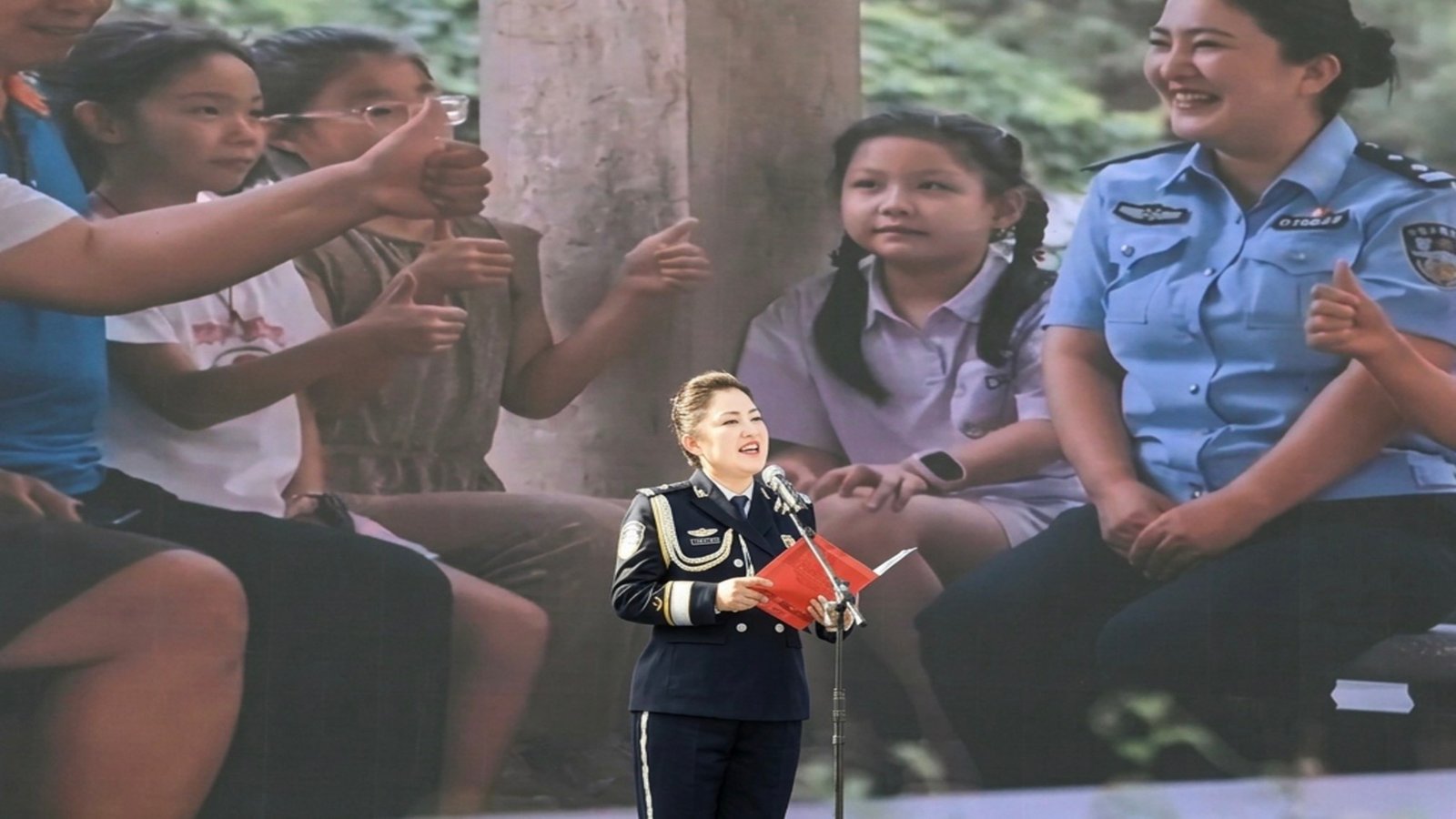
China’s state-building has long demanded that distinct communities be absorbed into a dominant national identity, and many languages, histories, and cultures have been weakened or lost along the way. What is new is the speed, technological reach, and totalitarian scale of the current campaign. The Party has digital surveillance, police databases, mass DNA collection, compulsory political education, and a vast security apparatus to enforce its vision of sameness. It can monitor a mother’s pregnancy, a child’s schooling, a family’s religious practice, a phone call abroad, and the words spoken inside a home. Now it seeks to give this machinery a permanent legal foundation.
The CCP wants the world to see a different picture. It promotes tourism in the Uyghur region: dancing, bazaars, deserts, mountains, and smiling performers in traditional dress. It decorates the scene of an atrocity and invites the world to admire it. While families remain separated and survivors are silenced, tourism is being used to whitewash genocide.
The absence of new testimony is not evidence that the suffering has ended. It is evidence of a more effective lockdown. Tens of thousands of Uyghurs in exile remain cut off from their parents, children, siblings, and friends. Fear, surveillance, and reprisals have created a silence so complete that Beijing can claim everything is normal.
This silence has been enabled by international failure. Governments have issued statements of concern and imposed limited sanctions, but their words have too rarely been followed by meaningful action. Supply chains remain tainted by forced labor, companies continue to profit from the Chinese market, and states remain reluctant to confront Beijing because of its economic power. That reluctance has emboldened the CCP, which has learned that it can commit grave crimes, deny them, cover them up with propaganda, and eventually write the policy itself into law.
The danger does not stop at China’s borders. By claiming authority over conduct abroad that allegedly undermines “ethnic unity,” the new law provides further cover for transnational repression: intimidation, threats against family members, surveillance, harassment, and efforts to silence those who speak out. It tells those who escaped that the Party still intends to control their voices.
Western governments should not view this as merely someone else’s tragedy. A state that normalizes collective punishment, surveillance, forced assimilation, and repression beyond its borders is testing the limits of what the world will tolerate. Its power reaches into universities, businesses, parliaments, technology, supply chains, and the safety of people living in democratic societies.
The West helped create the economic conditions that allowed this authoritarian power to grow. It must now decide whether market access matters more than human dignity, security, and the rules it claims to uphold.
Ethnic Unity and Progress Publicity Week must not pass unnoticed. Forced assimilation is not unity; silence is not stability; and cultural destruction is not progress.
For Uyghurs, Tibetans, and all communities facing erasure, this week was not a celebration. It was a warning.

Rahima Mahmut, a Uyghur exile in London, is Executive Director for Stop Uyghur Genocide and Advisor to the Inter-Parliamentary Alliance on China (IPAC).