How did the Russian Orthodox Church and the Ukrainian Orthodox Church/ Moscow Patriarchate interact from 2014 to 2022?
by Willy Fautré
Article 1 of 3
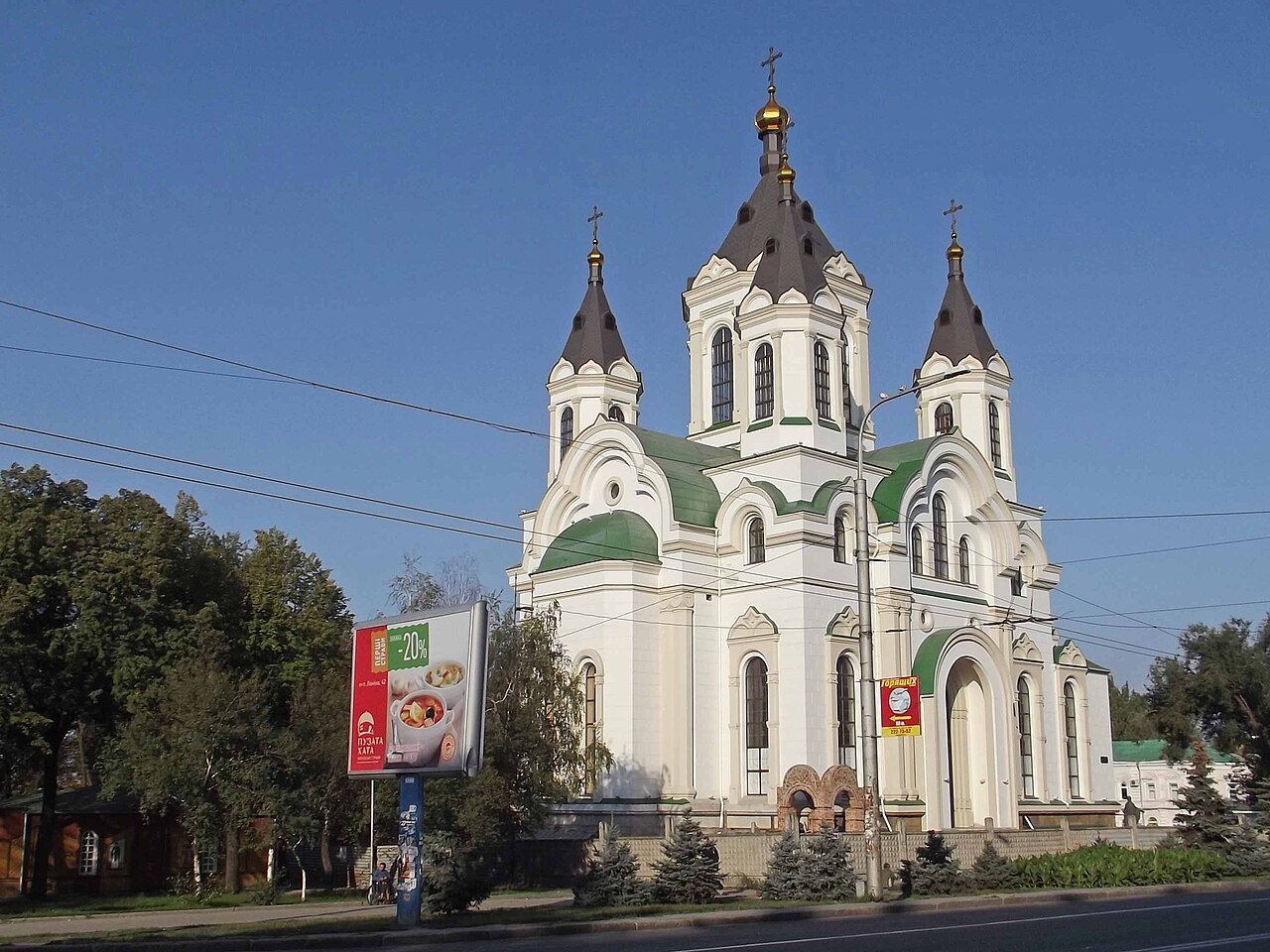
In the shadow of Russia’s war on Ukraine, and away from the eyes of the international community, the Russian Orthodox Church (ROC) has quietly annexed about 800 churches and other places of worship belonging to the Ukrainian Orthodox Church (UOC) in the temporarily occupied territories of the Donetsk, Luhansk, Zaporizhzhia, and Kherson regions.
The war of the Russian Federation against Ukraine openly started in 2014. Its first stage was the illegal occupation of the Autonomous Republic of Crimea and the city of Sevastopol, as well as the establishment of Russian control over certain areas of the Donetsk and Luhansk regions. After the fullscale invasion launched by the Russian Federation on 24 February 2022, Russian occupation progressively expanded to large areas of the Donetsk, Luhansk, Zaporizhzhia, and Kherson regions of Ukraine.
However, the consequences of this war, which began in 2014, go far beyond the military sphere. Occupation brings changes to the population’s political, legal, social, and cultural conditions. One of the areas most affected by these changes has been religion.
In Crimea, there was no frontline after the surprise takeover of the peninsula in 2014. Religious jurisdiction rapidly shifted de facto from the UOC to the ROC. Still, the official annexation only took place in the key year of 2022, as I explained earlier this year in another article, titled “Occupied Crimea: About the Annexation of All Ukrainian Orthodox Churches by the Russian Orthodox Church.”
In Eastern Ukraine, special attention must also be paid to the situation of the Ukrainian Orthodox Church (UOC). It is noteworthy that before the start of the fullscale invasion, the UOC was one of the largest Orthodox religious organizations in Ukraine and had a significant number of parishes in the territories bordering Russia that Moscow progressively occupied.
The Ukrainian Orthodox Church (UOC) in the Occupied Territories from 2014 to 2022
After the start of Russian aggression against Ukraine in 2014, religious organizations in the occupied territories found themselves in an extremely difficult situation.
On the one hand, political and administrative control over the territories changed. On the other hand, the UOC church structure was formally preserved for several years.
The dioceses of the Ukrainian Orthodox Church continued to exist within the UOC structure, even though some of their parishes ended up in territories controlled by Russia.
The concerned dioceses were:
1.Donetsk and Mariupol diocese;
2.Horlivka and Sloviansk diocese;
3.Luhansk and Alchevsk diocese;
4.Rovenky diocese;
5.Severodonetsk diocese.
After February 2022, parts of the Zaporizhzhia and Kherson regions were also partly occupied, and three more dioceses found themselves in a similar situation:
6.Berdiansk diocese;
7.Zaporizhzhia and Melitopol diocese;
8.Kherson diocese.
No annexation of UOC dioceses by the Russian Orthodox Church until 2022
In the period from 2014 until the beginning of the fullscale invasion, the Russian Orthodox Church did not carry out significant changes in the ecclesiastical organigram of the Ukrainian dioceses in the occupied territories of Eastern Ukraine. Most dioceses formally remained part of the Ukrainian Orthodox Church (UOC) in Kyiv.
Paradoxically, for eight years, the Russian Orthodox Church made no major attempts to annex the UOC dioceses in the occupied territories officially. Although Crimea was annexed, and parts of the Donetsk and Luhansk regions were under the control of Russianbacked administrations, the Ukrainian Orthodox dioceses remained under the authority of the UOC in Kyiv.
Why? The reasons are probably threefold: political, canonical, and international.
In the 2014–2022 period, Russia officially denied its participation in the conflict in the Donbas. It did not recognize the selfproclaimed independence of the “DPR” (Donetsk People’s Republic) and “LPR” (Luhansk People’s Republic). Moscow’s official narrative was that the Donbas problem was a Ukrainian domestic issue. If the Russian Orthodox Church had immediately incorporated the Donbas dioceses into its own structures, it would have looked like a direct recognition of Russian rule over these territories. Therefore, the Ukrainian Orthodox Church kept its sovereignty in the Donbas.
On 21 February 2022, Vladimir Putin signed decrees No. 71 and No. 72, by which Russia officially recognized the DPR and LPR for the first time.
On 30 September 2022, Putin signed the annexation treaties of the two secessionist regions after staged local referendums, which were internationally condemned and rejected as illegal. He signed treaties admitting the DPR and LPR, as well as parts of the Zaporizhzhia and Kherson regions, into the Russian Federation.
From 2014 to 2022, the UOC formally remained an autonomous Church with broad selfgovernment in the occupied territories of the Donbas and Crimea. The Russian Orthodox Church endorsed this situation and maintained the UOC’s canonical status.
Until 2022, the Russian Orthodox Church sought to show that Moscow’s occupation of Ukrainian territories had no effect on ecclesiastical borders and that Church structures did not depend on shifting political boundaries.
During 2022, the situation started to change dramatically.

Willy Fautré, former chargé de mission at the Cabinet of the Belgian Ministry of Education and at the Belgian Parliament. He is the director of Human Rights Without Frontiers, an NGO based in Brussels that he founded in 1988. His organization defends human rights in general but also the rights of persons belonging to historical religions, non-traditional and new religious movements. It is apolitical and independent from any religion.
He has carried out fact-finding missions on human rights and religious freedom in more than 25 countries He is a lecturer in universities in the field of religious freedom and human rights. He has published many articles in university journals about relations between state and religions. He organizes conferences at the European Parliament, including on freedom of religion or belief in China. For years, he has developed religious freedom advocacy in European institutions, at the OSCE and at the UN.