AI perpetuates old negative media coverage. The fact that the bonus system has not been eliminated continues to exert undue pressure on taxpayers.
Wu Chih‑chung*
*A paper presented at the 8th Annual Conference of the East Asian Society for the Scientific Study of Religion (EASSSR), Kaohsiung, Taiwan, July 1, 2026.
My name is Wu Chih‑chung, and I serve as Vice President of a medical equipment manufacturing company. I am also affiliated with the Tai Ji Men Qigong Academy. It is an honor to present this paper, which examines the causes and long‑term implications of the 1996 crackdown on certain religious and spiritual groups in Taiwan and reflects on its relevance in the contemporary AI era.
Taiwan’s 1996 crackdown on several religious and spiritual groups occurred during a politically sensitive period following the island’s first direct presidential election. The ruling party, the Kuomintang, won the elections and initiated a repression against religious groups it accused of not having supported its candidate. Tai Ji Men was one of the targets of this repression and was accused of fraud and tax evasion.
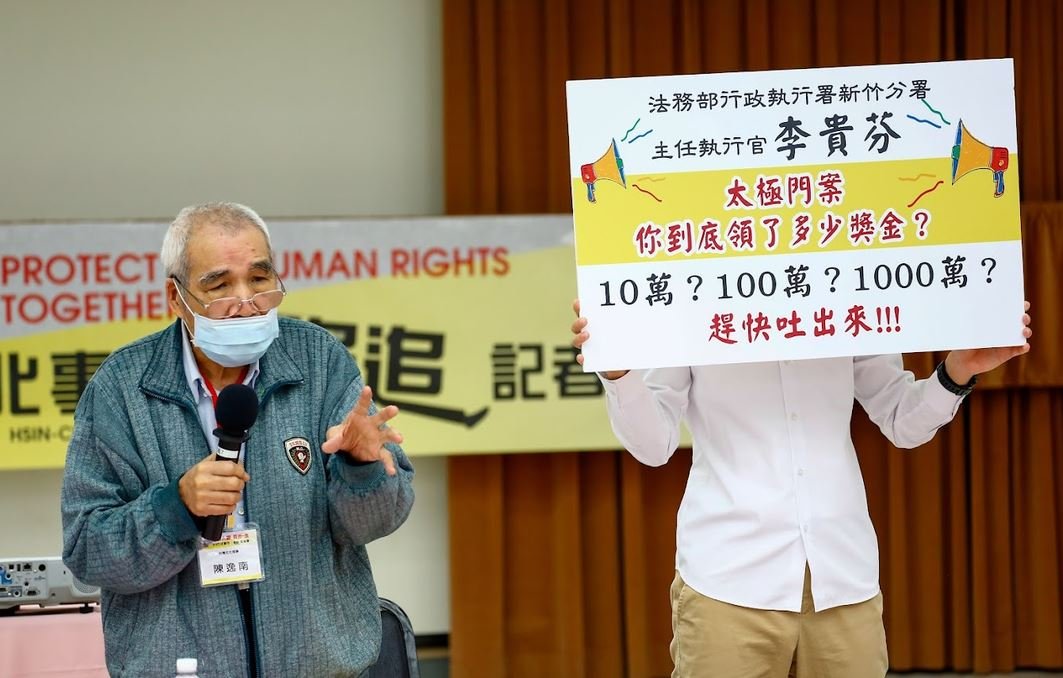
As the previous papers have noted, the Supreme Court ruled in 2007 that no crime had been committed and that the monetary gifts given by dizi (disciples) to their Shifu (Grand Master) were tax‑exempt. Yet administrative agencies continued to issue tax bills based on earlier, discredited assumptions, and in 2020, land intended for the establishment of a Tai Ji Men academy was seized.
In this paper, I want to examine two specific aspects of the Tai Ji Men case. The first is the long-term effect of negative media coverage and the role of artificial intelligence in its persistence today. The second is the system of bonuses for tax bureaucrats, which has already been mentioned in this session and which I will examine in more depth.
First, although the accusations made at the time were later dismissed in court, the extensive negative media coverage produced during that period continues to circulate online. In the age of artificial intelligence, such content is easily retrieved and reproduced by algorithms that cannot distinguish between verified information and outdated or misleading material.
AI is powerful, but it is inherently incapable of distinguishing between truth and falsehood when a narrative has been repeated in hundreds of media articles. As a result, AI systems may inadvertently perpetuate stigmatizing narratives about groups that have been legally exonerated.
Second, a central factor in the Tai Ji Men case is Taiwan’s tax incentive system. Under this system, tax officials may receive financial bonuses linked to the amount of tax assessed or collected. This creates a structural conflict of interest: officials have personal financial incentives to issue higher tax assessments or to resist correcting erroneous ones. In the Tai Ji Men case, officials involved in the original assessments benefited from these incentives, creating institutional resistance to rectifying the case even after judicial clarification.
To understand why such a system persists, it is useful to consider its historical roots. For nearly a thousand years in Chinese history, the Yuan, Ming, and Qing dynasties relied on whistleblowers to report on both dissent and tax evasion, leading to widespread reliance on informal exactions and arbitrary levies. When the Republic of China government relocated to Taiwan in 1949, it inherited both limited fiscal resources and longstanding administrative habits. Under the “Anti-Spy Law,” informants on real or imaginary Communist spies, many of whom were executed and had their properties confiscated, could receive 30% of the alleged spy’s property, while those who carried out the investigation could receive 35%. Because of this huge incentive, thousands of people were falsely accused of being spies.

The tax evasion scheme was inspired by the Anti-Spy Law and included in a separate “Provisional Act for Handling Financial Penalties,” which offered similar rewards to whistleblowers. The effect was the same as the Anti-Spy law: creating numerous fraudulent tax cases and causing widespread public resentment. Finally, in 2003, after the lifting of martial law, the Legislative Yuan abolished the “Bonus for Personnel in Duty.” In 2004, the “Bonus for Whistleblowers” excluded relatives within three degrees of kinship. However, in 2007, the Ministry of Finance established a tax incentive fund to replace the abolished and restricted bonuses, despite reservations from the Legislative Yuan.
Another structural issue concerns the adoption of the “substance over form” principle in taxation. Historically, similar doctrines have been used in various countries during periods of fiscal stress to expand tax authority. When applied without adequate checks, such principles can enable overly broad interpretations of tax liability and create opportunities for administrative abuse.
The principle of “Substantial Taxation” was first codified in Section 6 of the 1919 National Tax Code (Reichsabgabenordnung) of the Weimar Republic, following World War I: “Tax liability shall not be avoided or reduced through the abuse of forms and legal possibilities provided by civil law. In cases of abuse, taxes shall be levied according to the legal status that corresponds to the underlying economic events, facts, and relationships.“ To pay the massive reparations mandated by the Treaty of Versailles, the Weimar government abused this principle to aggressively collect taxes, leading to the paralysis of the German economy and widespread public outcry. The unpopularity of the Weimar government eventually led to the rise of Nazism.
Hitler, however, maintained the principle of “substantial taxation” when he accused the Jews of Germany of massive tax evasion and imposed astronomical tax bills on them. Bureaucrats who taxed Jews for enormous amounts were rewarded. When they had been thus impoverished, the Jews became an easier target for the Nazi terror.
Of course, not in all political contexts does the abuse of taxes to discriminate against a minority group lead to genocide. The concern in Taiwan is not that historical contexts are equivalent, but that certain structural patterns—such as the use of broad tax doctrines to increase revenue—can reappear across settings when institutional safeguards are weak.
Taiwan’s own legal framework contains mechanisms intended to prevent such problems. The “Public Officials Conflict of Interest Avoidance Act” prohibits officials from using their authority for personal gain. The U.S. Taxpayer Bill of Rights similarly prohibits the use of tax collection quotas or revenue-based performance metrics. Taiwan’s 2015 Anti‑Corruption Convention Implementation Act further emphasizes that public officials’ compensation should be adequate, predictable, and transparent. However, the continued existence of tax‑related incentive payments undermines these principles and creates incentives that may conflict with constitutional protections, including freedom of religion or belief.
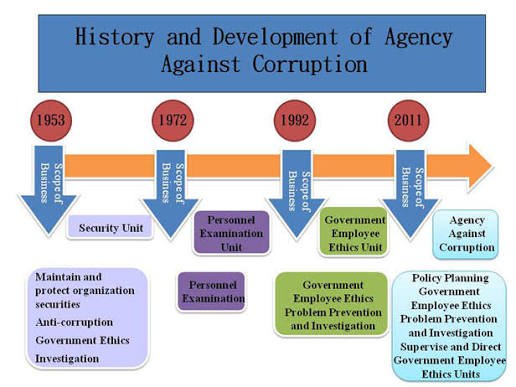
Reforming long‑standing administrative practices is challenging, but Taiwan has successfully addressed similar issues in the past. For example, in the 1980s, physicians in Taiwan often received commissions from pharmaceutical companies for prescribing certain medications. Over time, through reforms in medical ethics and compensation structures, this practice was largely eliminated. This demonstrates that systemic change is possible when ethical standards and institutional design align.
To uphold the principles of the anti‑corruption convention and to protect taxpayers’ rights, whose violation in cases such as Tai Ji Men may also endanger freedom of religion or belief, Taiwan must address the conflicts of interest embedded in its tax incentive system. Ensuring that public officials are compensated transparently, without reliance on performance‑based bonuses, is essential to maintaining public trust and safeguarding constitutional rights.
Similarly, the media should critically reexamine old assumptions against religious or spiritual minorities, especially when accusations have been declared unfounded by courts of law. Eventually, this may also help AI avoid spreading false information and further discriminating against minorities.

Wu Chih-Chung is Vice President of a biomedical company and a researcher on the history of human rights in Taiwan.