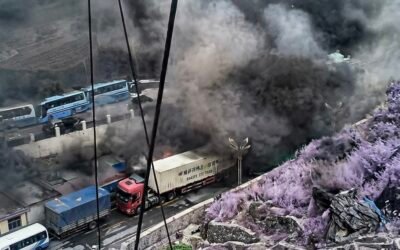
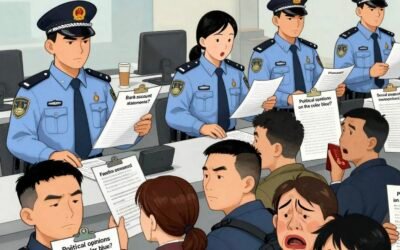
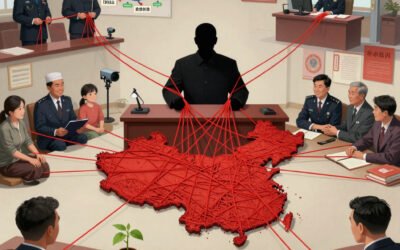
Seventeen years after the tragedy, the questions still matter. A Uyghur view.
by Asiye Uyghur
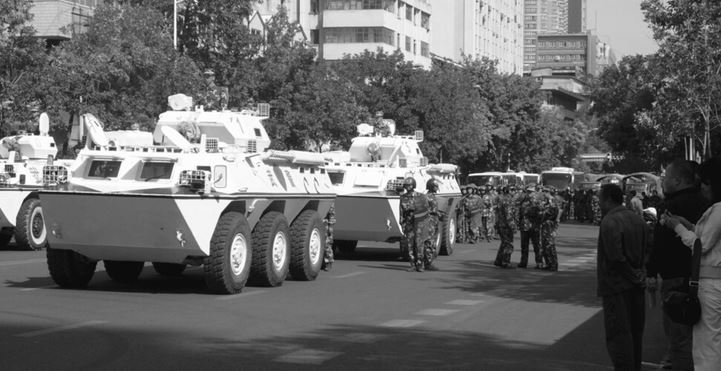
Seventeen years have passed since the July 5, 2009, Urumqi massacre. Yet the questions raised on that day have never disappeared. They continue to shape how Uyghurs understand their recent history and how the world should understand one of the most consequential turning points in contemporary China.
Why did a peaceful demonstration organized by Uyghur university students end in bloodshed? Why were the killings of Uyghur workers in Shaoguan never transparently investigated? Why were repeated warnings from Uyghur intellectuals ignored? And why did the authorities choose repression instead of dialogue?
These questions remain significant because July 5 was not an isolated tragedy. Nor was it the beginning of the Uyghur crisis. Rather, it marked the moment when decades of unresolved injustice, systematic discrimination, and unfulfilled promises of regional autonomy became impossible to conceal.
To understand July 5, it is therefore necessary to look beyond the events of that single day. The tragedy can only be understood by examining what came before it—and by asking why every opportunity to prevent it was lost.
The tragedy of July 5 did not occur in isolation. Several months before the events of July 5 unfolded, Uyghur economist and public intellectual Ilham Tohti had already warned that relations between Uyghurs and the Chinese authorities were moving in a dangerous direction. In an interview with Agence France‑Presse (AFP) in March 2009, he warned that official Chinese propaganda was increasingly portraying Uyghurs through the framework of the so‑called “Three Evil Forces”—terrorism, extremism, and separatism. He also argued that the constitutional promise of regional ethnic autonomy existed largely on paper, while discrimination and exclusion continued to deepen in practice. Rather than addressing the legitimate grievances of Uyghurs, this political narrative fostered mistrust and made future confrontation increasingly likely.
His warning received little attention. Three months later, on June 26, 2009, Uyghur workers who had been transferred to Shaoguan, Guangdong Province, under state‑organized labor programs became victims of a deadly mob attack after false rumors spread online. The authorities failed to conduct a transparent investigation or provide a credible public explanation. For many Uyghurs, the official silence that followed the killings was almost as disturbing as the attack itself.
Against this background, a group of Uyghur university students organized a peaceful demonstration in People’s Square in Urumqi on July 5. Their demand was simple: they asked the authorities to explain what had happened in Shaoguan and to hold those responsible accountable.
According to numerous eyewitness accounts, the demonstration itself began peacefully. The turning point came when security forces moved to disperse the students by force. As students fled through the surrounding streets, news of the crackdown spread rapidly across the city. Uyghur residents who happened to be nearby—including people at work, people passing through the city center, and families attending wedding celebrations—learned that the demonstration had been violently suppressed. Many rushed toward the area to find out what had happened. The events that followed soon expanded far beyond the original student demonstration.
Seen in this broader historical context, the July 5 massacre did not occur in isolation. It was the culmination of a chain of events that began with the Shaoguan killings, continued through the authorities’ refusal to respond transparently, and reached its tragic turning point with the violent suppression of a peaceful student demonstration.
The historical significance of July 5 extends far beyond the tragedy itself. More importantly, it marked a decisive turning point in the Chinese government’s approach toward the Uyghurs.
Rather than examining why Uyghur university students had felt compelled to organize a peaceful demonstration or addressing the grievances that had brought them into the streets, the authorities responded by expanding political control and security measures. The questions raised by the students were never meaningfully answered.
What changed after July 5 was not merely the scale of state control, but the logic behind it. Instead of asking why a peaceful protest had occurred, the authorities increasingly came to regard ordinary expressions of Uyghur identity as matters of state security. This shift did not happen overnight, but July 5 accelerated the adoption of a governing approach that became increasingly visible in the years that followed.
Restrictions on religion, language, education, and cultural expression became increasingly systematic. Surveillance expanded rapidly, while policies initially presented as temporary security measures gradually evolved into a comprehensive system of political and social control.
This transformation reached an unprecedented level after 2017. Large‑scale arbitrary detention, concentration camps, intrusive digital surveillance, labor transfer programs, and policies of coercive assimilation fundamentally reshaped Uyghur society. These developments have been extensively documented by the Office of the United Nations High Commissioner for Human Rights (OHCHR), Human Rights Watch (HRW), and numerous independent scholars. In its 2022 assessment, the OHCHR concluded that the arbitrary detention of Uyghurs and other predominantly Muslim communities may constitute crimes against humanity.
The policies implemented after 2017 did not emerge suddenly. They represented the continuation and intensification of a governing approach that accelerated after July 5. The tragedy, therefore, marked not only the end of one chapter but also the beginning of a new era in which political dialogue gave way to permanent surveillance, coercion, and forced assimilation.
Seventeen years later, the questions raised by July 5 remain unanswered. Why were the killings in Shaoguan never investigated transparently and credibly? Why was a peaceful student demonstration met with force instead of dialogue? Why were repeated warnings from Uyghur scholars and intellectuals ignored rather than taken seriously? These questions are not simply about the past. They remain essential to understanding the present.
The policies imposed on Uyghurs after July 5 did not emerge in a historical vacuum. They grew out of a governing approach that repeatedly chose repression over accountability, control over dialogue, and coercion over meaningful responses to legitimate grievances.
Remembering July 5 is therefore not simply an act of commemoration. It is an effort to understand how unresolved injustice can evolve into long‑term state policy—and how the refusal to confront historical truth can shape the future of an entire people. History records what happened. It should also remember the questions that remained unanswered—and the warnings that went unheeded.
Asiye Uyghur is a Netherlands-based Uyghur writer and political commentator. Before the closure of Radio Free Asia’s Uyghur Service, she worked there as a political commentator. She currently publishes commentary and analysis in English, Dutch, and Chinese on Uyghur human rights, cultural repression, information control, and Chinese state policies related to Uyghurs through platforms including Global Voices, the Uyghur Human Rights Project (UHRP) as a guest contributor, and the Dutch publication “De Kanttekening.”