How Shincheonji France extends its faith to society: from blood donation campaigns to cleaning streets and parks—and what it means.
by Massimo Introvigne
Article 3 of 4. Read article 1 and article 2.
Shincheonji’s presence in France is often discussed through theological debates or media controversies, yet the movement’s daily life includes a dimension that receives far less attention. Members engage in a variety of charitable and ecological initiatives that reflect their understanding of solidarity and stewardship of the Earth. These initiatives are not limited to internal needs. They involve cooperation with secular organizations, local associations, and citizens who have no connection with the movement. The interviews I conducted reveal a pattern of participation in public life that is both practical and consistent with the values members say they learn in their Bible studies.
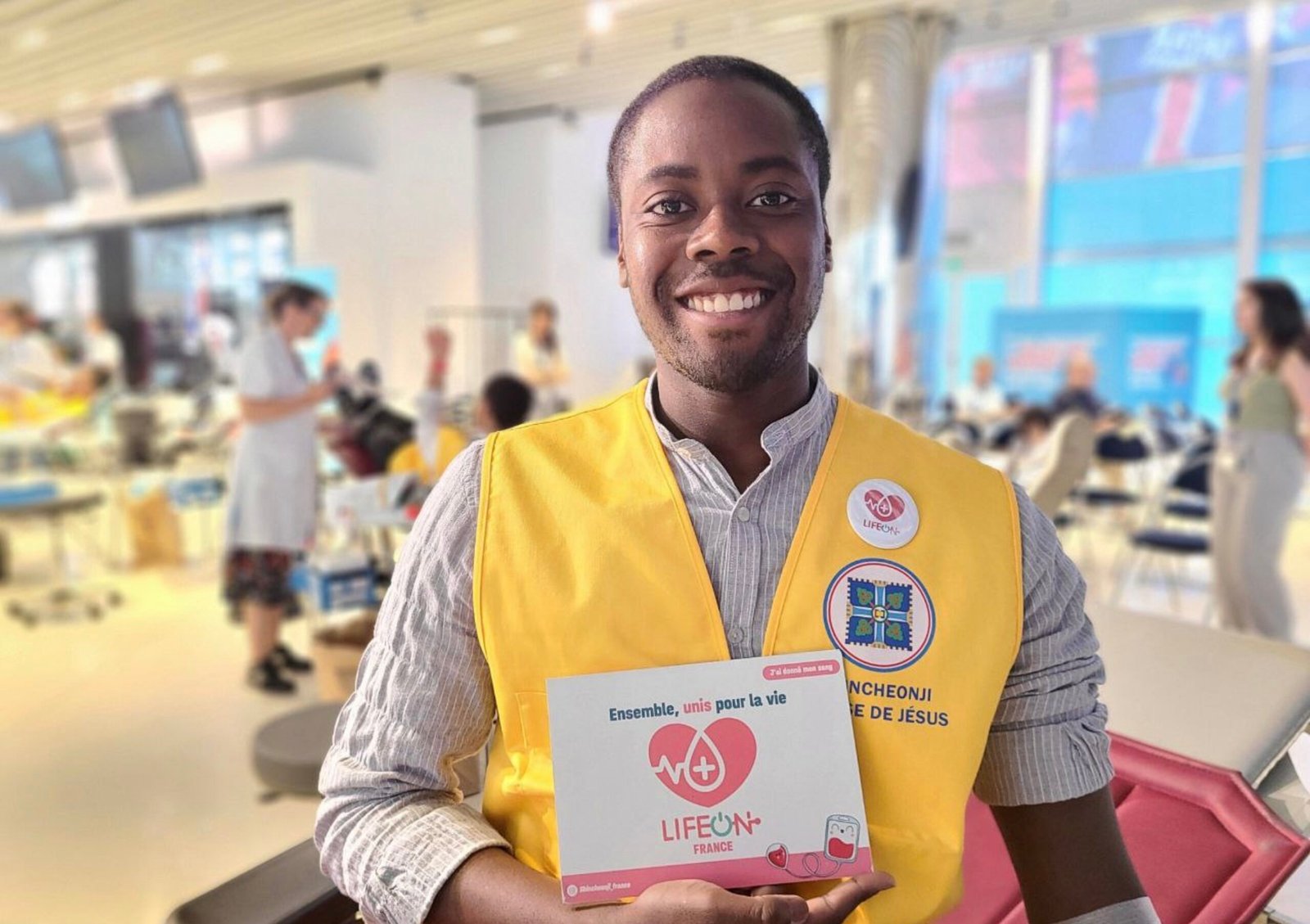
One of the most visible initiatives is LifeON, a blood donation campaign that originated in South Korea during the COVID period when blood supplies were insufficient. The campaign was introduced in France in 2022. Since then, hundreds of members have donated blood. Several interviewees mentioned LifeON spontaneously. One said that she would have liked to participate but could not donate for health reasons. She added that she joined other humanitarian activities instead. Another said that he had participated in LifeON events and regarded them as an opportunity to help people he would never meet. These testimonies show that the campaign is not limited to members who are physically able to donate. It includes those who help organize the events, welcome participants, and encourage others to contribute.
LifeON events in France are open to the public. Members set up booths, distribute information, and invite passersby to donate blood. They cooperate with medical services and follow the procedures established by the French blood donation system. Several interviewees described these events as moments when they interact with people who have no connection with Shincheonji. One said that she enjoyed speaking with donors who were curious about the campaign. She said that these conversations were simple and focused on the importance of donating blood. She emphasized that the events were not occasions for proselytization. They were occasions for service.
Another initiative that has become a regular feature of Shincheonji’s activities in France is Shincheonji PariClean. This project reflects the movement’s concern for the degradation of the urban environment. Members participate in World Cleanup Day every September. The first PariClean event took place in Paris on September 17, 2022. In 2025 the initiative expanded to Montpellier, Marseille, and Lyon. Members clean streets, parks, and public gardens. They collect plastic, bottles, paper, and other waste. They also operate booths to promote ecological awareness. These booths distribute information about recycling, pollution, and environmental responsibility.
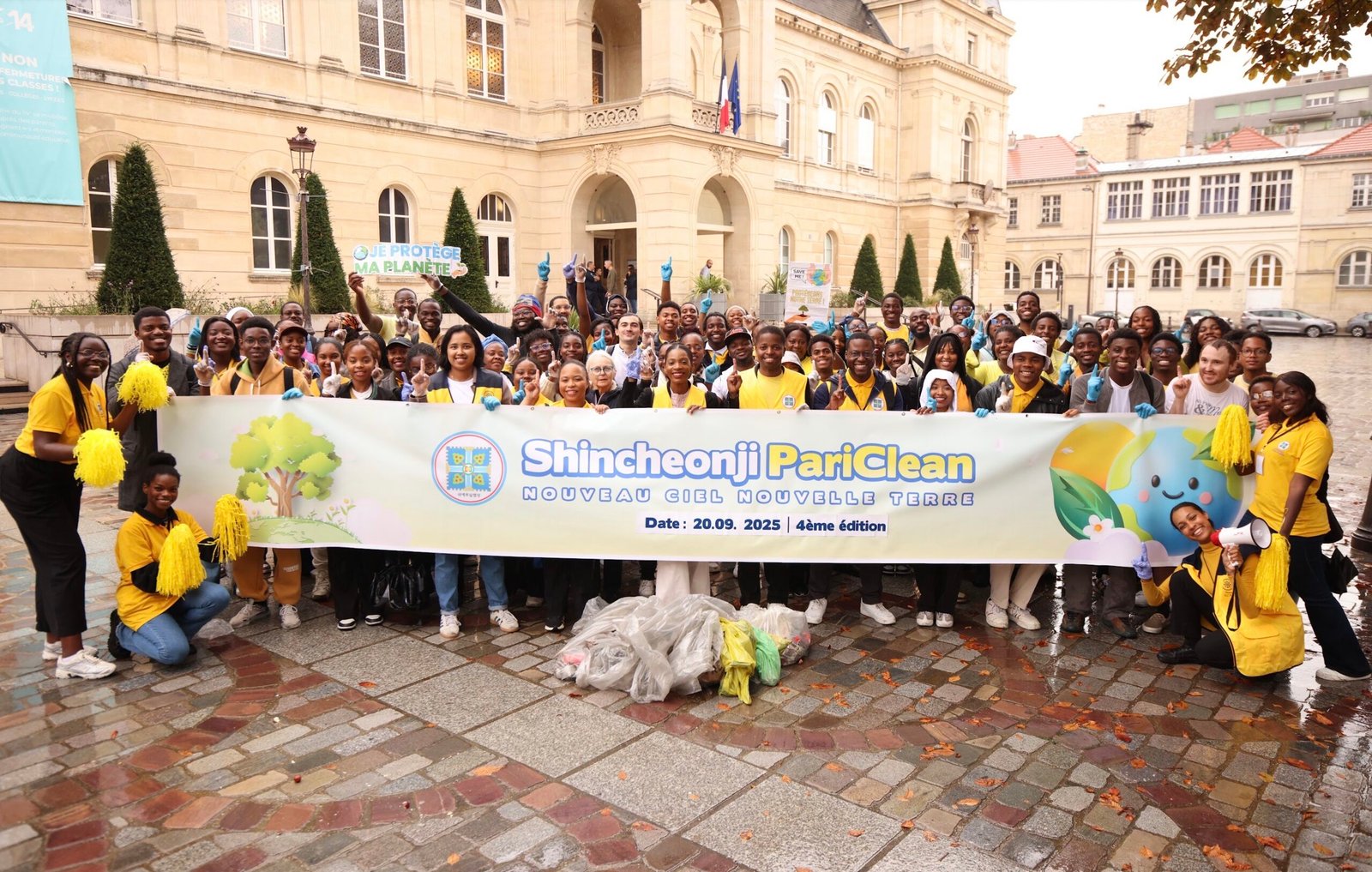
Interviewees described these activities with enthusiasm. One said that she had participated in several cleanup events and found them energizing. She said that she enjoyed working alongside people she had never met before. Another said that he had joined the Mégothon day in Paris in May 2025, an event organized by associations unrelated to Shincheonji. The focus was on collecting cigarette butts. He said that he was impressed by the number of volunteers from different backgrounds. He said that participating in such events helped him feel connected to the city.
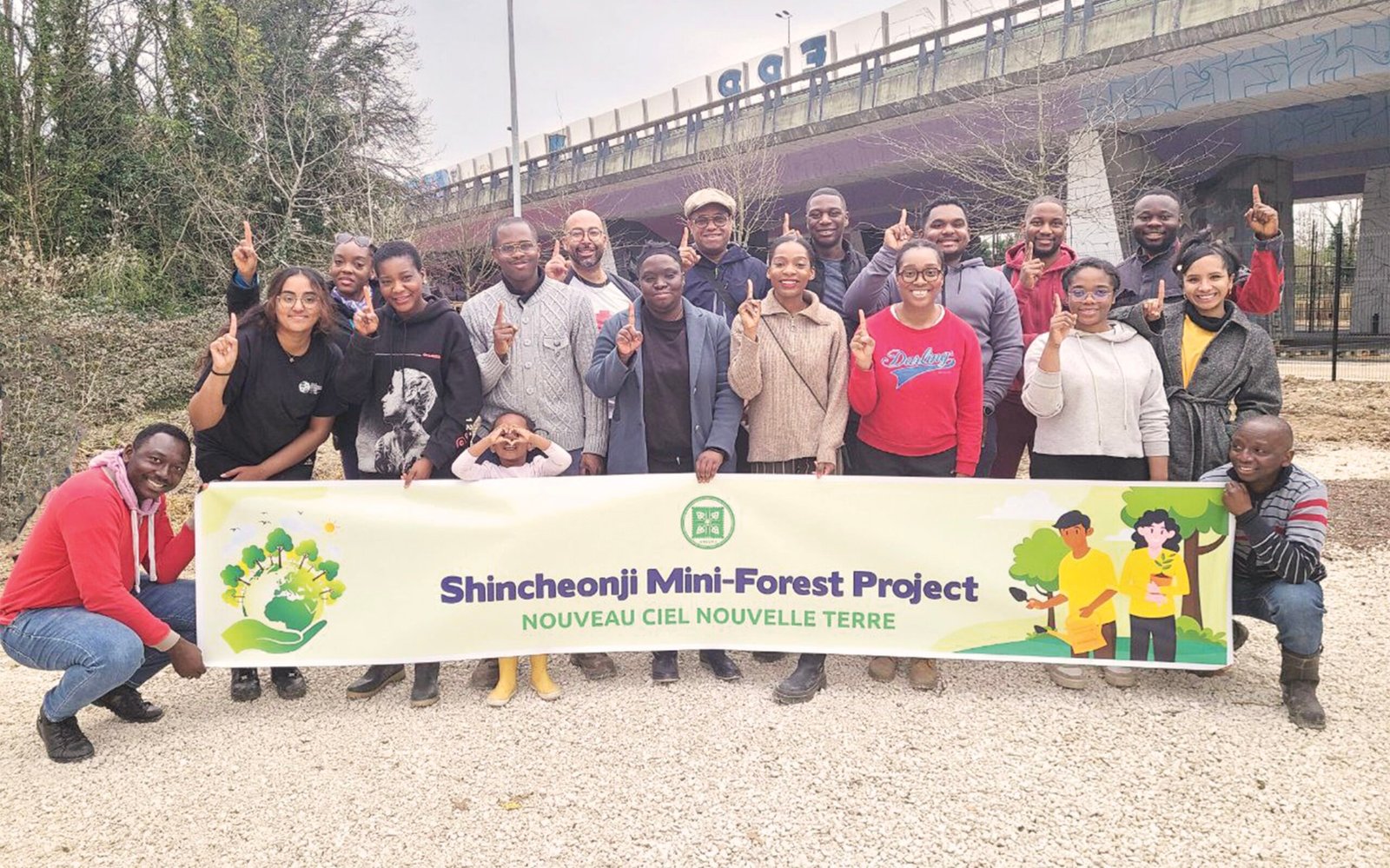
The Mini Forest Project is another example of Shincheonji’s ecological engagement. The movement believes that planting trees contributes to a healthier and more beautiful urban environment. In 2025 members planted 150 trees in Joinville-le-Pont. They did so in cooperation with secular organizations specialized in urban forestry. Interviewees who participated in the project described it as a meaningful experience. One said that planting a tree felt like leaving a small gift for future generations. Another said that she had never planted a tree before and found the experience unexpectedly moving. The project is both ecological and personal.
Shincheonji’s concern for the environment intersects with its concern for vulnerable populations. The movement participates in the Nuit de la Solidarité de Paris, an annual event dedicated to helping the homeless. In January 2025 and 2026 members joined volunteers from religious and secular organizations to conduct a census of the homeless and bring assistance to them. They distributed food, blankets, and hygiene products. They also spoke with people living on the streets to understand their needs. Several interviewees mentioned these nights. One said that she had been deeply affected by the conversations she had with homeless individuals. She said that the experience made her reflect on the fragility of life. Another said that he had participated in the event as part of the Eco Héros group, which combines ecological and charitable activities. This group collects garbage and also works to reduce food waste by redistributing surplus food.
Shincheonji members in France engage in activities that benefit society at large. They cooperate with others. They participate in events organized by secular associations. They join campaigns that have nothing to do with their religious identity. At the same time, they do so because they regard these activities as expressions of their faith. Several interviewees said that they had learned in Shincheonji that caring for others and caring for the Earth are part of a life of faith. One said that she had been taught that the world is a gift that should be preserved. Another said that he had learned that helping others is a way to practice gratitude.
These activities also create opportunities for members to interact with people who have no connection with Shincheonji. One interviewee said that she enjoyed meeting volunteers from other organizations. She said that these encounters helped her understand different perspectives. Another said that participating in public events helped him feel part of the broader community. He said that he appreciated the sense of solidarity that emerged during cleanup days and blood drives.
The interviews also reveal that these initiatives are not limited to those who are physically able to participate in all activities. Some members cannot donate blood. Others cannot participate in physically demanding cleanup events. They find other ways to contribute.
Opponents of Shincheonji have argued that these initiatives serve as propaganda. They claim that the movement uses charitable activities to improve its image and attract new members. Some have suggested that the blood donation drives were launched to counter the negative publicity associated with the alleged violations of health regulations by Shincheonji in Korea during COVID-19 (eventually, Korean courts cleared the movement of all COVID-related charges). They argue that the campaigns are designed to present Shincheonji as benevolent. These criticisms raise questions that are not unique to Shincheonji. They apply to all organizations that engage in humanitarian aid. When churches, NGOs, states, or international organizations help others, they also promote an image of benevolence. The United Nations, Caritas, and countless other institutions engage in humanitarian work that enhances their reputation. This does not diminish the value of their actions.
The interviews suggest that few, if any, of those who benefited from Shincheonji’s charitable activities have joined the movement. In general, blood donors who participate in LifeON events do not become members. Volunteers who join cleanup days do not enroll in Bible classes. Homeless individuals who receive assistance during the Nuit de la Solidarité do not attend services. The activities serve those who need help. They also provide members with opportunities to practice solidarity.
Disentangling self-promotion and charity is an impossible exercise. Humanitarian actions always have multiple dimensions. They help others. They shape public perception. They express values. They create opportunities for cooperation. Focusing exclusively on one dimension risks obscuring the others. The interviews show that Shincheonji members in France are motivated by a desire to help. They speak about their activities with sincerity. They describe moments of connection, gratitude, and reflection. They do not describe these activities as recruitment tools. They describe them as expressions of their faith.
The charitable and ecological initiatives of Shincheonji in France reveal a movement that seeks to contribute to society. They show members who engage with the world around them. They show cooperation with religious and secular organizations. They show a commitment to solidarity and environmental stewardship. They show a community that extends its values beyond its own boundaries.
These humanitarian activities are part of a wider landscape where many Christian churches and religious organizations also contribute to the common good, even though their efforts are not always acknowledged in a society as deeply secular as France. What I observed among Shincheonji members, in contrast with their portrayal as a mysterious “Korean” or “African” group described at times with racial overtones, is that they live as an ordinary component of French society, not very different from their co‑workers, fellow students, and friends except for their particular religious beliefs.

Massimo Introvigne (born June 14, 1955 in Rome) is an Italian sociologist of religions. He is the founder and managing director of the Center for Studies on New Religions (CESNUR), an international network of scholars who study new religious movements. Introvigne is the author of some 70 books and more than 100 articles in the field of sociology of religion. He was the main author of the Enciclopedia delle religioni in Italia (Encyclopedia of Religions in Italy). He is a member of the editorial board for the Interdisciplinary Journal of Research on Religion and of the executive board of University of Pennsylvania Press’ Nova Religio. From January 5 to December 31, 2011, he has served as the “Representative on combating racism, xenophobia and discrimination, with a special focus on discrimination against Christians and members of other religions” of the Organization for Security and Co-operation in Europe (OSCE). From 2012 to 2015 he served as chairperson of the Observatory of Religious Liberty, instituted by the Italian Ministry of Foreign Affairs in order to monitor problems of religious liberty on a worldwide scale.