The model tightens ideological discipline and expands monitoring, while temples quietly resist pressure to preach political doctrine rather than classical cultivation.
by He Yuyan
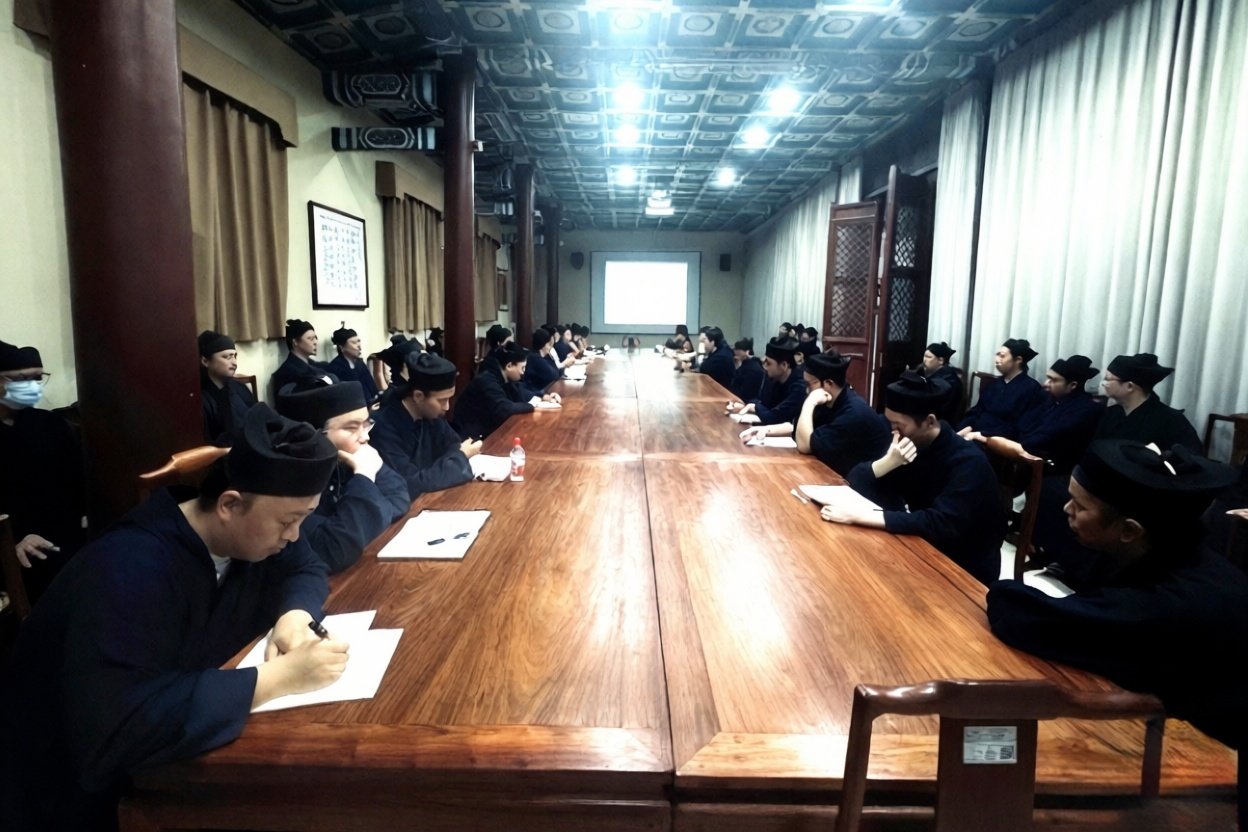
The China Taoist Association has triumphantly announced the completion, in mid‑May, of a special training for the clergy conducted in batches at the Hiode Zhenjun Temple in Beijing introducing its latest “revision” of the religious affairs management system. The name sounds like harmless administrative housekeeping, but in practice, it means something far more concrete: the clergy will now be watched more closely, instructed more firmly, and expected to align their spiritual path with the political compass. The official press release, a masterpiece of bureaucratic serenity, describes how Beijing’s Baiyun Temple and the Huode Zhenjun Temple dutifully gathered their entire staff for rounds of training led by senior instructors, who explained the “importance” of the new rules.
The message is familiar. One must study the General Secretary’s statements on religion, implement the Party’s decisions, and “systematically advance the Sinicization of religion.” It is always amusing, in a darkly comic way, to hear that Taoism must be Sinicized. If any tradition is already woven into Chinese culture, it is Taoism. Yet “Sinicization” has never meant cultural authenticity. It means alignment with the Communist Party, and nothing else. When the authorities insist that Taoism must be made more Chinese, what they really mean is that it must be made more governable by the CCP.
The revised system is also said to “strengthen the rule of law in Taoist affairs,” “promote healthy transmission,” and “solve internal problems.” These internal problems are left politely undefined, but those who follow the situation know exactly what they are. Many temples are wary of being told that their sermons must include Xi Jinping’s thought, that their rituals must be framed as patriotic performances, and that their clergy must spend more time studying political documents than the Daodejing. Some priests would prefer to return to a more classical approach to cultivation, one that does not require quoting the General Secretary. This, in the Association’s view, is a problem to be corrected through the new system.
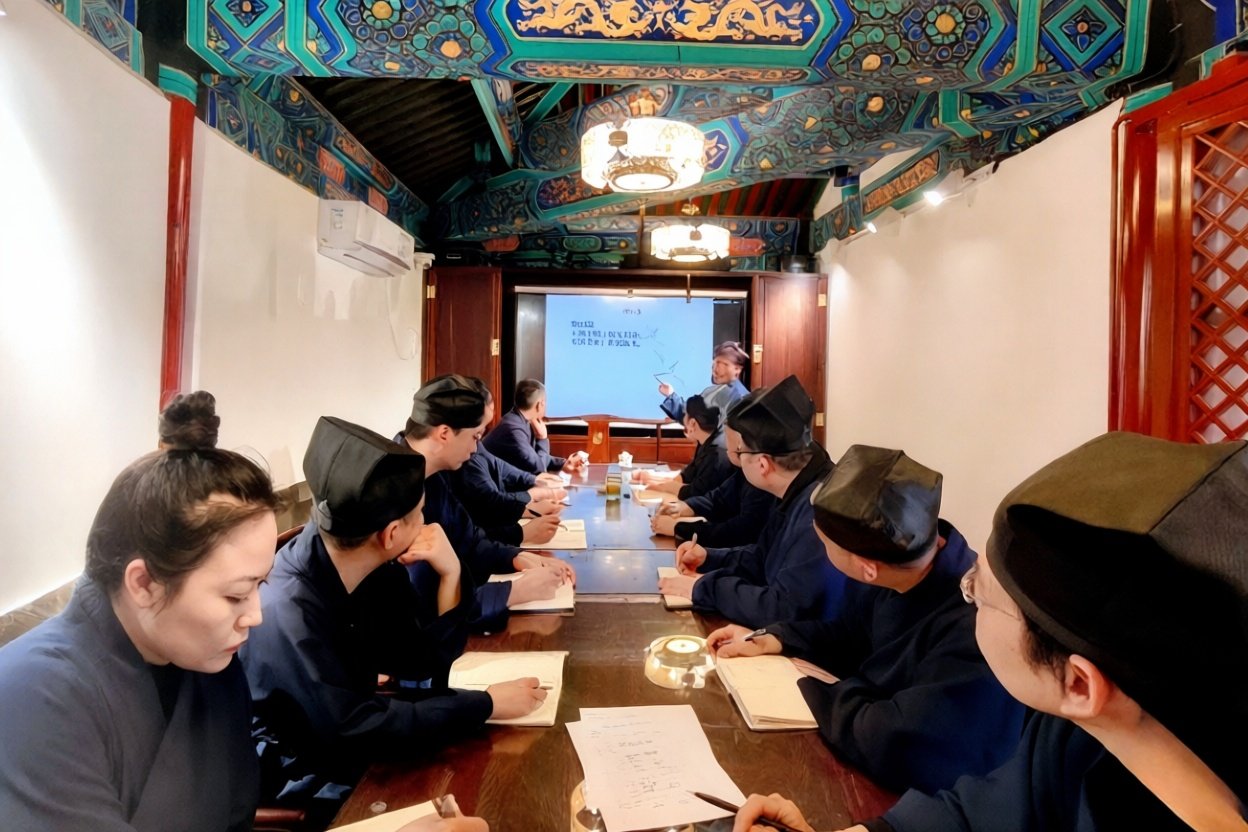
The official narrative claims that the training sessions explained the meaning of Taoist precepts and the importance of moral discipline. Nothing wrong with that, except that the real discipline being enforced is political. The new system is not about improving spiritual life but about ensuring that every temple, every abbot, and every novice remains within the ideological perimeter drawn by the Party. The clergy is encouraged to “internalize” the twelve‑character slogan about studying laws, observing precepts, cultivating virtue, and building an image. In practice, this means following the rules, avoiding independent thought, and presenting a patriotic smile.
The participants, according to the press release, were enthusiastic. They always are. They always “gain insights,” “strengthen their ideological foundation,” and “clarify their direction.” In reality, they understand perfectly well what is happening. The revision of the management system is simply the latest mechanism to monitor them more closely, limit their autonomy, and ensure that Taoism remains a decorative accessory to the Party’s narrative. The temples may continue to burn incense, but the smoke must rise in the approved direction. If the Dao is supposed to flow freely, the new system channels it through a narrow pipe. And if Taoism has survived emperors, warlords, and revolutions, it now faces a new challenge: a bureaucracy convinced that it understands the Dao better than the Taoists themselves. The irony is almost Taoist in its elegance, though the Association would prefer not to dwell on that.

Uses a pseudonym for security reasons.