An Italian mountaineer who was a Scientologist died in 2019 in the Himalayas. Apostate ex-members and the media manipulated the incident to blame the “cult.”
Massimo Introvigne*
*A paper presented at the international conference “FORB and the European Union,” Institute for the Study of Freedom of Religion or Belief, Evangelical Theological Faculty, Leuven, Belgium, May 7, 2026.
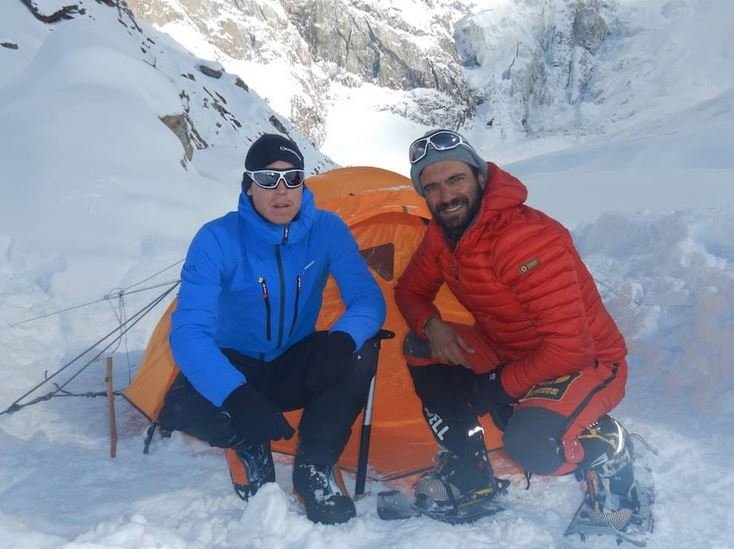
The death of Italian mountaineer Daniele Nardi and his British climbing partner Tom Ballard on Nanga Parbat in February 2019 was one of the most emotionally charged tragedies in recent Himalayan mountaineering. Nardi, a skilled alpinist from Italy, had long dreamed of climbing in winter the mountain’s challenging Mummery Spur, a route known for being technically demanding and dangerous. Ballard, the son of the famed British climber Alison Hargreaves, who was the first woman to solo Mount Everest and died on K2 in 1995, added significance to the expedition by drawing public attention.
Controversy is common in mountaineering, and the Nardi-Ballard tragedy was no different. Shortly after their disappearance, the well-known Italian climber Reinhold Messner called their winter attempt on the Mummery Spur “suicidal,” sparking debates among mountaineers and the public. However, this early controversy, rooted in ongoing discussions about risk, ambition, and judgment in high-altitude climbing, soon evolved into something entirely different.
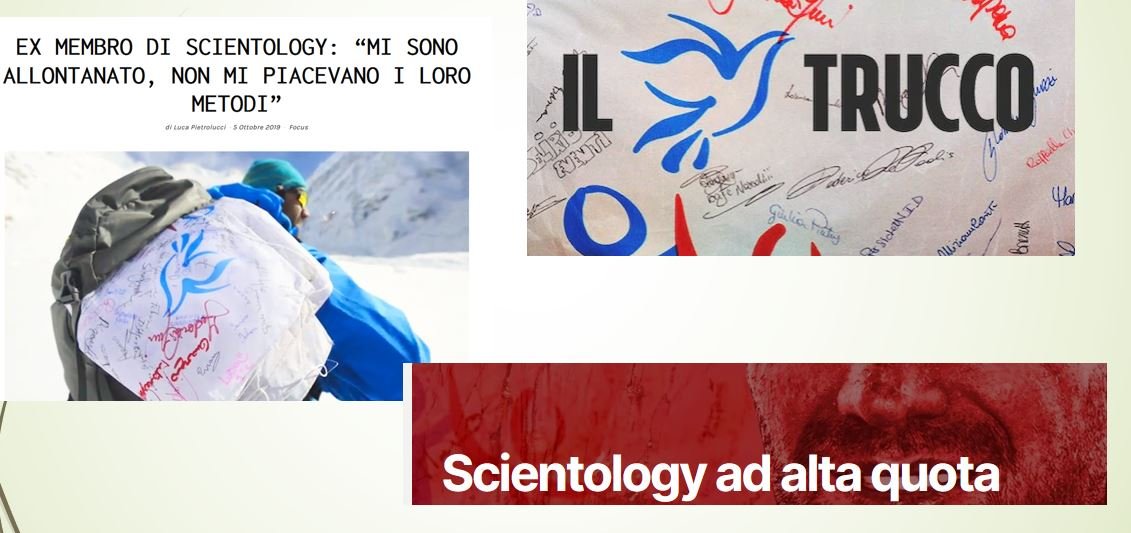
In October 2019, the Italian web magazine Fanpage, noted for its exposés on so-called “cults,” released a documentary titled Morte ad alta quota (“Death at High Altitude”) with the eye-catching subtitle “Scientology dietro la scalata” (“Scientology behind the climb”). The documentary claimed to “reveal” that Nardi was a Scientologist who intended to plant the flag of a Scientology-related human rights organization on Nanga Parbat. It suggested that the Church of Scientology pressured him into making a “suicidal” climb to promote the movement.
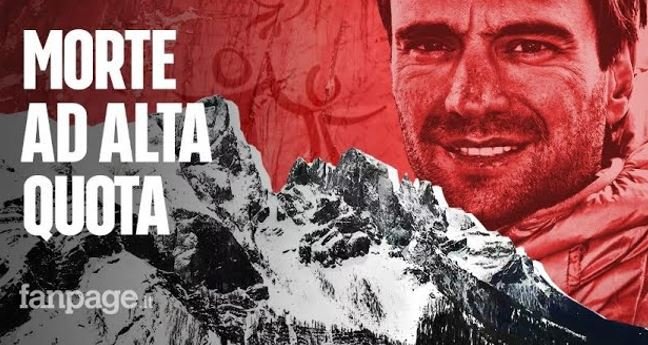
Other Italian media quickly followed this story. Even today, over seven years later, anti-cult activists often cite the Nardi case as supposed evidence of Scientology’s “brainwashing” and alleged willingness to encourage members to take life-threatening actions to enhance the organization’s public image. A research I performed returned more than 100 articles, both printed and online, using Nardi’s death to attack Scientology. A vocal, disgruntled ex-Scientologist called Claudio Lugli appeared in several of them and might have instigated the original Fanpage attack.
This enduring narrative highlights how media can exploit tragedy to reinforce negative views about minority religions, even misrepresenting the motivations of a deceased person and disrespecting the memory of two climbers who died while pursuing their passion.
A closer look at Nardi’s life and climbing career tells a different story. Born on June 25, 1976, in Sezze, Italy, he began climbing at sixteen and quickly became a talented alpinist. By the mid-2000s, he had achieved feats that placed him among Italy’s elite climbers: Everest in 2004, K2 in 2007, and many technical climbs in the Alps and Himalayas. In June 2008, along with Mario Panzeri, he reached the summit of Nanga Parbat via the Diamir face.
From the beginning of his career, Nardi embraced a personal philosophy summed up in his motto “Scala te stesso” (“Climb yourself”), a phrase he created long before he encountered Scientology. His climbing was closely connected to a vision of personal growth, self-improvement, and the pursuit of beauty and meaning in the mountains.
The Mummery Spur, named after British climber Albert F. Mummery, who died on that route in 1895, became Nardi’s obsession. Considered one of the toughest lines on any 8,000-meter peak, the Spur had never been climbed successfully in winter. For Nardi, establishing a new winter route on Nanga Parbat via the Mummery Spur represented the height of climbing ambition: a mix of technical challenge, historical significance, and personal calling. He started mentioning the Mummery Spur in winter as something he wanted to try at the beginning of his Himalayan climbings, in 2001.
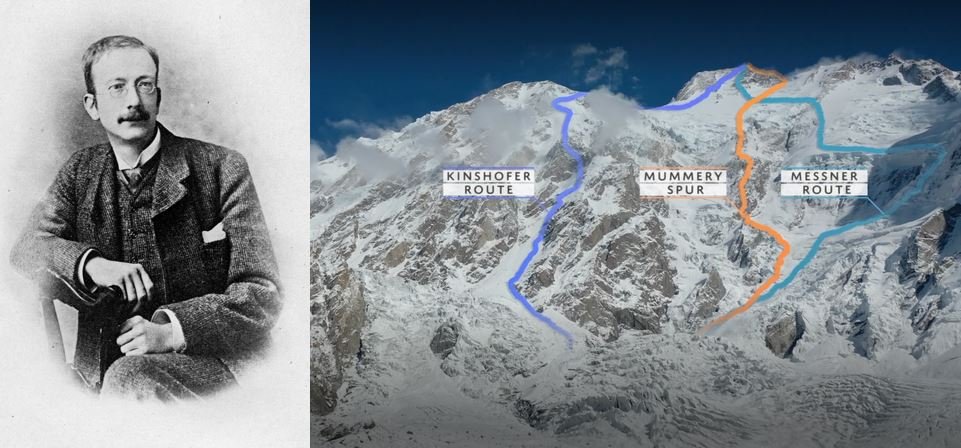
Finally, between 2013 and 2019, Nardi attempted the Mummery Spur five times. In 2013, he had to turn back due to frostbite. In 2014, he stopped because of bad weather. In 2015, he got within 300 meters of the summit, but a navigational error and worsening conditions forced him to retreat. During the winter of 2015-2016, he returned but had to withdraw due to disagreements within the team. His last attempt, in the winter of 2018-2019 with Tom Ballard, ended in tragedy. These attempts show a deep personal commitment to the route—one that began long before he got involved with Scientology or any Scientology-related campaigns.
In a 2018 interview, Nardi expressed a sentiment that now resonates clearly: he wanted to be remembered as someone who tried something “incredible, impossible” and never gave up. He hoped his young son would learn the importance of perseverance and striving to improve the world. Nothing in this statement indicates any outside pressure. It reflects the spirit of a climber motivated by passion, ambition, and purpose.
Nardi’s connection to Scientology began not with the Church but with Youth for Human Rights, a campaign supported by Scientology that promotes human rights education. In September 2009, at a human rights concert in Fiuggi, he met Maria Elena Martini, a Scientologist and volunteer in the campaign. Their mutual interest in human rights led to collaboration, and Nardi became an enthusiastic supporter of human rights education. His first direct contact with the Church of Scientology came in January 2010, when he attended a human rights event. He started his first Scientology course in 2012 and completed several courses between 2012 and 2018, also receiving auditing. Nardi and Martini founded the association “Arte e Cultura per i Diritti Umani,” and later the company “Ability,” which managed sponsorships and logistics for his climbs. Nardi also initiated the project “Alta bandiera dei diritti umani,” a white flag symbolizing hope and peace, signed by tens of thousands of people, which he carried on his climbs.
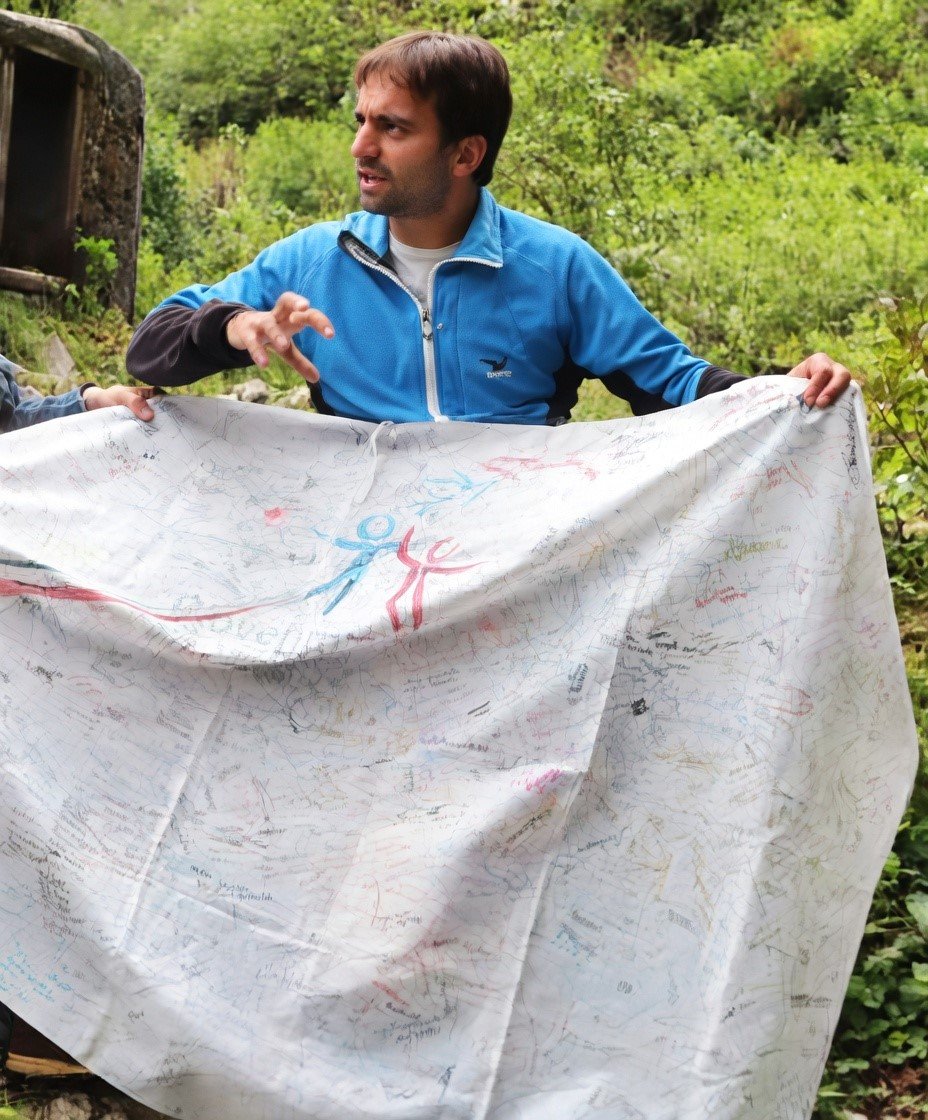
These activities show that Nardi integrated human rights advocacy into his public identity and climbing projects. They do not indicate that Scientology directed his climbing decisions. The timeline is crucial: Nardi’s dream of climbing the Mummery Spur dates back to the first years of this century, while his involvement with Scientology began in 2012 and his human rights activism in 2009. His passion for the Spur was already well established. However, the Fanpage documentary reversed this timeline, suggesting that Scientology “sent” Nardi to Nanga Parbat to plant a flag. This narrative overlooked his documented attempts, his motivations for climbing, and the independence that elite climbers typically have.
The documentary’s main point—that Nardi planned to plant a flag for Youth for Human Rights at the summit—was portrayed negatively. The statement was true, but Fanpage misinterpreted it. Mountaineers often carry symbolic items like national flags, memorials, organizational banners, or personal keepsakes. Nardi’s human rights flag matched his advocacy and traveled with him on many climbs.
Scientologists honored Nardi both before and after his death, taking pride in his being a famous mountaineer. However, it is unlikely that the average Scientologist, or even the typical Italian, could tell the difference between climbing the Munnery Spur in winter and other mountaineering feats by Nardi. That particular climb was important to mountaineering experts but probably wouldn’t boost Nardi’s fame or his role as a Scientology spokesperson among the general public.
The film also suggested that Nardi’s partnership with Tom Ballard was one-sided, portraying Ballard as a naive young man under Nardi’s influence. Mountaineering experts criticized this view as disrespectful and wrong. Ballard, while younger, was a skilled climber with plenty of experience.
A fair evaluation from a mountaineering expert, Francesca Cortinovis, on the Italian specialized website montagna.tv, starkly contrasts with Fanpage’s claims. The expert poses a straightforward but deep question: “Era proprio necessario?”—was it really necessary to use a mountaineer’s dream to create a story about Scientology? The expert notes that those close to Nardi had heard him, for decades, passionately discuss the Mummery Spur, fueled by “a burning inner fire.”
The idea that he climbed the Spur because Scientology manipulated him is dismissed as both unfair and ridiculous. The evaluation stresses that the desire to tackle such a route came from within, not from outside influence. Passion can slip into obsession, but this is part of mountaineering, not a religious issue. Tom Ballard wasn’t just a follower; he had his own complex background and motivations. Messner’s claim that the climbers “went to commit suicide” was also hurtful and oversimplified. Their tragedy shouldn’t be used for unrelated political agendas. The expert’s final point is that Nardi lived and died for his dream of charting what he saw as “the most beautiful route ever.” He lived and died out of love—for the mountain, the Himalayas, and the ideals of alpinism.
The Fanpage documentary reflects a wider trend of media stigmatizing minority religions. They uncritically adopt anti-cult narratives, relying on stereotypes instead of facts. In Nardi’s case, a tragic incident provided an opportunity to revisit anti-cult themes. Important details—like Nardi’s long history with the Mummery Spur—were left out because they didn’t fit the desired story. Nardi’s ties to Scientology were framed as inherently suspicious, regardless of his true motivations.
Most viewers lack knowledge about mountaineering or Scientology, allowing exaggerated claims to spread. Even after refutations, the false narrative continues. Critics of Scientology still reference the Nardi case as “proof” of manipulation, showing how these negative stories have enduring power.
The Nardi case goes beyond simply misreading a mountaineering tragedy. It highlights how media can misuse unrelated events to attack minority religions, make false connections, erase individual choice in favor of gross “brainwashing” tales, exploit grief for sensationalism, and reshape public memory in ways that misrepresent the truth.
For researchers of media and religion, this case shows how anti-cult narratives can invade public conversations even in areas—like mountaineering—where they don’t naturally belong. It also raises important ethical questions: What responsibilities do journalists have when covering the deceased? How should media juggle the need for investigation with respect for individuals and their freedom? How can minority religions protect themselves from emotionally charged but factually weak narratives?
Any analysis of the Nardi case must consider the dangers of the Mummery Spur. This route is well-known for being dangerous: steep, exposed, prone to avalanches, and technically challenging. Climbing it in winter is especially extreme. But mountaineering culture has long dealt with the balance between courage and recklessness. Messner’s comment that the attempt was “suicidal” highlights one perspective. Others argue that pushing limits is what alpinism is all about. But this debate is part of the mountaineering community; it should not be misused to slander Nardi’s religion. Nardi’s choice to try the Spur aligned with his background, personality, and climbing philosophy. To say it was due to “brainwashing” by Scientology is to misunderstand both mountaineering and Nardi himself.
The deaths of Daniele Nardi and Tom Ballard were tragedies shaped by the enduring elements of high-altitude climbing: passion, ambition, risk, and the unpredictable forces of nature. Their beliefs or religion didn’t cause them. The Fanpage documentary’s attempt to link their climb to Scientology was an oversimplified distortion, showing how media can exploit anti-cult narratives for attention. This approach disrespected the memory of the two climbers, misrepresented their motivations, and added to the stigmatization of a minority religion.
The balance between bravery and unnecessary risk will always be debated in mountaineering. This debate is legitimate. However, using a climber’s death to promote an anti-cult agenda is not a debate; it is an abuse of tragedy, a breakdown of journalistic ethics, and a testament to how far some media will go to discredit groups branded as “cults.”
The Nardi case thus serves as a warning: when bias rather than facts drives media narratives, they can twist reality, damage reputations, and turn human stories of passion and loss into instruments of ideological conflict. In this way, the case is not just about mountaineering or Scientology; it reflects the broader dangers of stigmatization, sensationalism, and the persistent strength of anti-cult rhetoric in modern media.
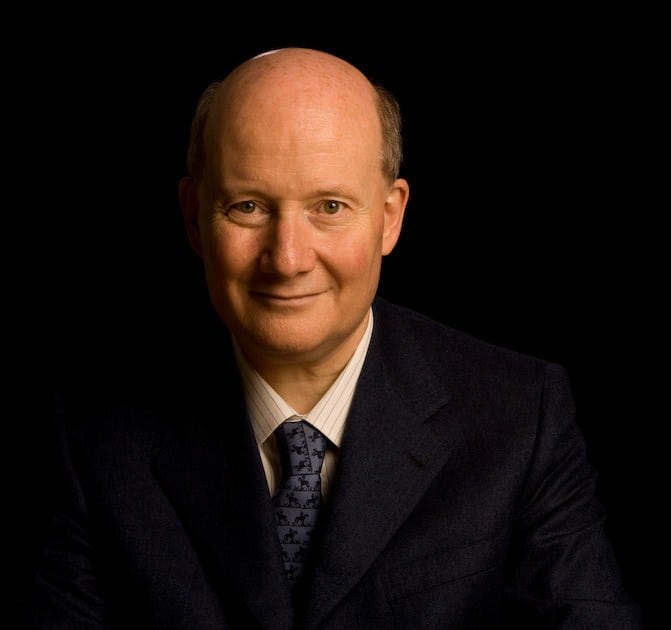
Massimo Introvigne (born June 14, 1955 in Rome) is an Italian sociologist of religions. He is the founder and managing director of the Center for Studies on New Religions (CESNUR), an international network of scholars who study new religious movements. Introvigne is the author of some 70 books and more than 100 articles in the field of sociology of religion. He was the main author of the Enciclopedia delle religioni in Italia (Encyclopedia of Religions in Italy). He is a member of the editorial board for the Interdisciplinary Journal of Research on Religion and of the executive board of University of Pennsylvania Press’ Nova Religio. From January 5 to December 31, 2011, he has served as the “Representative on combating racism, xenophobia and discrimination, with a special focus on discrimination against Christians and members of other religions” of the Organization for Security and Co-operation in Europe (OSCE). From 2012 to 2015 he served as chairperson of the Observatory of Religious Liberty, instituted by the Italian Ministry of Foreign Affairs in order to monitor problems of religious liberty on a worldwide scale.