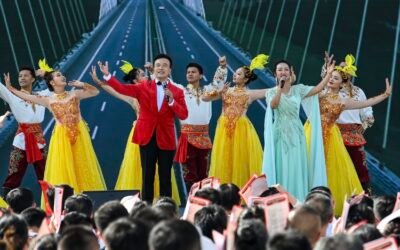
The United Front Work Department chief and Politburo members personally inspected the progress of the CCP’s plan to control religions in a key province.
by Li Xiaosi
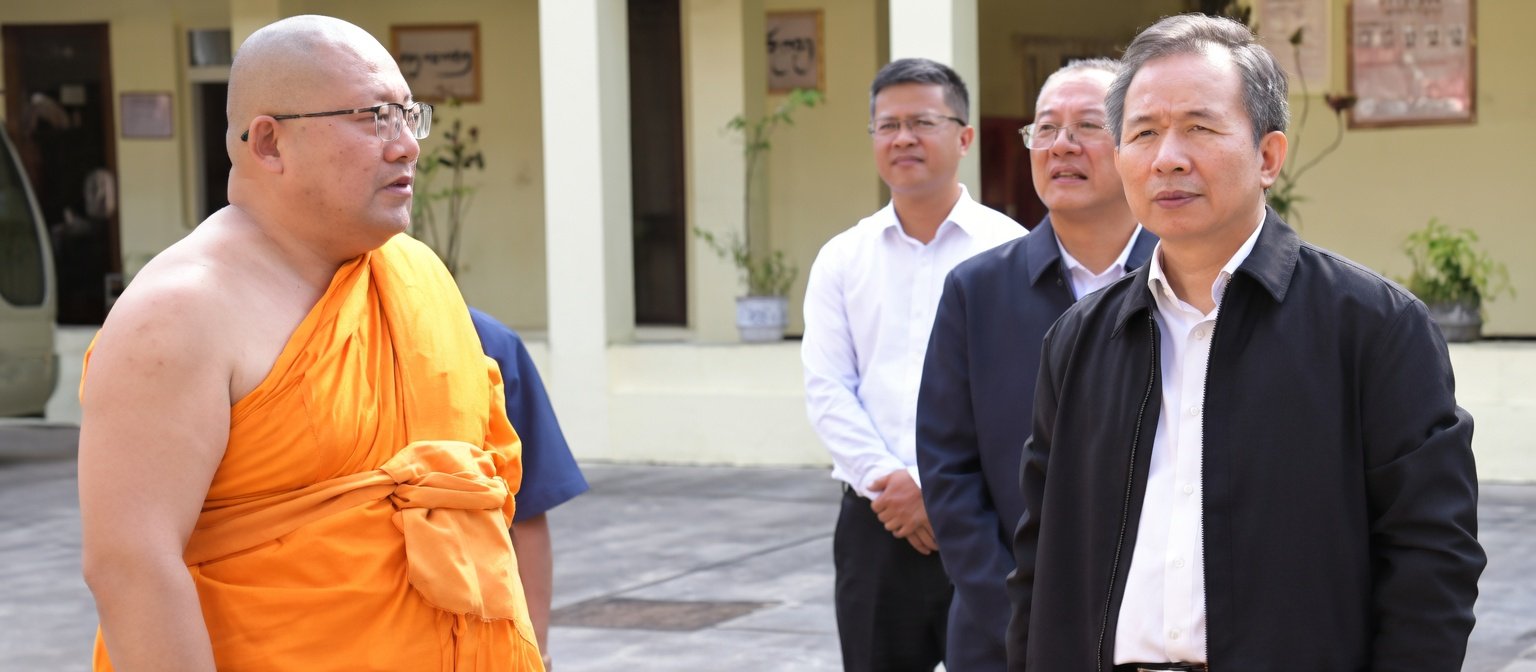
Chinese state media have given unusual and sustained attention for more than a month to a four-day inspection tour in Yunnan that Li Ganjie, a member of the CCP Politburo and the head of the United Front Work Department (UFWD), conducted in March. In the Chinese political system, the UFWD manages religion, ethnic affairs, and overseas Chinese communities. However, it is rare for a Politburo-level official to personally conduct extended on-site inspections of religious academies, temples, and ethnic minority villages. The fact that Li himself—not a vice-minister or provincial official—was sent to oversee “Sinicization of religion” shows how central religious control has become to the CCP’s political agenda.
Li toured Xishuangbanna, Yuxi, and Kunming, checking on Buddhist academies, religious venues, and multi-ethnic villages, and chairing a symposium on “Sinicization of religion.” State media repeatedly highlighted his message: religious affairs must be governed strictly “according to law,” grassroots management must be strengthened, and “persistent problems” in the religious area must be “rectified.” The repetition of these themes across multiple outlets suggests a coordinated propaganda effort. Analysts note that when the CCP highlights one trip this way, it signals that the visit goes beyond routine and becomes a political directive in action.
Li’s speeches during the tour leave little doubt about the purpose. He called for “systematically advancing the Sinicization of religion,” “strengthening the political responsibility” of religious work, and “guiding believers to resist illegal religious activities.” In CCP terms, “Sinicization” is not about cultural adaptation but a political process: aligning all religious life with Party ideology, ensuring loyalty to the state, and removing independent religious authority. That the UFWD chief personally went to supervise Sinicization and religious governance in a province indicates that Beijing now sees religious control as a matter of high-level national security, not just administration.
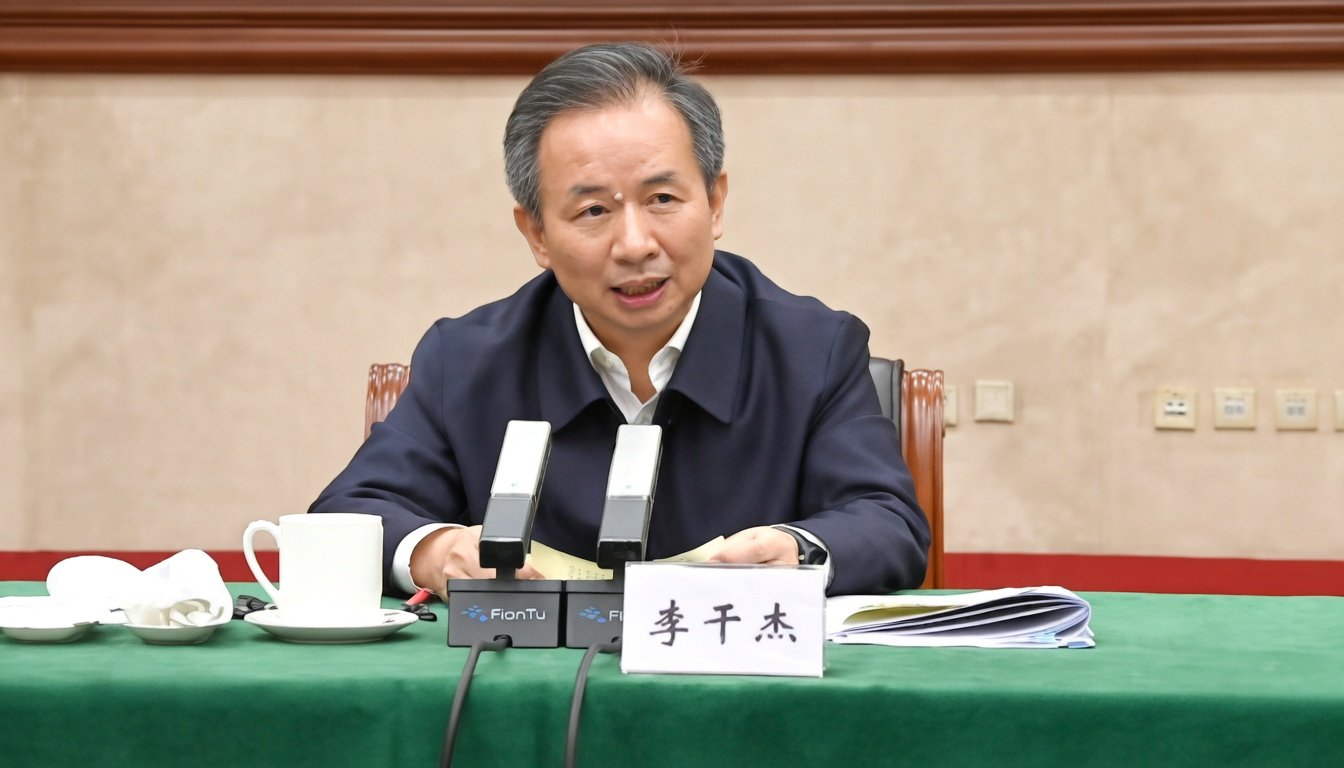
The Yunnan trip also highlighted another aspect of the UFWD’s growing role: merging religious and ethnic policy. Li visited the “Forging a Strong Sense of the Chinese Nation Community” education center, which promotes ethnic assimilation. He then toured mixed-ethnicity villages to review “ethnic unity” campaigns. The order was intentional. In official statements, the Sinicization of religion and the building of a unified “Chinese national identity” are now presented as mutually supportive projects. For ethnic minorities whose religious traditions are deeply tied to local culture—such as Dai Theravada Buddhists in Xishuangbanna—this convergence means more pressure to conform to state-approved historical and cultural narratives.
Li signaled that failing to enforce Sinicization will be seen as political disloyalty. For those observing religious freedom in China, Li Ganjie’s Yunnan tour i serves as a reminder that the CCP’s project of Sinicization is entering a new phase—one in which high-ranking officials are directly involved, propaganda channels are mobilized to amplify the message, and religious governance is increasingly linked to national security, ethnic assimilation, and ideological control.

Uses a pseudonym for security reasons.