A campaign in Lishui, Zhejiang, shows how the fight against “heterodox teachings” now targets even young pupils.
by He Yuyan
China has finally tackled a problem that has troubled empires for ages: how to protect the country from the threat of primary school children learning the wrong kind of religion. The answer, revealed in Lishui, Zhejiang, on April 8, is surprisingly simple. If you cannot convince adults to reject “xie jiao,” start earlier—much earlier. Why wait until adolescence, when dangerous ideas like independent thought may have already taken hold? You can begin shaping future defenders of ideological purity at age seven.
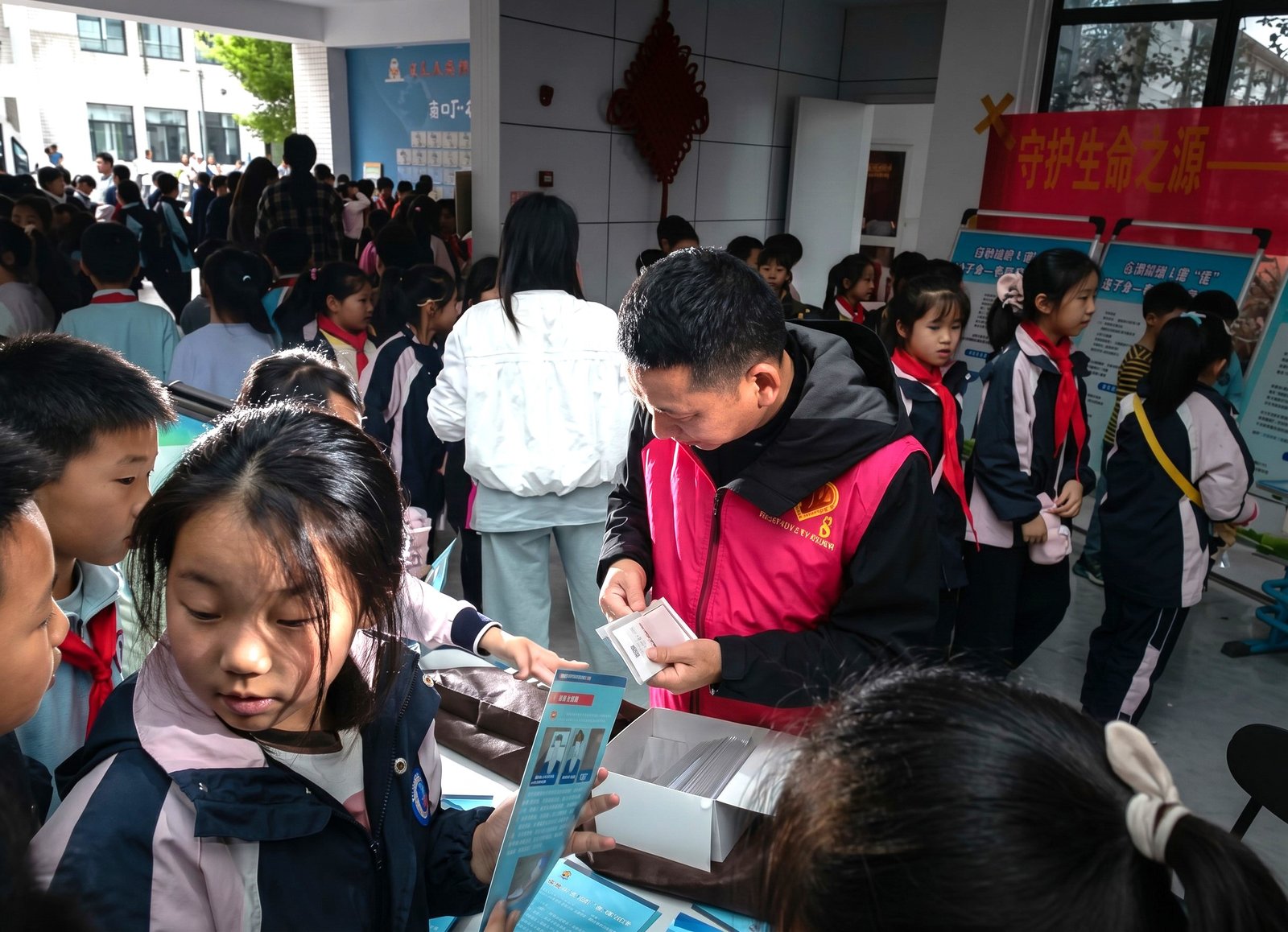
A coalition of local science associations, anti-xie jiao activists, special equipment inspectors, and environmental enthusiasts marched into Changgangbei Primary School to deliver what was called a “lively and engaging” anti-xie-jiao science class. In effect, it was a reminder that in today’s China, “science” is often a polite term for “atheism,” and “xie jiao” (sometimes incorrectly translated as “cults” or “evil cults”) has a flexible definition that now includes not only “groups promoting heterodox teachings” (its literal meaning) but also nearly any form of unregistered religious life.
According to the official report by the China Anti-Xie-Jiao Association, the event “thoroughly broke the dullness of traditional preaching.” It certainly did. Staff members, now called “science teachers,” explained to children what a xie jiao is, how it disguises itself, and why it is “anti-science, anti-society, and anti-humanity.” They used cartoons, animations, and “real cases,” all carefully chosen to ensure pupils learned to fear the wrong religion before encountering it. If the Party does not approve a belief system, it is not just incorrect—it is dangerous, manipulative, and morally corrupt. If a child ever meets someone who prays too enthusiastically, quotes scripture without permission, or hands out pamphlets not approved by the United Front Work Department, the appropriate response is vigilance, not curiosity.
To emphasize this point, the schoolyard was turned into a small ideological theme park with anti-xie jiao posters, comic strips, and slogans urging students to “revere science” and “resist xie jiao.” Teachers and officials handed out over 1,100 brochures for children to take home, transforming every living room into a potential front line in the battle against unorthodox beliefs. The report proudly stated that students were encouraged to become “little anti-xie-jiao guardians,” a phrase that sounds absurd but is chilling in reality. Primary school pupils are enlisted to monitor their families’ spiritual hygiene.
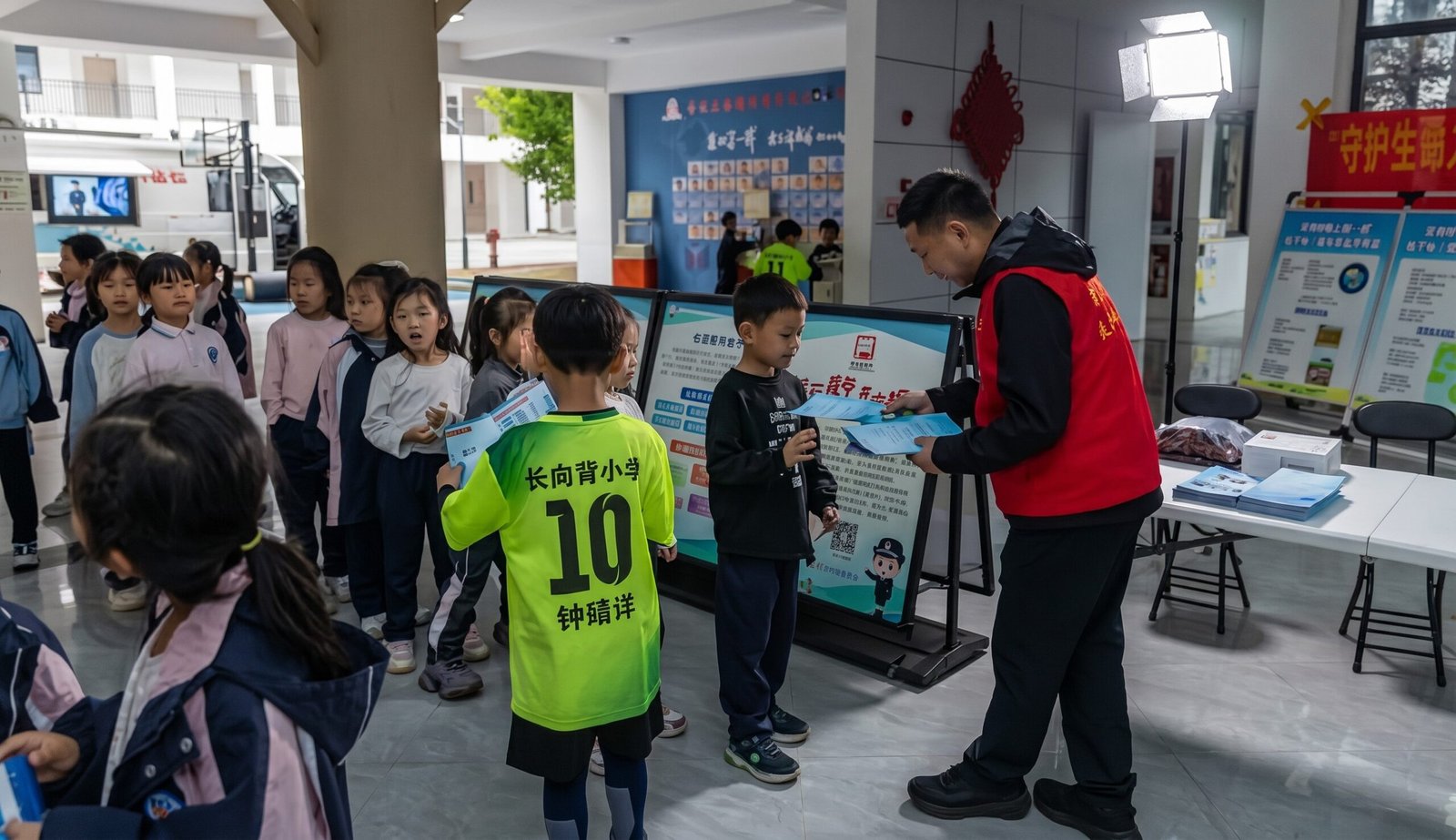
The official story claims this campaign “organically integrates anti-xie-jiao education with science promotion and environmental concepts,” as if the fight against unregistered religion were a natural extension of recycling and air quality awareness. The real integration is different: it merges political loyalty, atheistic education, and the systematic discrediting of any belief system that the state does not control. Here, “science” serves as a rhetorical shield, a way to present ideological conformity as rationality and to depict religious diversity as a threat to social stability. The children of Lishui are not being taught to think scientifically; they are being taught to associate faith with danger and obedience with enlightenment.
What comes through in this cheerful school visit is a picture of a society where the boundaries of “xie jiao” expand as needed. This term encompasses not only groups labeled as heterodox but also house churches, unregistered Buddhist and Daoist communities, and any spiritual movement that resists state oversight. The definition of “xie jiao” becomes infinitely flexible, and the list of enemies grows long. With primary school students as the guardians of ideological purity, no one is too young to join the struggle, and no area of life—not even childhood—is free from the state’s campaign to shape belief.
These events are about shielding the Party from religious diversity. The children think they are defending “science,” but what they are truly defending is a view where the only acceptable faith is faith in the state. And if they learn to report suspicious religious actions along the way, that is even better. After all, the future of ideological security has to start somewhere, and why not in the first grade?

Uses a pseudonym for security reasons.