A sweeping prohibition on prayer, worship, and faith‑based identity in public life raises profound constitutional and human rights concerns.
by Massimo Introvigne
When Quebec’s National Assembly adopted Bill 9 on April 2, 2026, the government presented it as a simple reinforcement of “laïcité.” In reality, the new law marks one of the most far‑reaching restrictions on religious liberty ever enacted in Canada. With 76 votes in favor and 28 against, the Assembly approved a framework that polices religion in society, treating prayer, worship, and collective expression of faith as activities that must be pushed out of public institutions and tightly controlled in public spaces.
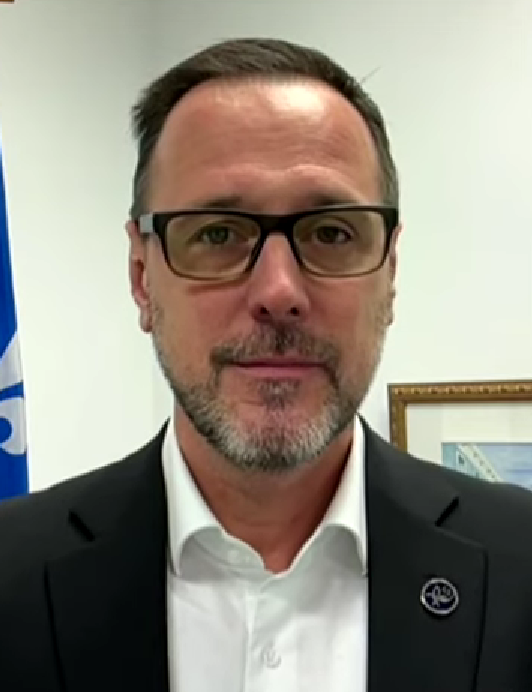
The Minister of Secularism, Jean-François Roberge, made the government’s intentions unmistakably clear. “Religious practice will end in our public institutions,” he declared, insisting that universities, colleges, childcare centers, and youth protection services “are not places of worship.” Prayer rooms in universities are to be eliminated. Faith‑based schools may continue to exist, but their religious identity is effectively confined to the margins: worship and religious instruction must be moved outside regular school hours, and participation must be optional. Even then, the law offers no clarity on how such schools can maintain a coherent religious mission while complying with a regime that treats almost any manifestation of belief as suspect.
Bill 9 defines “religious practice” so broadly that nearly any visible expression of faith may fall under its prohibitions. Overt prayer is explicitly included, but the definition extends to any action that “may reasonably constitute” a manifestation of belief. This ambiguity is not accidental. It gives administrators, inspectors, and municipalities wide discretion to determine what counts as religious behavior and when it must be curtailed. It is a system in which religious minorities must constantly prove that their practices are “reasonable,” “sincere,” and “consistent with equality rights.” At the same time, the state reserves the power to decide what those terms mean.
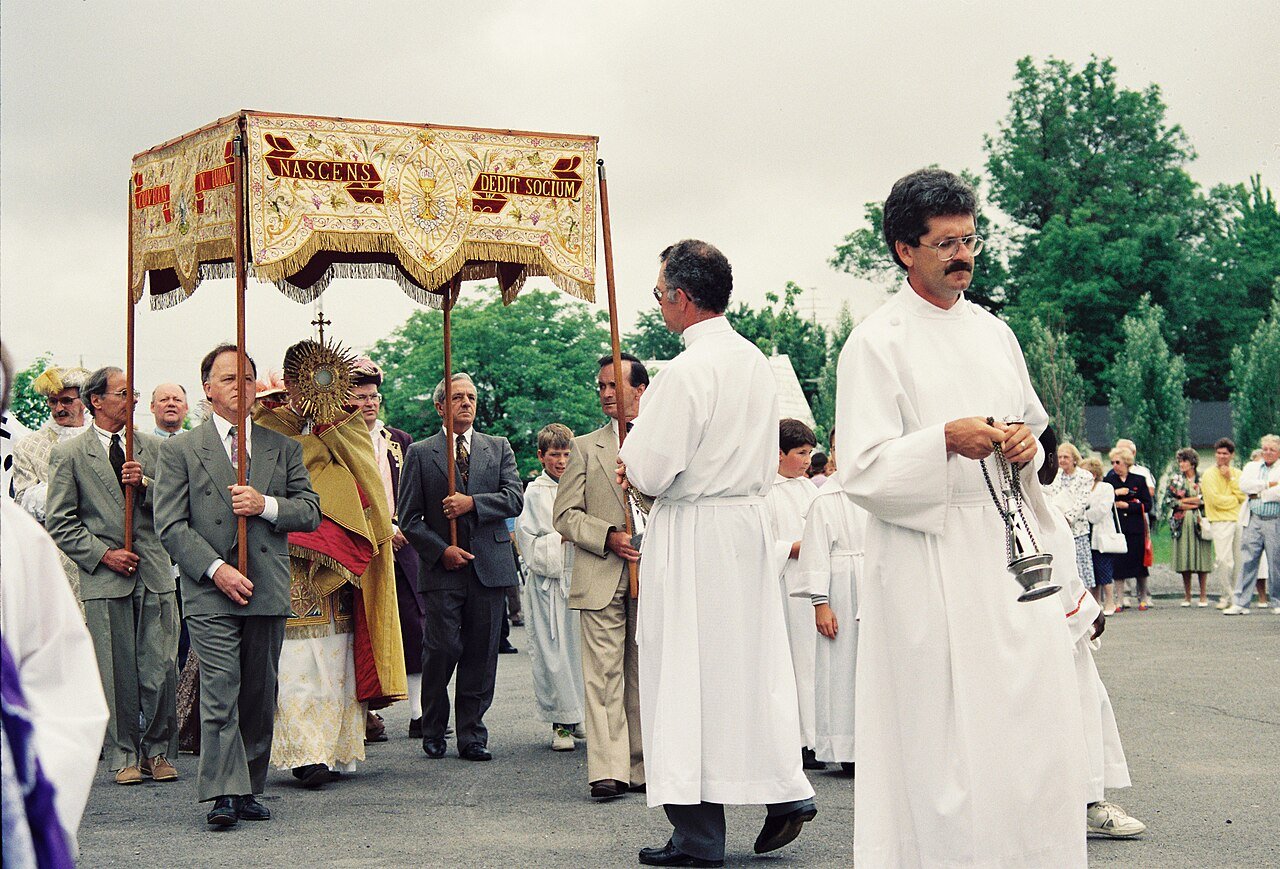
The law’s reach extends beyond institutions to the public square. Collective prayer in streets and parks is now prohibited unless municipalities grant prior authorization. The government insists this is necessary to prevent “appropriation of public space,” but the effect is to convert a fundamental freedom into a regulated privilege. Municipalities are left to decide which gatherings are acceptable and which are not, with no clear criteria. Even traditional practices—such as funeral processions, commemorative prayers, or religious charity events—could, in theory, fall within the scope of the ban. The threat of fines exceeding $1,000 underscores the punitive nature of the new regime.
Supporters of Bill 9 frame it as a continuation of Quebec’s secularist trajectory since the Quiet Revolution, but the province of 2026 is not the Quebec of the 1960s. It is a religiously diverse society in which many communities—Muslim, Sikh, Jewish, Christian, Hindu—express their faith not only in private but through public rituals, gatherings, and symbols. The new law disproportionately affects these minorities, especially groups whose religious life includes collective outdoor prayer. Although the government insists that no religion is targeted, the political debate leading to Bill 9 repeatedly invoked Muslim prayer gatherings as justification for legislative intervention. The message minorities receive is that their visibility is unwelcome.
The law also deepens the contradictions already present in Quebec’s secularism policies. Bill 21, adopted in 2019, banned certain public‑sector employees from wearing religious symbols. That law is now before the Supreme Court of Canada, and its reliance on the notwithstanding clause (which allows Canadian federal, provincial, or territorial governments to pass laws that temporarily override specific constitutional rights) remains one of the most controversial uses of such override powers in the country’s history.
Bill 9 goes further still. It does not merely deal with state employees; it restricts the religious expression of the population at large, including students, parents, children, and private organizations. It reaches into universities, healthcare facilities, childcare centers, and even the streets. It transforms secularism from a principle of state neutrality into a program of religious invisibility.
Religious leaders and civil‑liberties advocates warned of these dangers even before the final vote. The Archbishop of Montréal cautioned that banning public prayer undermines freedoms that lie at the heart of democratic life. The Fédération québécoise des municipalités raised concerns that the law’s scope is so broad that even long‑standing cultural and religious traditions could be criminalized. These warnings were not heeded. Instead, the government expanded the law’s reach, extending the ban on religious symbols to public‑service contractors and imposing new requirements on organizations that provide religiously compliant food.
Bill 9’s defenders claim that the law merely ensures “respect,” “communication,” and “living in society.” Yet the law’s logic is unmistakably coercive. It assumes that religious expression is inherently disruptive, that prayer is incompatible with civic life, and that the presence of faith in public institutions threatens the state’s neutrality. It treats religious communities not as partners in a pluralistic society but as groups whose practices must be monitored, limited, and, where possible, removed from public view.
The consequences will not be theoretical. Faith‑based schools may lose accreditation or funding if they cannot reconcile their identity with the law’s restrictions. Students in universities will lose access to prayer rooms that have long served as essential spaces for reflection and spiritual practice. Churches and religious associations will face uncertainty each time they seek to gather in a park or public square. And minorities whose religious life includes collective prayer will find themselves navigating a legal landscape in which their most basic practices require bureaucratic permission.
Bill 9 is presented as a defense of secularism. In practice, it is a redefinition of secularism into something far narrower and more intrusive than the principle of state neutrality. It is a model in which the state does not merely refrain from endorsing religion but actively suppresses its visibility. It is a model that treats religious freedom not as a constitutional right but as a problem to be managed. And it is a model that risks transforming Quebec’s public sphere into a space where diversity is tolerated only when it remains invisible.
Bill 9 may well face legal challenges, and courts will have to determine whether such sweeping restrictions can coexist with the Canadian Charter of Rights and Freedoms. But beyond the legal questions lies a deeper one: whether a democratic society can remain truly free when the state decides that prayer, worship, and public expressions of faith are no longer welcome in its institutions or its streets.
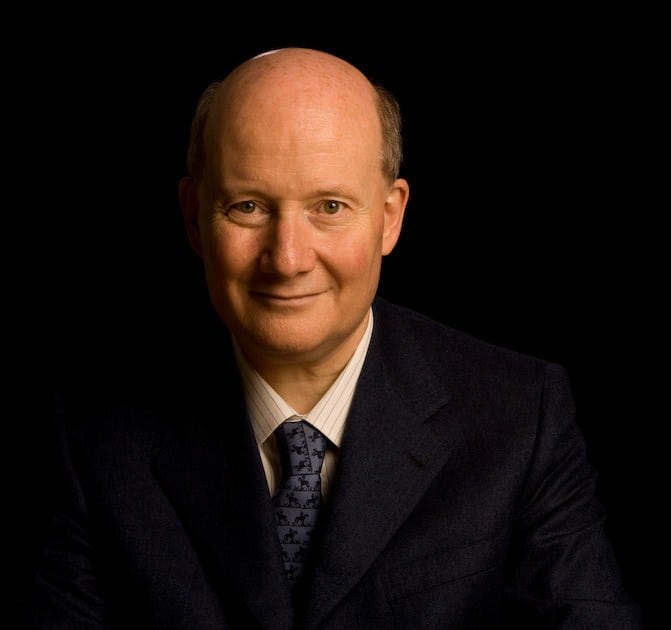
Massimo Introvigne (born June 14, 1955 in Rome) is an Italian sociologist of religions. He is the founder and managing director of the Center for Studies on New Religions (CESNUR), an international network of scholars who study new religious movements. Introvigne is the author of some 70 books and more than 100 articles in the field of sociology of religion. He was the main author of the Enciclopedia delle religioni in Italia (Encyclopedia of Religions in Italy). He is a member of the editorial board for the Interdisciplinary Journal of Research on Religion and of the executive board of University of Pennsylvania Press’ Nova Religio. From January 5 to December 31, 2011, he has served as the “Representative on combating racism, xenophobia and discrimination, with a special focus on discrimination against Christians and members of other religions” of the Organization for Security and Co-operation in Europe (OSCE). From 2012 to 2015 he served as chairperson of the Observatory of Religious Liberty, instituted by the Italian Ministry of Foreign Affairs in order to monitor problems of religious liberty on a worldwide scale.