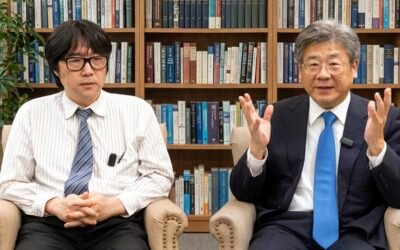
The High Court based its decision on a biased view of the church and a vague notion of what is socially acceptable.
by Eitaro Ogawa
Article 3 of 3. Read article 1 and article 2.
The Dangerous Logic of the High Court’s Decision
Yet, astonishingly, the grounds for dissolution relied upon in the Tokyo High Court’s recent dissolution decision (Presiding Judge Motoko Miki, March 4) are even worse.
Because the full text of the decision has not been made public [at the time of this writing], I will discuss the matter below based on a summary published by “The Asahi Shimbun.”
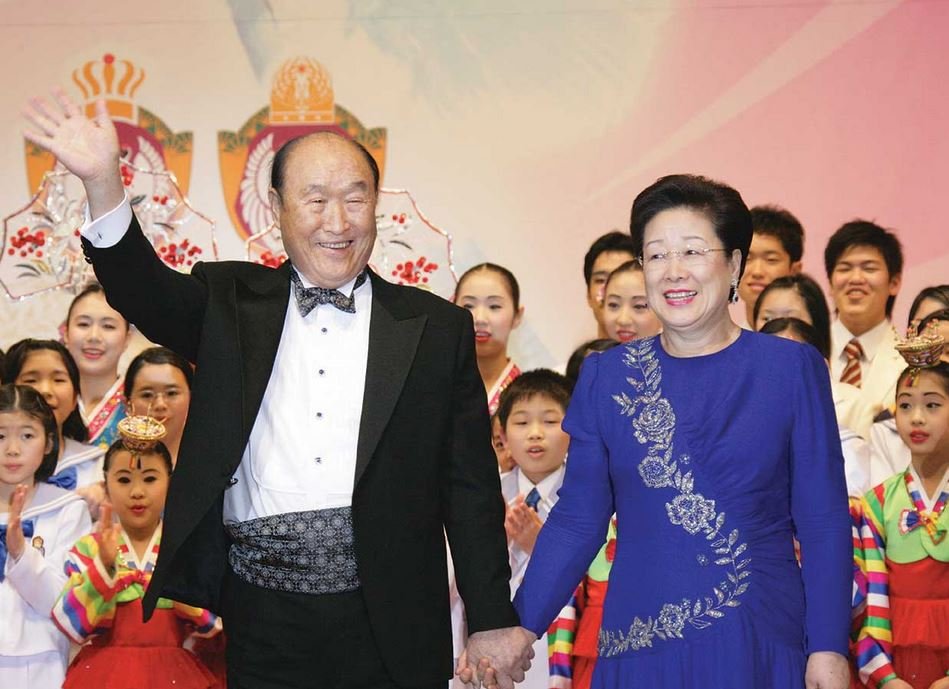
First, this decision addresses the activities and doctrinal content of the Korean Family Federation and its founder, Sun Myung Moon, and grounds the dissolution order in them. The image of the Family Federation portrayed by the court is that of an antiJapanese cult originating in Korea, with a strong brainwashing character, inducing Japanese believers to make large donations for doctrinal reasons.
I do not seek to judge here whether the court’s image of the organization is accurate.
However, these are the court’s subjective evaluations of the founder, the doctrines, and the organization’s actual activities. Modern justice is not a feudal tribunal. For a court to go beyond determining illegality, delve into doctrinal content, and order dissolution on that basis is a fundamental violation of the principle of separation of religion and state, and nothing less than religious persecution.
Needless to say, Japan is a free society, and the continued existence of diverse values and ways of life within the bounds of the law is guaranteed.
As for the doctrines and actual condition of this organization, those who should first evaluate and judge them are the believers and those concerned. If those doctrines or practices are found to be grossly contrary to public order and morals in Japanese society, then social sanctions should come first. For the judiciary to impose sanctions based on its own subjective judgment is utterly unacceptable.
Second, what repeatedly stands out throughout the High Court’s reasoning is the following logic: “The organization set numerical targets for believers and required them to solicit donations and purchases of goods in a manner that could not be achieved through methods or forms of solicitation that remained within the bounds of what is regarded as socially acceptable. In doing so, senior leaders, including the president of the former Unification Church, at least tacitly accepted that believers, to achieve those numerical targets, would engage in solicitations for donations and the like that would constitute tortious conduct” (from “The Asahi Shimbun”’s summary).
If one reads this carefully, without being misled by the convoluted phrasing, one can only conclude that the logic is excessively strained.
The District Court ordered the dissolution of the Family Federation as a result of civil litigation.
The High Court decision, however, does not even rely on civil litigation as such.
The ground for dissolution advanced by the High Court is “social norms.” But what exactly does “the bounds of what is socially acceptable” mean in the context of religious donations?

The Sophistry of “Social Norms”
A billionaire with assets of one trillion yen may donate fifty billion yen. From the standpoint of “social norms,” this may appear to be an enormous sum, yet for the individual concerned, it may be entirely natural.
On the other hand, a person earning three million yen annually may pay a monthly membership fee of 20,000 or 30,000 yen. Or someone may visit a shrine or temple and place a fiveyen coin in the offering box. All of these are forms of donation.
How, then, can there possibly be such a thing as a “socially acceptable range” for donations?
For groceries sold in supermarkets or the rent of an apartment somewhere in Tokyo, one might be able to determine what falls within a socially acceptable range. But for a court to impose “social norms” on religious donations is, in itself, nothing less than an infringement of the principle of separation of religion and state.
Moreover, what exactly is meant by a “donation constituting a tort”?
A tort is defined as “an act that, intentionally or negligently, infringes the rights or legally protected interests of another” (Article 709 of the Civil Code).
Whereas the District Court based its dissolution order on civil litigation from the distant past—before the organization’s 2009 compliance declaration—the High Court has placed its primary grounds on alleged tortious conduct after that 2009 declaration. Because the cases cited by the District Court were all from long ago, the High Court likely sought to assert that harm had continued into recent years.
However, the substance of this reasoning is nothing short of astonishing.
The High Court classifies the organization’s alleged “torts” into three categories:
- Acts established as torts.
- Acts deemed to have a reasonable possibility of constituting torts.
- Acts whose possibility of constituting torts cannot be denied.
This classification itself is incomprehensible. What kind of absurdity is it for a court to refrain from definitively determining whether a specific act is unlawful, while also refusing to determine that it is not? What, then, is the point of adjudication? Even more astonishing are the proportions. According to the decision, “established torts” involve four individuals (total damages of 18,681,600 yen), while those deemed to have a “reasonable possibility” involve two individuals (23,448,000 yen). By contrast, those categorized as cases whose “possibility of constituting a tort cannot be denied” number 138 individuals (totaling 915,456,469 yen).
In other words, the court openly recognized only four individuals as victims of established torts (with damages of approximately 18.68 million yen). At the same time, over 99% of the alleged harm falls into the category of mere “possibility” of tort.
One is left at a loss for words. Once one begins to speak of something whose “possibility cannot be denied,” then anything can be said to be possible. Even a probability of 0.001% remains a “possibility.” This is not a childish quarrel. That a court would, in all seriousness—and in the context of what amounts to a death sentence for a legal entity—employ such a fallacious line of reasoning raises serious questions about its judgment.
In essence, this is nothing more than superficial inflation. Only four cases, totaling about 19 million yen, could be recognized as actual torts—far from sufficient to justify a dissolution order. Therefore, approximately 900 million yen in claims that do not qualify as torts were nevertheless counted by labeling them as cases where the “possibility of constituting a tort cannot be denied,” and thereby included in the calculation.
A Touchstone for a Free Society
Let me state my conclusion. I ask readers to set aside, for the moment, the negative image of the Family Federation that has long been portrayed on television as a “cult.”
The image or attributes of the organization are not the issue here. What I am questioning is not whether the organization is good or bad. Nor is it an inquiry into the truth or falsity of allegations such as “spiritual sales,” “brainwashing,” or “cult.”
The sole question is whether the organization has committed acts that meet the statutory standard for a dissolution order under the Religious Corporations Act—namely, whether it has “violated laws and regulations and is clearly recognized as having significantly harmed the public welfare.”
As we have already seen, neither the District Court nor the High Court has actually established the existence of such unlawful acts.
Let me repeat: a dissolution order is nothing less than a death sentence for a legal entity.
In reality, the organization’s land and assets have been confiscated without recourse; thousands of employees and their families have been deprived of their livelihoods; and the dignity of hundreds of thousands of believers has been denied.
The forthcoming decision of the Supreme Court will set a precedent and become a standard for the future enforcement of law in Japanese society. If the Supreme Court were to endorse and finalize the lower courts’ unfounded decisions, Japan would risk descending into anarchy.
Once that happens, there will be no effective safeguard against who may next be subjected to a judicial declaration of social death, or on what grounds.
First, a legal doctrine would be established whereby any religious corporation could be dissolved based on a court’s subjective judgment of its doctrines and civil litigation. If such coercive measures can be imposed on religious organizations, the scope of targets can readily expand.
At some point, publishing houses such as Asuka Shinsha or Bungeishunju—both of which have been subjects of civil litigation—might themselves be forcibly dissolved. I myself have been involved in civil litigation. It is not inconceivable that journalists and politicians alike could find themselves at risk.
Please do not dismiss this as a mere exaggeration.
Once society accepts a leap in logic, such as the largescale exercise of coercive state power without sufficient grounds—as seen in this case—such excesses become normalized. History teaches us that this strengthens social control through similarly expansive reasoning. To tolerate one act of repression is to open the door to a hundred more. If we remain indifferent to this, we may one day awaken to find that our freedom has already been lost.
I urge the Supreme Court to stand firm.
It must not follow transient political judgments, but instead demonstrate the independence of the judiciary and uphold the principles of separation of religion and state, as well as the dignity of a nation governed by the rule of law.
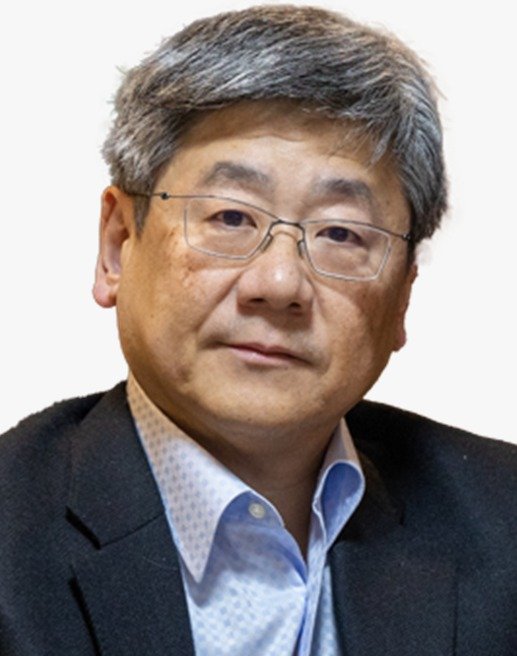
Eitaro Ogawa, born in 1967. Graduated from the Faculty of Letters at Osaka University and completed graduate studies at Saitama University. He is a well-known literary critic and the Chairman of the Japan Peace Studies Institute, and the recipient of the 18th Seiron New Wind Award. His major works include “The Promised Day: An Essay on Shinzo Abe” (Gentosha), “The Last Chance for Victory” (PHP Institute), “A Readable Showa History of War” (KK Bestsellers), “Twenty-One Chapters After Hideo Kobayashi” (Gentosha), “Chronicle of the Heisei Era” (Seirindo), and “The Value of a Writer” (by the publishers of the “Hanada” magazine).