Rather than on logic, the decision seems to be based on political decisions taken under the pressure of a manipulated public opinion.
by Eitaro Ogawa
Article 2 of 3. Read article 1.
A Staggering Violation of Human Rights
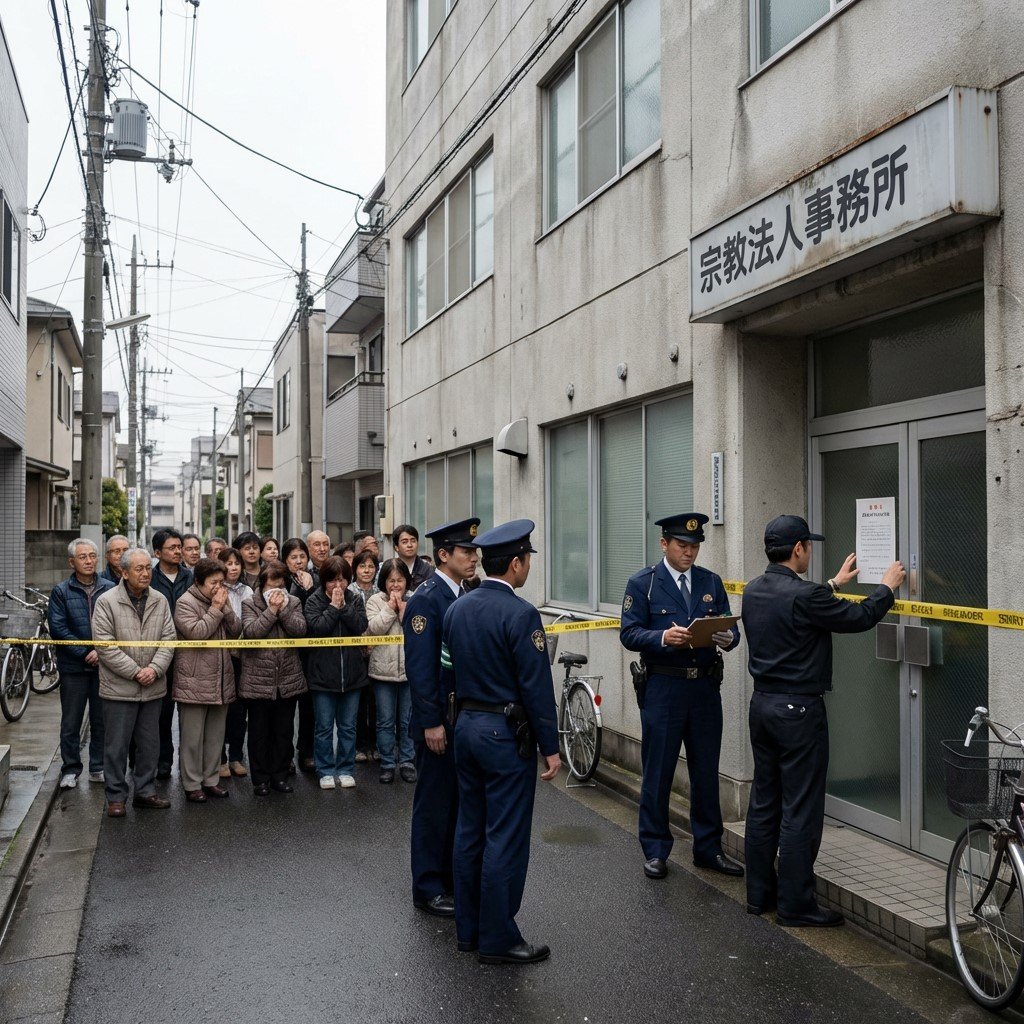
The actual harm is severe. As a result of this dissolution order, 1,933 employees of the organization, together with 2,441 dependent family members—a total of 4,374 people—stand to lose their livelihoods.
All assets, including the organization’s facilities, have been seized. Yet, in substance, these assets consist of donations and contributions from individual believers. Each believer’s donations, as well as their contributions of land and buildings, fall within the scope of property rights guaranteed by the Constitution. The faithful did not donate or contribute their property so that the state might confiscate it. For the state to seize everything and dispose of it through forced liquidation—like leveling land with a bulldozer—is, by the standards of any free society, an almost blindingly egregious violation of human rights.
For such an extraordinary infringement of human rights to be justified, would it not require overwhelmingly grave criminal conduct on the part of the organization and its members of a comparable magnitude?
In the past, dissolution orders against religious corporations on the grounds of extreme antisocial conduct have been limited almost exclusively to the case of Aum Shinrikyo. In the course of incidents associated with Aum Shinrikyo, a total of 29 people were killed (28 murders and one death resulting from abduction and confinement), and more than 6,000 people were injured. Within the group itself, five members were also killed, bringing the total number of deaths and missing persons to over 30. As a result, 13 individuals, including the leader Shoko Asahara, were sentenced to death, and five others received life imprisonment.
It is almost absurd to make such a comparison, but the Family Federation has committed no such heinous acts—indeed, it has not even been involved in criminal offenses.
The Kishida Administration’s Change in Legal Interpretation
The Religious Corporations Act stipulates that a dissolution order may be issued when “an act has been committed in violation of laws and regulations and is clearly recognized as significantly harming the public welfare.”
While “violation of laws and regulations” is, as a legal term, open to a range of interpretations, it has traditionally been understood in this context to refer to “criminally unlawful acts.”
However, following the assassination of Shinzo Abe, an intense wave of mediadriven criticism against the Family Federation suddenly erupted. Amid this atmosphere, then–Prime Minister Fumio Kishida made a significant change in legal interpretation.
On October 18, 2022, during a session of the House of Representatives Budget Committee, Prime Minister Kishida maintained the government’s longstanding position that civil torts under the Civil Code were not included among the grounds for the state to request a dissolution order against a religious corporation. However, the very next day, October 19, at the House of Councilors Budget Committee, he stated that “civil torts under the Civil Code may also be included,” thereby altering the law’s interpretation.
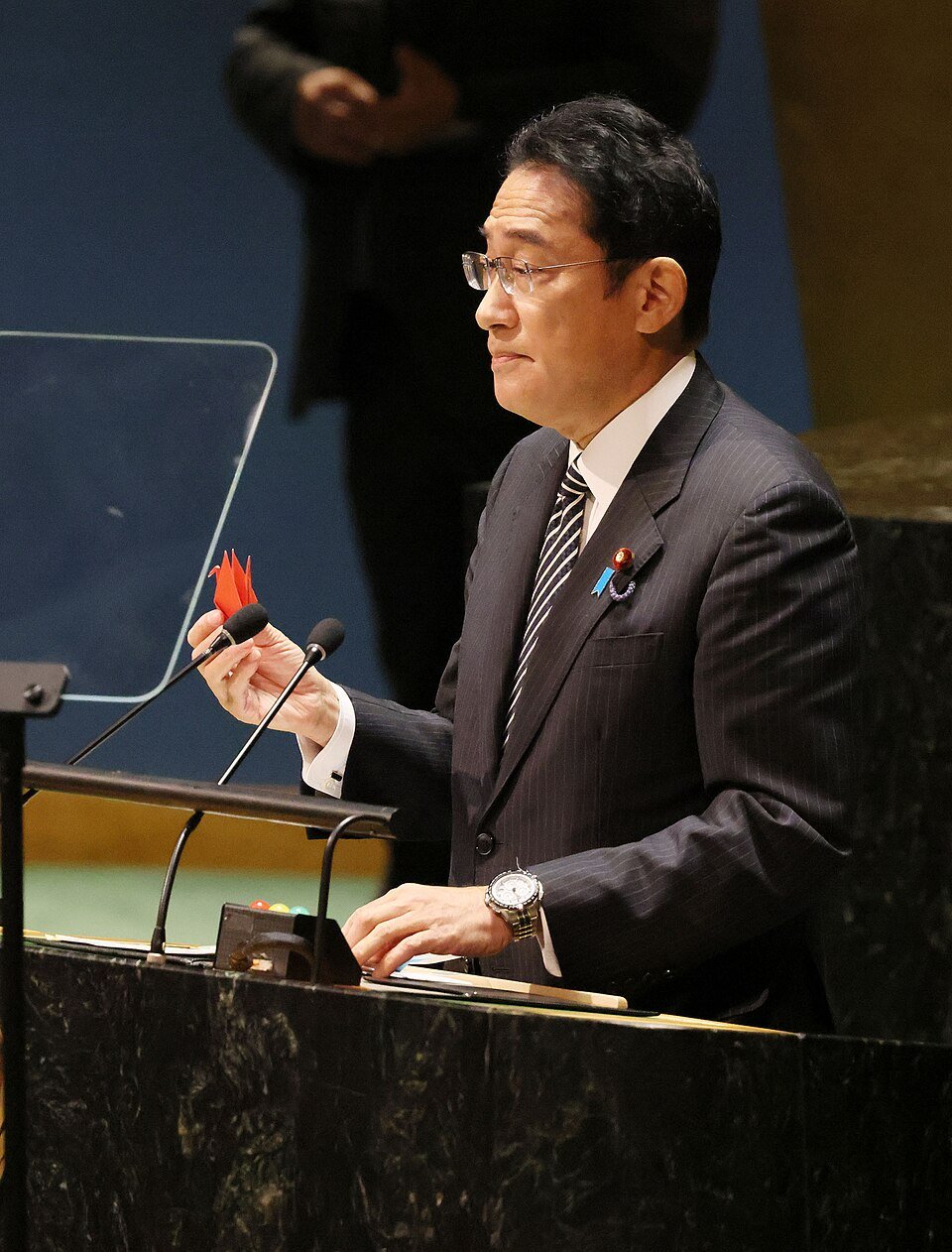
It is difficult to believe that there was a sufficient and legitimate reason for such a change in official position within the span of a single day. I infer that this was nothing more than an opportunistic move to evade public pressure—motivated by the political calculation that appearing to defend the heavily criticized Unification Church would place the administration in a precarious position.
However, this change carried profoundly serious implications. The previously understood requirement of “criminally unlawful acts” refers to crimes. As exemplified by the case of Aum Shinrikyo, if a religious corporation commits crimes that are “clearly recognized as significantly harming the public welfare,” it is only natural that it should be subject to dissolution.
Once the scope is extended to include civil torts, however, the situation changes fundamentally. Civil torts are adjudicated in civil litigation, which resolves disputes between private parties. Put simply, such cases often concern differences in claims—essentially disputes or quarrels.
In cases of murder, even if the victim’s family were to forgive the perpetrator, the state would nevertheless impose criminal punishment as a matter of public justice. By contrast, in disputes such as divorce or financial matters, where conflicting claims between parties make resolution difficult, the matter proceeds to civil litigation, typically resolved through settlement or compromise. If no agreement is reached, the plaintiff may withdraw the claim, or, in cases of serious wrongdoing, the matter may instead proceed to criminal prosecution.
If dissolution orders against religious corporations can be based on civil litigation, then forces seeking to dismantle a particular religion could file numerous civil lawsuits against the organization and use them to pressure the state to request its dissolution. This would make it all too easy to weaponize the system for religious persecution. The constitutional guarantee of freedom of religion would be easily undermined.
While I do not accept Mr. Kishida’s change in interpretation, it is also true that such irrationality often accompanies political decisions made under the pressure of public opinion and shifting political circumstances.
Three Major Doubts Regarding the District Court’s Decision
However, the judiciary is different. It is precisely the judiciary that must adhere strictly to legal principles; if political considerations sway it, it amounts to nothing less than judicial suicide. The Family Federation has not been involved in criminal offenses. All disputes have concerned civil litigation over donations, and even those cases date back, on average, 32 years. Even if they had been criminal cases, they would long since have been barred by the statute of limitations. Indeed, over the past 11 years, there have been zero instances of donations that were judicially recognized as illegal. Nevertheless, the District Court ordered the dissolution of the Family Federation as a result of civil litigation.

The “Association of Experts Calling for Fair and Impartial Trials,” with which I have recently become involved, issued the following three points of concern, along with a fundamental criticism, when the Tokyo District Court (Presiding Judge Kenya Suzuki) rendered its dissolution decision on March 25, 2025:
- Civil cases dating back an average of 32 years were used as grounds for dissolution.
- Even though there have been zero illegal donations in the past eleven years, the court recognized the “continuity of harm” based on assumptions not grounded in evidence—thereby violating the principle of adjudication based on evidence.
- The court tolerated instances of falsification and fabrication in documentary evidence submitted by the government.
Furthermore, as a fundamental problem, it must be noted that government petitions for dissolution of religious corporations are treated as noncontentious cases, and even the decisions themselves are not made public. To dissolve an organization comprising a large number of employees and believers through nonpublic proceedings represents a serious structural defect in the system.
Indeed, the irrationality of counting civil lawsuits from the distant past—long beyond even the statute of limitations applicable to criminal penalties—and using them as grounds for a dissolution order may have been made possible precisely because the proceedings were conducted in secrecy.

Eitaro Ogawa, born in 1967. Graduated from the Faculty of Letters at Osaka University and completed graduate studies at Saitama University. He is a well-known literary critic and the Chairman of the Japan Peace Studies Institute, and the recipient of the 18th Seiron New Wind Award. His major works include “The Promised Day: An Essay on Shinzo Abe” (Gentosha), “The Last Chance for Victory” (PHP Institute), “A Readable Showa History of War” (KK Bestsellers), “Twenty-One Chapters After Hideo Kobayashi” (Gentosha), “Chronicle of the Heisei Era” (Seirindo), and “The Value of a Writer” (by the publishers of the “Hanada” magazine).