A dissolution order is more than just a legal act; it fundamentally denies the dignity of the dissolved religion and its members.
by Eitaro Ogawa
Article 1 of 3
The Shock of the High Court’s Dissolution Decision
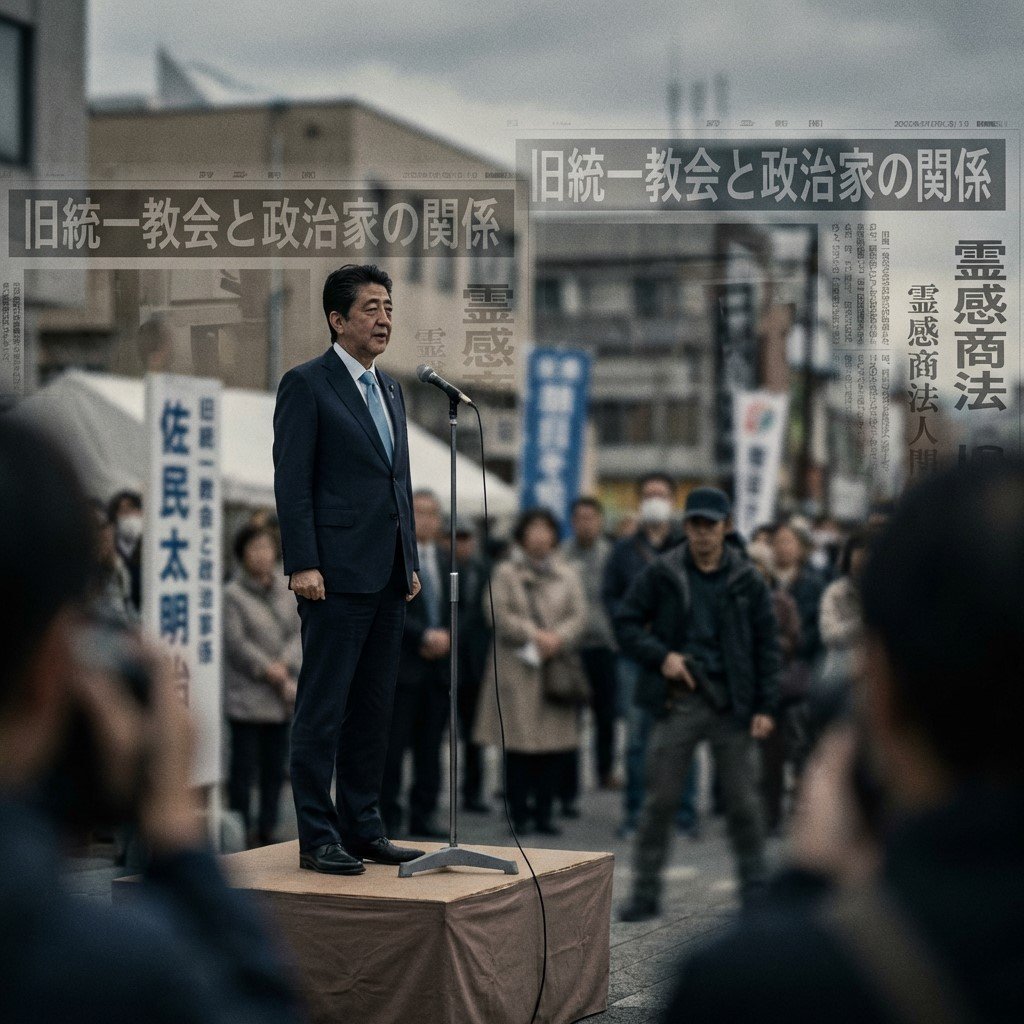
On March 4, the Tokyo High Court (Presiding Judge Motoko Miki) issued a dissolution order against the Family Federation for World Peace and Unification (formerly the Unification Church), and liquidation commenced immediately.
When the District Court issued its dissolution order on March 25 of last year, I was already astonished by the weakness of its grounds. However, at the District Court level, it is not uncommon for abnormal rulings to be rendered under the influence of public opinion, prevailing trends, or ideological pressures. I therefore regarded that decision as part of the broader turmoil fueled by the extraordinary media backlash against the Family Federation following the assassination of Shinzo Abe.
Yet the High Court’s decision goes even further: it presents grounds for dissolution that are even more irrational than those of the lower court, and it has been executed with remarkable severity. To leave this unchallenged would, in my view, amount to a form of suicide for a nation governed by the rule of law. For this reason, I have taken up my pen.
To be frank, I had long preferred to keep my distance from issues concerning the Family Federation. Many of its members had supported the conservative wing of the Liberal Democratic Party for years, and I have several close acquaintances among them. Nevertheless, I have never engaged deeply with the organization or its doctrines. Needless to say, in Japan, it is customary not to inquire into one another’s religious beliefs. I rarely speak of my own faith, and I know little about the beliefs of even my close friends.
As for the Family Federation, ever since my university days—when controversies such as so-called “spiritual sales” and activities of CARP, the affiliated student group, were reported—it has long been associated in public discourse with unfavorable terms such as “cult” and “brainwashing.” Even before verifying the truth of such claims, I instinctively kept my distance, guided by the attitude that “it is best not to get involved.” I suspect most Japanese people feel the same way.
Looking back now, based on my own experience, the members of this organization whom I have known have generally been people of high intellectual caliber, with gentle character and sound judgment. Yet, regardless of such impressions, when confronted with the organization as a religious entity, one cannot help but feel a certain wariness. After all, the image disseminated through television and weekly magazines has been overwhelmingly negative. Without attempting to verify the truth or engage in discussion, many years passed.
The Backlash Against the Unification Church Following the Assassination
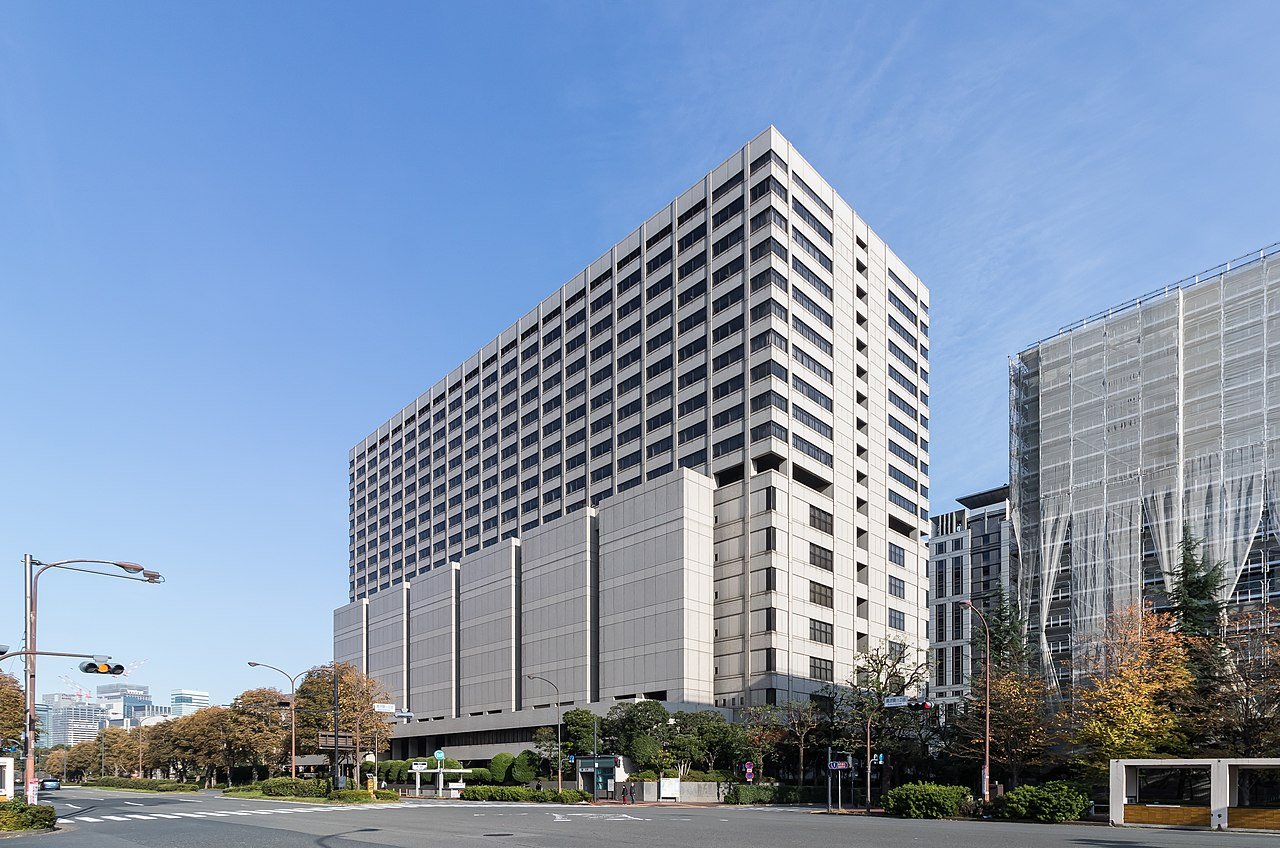
Immediately after Abe’s assassination, I was struck by the bizarre transformation of television programs—from memorial broadcasts mourning Abe to relentless criticism of the Unification Church, and then, by extension, of Abe himself, all within a matter of days. At the time, however, the shock of Abe’s death was so overwhelming to me that I lacked the energy to reflect on these developments.
Around that time, when reports emerged that then–Prime Minister Fumio Kishida had begun moving toward requesting the dissolution of the Unification Church, I paid little attention and let it pass.
However, in February of the year before last, while the case was still under deliberation at the Tokyo District Court, I was asked, through a certain connection, to submit a written opinion to the court regarding the dissolution order. For the first time, I examined the factual background—and was astonished. Both the media coverage and the government’s procedures were riddled with forced reasoning and distortions that disregarded the facts, all seemingly aimed at socially crushing this organization.
I will not go into the details here. Still, the opinion I wrote at that time is included in “Objections to the ‘Dissolution Order’ of the Family Federation” (edited by Tatsuki Nakayama, Good Time Publishing). Even so, I had no intention of becoming deeply involved in this issue. To take sides in matters concerning a religious organization risks being perceived as endorsing its founder or doctrines. Although I sharply criticized the irrationality of the dissolution request, I did not investigate, nor do I claim knowledge of, the doctrines or actual religious practices of the Family Federation.
As a matter of principle, I respect all religions. Yet as a thinker and critic, I do not intend to either criticize or endorse any religion without sufficient study. This basic stance remains unchanged.
However, when the High Court decision was issued, and the seizure of the organization’s facilities began almost immediately, something within me was triggered.
A Dissolution Order as a “Death Sentence”
With this, the dissolution order has effectively become a fait accompli, and within a few months, the Supreme Court will likely finalize it. As will be shown below, the decisions of both lower courts were built upon a predetermined conclusion—“dissolution first”—and sustained through a series of forced and strained justifications. If the Supreme Court were to affirm such reasoning, it could shatter the very foundations of a rule-of-law state and a free society, potentially triggering the widespread acceptance of what can only be described as “dark” or unjust trials in Japan.
Many readers may find this characterization exaggerated. The negative image surrounding the organization is extremely strong, and Japanese society appears to have developed a vague sense of acceptance toward the dissolution order by overlaying it onto that image. However, in my view, this case does not concern only a single religious corporation, the Family Federation. Whether this dissolution order is accepted or rejected will serve as a touchstone for the future of freedom in Japanese society. It is a matter of that magnitude.
A dissolution order against a religious corporation, if applied to an individual, would be equivalent to a death sentence. In fact, immediately after the High Court’s decision, lawyers acting as liquidators—responsible for carrying out the dissolution—entered approximately 280 of the organization’s facilities nationwide, each accompanied by multiple police officers. Members of the organization were immediately expelled from these premises. From a general perspective, the scene strongly resembled a police raid conducted under a search warrant, treating the organization as if it were a fully criminal entity.
Strangely, however, neither television nor newspapers reported any photographs or footage of these scenes. There have been numerous reports that when members attempted to record the execution with photos or videos, they were stopped by officials.
If the organization were truly so egregious as to warrant such overt coercive enforcement by state power, should not the public have been fully informed of how that enforcement was carried out?
Instead, the authorities appear to have imposed a form of media control, concealing these “raids” from public view. Why?
I suspect it is because the very grounds for the dissolution order were, even by the standards of judicial reasoning—indeed, even by common social standards—irrational and deeply embarrassing. The concealment of such a large-scale exercise of state power is not something the Japanese public should take lightly.
A dissolution order is more than a mere act of legal enforcement; it constitutes a fundamental denial of the dignity of the religion in question. Revoking its status as a religious corporation is, in effect, the state declaring that it is an entity that should not be tolerated in Japanese society. For hundreds of thousands of believers, this means that the very core of their identity—their faith—is branded as socially deviant, and their dignity is thereby denied.

Eitaro Ogawa, born in 1967. Graduated from the Faculty of Letters at Osaka University and completed graduate studies at Saitama University. He is a well-known literary critic and the Chairman of the Japan Peace Studies Institute, and the recipient of the 18th Seiron New Wind Award. His major works include “The Promised Day: An Essay on Shinzo Abe” (Gentosha), “The Last Chance for Victory” (PHP Institute), “A Readable Showa History of War” (KK Bestsellers), “Twenty-One Chapters After Hideo Kobayashi” (Gentosha), “Chronicle of the Heisei Era” (Seirindo), and “The Value of a Writer” (by the publishers of the “Hanada” magazine).