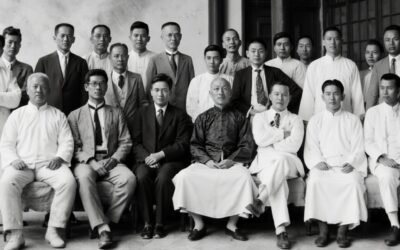
An international webinar compared what happened to Tai Ji Men with other cases of gross human rights violations.
by Daniela Bovolenta
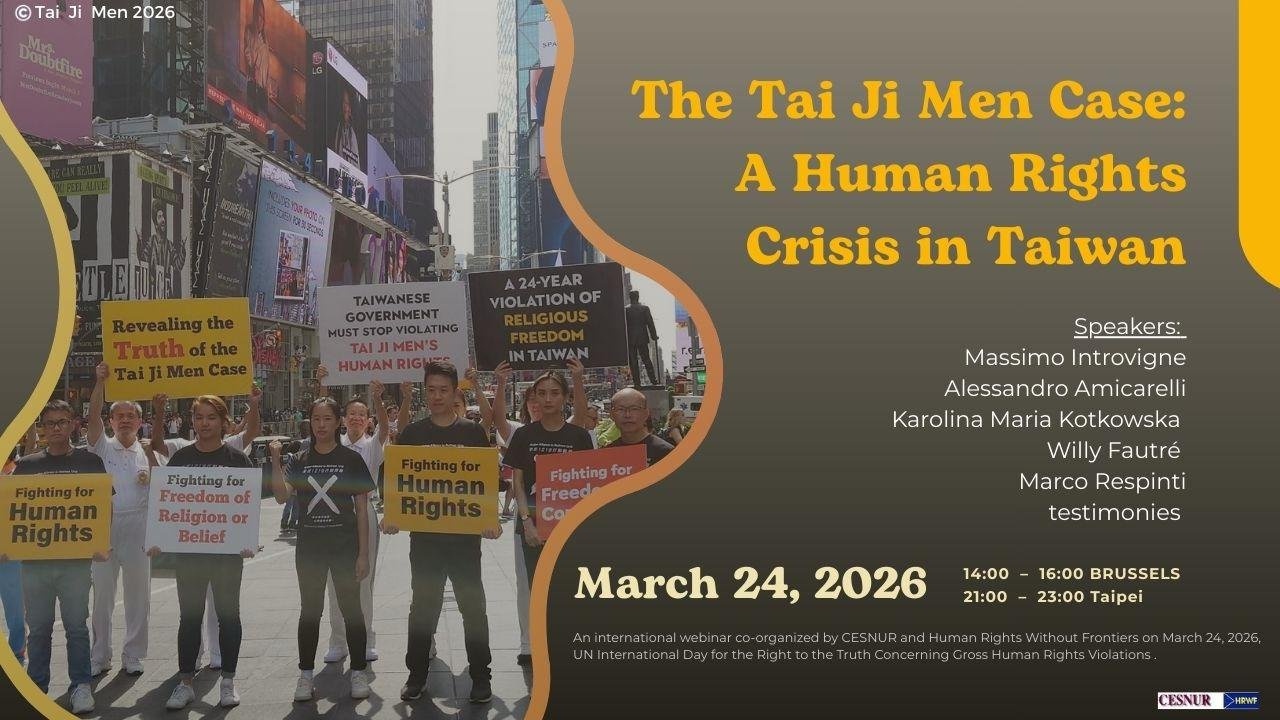
The webinar “The Tai Ji Men Case: A Human Rights Crisis in Taiwan,” coorganized by CESNUR and Human Rights Without Frontiers on March 24, 2026, was held on the United Nations International Day for the Right to the Truth Concerning Gross Human Rights Violations and for the Dignity of the Victims. The date, established in memory of Archbishop Óscar Romero, has become a global reminder that truth is not a luxury of history but a living requirement for justice. The event opened with Massimo Introvigne, Italian sociologist and Managing Director of CESNUR, who chaired the first session and delivered an introduction that set the tone for the entire webinar.
Introvigne began far from Taiwan, recounting his February 2026 journey to Rwanda, where he visited the Kigali Genocide Memorial and the regional memorial in Musanze. He described the overwhelming silence of the mass graves, the testimonies of survivors, and the lingering presence of a tragedy that reshaped the country’s moral landscape. The stories he heard—from a school principal who lost nine siblings, from a memorial caretaker guiding visitors through the ruins of the old Court of Appeal where hundreds were massacred, and from his own guide, who survived as a child after his parents were killed—illustrated how human rights violations begin long before violence erupts. They start with stereotypes, rumors, bureaucratic decisions, and silence.
From there, Introvigne moved to what he called the “Rome Model,” a framework he proposed in 2011 while serving as the OSCE Representative for combating racism, xenophobia, and religious discrimination. Human rights violations, he explained, follow a predictable slope: intolerance, discrimination, persecution. The avalanche begins quietly, and only early intervention can stop it. This, he argued, is why the Tai Ji Men case matters. No one died, but the same logic is visible: false accusations, ideological targeting, unlawful detentions, reputational destruction, and the confiscation of property despite a Supreme Court ruling of innocence. Human rights violations do not begin with machetes, he said—they begin with lies. The lesson of Rwanda is that no society is immune, and the lesson of March 24 is that truth is the first step toward restoring dignity. He concluded by urging participants to listen to the truth and ensure that what happened in Rwanda and to Tai Ji Men never happens again.

Introvigne then presented a video highlighting the milestones of Tai Ji Men’s activities during 2025—an impressive sequence of cultural exchanges, international conferences, performances, and peace missions across several continents, all carrying the movement’s message of conscience, love, and harmony. He then introduced the two speakers of the first session: Alessandro Amicarelli, a Londonbased human rights attorney and President of the European Federation for Freedom of Belief, and Karolina Maria Kotkowska, professor at the Center for Comparative Studies of Civilizations at Jagiellonian University in Krakow.
Amicarelli offered a detailed legal and human rights analysis of the Tai Ji Men case, emphasizing that the right to the truth is not merely a moral aspiration but a binding principle of international law. He recalled that the case began with the December 19, 1996, crackdown, when prosecutors and police raided Tai Ji Men, detained its leaders, and orchestrated a media campaign that portrayed them as criminals before any trial had taken place. He explained how the core of the case revolved around the misinterpretation of traditional red envelopes—gifts offered by dizi (disciples) to their Shifu (Grand Master)—as taxable tuition fees for a non-existent cram school. This reinterpretation, he argued, was not only legally baseless but also a violation of freedom of religion or belief, as it reduced a spiritual relationship to a commercial transaction.
Amicarelli reviewed the 2007 Supreme Court ruling that fully acquitted Tai Ji Men of all charges, recognized the red envelopes as gifts, and ordered compensation for wrongful detention. Yet, he noted, the tax administration refused to comply, correcting five years of tax bills to zero but using a technicality to keep the 1992 bill alive. This persistence, he said, contradicts the principle of consistency and violates Article 2(3)(c) of the ICCPR, which requires states to enforce remedies granted by courts. The nationalization of Tai Ji Men’s sacred land in 2020, based on the disputed 1992 bill, was, for Amicarelli, a clear breach of property rights and freedom of religion. He concluded that the case remains a test of the rule of law in Taiwan: a democracy cannot tolerate administrative bodies ignoring the judiciary.

Kotkowska approached the theme from the perspective of memory, trauma, and the intergenerational transmission of fear. She recalled how, as a teenager in Poland, she and a Jewish friend both kept “emergency folders” at home—documents and valuables to take if they ever had to flee. Only later did she realize that this reflex was inherited from the traumas of war and occupation. Human rights violations, she argued, do not end when violence stops; they persist across generations. This is why truth is essential: without it, the past remains unresolved, and the mechanisms of exclusion can reappear. She reflected on the Ulma family, executed in 1944 for sheltering Jews, and on how their story illustrates both the brutality of persecution and the moral clarity of solidarity.
Turning to Taiwan, she noted that the Tai Ji Men case shows how stigmatization, administrative abuse, and media manipulation can inflict longlasting harm even without physical violence. The 1996 media campaign that labeled Tai Ji Men a “dangerous cult,” the detentions, and the 2020 nationalization of their sacred land all exemplify how institutions can perpetuate injustice despite evidence and court rulings. The right to the truth, she said, applies not only to past atrocities but to ongoing cases like this one. She urged the international community to remain vigilant and to recognize contemporary violations with the same seriousness as historical ones.
The second session was chaired by Willy Fautré, co-founder and director of Human Rights Without Frontiers, who introduced a second video recounting how Canadian judges rendered justice to a family of restaurant owners unfairly persecuted through fabricated tax bills. However, the verdict came too late, as the health and family harmony of the unjustly accused taxpayers had already been destroyed.

Fautré used the video’s theme to introduce his reflections on the right to the truth. He recalled his visit to the JingMei White Terror Memorial Park in Taipei, where thousands of political prisoners were once detained and tortured. Taiwan, he said, has made progress in acknowledging the crimes of the authoritarian era, but the manipulation of truth remains a recurring feature of human rights violations worldwide. Perpetrators often construct biased narratives to evade accountability, and when these narratives dominate public discourse, victims suffer a second time. Documentation, education, and public memory are essential tools to counter distortion. Fautré argued that the Tai Ji Men case contains all the elements of a struggle for truth: fabricated accusations, administrative abuse, reputational harm, and decades of resistance. He concluded with a bold proposal: to build in Taipei a “Wall of Shame” honoring the victims of the National Taxation Bureau, mirroring the memorials of the White Terror and serving as a permanent reminder of the need for accountability.
Five Tai Ji Men dizi then offered personal testimonies. The first, Lana Tien, an elementary school English teacher, reflected on the meaning of the International Day for the Right to the Truth. She recalled the assassination of Archbishop Romero and the long delay before the truth was officially acknowledged. Turning to Taiwan, she described the Tai Ji Men case as a “Legal and Tax 228,” comparing it to the infamous 1947 228 Incident, and as a test of the country’s democratic maturity. She explained how the Supreme Court’s 2007 ruling of innocence was contradicted by the tax administration’s refusal to cancel the 1992 bill, leading to the 2020 nationalization of Tai Ji Men’s sacred land. As a teacher, she emphasized the importance of planting the seeds of truth, courage, and critical thinking in children. Human rights, she said, are not slogans in textbooks but values that every generation must protect.

The second testimony came from Jovie Kang, a senior high school student who described her journey from shyness to confidence thanks to the support of her Shifu and fellow dizi. Human rights, she said, once felt abstract, but through Tai Ji Men’s global peace missions, she learned that truth is the foundation of justice. She expressed sorrow that her Shifu, honored internationally for promoting conscience and peace, has faced persecution in his own country. The case, she argued, is a test of conscience for Taiwan: when people witness injustice, they must not look away. Quoting Hannah Arendt, she warned against becoming complicit in the “banality of evil” by remaining silent. Transparency and integrity, she said, are essential to ensuring that truth is never buried.

The third testimony was delivered by Olivia Yen, an audiologist who drew parallels between her medical work and the struggle for human rights. Hearing loss, she explained, is often invisible, just like the suffering of victims of state violence. Listening attentively is the first step toward restoring dignity. She contrasted this ethic of empathy with the behavior of officials who have persecuted Tai Ji Men for thirty years, breaking promises made publicly in 2010 to resolve the case. She criticized Taiwan’s transitional justice efforts for failing to identify perpetrators, noting that declaring “only victims, no perpetrators” obscures half the truth. Like Tien, she said that the Tai Ji Men case is a “Tax 228,” and true transitional justice must begin by rectifying it and holding wrongdoers accountable.

The fourth testimony came from Helen Kuo, a retired civil servant who once believed deeply in the integrity of government. Her perspective changed on December 19, 1996, when she saw the televised raid on Tai Ji Men and witnessed the ensuing media smear campaign. She described the humiliation of being mocked by colleagues and even by children, repeating slanders they had heard on TV. She recounted how Tai Ji Men transformed her life, helping her overcome chronic illness, and how painful it was to see her traditional gifts to her Shifu reinterpreted as taxable tuition fees. She condemned the illegal nationalization of Tai Ji Men’s land and officials’ refusal to obey court rulings. Having traveled internationally with Tai Ji Men to promote peace, she expressed disbelief that a community admired abroad could be persecuted at home. She urged Taiwan’s President to fulfill his human rights commitments and return the confiscated land.
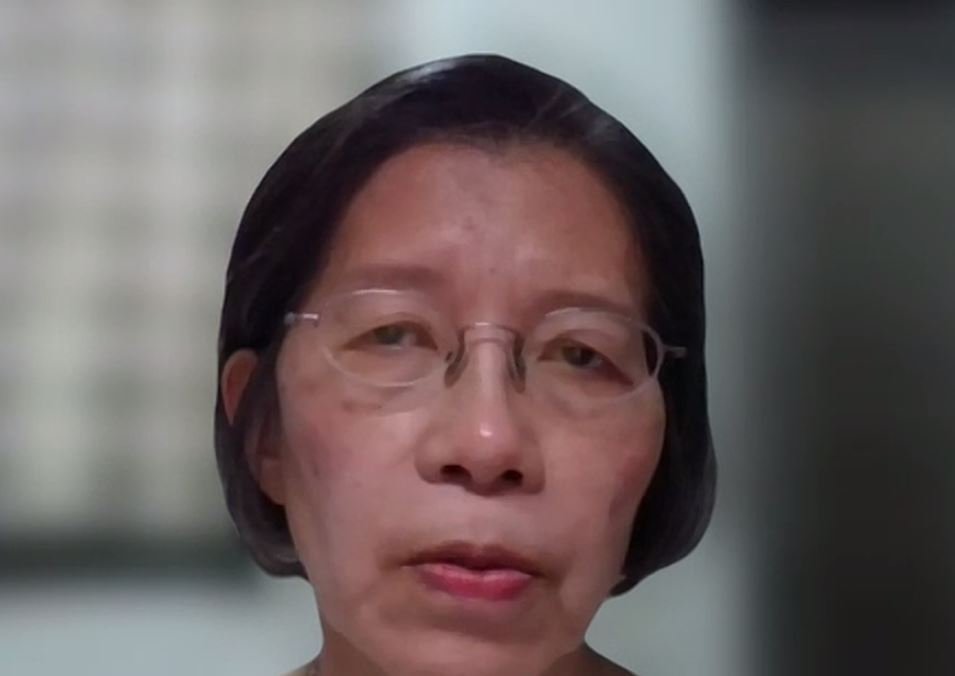
The final testimony was offered by Louis Chen, an AI consultant who framed his experience through the logic of his profession. In AI, he said, “Garbage In, Garbage Out” is a fundamental rule: false inputs produce false outputs. He then recounted his own 13year ordeal as a tax victim, beginning with a legitimate U.S. patent licensing deal that the tax bureau used—without evidence—to fabricate five years of “hidden income.” When he won a criminal case against officials for forgery, he faced retaliation: illegal property auctions, harassment, job loss, detention, and even physical assault. He finally cleared his name in 2023, but the damage to his life persists. This, he argued, is why the Tai Ji Men case matters: it is a textbook example of a fabricated reality built on nonexistent evidence. When the state has a financial interest in a lie, truth becomes its enemy. The only antidote is conscience, the compass taught by Tai Ji Men’s Shifu. By fighting for truth in this case, he said, we fight for victims everywhere. He closed with a reflection from Thomas Jefferson: truth will prevail if left to herself—but when the state suppresses truth, she needs defenders.
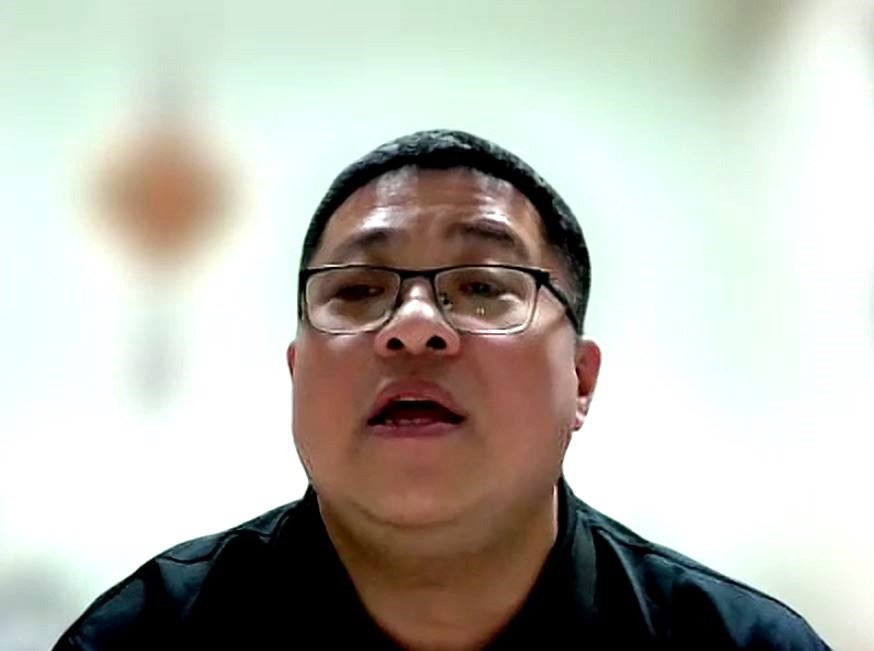
The webinar concluded with remarks by Marco Respinti, Italian scholar, journalist, and Director-in-Charge of “Bitter Winter.” Respinti drew inspiration from the latest issue of “Voci di Pace,” the Italian quarterly of the Universal Peace Federation and the Women’s Federation for World Peace. He summarized Editor-in-Chief Giorgio Gasperoni’s call to recover the original meaning of human dignity, rooted in Thomas Aquinas, the School of Salamanca, and Bartolomé de Las Casas. Dignity, Respinti explained, is not a feeling or a political slogan but an ontological condition grounded in the divine image. Natural law, far from being a list of prohibitions, is the participation of human reason in the order of justice. The School of Salamanca extended this dignity universally, laying the foundations of international law, while Las Casas brought these principles into concrete historical debates.
Respinti noted that these ideas resonate beyond Catholicism; C.S. Lewis called natural law the “Tao” to emphasize its universality. Turning to the Tai Ji Men case, he argued that the thirtyyear persecution of a peaceful community is a direct violation of human dignity and natural law. Fabricated accusations, administrative abuse, and the refusal to respect judicial rulings constitute an assault on what it means to be human. He also recalled that the Family Federation for World Peace and Unification, which promotes “Voci di Pace,” is itself persecuted in Japan and South Korea, showing how violations of dignity unite victims across traditions. On this UN International Day, he said, the injustice suffered by Tai Ji Men must be made clear to the world’s conscience. Defending victims is more than an act of solidarity—it is a requirement of natural law.
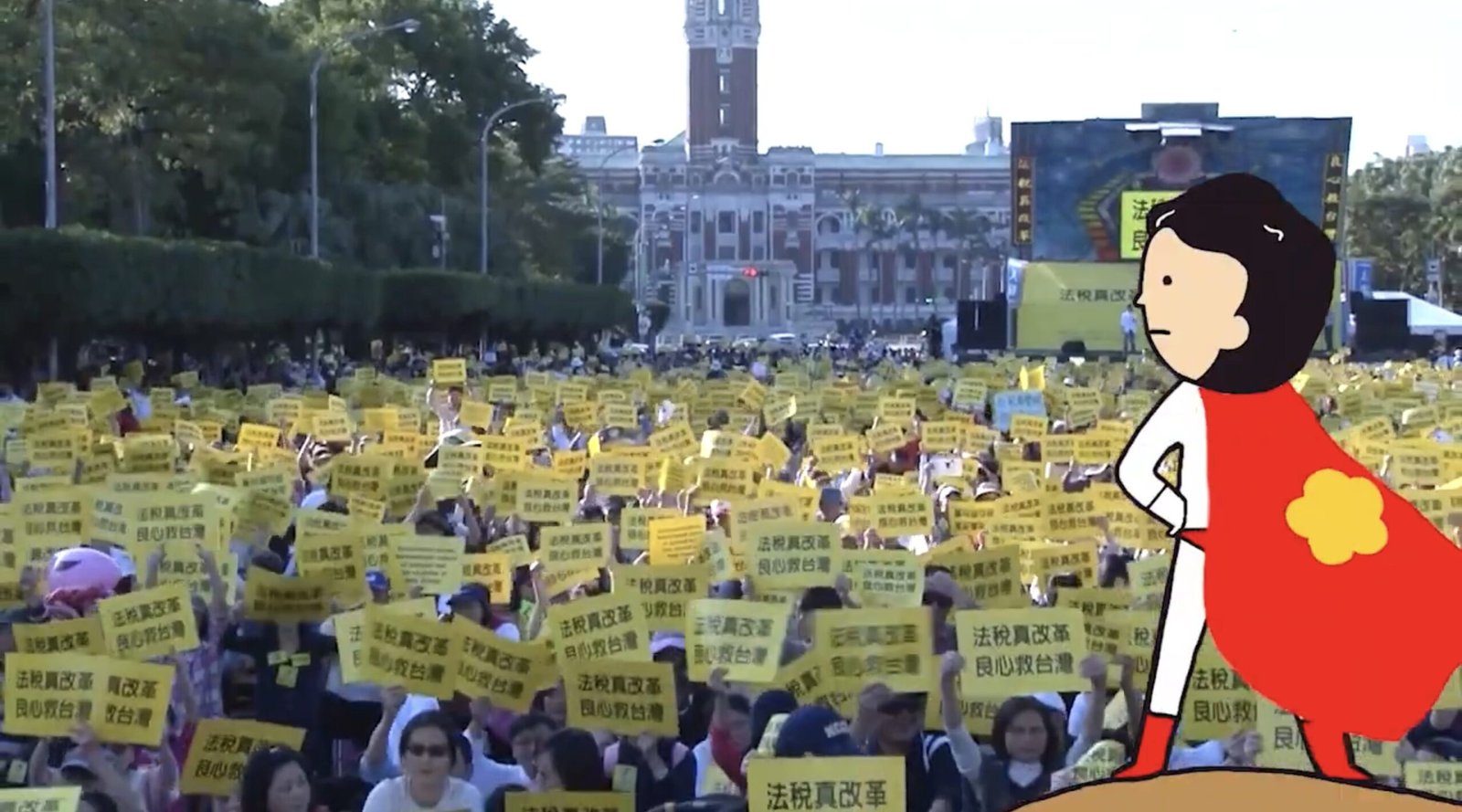
As in previous webinars, the evening ended with a vibrant musical video, this time presenting “the truth about the Tai Ji Men case” in an energetic rockandroll style, reminding participants that the struggle for justice is also a struggle to keep truth alive, audible, and impossible to ignore.