Experts warned that when corrupt bureaucrats and prosecutors control the narratives, reporting becomes re‑education, and minorities pay the highest price.
by Daniela Bovolenta
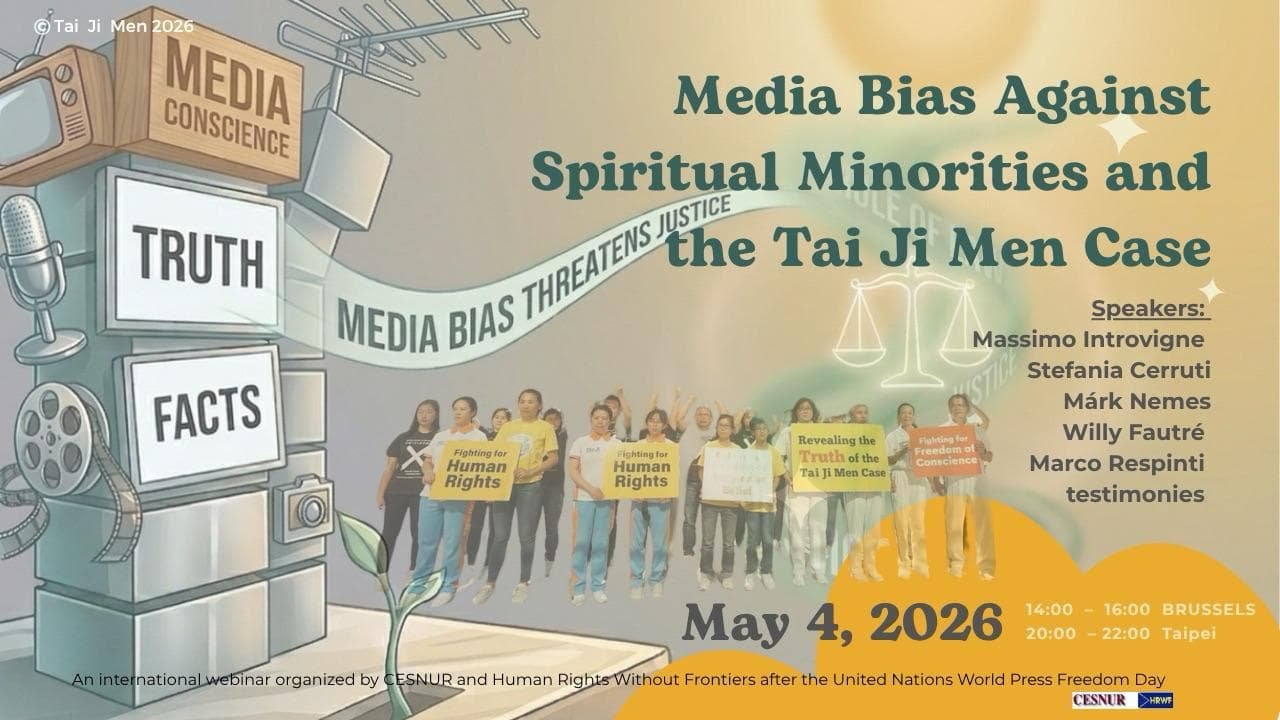
On May 4, 2026, one day after the United Nations World Press Freedom Day, CESNUR and Human Rights Without Frontiers held one of their periodical webinars on the Tai Ji Men case, this time devoted to a theme that has become increasingly urgent in contemporary societies: “Media Bias Against Spiritual Minorities and the Tai Ji Men Case.”
Massimo Introvigne, Italian sociologist and managing director of CESNUR, opened the meeting by recalling that the defense of press freedom cannot be separated from the responsibility to prevent the media from becoming instruments of hatred. He returned to the lessons of the 1994 genocide against the Tutsi in Rwanda, which he has studied extensively and revisited during a recent trip. There, he noted, the genocide was not executed by a small elite but by ordinary citizens who had been exposed for years to a relentless campaign of dehumanization. Magazines such as “Kangura” and the infamous Radio Télévision Libre des Mille Collines created a climate in which Tutsi were portrayed as existential enemies, and coded messages such as “cut down the tall trees” became calls to murder. Hate speech did not cause the genocide alone, but it prepared the ground for it, demonstrating how words can become weapons when repeated with authority and without restraint.

Introvigne warned that the same mechanism—though obviously on a far smaller scale—can be seen whenever media adopt hostile narratives against spiritual minorities. In Taiwan, after the fabricated accusations against Tai Ji Men in 1996, dozens of outlets repeated unverified claims, including grotesque fantasies such as “raising goblins.” Although the courts eventually cleared Tai Ji Men completely, the media’s stigma persisted. Hate speech, he concluded, must be stopped when it begins, not when it is too late.
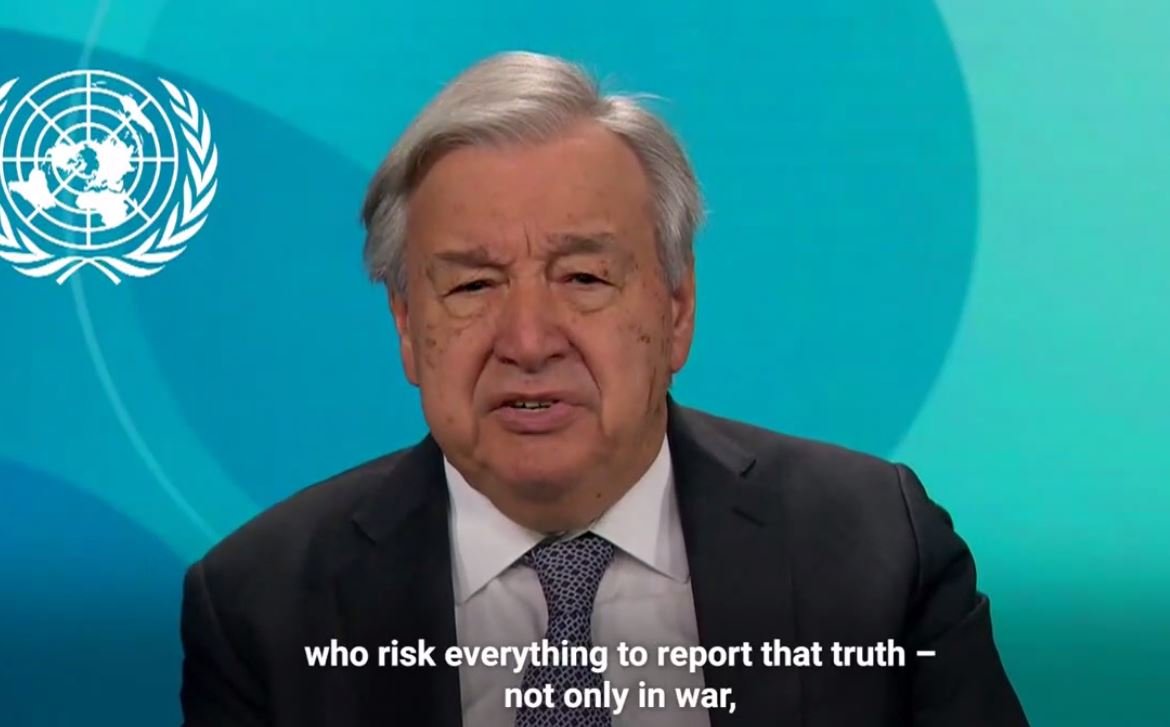
He then introduced a video message from UN Secretary‑General António Guterres, who emphasized that press freedom is essential to peace, cooperation, and the protection of human dignity. He honored journalists who were jailed or killed for their work and noted that, unfortunately, 85% of crimes against them remain unpunished.
The first session featured two scholars. Stefania Cerruti, External Relations Manager of the San Marino‑based Major Emergencies and Disasters International School (MEDIS), reflected on the dual role of the media in times of crisis. In disaster management, she explained, information can save lives—but distorted information can destroy them. Epidemics, earthquakes, and political upheavals often generate fear, which in turn creates a demand for scapegoats. During the COVID‑19 pandemic, religious minorities around the world were accused of spreading the virus, even when they followed the same rules as everyone else. The mechanism was familiar: pre‑existing prejudices found an outlet in sensationalist reporting. Cerruti drew a parallel to the Tai Ji Men case, in which the media amplified unverified accusations, contributing to long‑term stigma. Whether in the wake of a natural disaster or during a political campaign, she argued, the media can either strengthen social cohesion or tear it apart. The responsibility to choose wisely lies with journalists, institutions, and the public alike.
Márk Nemes, researcher at the Hungarian Academy of Arts and Deputy Director of CESNUR, examined the issue from the perspective of freedom of expression as defined in Article 19 of the Universal Declaration of Human Rights. He noted that in an age dominated by algorithms and attention‑driven content, the right to impart information can easily become a tool for overpowering lesser‑heard voices.

Sensationalism, he said, thrives on what is strange or unfamiliar, and new religious movements often become easy targets. The Tai Ji Men case illustrates how misrepresentation can shape public perception for decades. Yet Nemes also highlighted a positive development: today, when one searches for “Tai Ji Men,” the first results are scholarly and human‑rights sources rather than defamatory articles. This shift shows that balanced, value‑centered discourse can prevail when supported by transparency, pluralism, and critical engagement.
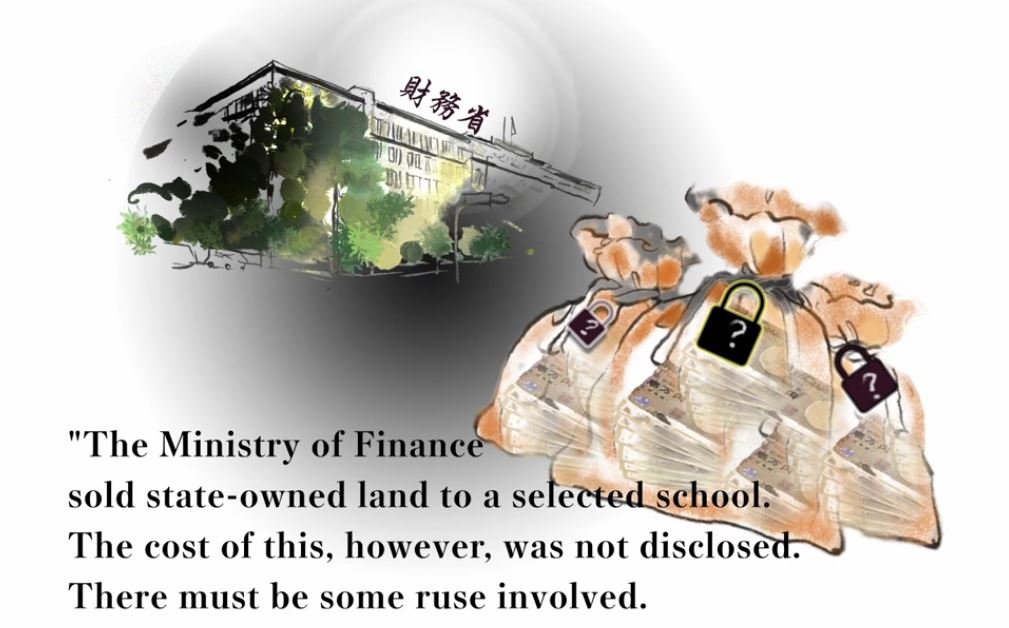
The second session was chaired by Willy Fautré, co‑founder and director of Human Rights Without Frontiers. He introduced a video on the press’ role in exposing Japan’s Moritomo Gakuen case, a 2017 scandal involving the discounted sale of state-owned land in Osaka to a school operator with political ties. The case shows that the media may play a praiseworthy role in denouncing corrupt bureaucrats, while, in other cases, journalists collude with them.
Fautré then reflected on the meaning of World Press Freedom Day. He warned that every war begins with words, and that in today’s democracies the most insidious battles are waged not with weapons but with headlines. Unscrupulous journalists, he argued, often turn spiritual minorities into convenient villains, as shown by recent French cases where Jehovah’s Witnesses were falsely linked to violent crimes through sensationalist reporting that editors later refused to correct. Such distortions, he noted, reinforce stigma, invite political hostility, and sometimes even survive judicial scrutiny, leaving entire communities penalized twice—first by the press, then by the courts. Tai Ji Men, he added, knows this pattern all too well. In 1996, Taiwanese media echoed unverified accusations, branding the group as tax delinquents and “cult‑like” long before any court examined the facts. Although the judiciary eventually fully cleared Tai Ji Men, the reputational damage from years of biased reporting has never been repaired. Fautré then introduced the five testimonies of Tai Ji Men dizi.
The first testimony was offered by Zona Chen, an educator, who spoke of the importance of conscience in both journalism and public life. She recalled how, in 1996, the prosecutor in the Tai Ji Men case violated confidentiality rules, and the media amplified false accusations, causing widespread misunderstanding and discrimination. Although the Supreme Court declared Tai Ji Men innocent in 2007 and awarded compensation for wrongful detention, the tax case remains unresolved thirty years later. Chen cited international experts who have called for a retrial and for the revocation of the erroneous tax bill. She also shared personal reflections on peace, inspired by a visit to the 1453 War Museum in Türkiye, and on the transformative impact of conscience education in her classroom. She concluded by urging the Taiwanese government to respect Supreme Court rulings, rescind the illegal tax bills, and restore justice.

The second testimony came from Amanda Hsiao, a factory planner working in the AI sector. She described AI as a double‑edged sword: it can enhance information accuracy but can also spread misinformation at unprecedented speed. As a university student during the height of the media campaign against Tai Ji Men, she experienced firsthand the effects of biased reporting—mockery from classmates, social isolation, and emotional distress. Even after the 2007 ruling, the media never corrected the narrative, leaving society trapped in outdated prejudices. Working in the technology industry has made her acutely aware of how easily information can be manipulated. She emphasized that justice does not happen automatically; it requires continuous vigilance. Her decades of Qigong practice helped her rebuild her health, improve her family relationships, and find balance in a high‑pressure work environment. She concluded by calling for conscience‑based choices in an age where information is power.

The third dizi who offered his testimony, Joffrey Hung, a college student of interior design, drew a striking parallel between his discipline and the foundations of a democratic society. Just as a single falsified parameter can cause a building to collapse, a state that manipulates data—whether geological surveys or tax assessments—places its entire social structure at risk. He warned that when public authorities override judicial truth, as in the Tai Ji Men case, where false tax data persisted despite the 2007 Supreme Court ruling, the result is a form of “state‑level data fraud” capable of eroding public trust and destabilizing national life. Hung reflected on how thirty years of injustice have shown that a system built on lies cannot stand, and he emphasized that in the age of AI, where misinformation can be replicated at lightning speed, humanity, conscience, and critical judgment are the only real safeguards. Justice, he concluded, must be more than a beautiful blueprint: it must be the air citizens can breathe.

The fourth testimony was delivered by Luna Ho, an elementary school teacher, who focused on the human‑rights implications of Taiwan’s tax system. She noted that although the Supreme Court declared Tai Ji Men innocent of all charges, including tax evasion, in 2007, the National Taxation Bureau continued to issue illegal tax bills. Eventually, one fabricated bill led to the nationalization of Tai Ji Men’s sacred land in Miaoli. This, she argued, reveals a structural imbalance in Taiwan’s administrative system, where a single agency can override the judiciary. As a teacher, she worries about the example this sets for children: if officials distort truth and refuse to correct mistakes, how can educators teach moral reasoning? She also criticized the requirement that citizens pay one‑third of a disputed tax before filing an appeal, calling it a violation of the principle that where there is a right, there must be a remedy. She concluded by urging the government to revoke the illegal tax bill under Article 117 of the Administrative Procedure Act and restore justice to both Tai Ji Men and the Taiwanese people.

The fifth testimony was offered by Jerry Lin, a technical service manager at a Japanese company, who approached the issue from the perspective of corporate systems. He noted that Taiwan is often praised for its press freedom, yet true freedom requires the ability to recognize and correct errors. The Tai Ji Men case, he argued, is a “bug” in Taiwan’s democratic system, where checks should normally be followed by appropriate action. The courts performed the “check” by confirming innocence, but the National Taxation Bureau refused to “act,” instead escalating the injustice by allowing for nationalization of private property. In any company, he said, such a refusal to correct errors would lead to collapse. The media should function as society’s “final firewall,” but political polarization, low public trust, and lack of editorial independence have weakened their ability to hold power accountable. Lin warned that if authoritarian residues are not removed, Taiwan’s technological achievements could be undermined by systemic failures. He called on society and the media to exercise civic oversight and on the government to revoke the illegal tax bills, “debug” the remnants of authoritarianism, and uphold the rule of law.
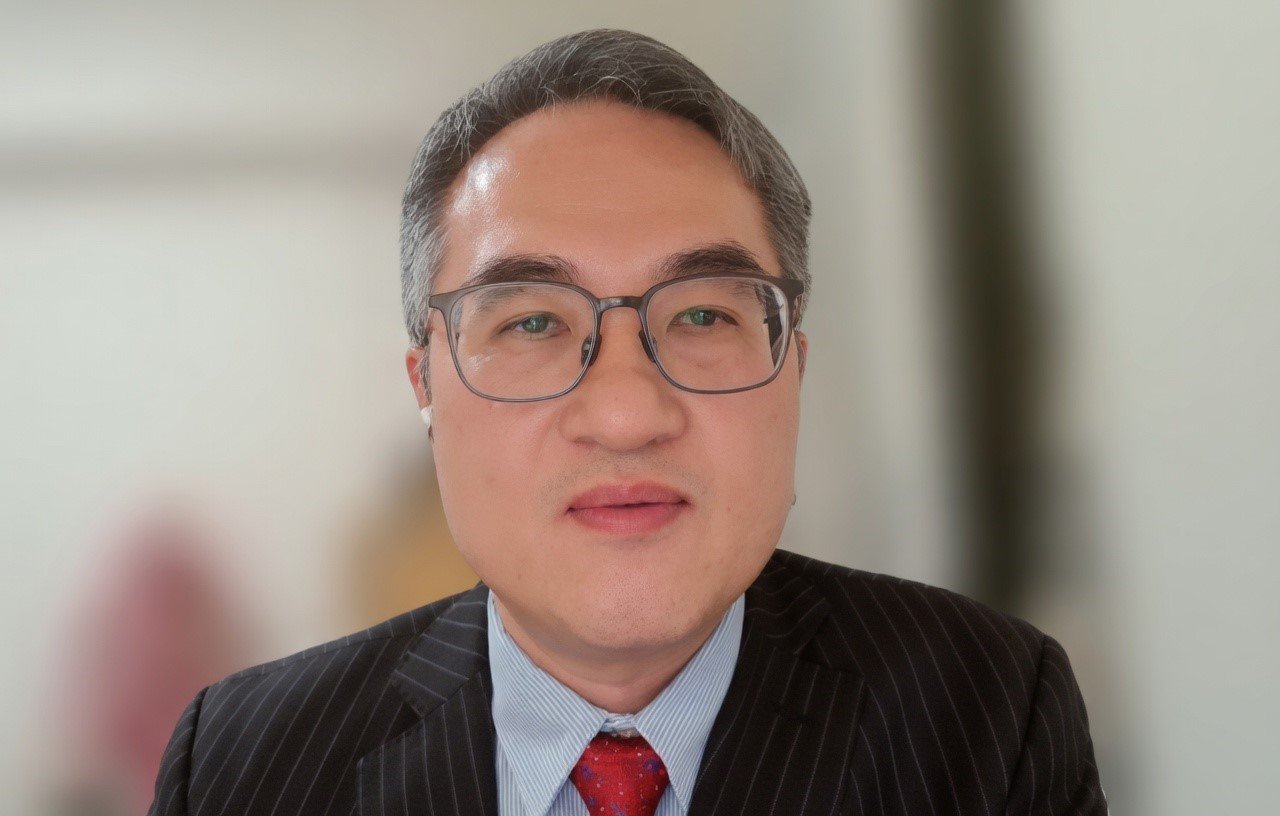
The webinar concluded with Marco Respinti, an Italian scholar and journalist, who framed the discussion through the lens of Italian 19th-century novelist Alessandro Manzoni. He recalled Manzoni’s critique of Rousseau and Sieyès, whose doctrine of the “general will” allowed factions to present themselves as the voice of the entire people. When a minority claims to represent the majority, and when propaganda convinces the public that “some” means “all,” oppression is never far behind. Respinti argued that today’s media often behave like those revolutionary vanguards: instead of informing, they re‑educate, convinced that they “know better” than the public. This attitude is particularly dangerous in matters of religious liberty, where bureaucracies and anti‑cult activists collaborate to impose their narratives. He cited an Italian TV series that introduced a stereotypical “cult leader” simply because the trope was culturally familiar. The same mechanism, he said, has shaped public perceptions of Tai Ji Men, whose innocence has been overshadowed by decades of misrepresentation. The result is a community forced to pay the price of its innocence for thirty years.
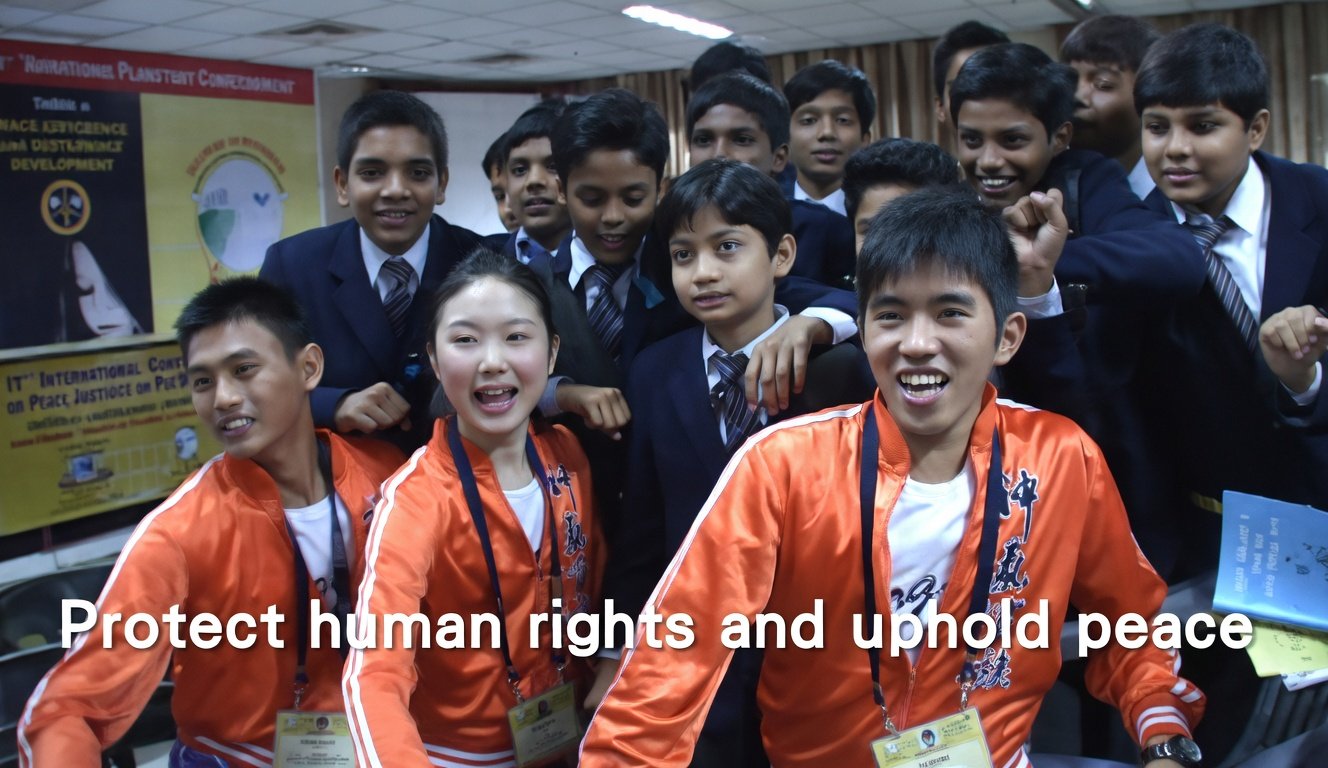
As in previous webinars, the meeting concluded with a musical video featuring Tai Ji Men dizi, who presented their ongoing commitment to universal human rights, reminding viewers that conscience, justice, and peace remain the foundation of a just and harmonious world.