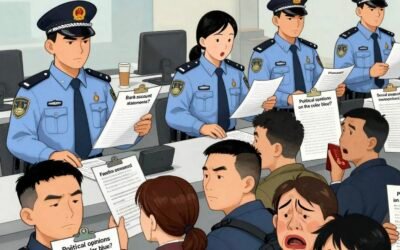
Detention in mass camps, forced sterilization, coerced birth control, and sexual abuse are rarely mentioned. Perhaps economic ties with China make criticism inconvenient.
by Rahima Mahmut
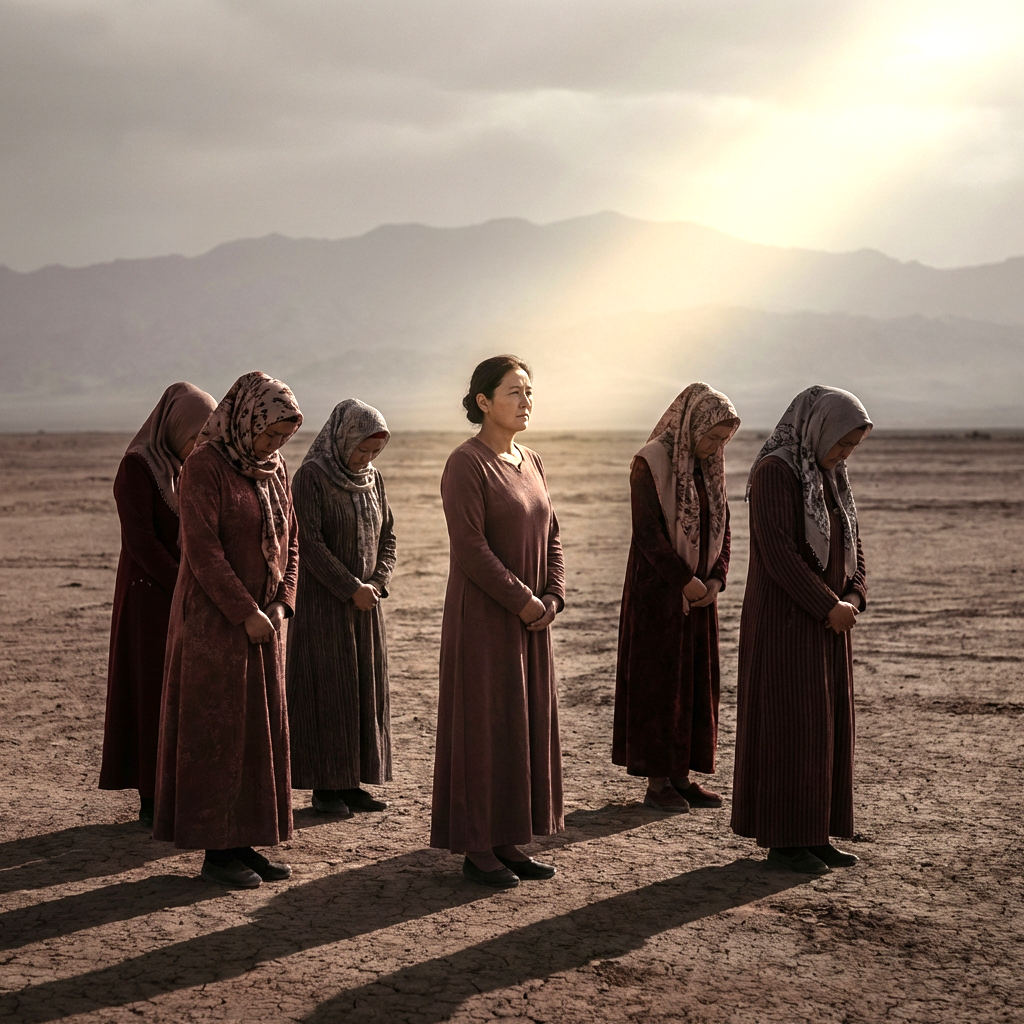
Every year, when March arrives, the world celebrates Women’s History Month. We hear powerful stories of courage, resistance, and progress: women who broke barriers, women who changed laws, women who reshaped societies.
Yet there are also women whose stories remain buried beneath silence.
As a Uyghur woman, I cannot observe this month without thinking of the women whose voices have been erased—women whose suffering rarely enters the global feminist conversation.
I grew up in the Uyghur homeland during a period of enormous upheaval in China. My childhood unfolded in the years following the Cultural Revolution, when the country was cautiously emerging from chaos. At school, we were taught that women “hold up half the sky.” The slogan echoed everywhere—a proud declaration that the Communist revolution had liberated Chinese women from feudal oppression.
On paper, women were equal.
But daily life told a far more complicated story.
Like many young women growing up in China at the time, we learned early about the invisible boundaries that shaped our lives. Sexual harassment was common but rarely acknowledged. Speaking about it could bring shame rather than protection. The language of equality filled official speeches, yet the lived reality for many women remained constrained by deeply rooted discrimination.
The state also exercised extraordinary control over women’s bodies. During much of my youth, China’s onechild policy governed family life with an iron hand. Pregnancies were monitored and births tightly regulated. For many Chinese women, the pressure was immense. In a society where sons were often preferred, stories of female babies abandoned or quietly disappearing circulated in whispers through villages and towns. These tragedies were rarely spoken of openly, yet they formed a silent undercurrent beneath everyday life.
Even then, the idea that the state could decide the fate of women’s bodies had become normalized.
Decades later, that same logic of control would take a far more devastating form in my own homeland.
Today, the world knows that the Uyghur region has become the site of one of the gravest human rights crises of our time. Mass detention camps, pervasive surveillance, and the destruction of families have transformed the lives of millions. Uyghur women have borne some of the most painful consequences. Many have been transferred into vast forcedlabor programs that remove them from their homes and communities, sending them to factories under conditions of coercion and constant monitoring. Uprooted from the social networks that once protected them, they become more vulnerable to exploitation and abuse.
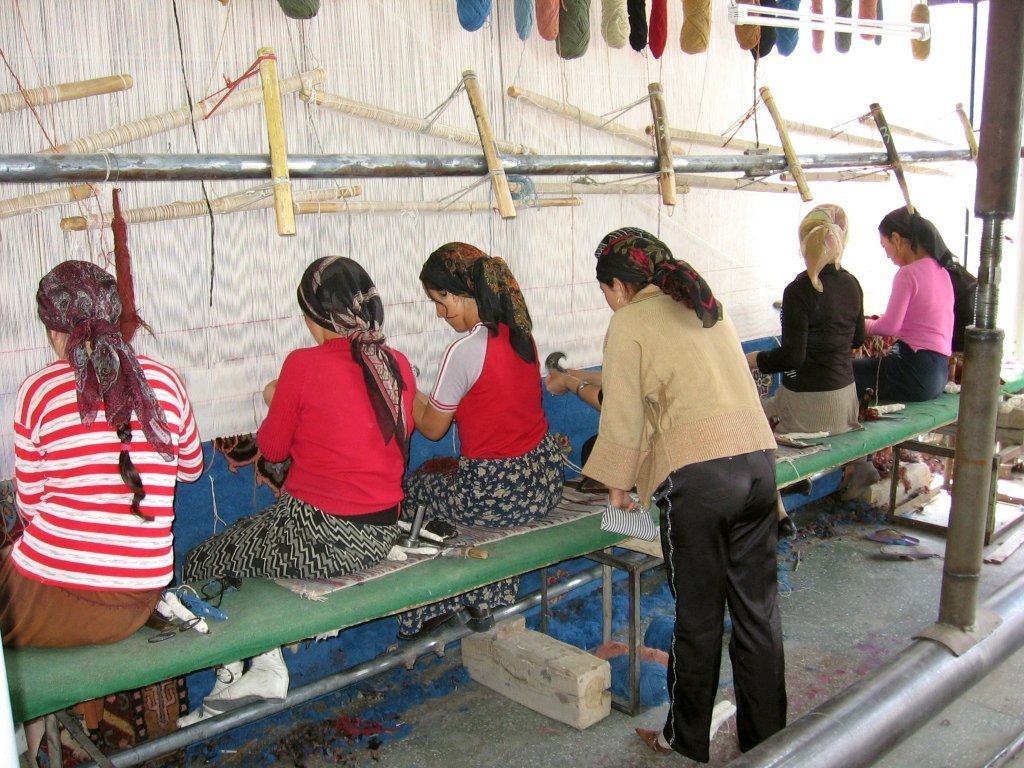
These policies do not merely serve economic interests. By targeting women—the cultural carriers of language, family, and tradition—they strike at the heart of Uyghur society itself.
Testimonies from survivors describe forced sterilization, coerced birth control, and sexual abuse within detention facilities. In its final judgment, the Uyghur Tribunal, chaired by Sir Geoffrey Nice KC, concluded that “the deliberate imposition of measures intended to prevent births within the Uyghur population” constituted a central element of the genocide being committed against the Uyghurs.
But beyond these horrifying statistics lies another, quieter tragedy: the disappearance of Uyghur women whose voices once enriched our cultural and intellectual life.
Brilliant female poets, scholars, and artists have vanished. Women who wrote about love, language, and homeland have been silenced. Teachers who nurtured generations of students are gone. Intellectuals who carried the memory and wisdom of our culture have disappeared into the machinery of repression.
Their absence leaves a wound that is difficult to describe.
For more than a decade, my own life has been shaped by the struggle to ensure that these stories are not forgotten. As a human rights activist, I have traveled across the world speaking about the Uyghur genocide. I have interpreted survivors’ testimonies so that their words can reach international audiences. I have translated stories that might otherwise remain unheard. Through music and cultural work, I try to preserve fragments of a civilization now under threat.
There are moments when the weight of this work feels overwhelming. I have not been able to speak with my own family for over nine years. Like so many Uyghurs in exile, I live with the constant uncertainty of not knowing whether those we love are safe.
Yet silence would be a far greater betrayal.
What pains me deeply during Women’s History Month is how rarely Uyghur women appear in global conversations about women’s rights. Many prominent voices who rightly advocate for women elsewhere have remained strikingly quiet about the systematic abuses faced by Uyghur women.
Perhaps the political reality feels uncomfortable. Perhaps economic ties with China make criticism inconvenient.
But the suffering of women should never be subject to geopolitical calculation.
If feminism is truly universal, it must include the women who cannot speak for themselves—the imprisoned poet, the grieving mother, the young girl growing up in a surveillance state where even her language is treated as a threat.
And yet the story of Uyghur women is not only one of suffering. It is also a story of resilience.
Across exile communities around the world, Uyghur women continue to organize, write, sing, and advocate. They carry our language, our memories, and our traditions forward, refusing to allow an entire culture to disappear.
History has always been shaped by the courage of women, often in ways the world fails to notice.
In Islam, the Prophet Muhammad (peace be upon him) said, “Paradise lies at the feet of mothers.” It reminds us that the strength and dignity of women form the moral foundation of any society.
Knowing this, the fate of Uyghur women must weigh heavily on the conscience of the world. When mothers are silenced, daughters vanish, and poets are erased, a vital thread of our shared humanity is torn away.
Women’s History Month should not only celebrate the victories of the past. It must also confront the injustices unfolding in the present.
And among those injustices, the suffering—and the courage—of Uyghur women must never be forgotten.

Rahima Mahmut, a Uyghur exile in London, is Executive Director for Stop Uyghur Genocide and Advisor to the Inter-Parliamentary Alliance on China (IPAC).