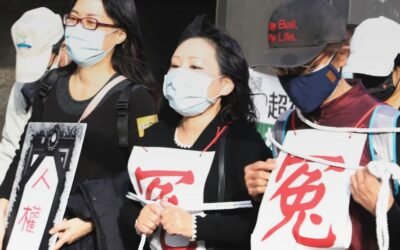
Defending victims of injustice is not only an act of solidarity but a basic requirement of natural law. This is the lesson the Tai Ji Men case brings to mind.
by Marco Respinti*
*Conclusions of the webinar “The Tai Ji Men Case: A Human Rights Crisis in Taiwan,” co-organized by CESNUR and Human Rights Without Frontiers on March 24, 2026, United Nations International Day for the Right to the Truth Concerning Gross Human Rights Violations and for the Dignity of the Victims.

“Voci di pace” (“Voices of Peace”) is an Italian quarterly magazine and the official publication of the San Marino and Italian chapters of the Universal Peace Federation (UPF) and the Women’s Federation for World Peace International (WFWP). Both are NGOs with General Consultative Status at the United Nations. These organizations were founded by Reverend Sun Myung Moon (1920–2012) and his wife, Hak Ja Han Moon, the South Korean couple who initiated the Unification Church, now known as the Family Federation for World Peace and Unification (FFWPU).
In the latest issue of the magazine (first quarter of 2026), the Editor-in-Chief, Giorgio Gasperoni, contributes a concise and incisive editorial on human rights titled “Dignità e legge naturale” (“Dignity and Natural Law”).
Gasperoni begins with a sharp observation: the expression “human rights” is now used everywhere, which makes it vulnerable to misunderstandings, distortions, and even manipulation. I vividly recall a pleasant yet serious conversation over bubble tea in the cafeteria of the Chiang Kaishek Memorial Hall in Taipei, Republic of China (Taiwan), a few years ago. During a visit by scholars, journalists, and activists —my good friends and outstanding defenders of religious liberty, Willy Fautré and Hans Noot —discussed with me the ambiguity—and sometimes the outright vagueness—of the term “human dignity,” a phrase that can be invoked to justify almost anything.
In his editorial, Gasperoni calls for a return to clarity and to the original meaning of human dignity. He traces its roots to three sources: the medieval philosopher and theologian Thomas Aquinas, the School of Salamanca in sixteenthcentury Spain, and the Dominican priest and bishop Bartolomé de Las Casas. His argument can be summarized as follows.
For Aquinas, human dignity comes from being created by God in His image. It is not a reward or a feeling but an ontological condition that carries ethical obligations. Dignity belongs to human nature by virtue of this divine origin. Morality flows directly from this essence; it is not a secondary layer that can be manipulated or exploited. In this light, natural law is not, as caricatured today, a mere list of prohibitions. It is the participation of human reason in the order of justice established by God in creation.
When Europeans encountered the Americas in the fifteenth century, the School of Salamanca expanded Aquinas’s framework. Its scholars concluded that the peoples newly encountered in distant lands shared the same human nature as Europeans, despite cultural and religious differences, and were therefore entitled to the same protections. State power was thus limited, and rights belonged not only to rulers but to all persons. From this reflection emerged the concept of “ius gentium,” the “law of peoples,” which became the foundation of international law. It can be described as both the universal extension of human dignity and the principle governing relations among states.
Las Casas then translated these philosophical principles into concrete historical and political debates. Despite some misunderstandings and exaggerations, his contribution remains of great philosophical importance because he brought the discussion out of theory and into the realm of lived human conflict.
These three pillars of reflection on human dignity and international relations are Catholic in origin. As I have noted on other public occasions, I do not emphasize their importance simply because I am Catholic. UPF, WFWP, and “Voci di Pace” are not Catholic organizations. Yet they take their work seriously, just as I aim to do when highlighting the relevance of this editorial and its appeal to universal principles. I often recall that the Irish Christian writer and apologist C.S. Lewis (1898–1963) referred to natural law as the “Tao.” He chose this term to avoid confessional labels and to underscore its universality. His choice also resonates with nonWestern, especially Asian, audiences. I recall it again today as we consider the astonishing and deeply troubling case of Tai Ji Men.
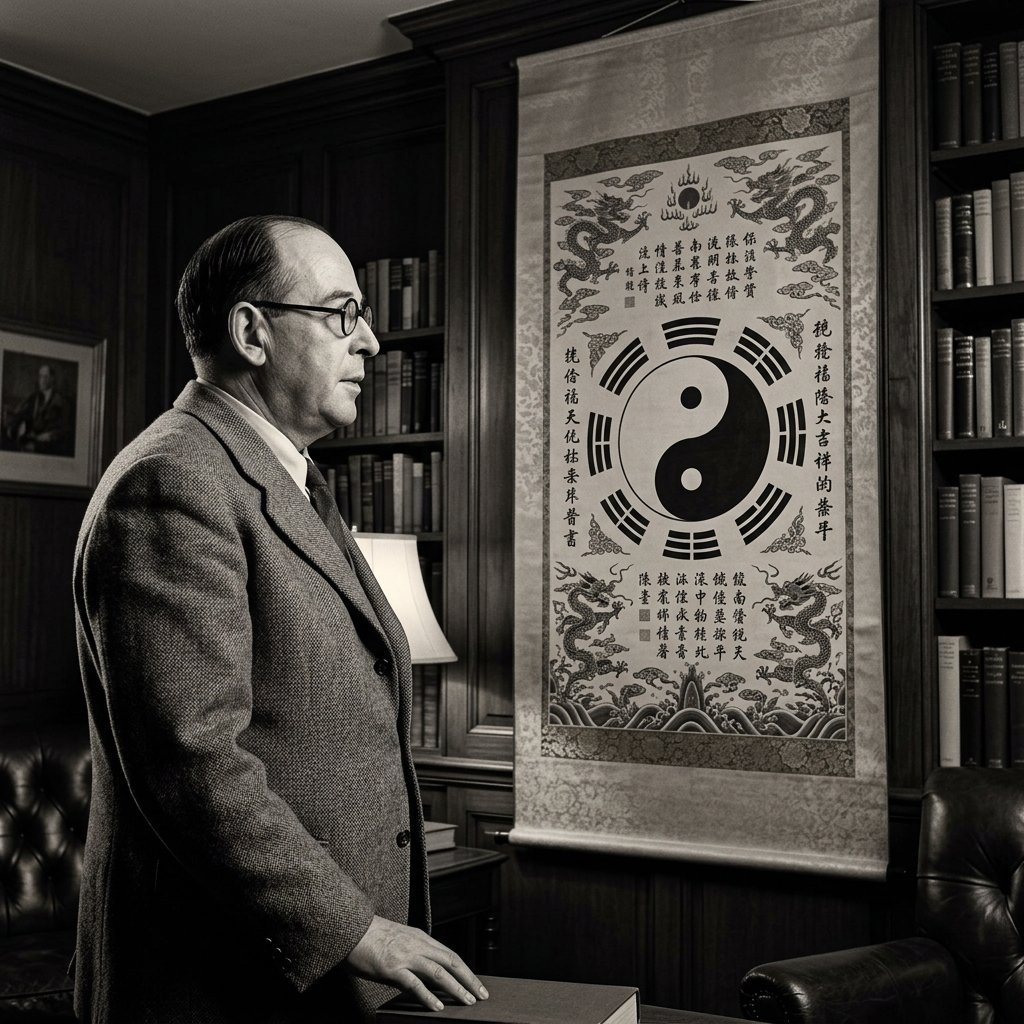
The Tai Ji Men case concerns both human dignity and natural law.
The staggering injustice inflicted on Tai Ji Men’s Shifu (Grand Master) and dizi (disciples) for thirty years—and still ongoing today—is, above all, a violation of what it means to be human.
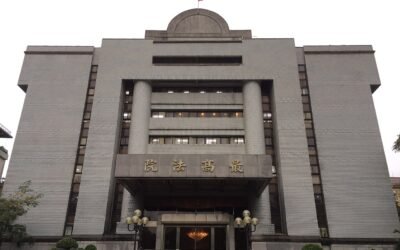
A peaceful community of patriots and lawabiding citizens has been targeted for ideological reasons and continually harassed by corrupt bureaucrats driven by greed, even though every level of Taiwan’s judiciary, including the Supreme Court, has cleared Tai Ji Men of all false charges. The cases themselves show that the accusations were deliberately fabricated, including allegations of tax evasion and even black magic.
This is, first and foremost, an assault on human dignity. It means being dragged into ruin and exposed to public ridicule despite complete innocence. Human dignity is violated when individuals are mistreated and defamed by a powerful entity such as the state, even though they have committed no crime. Such actions cry out for justice before God, in whose image all human beings are created.
If natural law means acting in accordance with the divine order of creation, then deliberately violating justice—the highest law of creation—and the respect owed to every person is a clear breach of natural law. Yet this is precisely what has been done, and continues to be done, to the members of Tai Ji Men.

In this paper, I have given considerable credit to “Voci di Pace” and to its reminder of the origins and essence of human dignity. We should remember that the Family Federation for World Peace and Unification, which initiated and promoted the Universal Peace Federation and thus “Voci di Pace,” is itself the target of severe religious persecution in both Japan and South Korea, where the movement was founded in 1954. In Japan, UPF is now facing a dissolution proceeding ordered by the Tokyo High Court as a religious organization. In South Korea, Hak Ja Han Moon—“Mother Moon,” the widow of Reverend Moon and the current leader of the movement—is treated as a criminal and kept in jail despite her age and fragile health.
This reinforces the idea that violations of human dignity and natural law lie at the heart of religious persecution. It brings together individuals and groups from different backgrounds to rediscover the true meaning of human dignity as a foundation for protecting religious liberty. It also calls for an alliance among all who value human dignity and natural law, encouraging them to unite in defending freedom of belief.
Tai Ji Men is undeniably the victim of a profound injustice that, at its core, denies human dignity. On the United Nations International Day for the Right to the Truth Concerning Gross Human Rights Violations and for the Dignity of Victims, this fact deserves to be stated clearly and publicly before the conscience of the world. If human dignity truly derives from the fact that every person is created in the image of God, then defending victims of injustice is not merely an act of solidarity but a simple requirement of natural law. The Tai Ji Men case reminds us of nothing less.

Marco Respinti is an Italian professional journalist, member of the International Federation of Journalists (IFJ), author, translator, and lecturer. He has contributed and contributes to several journals and magazines both in print and online, both in Italy and abroad. Author of books and chapter in books, he has translated and/or edited works by, among others, Edmund Burke, Charles Dickens, T.S. Eliot, Russell Kirk, J.R.R. Tolkien, Régine Pernoud and Gustave Thibon. A Senior fellow at the Russell Kirk Center for Cultural Renewal (a non-partisan, non-profit U.S. educational organization based in Mecosta, Michigan), he is also a founding member as well as a member of the Advisory Council of the Center for European Renewal (a non-profit, non-partisan pan-European educational organization based in The Hague, The Netherlands). A member of the Advisory Council of the European Federation for Freedom of Belief, in December 2022, the Universal Peace Federation bestowed on him, among others, the title of Ambassador of Peace. From February 2018 to December 2022, he has been the Editor-in-Chief of International Family News. He serves as Director-in-Charge of the academic publication The Journal of CESNUR and Bitter Winter: A Magazine on Religious Liberty and Human Rights.