A key theme of the decision is the discredited pseudo-scientific theory that “cults” victimize their members through “mental manipulation.”
by Massimo Introvigne
Article 2 of 6. Read article 1.

In the first article of this series, I presented the High Court’s malicious and caricatural reconstruction of the Unification Church as a money-making enterprise rather than a bona fide religion. A second central theme of the decision is mental manipulation as the main tool through which the Church allegedly pursues its aims.
The High Court decision reiterates this theme across twelve different paragraphs, repeatedly emphasizing that the Unification Church employs techniques “restricting the free will” and placing its “victims” “in a state in which it is difficult to make an appropriate judgment.” The court believes these techniques are so effective that victims find it “difficult to withdraw from the Appellant’s [Unification Church] doctrine.” Ultimately, the free will of the believer is not only “restricted” but “suppressed.” The court states that this extreme outcome is achieved through specialized techniques of “psychological influence.”
The decision avoids using the word “brainwashing” but largely reproduces its logic. The idea that certain religious groups have mysterious techniques capable of overriding individual choice has a long and troubled history. It has been used for centuries to discredit unpopular minorities, and modern scholarship consistently rejects it as pseudoscience. Yet, the High Court treats it as fact, as if mentioning mental manipulation explains why thousands of Japanese citizens voluntarily joined and supported the Unification Church for decades.
The notion that religious conversion must be the result of some hidden coercive force is far older than the contemporary anti‑cult movement. In the nineteenth century, critics of the Latter‑day Saints insisted that no rational person could embrace Mormonism unless subjected to “mesmeric” influence. Long before that, Roman authors described early Christians as victims of sorcery, while Chinese imperial officials accused unauthorized religious movements of using black magic to ensnare followers. Medieval European polemicists recycled the same accusations against groups they labeled “heretical.” The pattern is always the same: when a religion appears too unfamiliar, too demanding, or too threatening to established institutions, its converts are portrayed as dupes rather than agents.
Modern anti‑cult ideology replaced the vocabulary of magic with the vocabulary of psychology. After the Korean War, Western intelligence agencies became fascinated with the idea that Communist regimes had developed techniques to forcibly “convert” prisoners. The term “brainwashing” itself was coined not by scientists but by a journalist with intelligence ties, and it entered public discourse through sensationalist accounts rather than empirical research. The U.S. government later acknowledged that these early theories were speculative and politically motivated. Nevertheless, they provided a template for later claims that new religious movements use similar methods.
Anti‑cult activists in the 1960s and 1970s revived the brainwashing narrative to explain why young people were joining new religious movements. Their theories gained traction among anxious parents and the media, but they fared poorly under legal scrutiny. The decisive moment came in 1990, when a U.S. federal court examined the scientific status of “coercive persuasion” in the “Fishman” case. After reviewing extensive expert testimony, the court concluded that such theories lacked empirical foundation. It ruled that “Theories regarding the coercive persuasion practiced by religious cults are not sufficiently established to be admitted as evidence in federal courts of law.” The judge also excluded expert testimony based on these models, finding that they did not meet minimal standards of scientific reliability.
European jurisprudence reached similar conclusions. In 2010, the European Court of Human Rights noted that “there is no generally accepted and scientific definition of what constitutes ‘mind control.’” It further observed that many behaviors cited as evidence of coercion—intense commitment, deference to leaders, communal living, enthusiastic proselytism—are common across a wide range of religious traditions. The Italian Constitutional Court had already abolished the crime of “plagio,” a Fascist‑era statute akin to “brainwashing,” in 1981, declaring it incompatible with both scientific knowledge and religious liberty.

These legal precedents matter because they reflect a broad international recognition: claims of “psychological manipulation” in religious contexts are too vague, too ideologically loaded, and too easily abused to serve as a basis for state intervention. They allow courts to substitute their own value judgments for the lived experiences of believers. They also create a dangerous asymmetry: mainstream religions are assumed to attract followers through legitimate persuasion, while minority religions are presumed guilty of manipulation unless proven otherwise.
The Tokyo High Court’s decision falls squarely into this pattern. It asserts that the Unification Church uses “psychological influence.” Still, it never defines the term, never explains how such influence differs from ordinary religious exhortation, and never demonstrates that members were deprived of their capacity to choose. Instead, it relies on the assumption—common in anti‑cult discourse—that intense religious commitment is inherently suspicious. When believers donate generously, the court interprets this not as an expression of faith but as evidence of manipulation. When they accept theological teachings about sacrifice, providence, karma, or the ancestors, the court treats these beliefs as tools of coercion rather than as sincere convictions.
This approach is deeply problematic. All religions encourage giving, often in strong terms. Many emphasize the spiritual value of sacrifice, the importance of supporting the community, or the moral duty to contribute to a larger mission. If such exhortations are reinterpreted as “psychological influence,” then the boundary between legitimate religion and illicit manipulation becomes impossible to draw. The High Court’s reasoning would apply equally to Protestant tithing, Catholic appeals for contributing to the Vatican’s “Peter’s Pence,” Buddhist fundraising for temple construction, or Shinto requests for offerings. The difference lies not in the methods but in the evaluator’s approval or disapproval of the underlying theology.
Moreover, the court’s analysis ignores the most basic principle of religious freedom: adults are entitled to make commitments that others may find excessive, irrational, or incomprehensible. The state does not have the authority to declare that certain beliefs are too strange to be sincerely held, or that certain forms of devotion are incompatible with free will. To do so is to treat devotees of religious minorities as inherently less capable of agency than members of majority faiths.
The High Court’s reliance on “psychological influence” thus represents a step backward, reviving a discredited concept in both academic and legal circles for decades. It allows the court to pathologize religious commitment, reinterpret voluntary acts as coerced, and justify extreme state intervention based on speculative, unscientific assumptions. In doing so, it risks undermining the very foundations of freedom of religion or belief in Japan.
A legal system committed to constitutional principles should not rely on theories that courts elsewhere have rejected as pseudoscience. The Tokyo High Court’s decision, by embracing the language of “psychological influence,” crosses a line that democratic societies have long recognized as dangerous. The consequences will extend far beyond the Unification Church unless this reasoning is challenged.
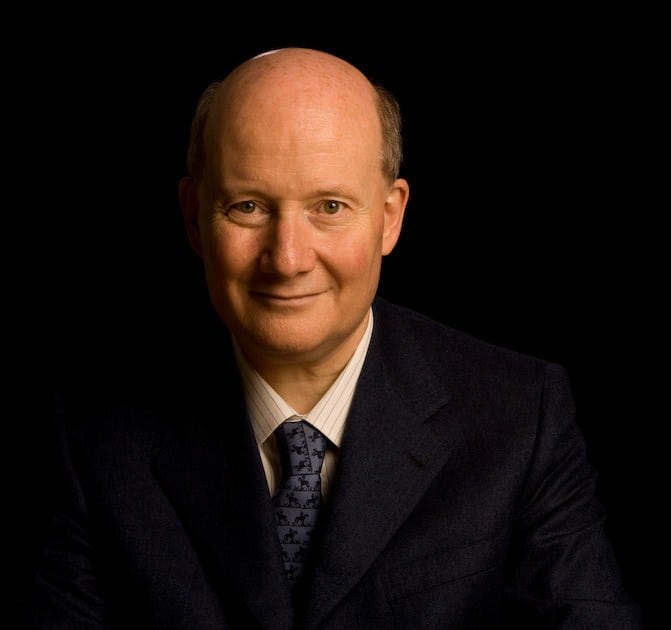
Massimo Introvigne (born June 14, 1955 in Rome) is an Italian sociologist of religions. He is the founder and managing director of the Center for Studies on New Religions (CESNUR), an international network of scholars who study new religious movements. Introvigne is the author of some 70 books and more than 100 articles in the field of sociology of religion. He was the main author of the Enciclopedia delle religioni in Italia (Encyclopedia of Religions in Italy). He is a member of the editorial board for the Interdisciplinary Journal of Research on Religion and of the executive board of University of Pennsylvania Press’ Nova Religio. From January 5 to December 31, 2011, he has served as the “Representative on combating racism, xenophobia and discrimination, with a special focus on discrimination against Christians and members of other religions” of the Organization for Security and Co-operation in Europe (OSCE). From 2012 to 2015 he served as chairperson of the Observatory of Religious Liberty, instituted by the Italian Ministry of Foreign Affairs in order to monitor problems of religious liberty on a worldwide scale.