An Apple TV series against Gregorian Bivolaru and his movement even rehabilitates the notorious Securitate police of Ceaușescu.
by Massimo Introvigne and Rosita Šorytė
Article 1 of 4.
On February 16, 2026, one of us (Introvigne) received an email from Vince Calvi, Senior Manager at the company producing a documentary titled “Twisted Yoga.” Calvi requested an interview and insisted that the documentary would examine “contested allegations” impartially, without “drawing conclusions,” avoiding “sensational true-crime storytelling,” and “emphasizing balance.” This appeared to be half a dozen unrequested excuses in a brief email. With over forty years of experience confronting anti-cultism disguised as “balanced” journalism, Introvigne reviewed the trailer, smelled a rat, and responded on February 19 with a two-line message: “It seems precisely the kind of project we DO NOT want to be part of.”
He was, as expected, correct. Apple TV’s three-part “Twisted Yoga” doesn’t focus on balance and instead aims to draw sensational conclusions. It addresses not general problems within the yoga community but a specific group, MISA, the Movement for the Spiritual Integration into the Absolute, whose founder, Gregorian Bivolaru, is currently in jail in France awaiting trial. Introvigne wrote the only book-length scholarly analysis on this group.
“Twisted Yoga” is interesting. It clearly shows how sensational anti-cult media stories are made. It also confirms some details about the MISA case in France that we suspected before and have now been proven true.
We will explore how “Twisted Yoga” revises the origins of MISA in Romania, how the French case was initiated, the perspectives of some women accusing Bivolaru, and the stance of the French specialized anti-cult police.
With the help of a Romanian journalist hostile to MISA, the documentary initially shows Bivolaru’s legal issues during Nicolae Ceaușescu’s Communist Romania. Her stance is that the files of Ceaușescu’s infamous police, the Securitate, should be trusted as gospel. She also suggests that she is the first to have reviewed them recently. However, this is not true. Romanian scholars such as Gabriel Andreescu have studied these files for more than 20 years.
The journalist explains that Bivolaru was arrested as a young man, not because he taught yoga, but because he had acquired pornographic material from abroad. She states that he was imprisoned “because he owned and distributed pornographic materials.” She emphasizes that “He was not jailed because he was a yoga practitioner. This is what we see from the [Securitate] files.”
Obviously, totalitarian regimes rarely include in their files that they have arrested dissidents for their opinions. Dissidents are often “found” in possession of pornographic pictures or drugs, a practice still ongoing in present-day Russia, reflecting ingrained habits from Soviet times. What “Twisted Yoga” does not specify, however, is that, as Andreescu documented, the “pornographic material” the Securitate claims to have found in Bivolaru’s possession consisted of several issues of “Playboy” and the serious book by Italian esoteric author Julius Evola, “The Metaphysics of Sex.”
The journalist also takes at face value the assessment by the Securitate’s psychiatrists, who sent Bivolaru to the notorious Poiana Mare asylum: he was, she says, “subject to psychiatric exam, which says that he lacks the mental capacity to assess his own actions, his own deeds.” The problem is that similar “diagnoses” were given to several political dissidents, who also ended up in Poiana Mare.
That the Securitate’s accusations against Bivolaru were fabricated is not only the opinion of scholars. He was officially rehabilitated by a decision from the 3rd Civil Division of the Bucharest Law Court on July 1, 2011. The court examined both the pornography charges and the psychiatric assessment. It concluded that the real reason for his conviction was that the regime wanted to “discredit and dismantle” those with dissident opinions. The court cited several statements in the Securitate files that said Bivolaru’s activities should be stopped because of their “occult,” “mystical” nature, and because he criticized the regime, and “attracted followers.” The 2011 ruling and the documents it references are completely ignored by “Twisted Yoga.” It is quite unbelievable that some people still defend the Securitate, its files, and its methods in 2026.
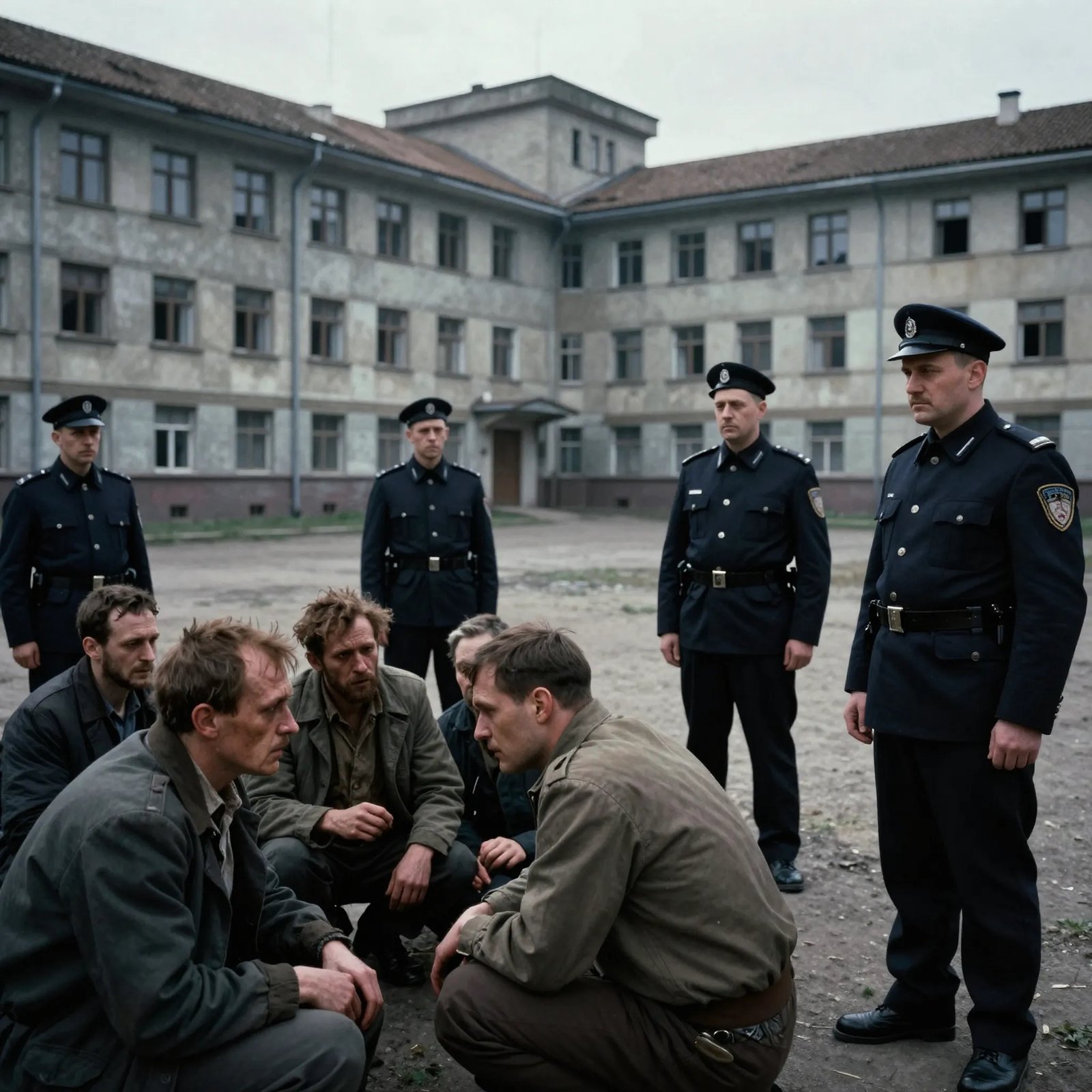
The pro-Securitate journalist also presents her own version of the 2004 raid in Romania in “Twisted Yoga.” She fails to mention that the Orthodox Church and the media had campaigned against the “heretical” ideas and practices of Bivolaru for about ten years before the raid. Since the early 1990s, MISA yoga sessions across Romania were disrupted, police interrogated yoga practitioners, and some lost their jobs. Romanian intelligence agencies monitored MISA since 1997, claiming it posed a threat to national security.
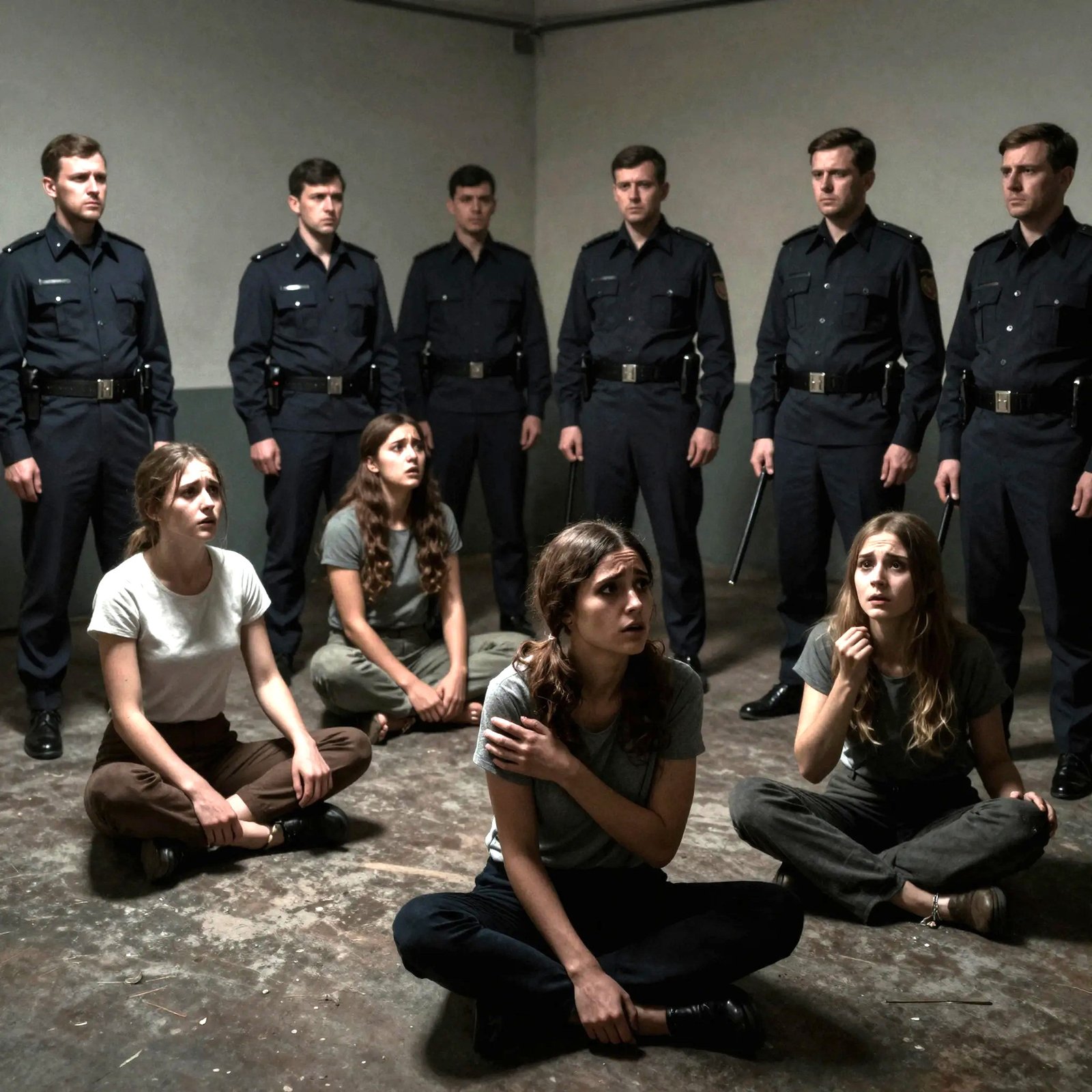
Official and media hostility towards MISA peaked with the March 18, 2004, raids, which Romanian police named “Operation Christ.” Masked gendarmes and special forces, armed with machine guns and Makarov pistols, accompanied by prosecutors and TV cameras, broke down the doors and entered 16 MISA ashrams across Romania simultaneously at 7 a.m. Main TV channels echoed the official statement, claiming that “today at 7:00 a.m., police carried out the largest operation against drugs and human trafficking in Romania’s post-Revolution history.” This exemplifies the early-morning militarized raids on “cults,” as studied in a book by Susan Palmer and Stuart Wright. These raids typically serve more as theatrical displays than effective law enforcement, reinforcing society’s vigilance against “cults” and signaling intolerance. As in many similar cases, no drugs were discovered, and the raid yielded little substantive evidence against MISA.
In “Twisted Yoga,” the journalist reports that police found minors being trafficked and that Bivolaru had sexual relations with them. The documentary includes testimony from Agnes Arabela Marques (born Mureșan), whom we will revisit later in this series. Agnes states she had sex with Bivolaru at age 15 years and 6 months, and although she claims she does not want to disclose many details, she ends up doing precisely so. The documentary does not mention that Bivolaru was never convicted in Romania for the alleged sexual affair with Agnes or for trafficking. In the 2021 trafficking case at the Court of Appeal of Cluj—which Bivolaru and MISA won—the judges noted that Agnes failed to provide evidence supporting her accusations.
Through the European Court of Human Rights decision “Amarandei and others v. Romania” of April 26, 2016, 26 members of MISA who had been mistreated during the 2004 raid received €291,000 in damages from the Romanian government. The decision stated that the raid was based on insufficient evidence and that the excessive use of physical and psychological violence violated the complainants’ human rights and dignity. On February 28, 2017, in the decision “Bivolaru vs. Romania,” the European Court of Human Rights ordered Romania to pay Bivolaru €6,980 for his illegal detention in 2004.
The journalist is correct to note that Bivolaru was convicted on one charge (not related to Agnes), but she does not provide the full context. In all the Romanian cases against him, Bivolaru was convicted only once, for an alleged sexual relationship with 17-year-old Mădălina Dumitru. We do not use “alleged” out of a pro-Bivolaru bias, but because the Supreme Court of Sweden, when granting him political asylum in 2005, concluded that he had never had sex with Dumitru and that the accusations were fabricated for political reasons.

Dumitru was 17 during the alleged relationship, with Romania’s age of consent at 15. Bivolaru was not convicted of statutory rape but for abusing a teacher-student relationship, as the Romanian Supreme Court in 2013 considered being a yoga teacher equivalent to being a schoolteacher, even though Dumitru testified she never attended yoga classes directly taught by Bivolaru.
In 2024, Dumitru published a voluminous book, in which she explained that she had been abused not by Bivolaru but by the Romanian police and prosecutors, who coerced her into signing a false statement. She maintained that she never had any sexual relationship with Bivolaru. She confirmed her version in an interview with “Bitter Winter.”
Thus, the Romanian segment of “Twisted Yoga” already exposes the documentary’s bias. It only presents the anti-Bivolaru version of the facts, even when court decisions contradict it.

Massimo Introvigne (born June 14, 1955 in Rome) is an Italian sociologist of religions. He is the founder and managing director of the Center for Studies on New Religions (CESNUR), an international network of scholars who study new religious movements. Introvigne is the author of some 70 books and more than 100 articles in the field of sociology of religion. He was the main author of the Enciclopedia delle religioni in Italia (Encyclopedia of Religions in Italy). He is a member of the editorial board for the Interdisciplinary Journal of Research on Religion and of the executive board of University of Pennsylvania Press’ Nova Religio. From January 5 to December 31, 2011, he has served as the “Representative on combating racism, xenophobia and discrimination, with a special focus on discrimination against Christians and members of other religions” of the Organization for Security and Co-operation in Europe (OSCE). From 2012 to 2015 he served as chairperson of the Observatory of Religious Liberty, instituted by the Italian Ministry of Foreign Affairs in order to monitor problems of religious liberty on a worldwide scale.