After the harsh Russian sentence against the Church of the Last Testament’s leader, a member speaks out.
by Massimo Introvigne
In recent years, “Bitter Winter” has closely followed the Russian case of the Church of the Last Testament and the trial of its founder, Sergey Torop, known as Vissarion. We reported on the raids, the charges, the long pre-trial detention, and finally the harsh sentence handed down to him and two other community members.
By the time the verdict was announced, all three defendants had already spent nearly five years in pre‑trial detention. Sergey Torop, Vadim Redkin, and Vladimir Vedernikov had been held since September 22, 2020 — a period the European Court of Human Rights has already ruled unlawful under Article 5 of the European Convention. On April 4 and 11, 2024, the Court issued three separate judgments confirming that their detention violated the right to liberty and security. The Russian Federation simply ignored these rulings, and no domestic court reconsidered the measure of restraint.
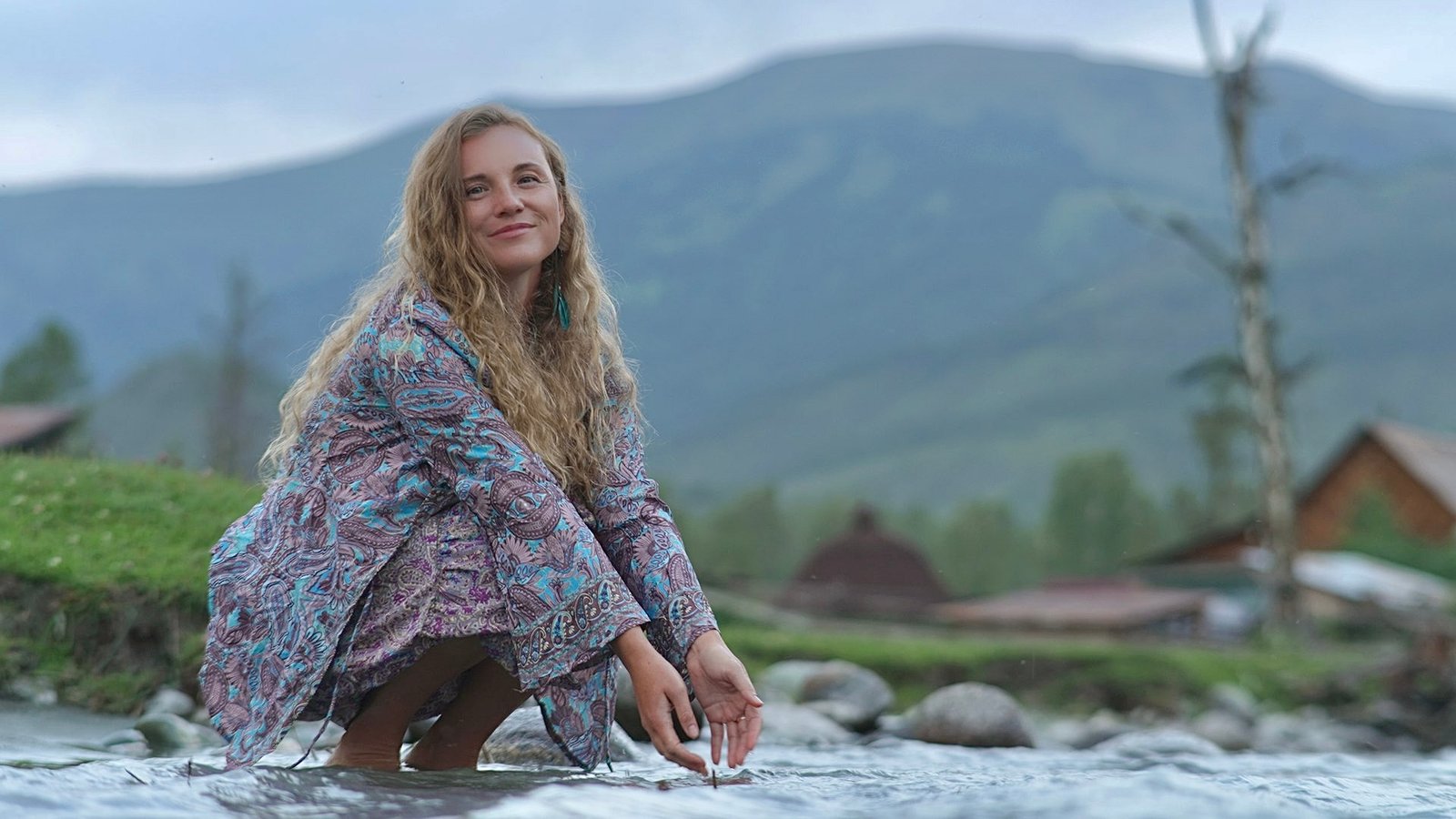
Now, after the court’s decision, we are speaking with a community member, Katya Palkina, whose reflections on the case and her own journey have attracted considerable attention. Hers is obviously an emic perspective, yet the community’s insider voices also need to be heard.
Bitter Winter: Katya, thank you for agreeing to speak with us.
Katya Palkina: Thank you for giving space to a voice from within the community. Too often, others speak about us while we remain unheard.
Bitter Winter: Your personal story is unusual. You lived in the United States, then in Asia, before returning to Russia and eventually joining the community in Siberia. What was the inner thread connecting these very different stages of your life?
Katya: My path was not linear. After university, I went to the United States—the very center of modern civilization, with its extraordinary opportunities and its relentless competition. Later, I turned to Asia, where I spent years in Himalayan monasteries, meditating, speaking with lamas and teachers, trying to understand the deeper currents shaping humanity.
But the more I saw of the world, the more clearly I felt a call to return, not to the Russia of political headlines, but to the Russia of its silent essence—its vast spaces, its endurance, its spiritual depth. I realized that if a genuine renewal of humanity is possible anywhere, it must begin in a place that has known both suffering and resilience. That realization brought me back.
Bitter Winter: And yet you did not return to Moscow or St. Petersburg, but to a remote settlement in the Siberian taiga. What did you find there?
Katya: I found something I had not encountered anywhere else: a living attempt to build a humane world. Not an escape, not a sectarian refuge, but a community consciously trying to embody a different way of being. There was no dogma. There was pedagogy—no utopian fantasies. Real work. People were building homes, roads, schools, workshops, bakeries, and temples—creating an entire material culture from scratch. And these were not lost souls or marginal people. They were engineers, doctors, teachers, artists, scientists—people who had walked away from successful careers because they wanted to live in accordance with their conscience. For me, it was the first time I saw humanity not discussed, but practiced.
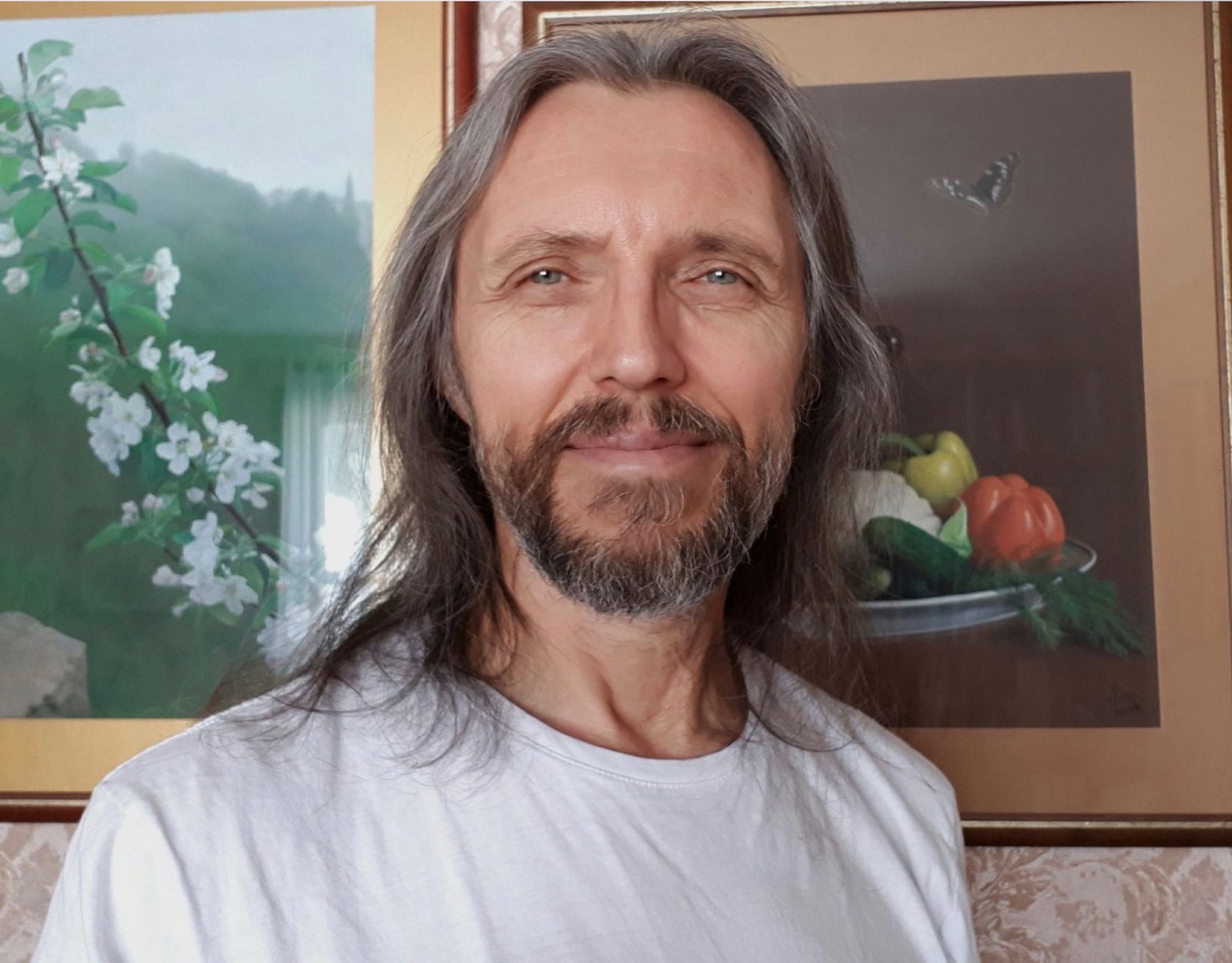
Bitter Winter: You have written very personally about Vissarion. How would you describe him to someone who has never met him?
Katya: I say this after meeting many respected teachers in the East: he is the most whole, luminous, and deeply humane person I have encountered. There is nothing authoritarian or manipulative in him. Nothing of the power‑hungry guru. His wisdom is profoundly practical. It teaches how to build a home, raise children, cultivate the land, and build relationships with love. His teaching is not a religion of the past. It is a guide to the future—a future humanity is desperately searching for.
Bitter Winter: You emphasize that your choice to join the community was made freely. Why was this path compelling to you?
Katya: Because I had the entire world before me. I could have lived anywhere. And with all that freedom, I chose this place. Not because I lacked experience, but because I had too much of it. Not out of fear of the world, but after studying it deeply. Here, in the Siberian community, I found not theories about humanity but its living, breathing practice. The future that many consider utopian is already being built here—quietly, steadily, by human hands.
Bitter Winter: Yet the Russian state has treated the community as a threat. How do you understand this conflict?
Katya: The contrast is painful. Where I see a laboratory of humanity, the state sees a “destructive cult.” Where I see a luminous thinker, the court sees a criminal. But to understand what happened, we must look beyond emotions. The case against our community was not a spontaneous reaction. It followed a very clear bureaucratic procedure—a template for liquidating autonomous social forms that do not fit into the state’s preferred model of society.
Bitter Winter: You are referring to what you call the “liquidation template.” How does it work?
Katya: It unfolds in four stages, each reinforcing the next. First comes stigmatization. Long before any charges, the media began portraying us as a “dangerous cult.” This created a moral justification for repression and prepared public opinion to accept whatever would follow. Then comes weaponized expertise. Court‑appointed experts—often connected to ideological structures—produce reports diagnosing the community as manipulative or destructive. Crucially, the court refuses all independent expertise, creating a closed loop in which only the state’s interpretation is admissible. The third stage is what I call legal alchemy. Normal aspects of communal life—donations, shared work, loyalty to a teacher—are reinterpreted as fraud or psychological harm. In the public discourse they are often labeled as “extremism,” even as in fact no such charge appears in the indictment. Nothing is fabricated; everything is redefined. There is another detail that rarely reaches the public: at the moment of sentencing, the statute of limitations had already expired for several of the charges. It had run out entirely for Article 239, Part 1—the very accusation of “establishing a religious association”—and for Article 112, Part 2, paragraph “g” (intentional infliction of medium-security harm). It had also expired for twenty‑one of the twenty‑three alleged victims under Article 111, Part 3, paragraphs “a” and “b” (intentional infliction of grievous bodily harm). Yet the court proceeded with conviction and sentencing as though these legal limits did not exist. Finally, the judicial ritual. The court does not act as an arbiter but as a notary, certifying the narrative already constructed. Throughout the proceedings, the court systematically rejected defense motions to call witnesses who could have provided objective testimony, and it refused every request for additional expert examinations. All of these motions, and the rulings denying them, remain in the case file. To challenge the earlier expert reports, the defense invited two independent specialists with long-standing professional reputations — Professor Vladimir D. Mendelevich and Dr. Marat Yu. Narov. After reviewing the materials, both concluded that the diagnoses attributed to the alleged victims—anxiety disorder, sleep disorder—do not meet strict medical criteria and cannot be classified as chronic grievous harm. The situation of Vladimir Vedernikov illustrates the logic of the prosecution with particular clarity. A former school principal, he was charged with fraud related to state subsidies for a private school attended by community children. Every ruble was accounted for, spent on teachers’ salaries and school needs, and confirmed by financial documents, by teachers’ testimony, and by inspections from the Ministry of Education. No parent, teacher, or regulatory body ever filed a complaint. The charge appeared only after Vedernikov—despite being subjected to torture—refused to give false testimony against the other defendants.
Bitter Winter: From your perspective, what is the deeper significance of this template?
Katya: Its danger lies in its replicability. It can be applied to any autonomous social form—an eco‑village, a cultural society, a cooperative, even a volunteer network. It is a bureaucratic mechanism for sterilizing social diversity. And that is tragic, because Russia’s historical strength has always been its ability to absorb and synthesize profound diversity. The template reflects not strength, but insecurity—a fear of complexity. This is not only our assessment. Mark Denisov, the Human Rights Ombudsman of the Krasnoyarsk Territory, described what happened to our community in stark terms. He said that a precedent has been created for the forceful dismantling of a religious association, and that law enforcement practice has now taken the shape of, in his words, “a meat grinder into which you can feed any religious structure, turn the handle, and get a criminal case at the output. If there is an order, political will, then any religious association can, if desired, share the destiny of the ‘Church of the Last Testament.’” Coming from an official of a constituent entity of the Russian Federation, this is not an outsider’s critique but a diagnosis from within the system itself. It confirms that what we call the “liquidation template” is not our interpretation—it is a reality acknowledged by those who have witnessed it from the inside.
Bitter Winter: What does this mean for the future of the community?
Katya: We have already shown what is possible: sustainable living, ethical maximalism, a pedagogy rooted in empathy, a social model based on responsibility and creativity. We built a prototype of a humane future. The question now is whether society—and the state—will have the wisdom not to destroy it. In fact, even after the verdict, the pressure has not stopped. Local authorities continue to disrupt community festivals and cultural events under various pretexts, and members face administrative prosecution for entirely lawful activities. This ongoing pattern makes it clear that the target is not specific individuals, but the very existence of an autonomous spiritual community.
Bitter Winter: If you had to express what is ultimately at stake, what would you say?
Katya: This is not just our story. It is a mirror held up to the entire civilization. Will it choose the sterile safety of bureaucratic erasure? Or will it find the courage to embrace complexity, to recognize that autonomous creativity is not a threat but a resource? Russia is not standing outside this mirror I have described — it is inside it. This is a country that has carried an immense weight of history, suffering, and searching, and it cannot be reduced to the bureaucratic template that has been applied to our community. That template exists, yes, but it is not the whole story. There is another Russia, one with a long tradition of living with complexity rather than eliminating it. I have seen this tradition with my own eyes, and it is not a relic. It survives because ordinary people have kept it alive, not because the state has protected it. What is happening now is not a test Russia must pass; it is an invitation — to recognise this inheritance, to claim it, and to act from it. Siberia offers a testament—a testament of trust in life, in responsibility, in humanity. The choice now belongs to all of us.

Massimo Introvigne (born June 14, 1955 in Rome) is an Italian sociologist of religions. He is the founder and managing director of the Center for Studies on New Religions (CESNUR), an international network of scholars who study new religious movements. Introvigne is the author of some 70 books and more than 100 articles in the field of sociology of religion. He was the main author of the Enciclopedia delle religioni in Italia (Encyclopedia of Religions in Italy). He is a member of the editorial board for the Interdisciplinary Journal of Research on Religion and of the executive board of University of Pennsylvania Press’ Nova Religio. From January 5 to December 31, 2011, he has served as the “Representative on combating racism, xenophobia and discrimination, with a special focus on discrimination against Christians and members of other religions” of the Organization for Security and Co-operation in Europe (OSCE). From 2012 to 2015 he served as chairperson of the Observatory of Religious Liberty, instituted by the Italian Ministry of Foreign Affairs in order to monitor problems of religious liberty on a worldwide scale.