The trial of a Catholic community under flexible ideas of “abuse of weakness” reveals how French anti-cult laws may target almost anyone.
by Massimo Introvigne

The trial of the Famille Missionnaire de Notre-Dame (FMND), which concluded its hearings in Privas on January 22 and now awaits a verdict on March 24, has become a significant moment in the development of French criminal law. What started as a disagreement between five former sisters and a traditional Catholic community has turned into a demonstration of how far the ideas of “abuse of weakness” (abus de faiblesse) and “cultic deviances” (dérives sectaires) can be stretched. It shows how easily they can be used to regulate religious life.
Bitter Winter previously presented the case and warned that these legal concepts amount to a rebranding of the old discredited “brainwashing” theories, which were rejected by courts in the United States and most democratic countries. The FMND case proves that these concerns are not just theoretical.
The FMND is not an obscure sect. It represents a branch of Catholicism that is strict, ascetic, and unapologetically countercultural. Yet, it is these characteristics—poverty, obedience, separation from the world, spiritual authority—that prosecutors have reinterpreted as signs of criminal manipulation.
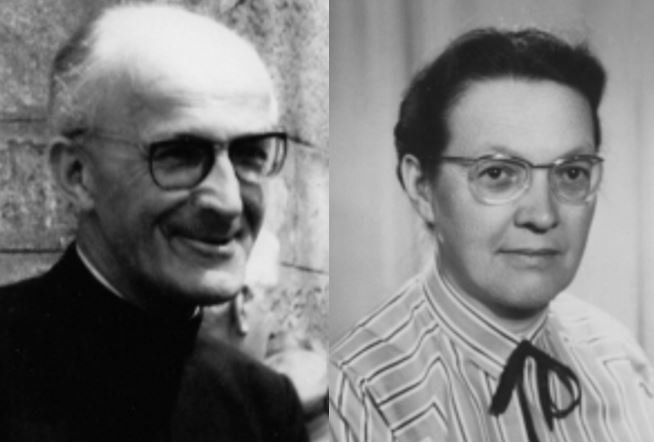
The story of the FMND begins during the final months of World War II, when several women from Saint-Pierre-de-Colombier, in 1944, vowed to erect a statue of the Virgin Mary—under the title Our Lady of Snows—if their village was spared the violence of retreating German forces. With the bishop’s approval, the statue was installed in 1946, and the same bishop authorized the parish priest, Father Lucien-Marie Dorne (1914–2006), together with Augusta Bernard (1907–1963), to establish a new religious community. The group slowly took shape and, in 2005, received formal diocesan recognition as a Catholic religious institute. After Father Dorne died in 2006, leadership passed to Father Bernard Domini (civil name Gérard Pinède), under whom the FMND expanded to roughly fifteen houses across France, Germany, and Italy.
Controversies, however, predated Father Dorne’s passing. The FMND’s openly traditional positions—particularly on abortion and homosexuality—placed it increasingly at odds with the dominant currents of French Catholicism. At the same time, its ambitious plan to build a large sanctuary dedicated to Our Lady of Snows in Saint‑Pierre‑de‑Colombier provoked fierce opposition from environmental activists and left-wing groups hostile to the community’s political stances. The dispute erupted nationally in October 2023, when a video of an FMND sister knocking down an environmental protester circulated widely online. The community protested that earlier acts of aggression by anti-FMND demonstrators had gone unreported. The clash followed a May 2023 announcement by the French Office for Biodiversity claiming that a scarce plant—the reseda of Jacquin—had been found on the construction site, prompting authorities to halt the project. The legal battle over the sanctuary continued.
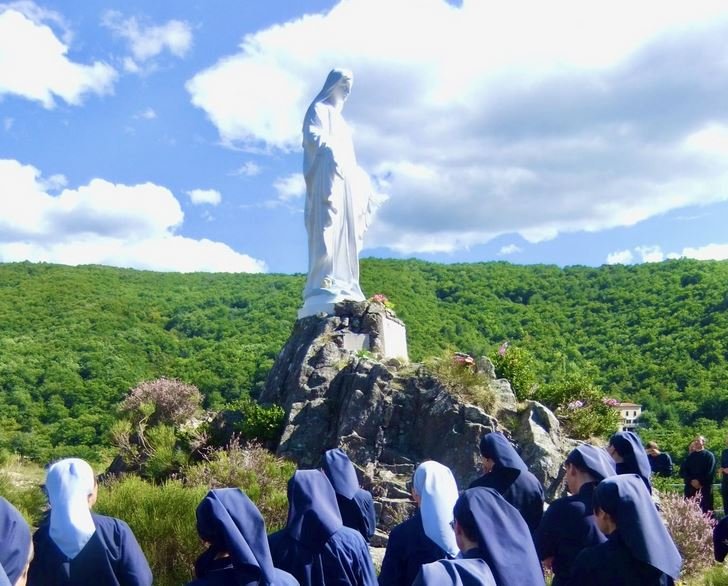
It is within this highly charged atmosphere that allegations of “cultic deviances” and “abuse of weakness” emerged. Private anti-cult groups first raised such accusations in 2007. In France, where bishops are particularly wary of being targeted by anti-cult campaigns, the FMND’s political conservatism did not help its standing within the Church. In 2019, the Vatican conducted a canonical visitation that identified several internal issues and, in 2021, appointed the retired Bishop of Metz, Jean‑Christophe Lagleize, as apostolic assistant. He emphasized that his role was to help the community update its constitutions in dialogue with Church authorities, not to sanction it. Father Bernard remained superior, and the FMND continued its activities.
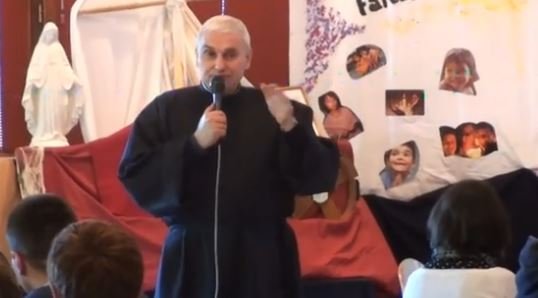
Father Bernard, however, now faces a possible (suspended) prison sentence, a five-year ban from ministry, and the temporary closure of the motherhouse. This is not due to violence, sexual misconduct, or financial wrongdoing. Instead, it is because he allegedly fostered an intense spiritual atmosphere that made some members feel pressured, infantilized, or unable to leave freely.
Testimonies from former sisters described cold dormitories, strict discipline, emotional dependency, and the fear of disappointing God or the community. These experiences should be taken into account and deserve pastoral care. However, they also reflect a pattern familiar in the history of monastic life: some vocations thrive, while others end painfully. Prosecutors have tried to turn these personal experiences into evidence of a criminal system of “enfermement,” as if centuries of religious asceticism deserve suspicion.
Supporters of the FMND, including 163 parents who publicly defended the community, argue that the accusations arise from a misunderstanding of Catholic radicalism. Even the Church’s leaders, while acknowledging concerns raised during a 2019 apostolic visitation, expressed discomfort at seeing a community with many satisfied members treated as if it were a dangerous “cult.”
The larger issue lies in the legal framework itself. “Abuse of weakness” and “cultic deviances” are vague terms that rely heavily on cultural beliefs and psychological guesswork. They allow prosecutors to claim that adults who willingly joined a religious community were, in fact, incapable of consenting because the spiritual environment was too intense. This logic mirrors the “brainwashing” theories that scholars of new religious movements have spent decades dismantling. However, France has revived these ideas under new names, granting them the weight of criminal law.
If this reasoning holds, any demanding religious group—Benedictine monks, Buddhist monastics, Sufi orders, Hindu ashrams—could face a similar accusation. Any spiritual guide who warns about sin could be charged with “moral pressure.” Any novice master who emphasizes obedience could be deemed to have “manipulative authority.” Religious freedom becomes conditional, awarded only to beliefs that are mild, moderate, and compatible with modern secular expectations.
The FMND trial illustrates how easily these concepts can apply not only to small niche groups but also to mainstream religious communities, particularly when their moral or political views are out of favor. It also shows how subjective the criteria are: some former members felt harmed, while others felt fulfilled; some left in distress, while others remained happily; some perceived manipulation, while others saw a calling. The court must now decide not on facts but on internal feelings, spiritual motivations, and the significance of religious commitment.
As the verdict nears, the stakes are evident. France claims to protect citizens from harmful groups. However, it may create a legal system in which the state becomes the arbiter of acceptable spirituality. The FMND may be the defendant today, but the implications extend far beyond Ardèche.
If “brainwashing,” by whatever name, becomes the new standard, no religious community—Catholic, Protestant, Jewish, Muslim, Buddhist, or others—can be sure that its internal practices won’t eventually be redefined as a criminal act.

Massimo Introvigne (born June 14, 1955 in Rome) is an Italian sociologist of religions. He is the founder and managing director of the Center for Studies on New Religions (CESNUR), an international network of scholars who study new religious movements. Introvigne is the author of some 70 books and more than 100 articles in the field of sociology of religion. He was the main author of the Enciclopedia delle religioni in Italia (Encyclopedia of Religions in Italy). He is a member of the editorial board for the Interdisciplinary Journal of Research on Religion and of the executive board of University of Pennsylvania Press’ Nova Religio. From January 5 to December 31, 2011, he has served as the “Representative on combating racism, xenophobia and discrimination, with a special focus on discrimination against Christians and members of other religions” of the Organization for Security and Co-operation in Europe (OSCE). From 2012 to 2015 he served as chairperson of the Observatory of Religious Liberty, instituted by the Italian Ministry of Foreign Affairs in order to monitor problems of religious liberty on a worldwide scale.