The new policy offers the anti-cultists an opportunity for a vendetta against one of the remnants of the Olive Tree, one of their main enemies in the 20th century.
by Massimo Introvigne
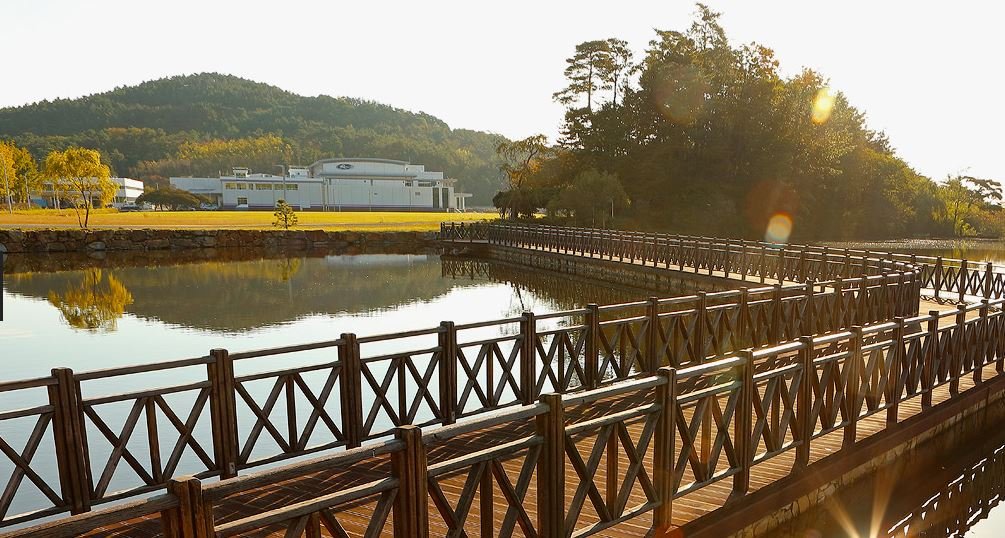
South Korea’s new proposed legislation would allow the government to dissolve religious groups accused of interfering in electoral politics. Critics warned this could lead to abuses, and we are already seeing those concerns come to life. The campaign against the Shinangchon community in Busan is a clear example. Shinangchon is a group of 3,000 people who pray, work, and produce one of Korea’s favorite soy sauces.
To understand why Shinangchon is now a target, we need to look back at the Olive Tree movement, from which Shinangchon descends. The Olive Tree began in the 1950s, a time when Korean Protestantism was flourishing but also deeply divided. Its founder, Park Tae-son, started as a Presbyterian revivalist whose healing services drew huge crowds before he was expelled from the Presbyterian Church for heresy in 1956. He then founded the Olive Tree, and his popularity soared. By the mid-1960s, he had attracted about two million followers, many from Presbyterian churches.
This loss of members sparked an intense backlash. Conservative Protestants, fearing the Olive Tree’s success and the parallel one of the Unification Church, also founded in the 1950s, started Korea’s first organized anti-cult movement. They teamed up with media outlets and politicians wanting Christian support. Park was labeled a heretic, a fraud, a sexual deviant, and even a communist sympathizer—an explosive accusation during the Cold War in Korea. However, in his case, it was false. He faced repeated arrests, and ongoing attacks on him led him to adopt more unconventional theological views. By the 1980s, he had strayed far from Christianity, calling Jesus a fraud and proclaiming himself the real Savior, leading to fragmentation in the movement. Yet, a few thousand stayed loyal even after he died in 1990, continuing in several successor communities, including Shinangchon.
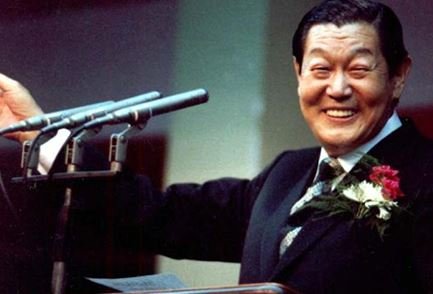
The anti-cult movement, which once worked with the state to dismantle the Olive Tree, still holds a grudge. They remain suspicious, if not hostile, toward anything linked to Park Tae-son. This historical animosity explains why Shinangchon—peaceful, hardworking, and mostly unnoticed—has become a target.
Now, President Lee’s draft law allows the government to dissolve religious corporations accused of political involvement. For anti-cult activists, this is a tempting opportunity. Local politicians also see it as a handy tool to gain favor.
In Busan, the first attack came from Woo Sung-bin, a former policy secretary to the Speaker of the National Assembly and a strong critic of the conservative People Power Party (PPP). On January 21, she held a press conference showing that during the last elections, the four polling stations inside Shinangchon had a turnout above 90%, which is unusually high for Korea. The PPP received between 85.97% and 99.18% of the votes there.
Woo suggested this was proof of organized electoral interference, implying that Shinangchon’s members had been mobilized to support the PPP in return for favors from the local government. She cited two examples: no fines were enforced for unauthorized construction, and a land purchase was allegedly made at a favorable price for the community. The local government denied both claims.
Usually, this would have been a minor local issue. But then O Myung-ok came into play. She is a well-known Korean anti-cult activist with documented links to China. She has been identified in two decisions by the Court of Rome (June 14, 2024, and March 17, 2025) as a “Chinese agent” working with Beijing internationally against refugees from The Church of Almighty God (“Bitter Winter” has copies of both decisions).

O Myung-ok bolstered Woo’s accusations, comparing Shinangchon to the Unification Church and Shincheonji—groups President Lee has already threatened with dissolution. She called for Shinangchon to be added to the list of “heretical” organizations slated for dismantlement.
The danger of the proposed law becomes clear here. Shinangchon’s polling stations are only for Shinangchon residents. If a community of 3,000 people votes at home, turnout is expected to be high. If this community is culturally conservative, it makes sense that they would vote overwhelmingly for the conservative party. This is not evidence of coercion; it shows civic participation.
The only “crime” Shinangchon seems to have committed is voting—and doing so in a way that some politicians do not like.
If this is enough to spark calls for dissolution, then no religious community in Korea is safe. Any group with a concentrated membership—Buddhist temples in rural areas, left-leaning Catholic parishes, conservative Protestant megachurches in Seoul—could be accused of political influence simply because its members share similar beliefs and vote accordingly.
The Shinangchon situation reveals the true purpose of the proposed law. It is a blunt instrument that can be used against any religious minority that becomes politically inconvenient. The risk for religious liberty is enormous.
Shinangchon has been around since 1970. For more than fifty years, its members have lived quietly, worshipped in peace, and contributed to the local economy. If such a community can be threatened with dissolution for voting in high numbers—and for the “wrong” party—the distinction between democracy and state-controlled religion is starting to fade.
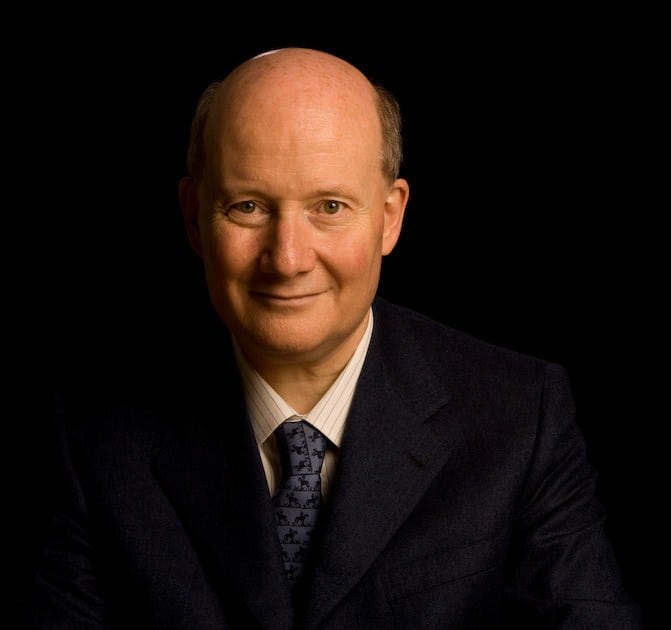
Massimo Introvigne (born June 14, 1955 in Rome) is an Italian sociologist of religions. He is the founder and managing director of the Center for Studies on New Religions (CESNUR), an international network of scholars who study new religious movements. Introvigne is the author of some 70 books and more than 100 articles in the field of sociology of religion. He was the main author of the Enciclopedia delle religioni in Italia (Encyclopedia of Religions in Italy). He is a member of the editorial board for the Interdisciplinary Journal of Research on Religion and of the executive board of University of Pennsylvania Press’ Nova Religio. From January 5 to December 31, 2011, he has served as the “Representative on combating racism, xenophobia and discrimination, with a special focus on discrimination against Christians and members of other religions” of the Organization for Security and Co-operation in Europe (OSCE). From 2012 to 2015 he served as chairperson of the Observatory of Religious Liberty, instituted by the Italian Ministry of Foreign Affairs in order to monitor problems of religious liberty on a worldwide scale.