The CRL Rights Commission, once rebuked for overreach, now stumbles into a new scandal as its “self‑regulation” project unravels.
by Rosita Šorytė and Massimo Introvigne

For years, “Bitter Winter” has tracked the South African Commission for the Promotion and Protection of the Rights of Cultural, Religious and Linguistic Communities (CRL) as it drifted from its constitutional mandate to protect cultural and religious diversity toward a more regulatory role. After sensational media stories in 2015 about fringe pastors making followers eat grass or drink petrol, the CRL reinvented itself as an investigator of “harmful” religions. Its 2017 report—based mainly on media clips rather than research—proposed forcing all faiths into state-supervised umbrella bodies, a system uncomfortably reminiscent of China’s “patriotic associations.” Parliament rejected the plan, which was a personal defeat for the CRL Chairperson, Ms. Thoko Mkhwanazi-Xaluva, but she did not give up, and the impulse to control religion persisted.
In 2025, the CRL created the Section 22 Committee, a quasi-judicial body empowered to probe undefined wrongdoing of the “Christian sector,” prompting legal challenges from the South African Church Defenders. Critics warned that the committee’s composition, rhetoric, and ambitions revealed a growing desire to police religious life—predominantly minority, independent, and charismatic groups—under the guise of “self-regulation.” At a press conference on January 21, 2026, the CRL presented slides explaining that it had decided “to commence with the Christian Sector,” implying that it plans to target, in the future, non-Christian religious and spiritual institutions as well.
Now, the story has taken a new and surprising turn, complete with leaked letters, emergency meetings, charges of dictatorship, and a chairperson who resigned dramatically after being told not to talk to journalists.
The main character in this latest chapter is Professor Musa Xulu, who was appointed Chair of the CRL’s Section 22 Committee on 25 April 2025. His task, at least on paper, was simple: investigate abuses within the Christian sector and help the community create its own self-regulation. Xulu took this seriously—perhaps too seriously for some. In internal messages, he reminded colleagues that self-regulation is “as old as the Church itself,” grounded in “sound scriptural, church history, theological, ecclesiastical, and ecumenical foundation.” This was not the language of someone ready to hand over religious governance to the state.
By late 2025, tensions were rising. Committee members accused Xulu of “dictatorship,” “undermining,” and “disrespectful rants.” A crisis meeting was held on 25 November 2025, during which Xulu criticized any draft legislation that would put churches under state control. From the documents, the atmosphere felt as welcoming as a disciplinary hearing in a cold room. On December 19, 2025, the Committee launched a draft document about the proposed control system for the Christian sector.
The crisis erupted in January 2026. On 14 January, several committee members filed a formal complaint claiming that Xulu had “silently distanced himself from the Ad Hoc Committee’s collective work,” failed to engage in discussions, and—most shockingly—“unilaterally called for a separate press conference.” It seems that other committee members found it offensive that the theologian was speaking to the media without their permission. That same day, the CRL Chairperson warned him: “You are scheduled to attend a media briefing tomorrow… without authorisation.” The underlying message was that scholars may research and sign what state bureaucrats ask them to sign, but they must not speak.
A vote of no confidence occurred on 14–15 January. Xulu, perhaps sensing that the walls were closing in, had sent a letter of resignation on 12 January 2026. His letter is a striking expression of wounded dignity. “It is with much pain, but also with relief, that I write this letter of resignation,” he began, noting that he believed he was appointed because of his “background and experience at the intersection of culture, religion, governance, and scholarship.” Instead, he found himself in a situation where his critics claimed that his “passive presence creates a leadership vacuum,” and where his research was “not understood or appreciated.” Musa also complained in a television interview that he was discouraged from discussing the work of the Committee with the Christian churches it was supposed to investigate, which he found unreasonable and unfair. Most notably, he pointed out: “There was no reference whatsoever in my letter of appointment to the development of a legislative framework, or to any form of State control of religion.”
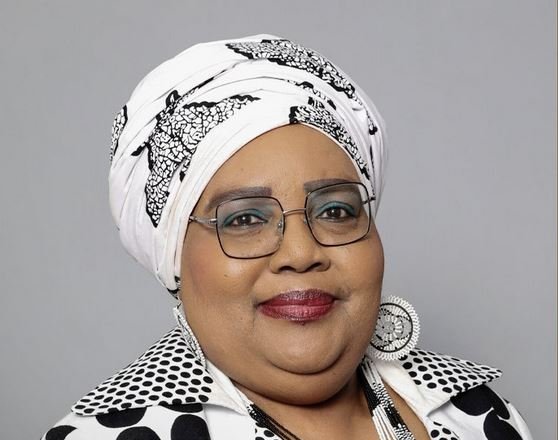
That statement strikes at the heart of the issue. The Section 22 Committee was supposedly created to help religious communities regulate themselves. Yet documents circulating within the CRL mention “registration of religious institutions,” “codes of conduct,” and a “Religious Practice Council”—all systems that, if enacted, would place religious life under state oversight. Religious scholars cautioned that such measures would “severely restrict the enjoyment of freedom of thought, conscience, religion or belief.” Meanwhile, the CRL appeared increasingly frustrated that its own committee chair insisted on voicing these concerns.
The internal communications depict a process moving steadily toward regulatory overreach. Faith leaders were sidelined. Dissent was treated as misconduct. Media engagement was discouraged, if not explicitly banned. The committee’s own complaint against Xulu stated, with bureaucratic gravity, that he had “undermined its integrity and effectiveness.” Yet from the outside, it appears that the real offense was resisting a pre-determined agenda.
For those who care about religious freedom, the situation is disturbing. Oversight bodies can help address abuses, but only if they respect the independence of the communities they claim to support. When oversight turns into control, when consultation shifts to coercion, and when scholars are told not to speak publicly about their work, the line between regulation and suppression starts to fade.
“Bitter Winter” warned years ago that the CRL Rights Commission was drifting towards a model of state-managed religion. Recent events confirm that this threat has not disappeared. If anything, it has become more subtle—wrapped in procedural language, committee votes, and polite letters that still carry a clear sense of intimidation.
South Africa’s religious communities deserve better than a regulatory system that treats them as subjects rather than partners. Professor Xulu’s resignation, whatever one thinks of his approach, serves as a reminder that the first casualty of overreach is always the freedom to speak, to dissent, and to govern one’s own faith without fear of bureaucratic retribution.

Rosita Šorytė was born on September 2, 1965 in Lithuania. In 1988, she graduated from the University of Vilnius in French Language and Literature. In 1994, she got her diploma in international relations from the Institut International d’Administration Publique in Paris.
In 1992, Rosita Šorytė joined the Ministry of Foreign Affairs of Lithuania. She has been posted to the Permanent Mission of Lithuania to UNESCO (Paris, 1994-1996), to the Permanent Mission of Lithuania to the Council of Europe (Strasbourg, 1996-1998), and was Minister Counselor at the Permanent Mission of Lithuania to the United Nations in 2014-2017, where she had already worked in 2003-2006. In 2011, she worked as the representative of the Lithuanian Chairmanship of the OSCE (Organization for Security and Cooperation in Europe) at the Office for Democratic Institutions and Human Rights (Warsaw). In 2013, she chaired the European Union Working Group on Humanitarian Aid on behalf of the Lithuanian pro tempore presidency of the European Union. As a diplomat, she specialized in disarmament, humanitarian aid and peacekeeping issues, with a special interest in the Middle East and religious persecution and discrimination in the area. She also served in elections observation missions in Bosnia and Herzegovina, Georgia, Belarus, Burundi, and Senegal.
Her personal interests, outside of international relations and humanitarian aid, include spirituality, world religions, and art. She takes a special interest in refugees escaping their countries due to religious persecution and is co-founder and President of ORLIR, the International Observatory of Religious Liberty of Refugees. She is the author, inter alia, of “Religious Persecution, Refugees, and Right of Asylum,” The Journal of CESNUR, 2(1), 2018, 78–99.
Languages (fluent): Lithuanian, English, French, Russian.