On June 20, 2024, a new act was passed with the explicitly stated aim of preventing the Jehovah’s Witnesses from receiving state grants.
by Massimo Introvigne
Article 2 of 4. Read article 1.
In our previous article, I traced the long and arduous legal battle that Jehovah’s Witnesses fought to secure equal treatment under Sweden’s religious subsidy system. After more than a decade of litigation, culminating in multiple rulings by the Supreme Administrative Court, the group was finally granted state support in 2019. But the story did not end there. Instead, it took a darker turn—one that raises urgent questions about religious freedom, state neutrality, and the rule of law in Sweden.
This second installment examines the legislative and administrative campaign that followed the 2019 decision, culminating in a new law passed in 2024 that appears custom-built to exclude Jehovah’s Witnesses from future subsidies. The facts are clear, and they are troubling.
On February 23, 2022, Sweden’s national broadcaster SVT aired a segment on its investigative program “Uppdrag granskning” (Mission Investigation). During the broadcast, Isak Reichel, head of the Swedish Agency for Support to Faith Communities (SST), stated unequivocally that Jehovah’s Witnesses “do not meet the criteria” for receiving state subsidies. He cited the group’s religious views on blood transfusions, congregational discipline, and homosexuality.
That same evening, Nina Andersson, then State Secretary at the Ministry of Culture, went further. She criticized the government’s 2019 approval of subsidies and declared that new legislation would be introduced to “correct” what she saw as a failure of the existing law.
On June 19, 2024, Professor Ulf Bjereld, the government-appointed investigator tasked with reviewing the subsidy framework, confirmed publicly that the new law was politically motivated. He stated that the legislative process began with a desire to prevent Jehovah’s Witnesses from receiving subsidies. He openly speculated whether the new law would be “sufficient” to achieve that goal.
The very next day, the Riksdag passed Act 2024:487, amending the previous law and requiring all religious communities to reapply for eligibility by March 31, 2025. The accompanying Ordinance 2024:1056, issued on November 21, 2024, gave the SST sole authority to evaluate applications—removing the government’s final say and concentrating power in the hands of an agency already on record as hostile to Jehovah’s Witnesses.
Even before Jehovah’s Witnesses submitted their new application, the SST was already laying the groundwork for rejection. They learned through a disclosure request that on February 12, 2025, the agency contacted Norwegian authorities seeking information about their decision to deny subsidies to the group. Norway’s Borgarting Court of Appeal overturned that decision just weeks later.
On March 10, 2025, the Jehovah’s Witnesses submitted a comprehensive application, affirming their peaceful religious activities and compliance with Swedish law. But on May 27, the SST responded with a letter demanding additional information—not about administrative procedures, but about religious doctrine. The questions focused on homosexuality, exclusion policies, and corporal punishment, and were based on decades-old texts, media articles, and a letter of complaint from two disgruntled ex-members. Rather than with a neutral inquiry, the Jehovah’s Witnesses were confronted with a doctrinal interrogation.
On June 19, 2025, following a public records request filed by the Jehovah’s Witnesses, the SST admitted that it had received 45 applications from religious communities. However, it had sent doctrinal questions only to the Jehovah’s Witnesses. No other group was asked to explain its beliefs in relation to the law’s “democratic conditions.”
The composition of the SST’s review panel further undermines its claim to impartiality. Its members include a former leader of the Jewish Community of Stockholm, ordained priests from the Church of Sweden, and an imam—all representatives of religions that have historically received state support. The potential for conflict of interest is glaring.
By June 24, the SST had ruled on 15 applications, rejecting 14 for failing to meet membership thresholds and one for not being a registered religious community. These were formal rejections. The remaining 30 applications—including that of Jehovah’s Witnesses—were still under review.
On July 3, 2025, Jehovah’s Witnesses submitted a formal request to the Ministry of Social Affairs, asking that an independent body—not the SST—handle their application. The letter detailed the SST’s lack of neutrality and cited Sweden’s obligations under the European Convention on Human Rights to act impartially in matters of religion.
On August 14, the government acknowledged that it had the authority to appoint another body—but refused to do so, claiming the reasons provided were insufficient. Jehovah’s Witnesses have since asked the Supreme Administrative Court to review this decision.
On September 18, the SST issued its own decision on the Jehovah’s Witnesses’ objection, denying bias and claiming inter alia that the SST director would not be involved in the decision-making process. The Jehovah’s Witnesses appealed this decision before the Stockholm Administrative Court of First Instance.
The SST’s final decision on the substance of the matter, issued on October 24, 2025, excluded Jehovah’s Witnesses from state subsidies under the new law. We will examine that decision in detail in the following article. Still, the trajectory is already clear: Sweden has shifted from judicially mandated inclusion to legislative exclusion, utilizing bureaucratic tools and doctrinal scrutiny to marginalize a religious minority.
The case is a test of Sweden’s commitment to freedom of religion or belief. And so far, the signs are deeply troubling.
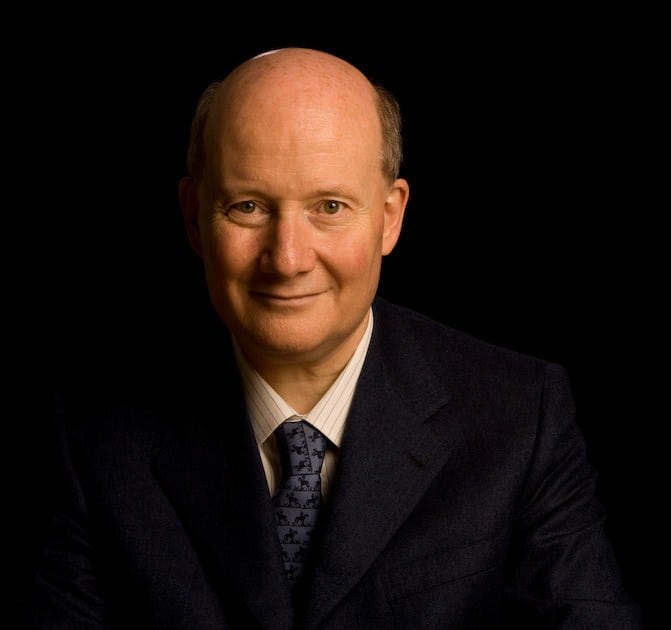
Massimo Introvigne (born June 14, 1955 in Rome) is an Italian sociologist of religions. He is the founder and managing director of the Center for Studies on New Religions (CESNUR), an international network of scholars who study new religious movements. Introvigne is the author of some 70 books and more than 100 articles in the field of sociology of religion. He was the main author of the Enciclopedia delle religioni in Italia (Encyclopedia of Religions in Italy). He is a member of the editorial board for the Interdisciplinary Journal of Research on Religion and of the executive board of University of Pennsylvania Press’ Nova Religio. From January 5 to December 31, 2011, he has served as the “Representative on combating racism, xenophobia and discrimination, with a special focus on discrimination against Christians and members of other religions” of the Organization for Security and Co-operation in Europe (OSCE). From 2012 to 2015 he served as chairperson of the Observatory of Religious Liberty, instituted by the Italian Ministry of Foreign Affairs in order to monitor problems of religious liberty on a worldwide scale.