Not content simply with dismantling Uyghur culture, the CCP is intent on stepping up the humiliation of the Turkic peoples of the Xinjiang region.
by Ruth Ingram
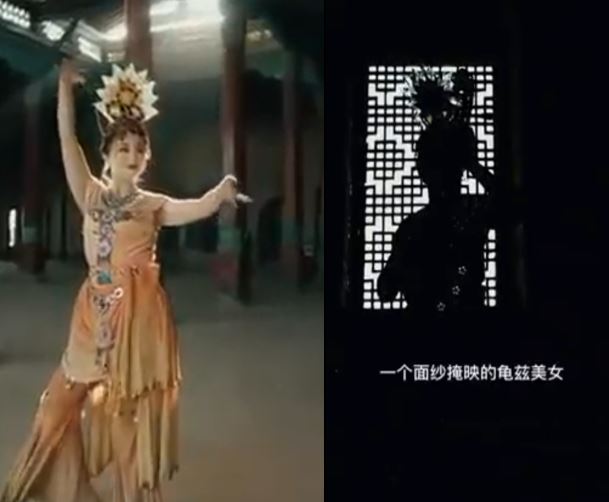
Attempts by the CCP to further undermine Uyghur cultural heritage and blur historical ties to the Xinjiang region, came to light recently through a state-sponsored promotional video that has horrified Uyghur exiles.
Distributed among the diaspora communities in their distress, the clip was sent to Bitter Winter by Istanbul-based Uyghur journalist Musa Abdulehed ER.

The cameo portrayal of the Grand Kuqa Mosque, the second largest in Xinjiang, as a Buddhist-Muslim religious hub inextricably bound up with Han Chinese history and culture, in which a Buddhist dancer takes center stage among the pillars of the central prayer hall has angered and humiliated exiled Uyghurs.
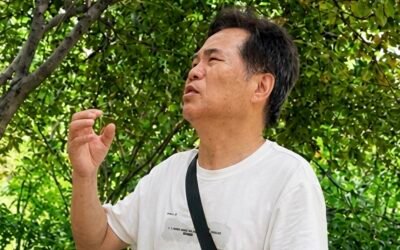
Not only is this one more government step to further Sinicize the region, but a gross humiliation and affront to their religion, says exiled poet Aziz Isa Elkun, now based in the U.K. Their cultural roots are being torn out and their religion mocked, he complains.
We are taken up the steep brick-stepped stairway of a 1930’s reconstruction of the original sixteenth century building that was destroyed by fire, beloved by Uyghurs everywhere. We approach the imposing double gated entrance, with the help of a jeans-clad, youthful Han Chinese woman who will introduce us to the history and background of this religious center, “with Chinese characteristics.”

Without a headscarf, she wanders nonchalantly through the doors into a pillared hall, keeping her shoes on. The next minute, a Uyghur dancer dominating the prayer area, dressed in full Buddhist orange regalia writhes characteristically in Buddhist style to soft Chinese music.
The narrator speaks in muted tones of the centuries of Buddhist and Islamic cultures woven inseparably through the centuries. “The long river of the setting sun,” the “clattering of silhouetted horses” galloping across the plain. We are introduced to a “Uyghur beauty “ outlined as if “veiled” behind the latticed window. She represents the “daughter of China’s history,” and through history we can understand the culture of the great Chinese nation, she intones.

Kuqa is inextricably part of China, she concludes. The softness and elegance of the Central Plains is woven together with the blood of the Western regions. “They combine to be as one,” we are told. The culmination of multicultural integration throughout the centuries, is met here, in the “Kuqa Temple.” The setting sun casts a long shadow through the “traditional Chinese window latticework.” The pillars, the painted beams are magnificent.
We should remember this, she urges the listener. Kuqa, the people and the religion are Chinese.
Kuqa has a special place in the heart of poet Aziz Isa Elkun, well known to Bitter Winter as we have traced his exiled journey of pain and longing through the removal of his father’s desert grave and his poetry.
Billeted to the city during his university entrance exams in 1988, he used to walk past and visit the building every day.

When he saw the video, he told Bitter Winter, his heart “was broken.” “There are so many sacred sites now that have been completely destroyed by the CCP,” he said, adding that the video was one more humiliation to his people.
He had seen footage of the British royal family visiting mosques around the world, taking off shoes, and the women, even Queen Elizabeth, wearing a scarf. Referring to the disrespect shown by the reporter and the dancer, “this desecration does nothing to glorify the so-called Chinese culture’s 5000 years of history,” he said. “Their disrespect to our religion shames them.”
Kuqa, formerly known as Qiuci, had been one of the foremost Buddhist centers in the sixth century, spreading from India before Islam appeared around the thirteenth century. “Yes Uyghurs were Buddhist; extremely devoted and eager to propagate their faith in those days,” said Elkun. The city had occupied a strategic position on the Northern Silk Road, bringing trade and prosperity. The remnants of the Buddhist period are spread around the hills and rocks around the city in caves and painted murals.
But by the end of the fourteenth century Islam had become well established and Buddhism largely vanquished. Most Uyghurs would consider themselves Muslim today, although there is a small but growing Christian minority among them.
According to 2019 research commissioned by the Uyghur Human Rights Project, “Demolishing Faith, The Destruction and Desecration of Uyghur Mosques and Shrines,” Beijing has been dismantling Uyghur and Turkic religious and cultural sites in earnest in recent years. Hundreds of mosques, particularly small, neighborhood buildings have been destroyed or repurposed and sharing the same fate, the leaders of their communities have been imprisoned.
Further research conducted recently by Professor Rachel Harris and Aziz Elkun, her husband, “The Complicity of Heritage: Cultural Heritage and Genocide in the Uyghur Region,” has shown that on UNESCO’s watch, and with Beijing’s approval, several treasures of intangible cultural heritage across Uyghur, Kyrgyz, and Kazakh cultures have also been dismantled and are in danger of disappearing altogether.

The latest video together with other similar CCP publicity stunts, is just the tip of the iceberg of the cultural indignities Uyghurs and other Turkic people are being subjected to in the Uyghur heartland today. “The insults are deliberate,” says Aziz. “They are intended to undermine us, but also, in the light of its purely Mandarin voiceover and subtitles, to deceive the Chinese people who are not so informed about our history.” He said the video’s message was one of “assimilation, caricature, cultural tropes and falsehood.”
“It is a gross insult to our beliefs and a disgrace,” he said.

Ruth Ingram is a researcher who has written extensively for the Central Asia-Caucasus publication, Institute of War and Peace Reporting, the Guardian Weekly newspaper, The Diplomat, and other publications.