The crackdown on dissident religious groups is now entering a second phase, where they are persecuted not for specific behaviors but for “heresy.”
by Massimo Introvigne

Tomás de Torquemada, the 15th‑century Dominican friar, has long been the poster child of the Spanish Inquisition. His name became shorthand for the cruelty of a system that hunted “heretics” with a zeal that burned more than bodies—it burned the boundaries of conscience. Modern historians such as Henry Kamen have dismantled the Enlightenment caricature of Torquemada as a crude, uneducated bureaucrat. He was, in fact, intelligent, well‑read, and utterly convinced he was serving God. That, precisely, made him dangerous. The Catholic Church would later apologize for the excesses committed under his watch.
Today, Torquemada no longer wears the white vest of the Dominicans. He wears a jacket and tie. He does not speak Spanish or Latin. He speaks Korean. Torquemada’s logic—the ancient, seductive logic that the state must protect society from “heresy”—has returned in a modern, democratic setting. And that is what makes it so unsettling.
Korean President Lee Jae Myung is not a theologian, nor does he pretend to be. Some might even suspect he is less well‑read on religion, perhaps even less intelligent, than Torquemada ever was. But he shares one trait with the old inquisitor: a fervent conviction that certain religious minorities are dangerous simply because they are religious minorities. And conviction, when paired with state power, is a combustible mix.
Although left‑leaning, Lee is not a Communist. Yet he displays a curious fascination with China’s model of religious control—a model built on the premise that the state alone decides which religions are legitimate and which must be crushed. In China, this logic has justified the bloody repression of Falun Gong, The Church of Almighty God, and countless others. It is a system where the Communist Party plays the role of a secular Torquemada, and “heresy” is defined not by theology but by political obedience.
This Chinese model did not remain within China’s borders. As scholars have documented, Beijing has spent decades exporting its ideology of discrimination against new religious movements (NRMs) abroad to justify its own repression by claiming international consensus and to weaken conservative religious groups supporting anti‑Communist forces. China found willing partners: France, with its tradition of state‑sponsored fight against “cults”; Japan, where left‑wing lawyers and academics had long agitated for the dissolution of the Unification Church; and South Korea, where some Christian denominations feared losing members to new religious movements such as the Unification Church and Shincheonji.
But the Korean story after Lee’s election has its own internal logic, unfolding in two distinct phases.
Phase One began with accusations that a Unification Church executive had offered illicit donations to former President Yoon and his PPP party. Mother Han, the leader of the Unification Church, was jailed and remains there. Both the Unification Church and Shincheonji were accused of violating Korea’s strict election laws by registering members en masse for PPP primaries. At first glance, this looked like a political scandal, not religious persecution.
But the narrative soon unraveled. The Unification Church executive who confessed to illegal donations revealed he had also donated to President Lee’s own party, forcing a cabinet minister to resign. Although threatened by an obviously biased judge, witnesses firmly testified that Mother Han had no personal involvement in the executive’s actions. The number of Unification Church members who joined the PPP proved far smaller than claimed. International protests erupted—even reaching the White House—after Mother Han’s innocence became more and more clear, prominent Protestant pastors critical of Lee were also harassed, and one, Pastor Son Hyun‑Bo, was jailed for alleged election‑law violations.
Embarrassed, the government shifted gears. Phase Two abandoned the pretense of prosecuting specific crimes. Instead, it embraced the Chinese model: religious minorities should be punished simply for being “heretical.” On January 12, 2026, President Lee met with leaders of majority religions at the Blue House. They told him that “the damage caused by pseudo‑cult religions like the Unification Church and Shincheonji is severe,” that “dissolving religious groups that harm the nation and its people would likely gain public consensus,” and urged the government to consider using the assets of these groups to “support victims of pseudo‑religions.” According to reports, the President replied that “the harm to our society [caused by these ‘pseudo‑cult religions’] has been neglected for too long, leading to enormous damage.”
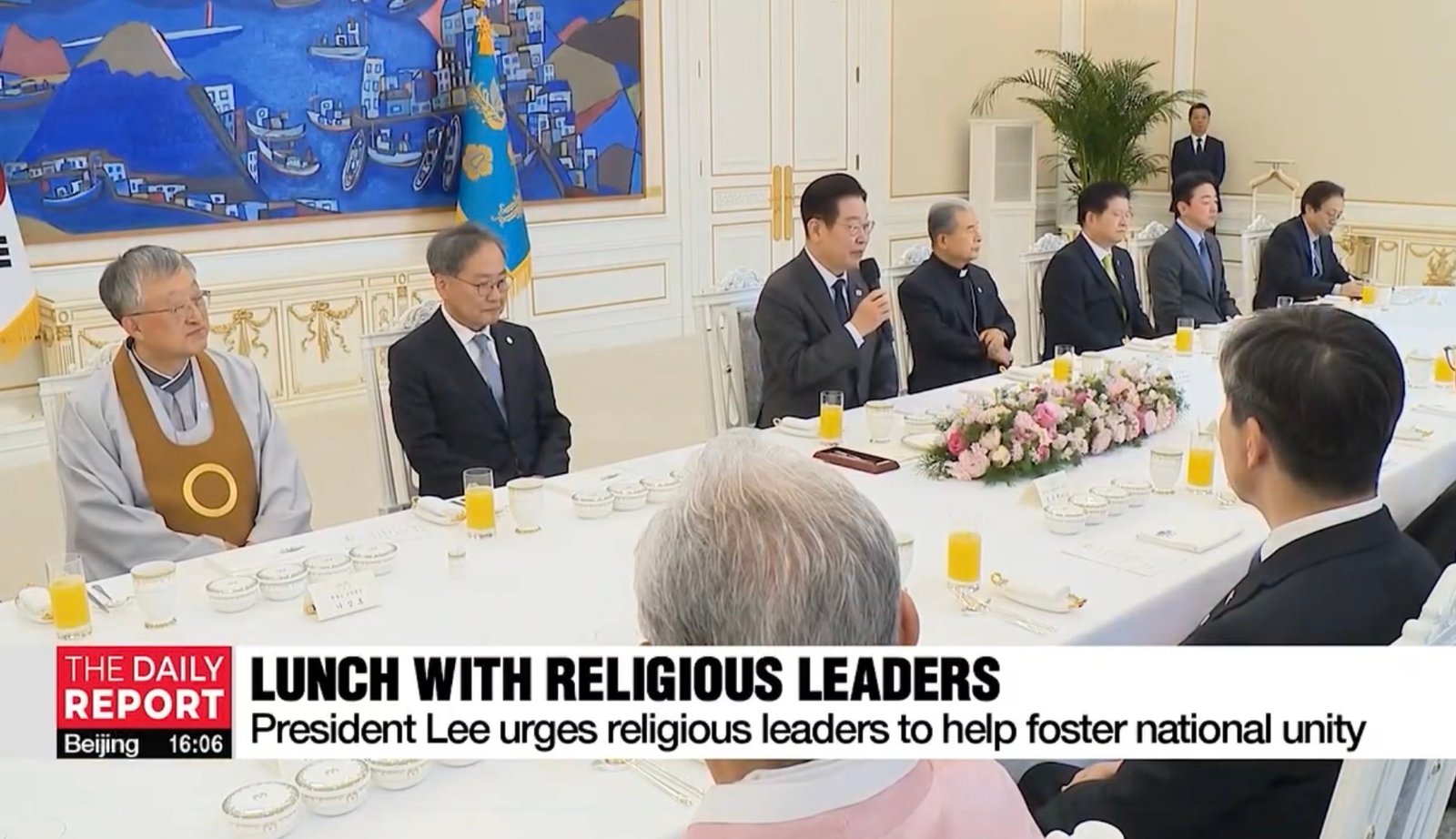
Another newspaper reported that he agreed with calls to disband the Unification Church, Shincheonji, and other “illegitimate, heretical religious organizations.” The Prime Minister added that “pseudo‑religions are social evils that need to be eradicated,” and called for ministries to explore ways to eliminate them.
Through the Blue House sideshow, some mainline religions seized the opportunity to eliminate competitors. Others were simply frightened. But the result was the same: a hunt for “heretics” was launched in Korea.
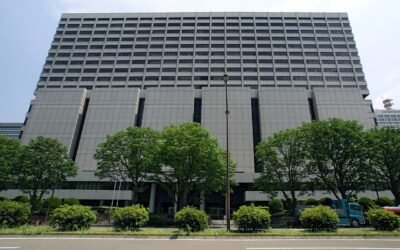
Japan’s first-degree dissolution of the Unification Church was cited as a precedent. Yet the Tokyo District Court’s decision was sharply criticized by four UN Special Rapporteurs, who warned that it relied on vague notions of “public welfare” incompatible with the ICCPR. They reminded Japan—and implicitly, by extension, Korea—that restrictions on religious freedom must comply strictly with Article 18.3 of the ICCPR.
In Japan, the dissolution was at least nominally based on allegations of excessive donation pressure. In Korea, the arguments for dissolution do not even pretend to be about donations. They are about “heresy.” And that is where Torquemada reenters the story.
The question is not whether religions can call one another heretical. They do it all the time. The question is whether a democratic state can decide which religions are heretical. China does it. It has always done it. But Korea?
On January 12, President Lee crossed a Rubicon. He embraced the logic of the Inquisition: that the state must protect society from “heretics,” and that the definition of heresy belongs to those in power. Torquemada believed he was saving souls. Modern inquisitors believe they are saving society. The danger is the same.
And history has taught us, again and again, that once a state claims the authority to decide which beliefs are legitimate, no one—not even the majority religions that cheer today—can be sure they will not be tomorrow’s heretics.
Korea stands at a crossroads. One path leads back to the principles of the ICCPR and the democratic commitment to freedom of religion. The other leads toward China and a modern, bureaucratic Inquisition—one that burns reputations and freedom instead of bodies, but burns them all the same.
The stakes could not be higher.

Massimo Introvigne (born June 14, 1955 in Rome) is an Italian sociologist of religions. He is the founder and managing director of the Center for Studies on New Religions (CESNUR), an international network of scholars who study new religious movements. Introvigne is the author of some 70 books and more than 100 articles in the field of sociology of religion. He was the main author of the Enciclopedia delle religioni in Italia (Encyclopedia of Religions in Italy). He is a member of the editorial board for the Interdisciplinary Journal of Research on Religion and of the executive board of University of California Press’ Nova Religio. From January 5 to December 31, 2011, he has served as the “Representative on combating racism, xenophobia and discrimination, with a special focus on discrimination against Christians and members of other religions” of the Organization for Security and Co-operation in Europe (OSCE). From 2012 to 2015 he served as chairperson of the Observatory of Religious Liberty, instituted by the Italian Ministry of Foreign Affairs in order to monitor problems of religious liberty on a worldwide scale.