Xinjiang CCP leaders claim that the majority of the camps’ inmates have found “suitable work.” In fact, they have not been released but are compelled to work in factories built inside the camps.
by Massimo Introvigne

“Chuangfa Innovative Electronics,” one of the factories where inmates of the Yining transformation through education camp are compelled to work
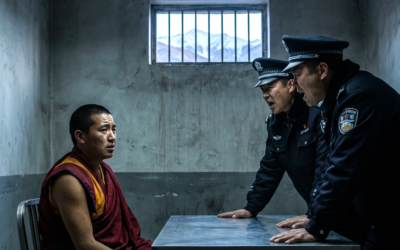
Lies lead to other lies. First, the CCP claimed that the dreaded Xinjiang transformation through education camps, where three million Uyghurs and other prisoners of conscience (including members of The Church of Almighty God) are detained, did not exist. Faced with massive evidence that the camps did indeed exist, the CCP claimed they are “vocational schools.” Bitter Winter was the first media outlet that published video evidence from inside the camps proving they are, indeed, jails.
Now, the CCP has launched with great fanfare a third version of the lie. On July 30, two of Xinjiang’s top CCP leaders announced that yes, Uyghurs and others were detained, but now “you could say that maybe 90 percent or more — have found suitable work to their liking.” In a press conference, Alken Tuniaz, the deputy chairman of the Xinjiang government, said that the majority of those detained in the camps “have returned to society and returned to their families.” And it was Shorat Zakir, the chairman of the same Xinjiang government, who claimed that 90% have found work.
Truth be told, what they exactly said is unclear. In one version, they announced that 90% of the inmates have been released. In another version, they said that 90% of those released have found work – without stating how many have been released. The two statements are obviously different.
Neither is true, but in the peculiar Marxist language of the CCP there is always a “dialectic” formal half-truth hiding a substantial lie. That a significant number of the camp’s inmates have “returned to their families” is a plain lie. Many of them have relatives abroad, who did not receive any good news from them, nor indeed any news at all. Uyghur activist Rushan Abbas suggested that reporters who attend these press conferences ask explicitly where her sister is. Just one name, just one example of a prisoner who is a medical doctor, does not need any “vocational training” and disappeared into the camps in September 2018. Is she not part of the 90%? Where is she?
Bitter Winter has reported about the frantic construction of new camps in 2018 and 2019. Were they built just to dismantle them after a few months? Nobody would believe it. However, the CCP’s plain lies are proposed in a dialectical relationship with half-truths. And these are truths Bitter Winter has already documented, including through videos, and is in a position to prove. It is true that some Uyghurs are no longer in the Xinjiang camps. They have been secretly transferred to other parts of China. This, however, did not improve their situation. As one brave prison worker in Henan, where thousands of Uyghurs were recently transported, told Bitter Winter, “these Uyghurs are separately held in so-called ‘high-risk prison areas,’ with handcuffs and shackles 24/7. Prison guards can shoot anyone regarded as disobedient at any time. These Uyghurs will spend the rest of their lives in jail without being tried, sentenced, or convicted. They are doomed to die in prison.”
And is true that many inmates of the transformation through education camps, perhaps the majority, some may say even 90%, have “found suitable work,” although we doubt that it is “to their liking.” Increasingly, besides being subject to forced indoctrination, inmates in the transformation through education camps are sent to work in factories that are part of the large compounds that also include the jails.

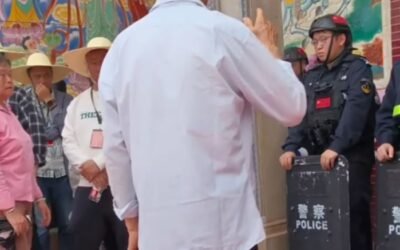
Welcome to “freedom”: entering the area of the Yining camp where inmates should work in nine factories.
For instance, when the huge transformation through education camp was built in Yining, Huocheng county in 2018, the area of some 100,000 square meters included the jail-like residences of the inmates and nine factories, including a clothing factory, an electronics factory, and a food processing plant. These factories have now started their operations, and it is where the inmates are sent to work. Forced labor, or slave labor, to contribute to the huge costs of keeping three million Uyghurs and other prisoners in jail. “Suitable work” indeed.
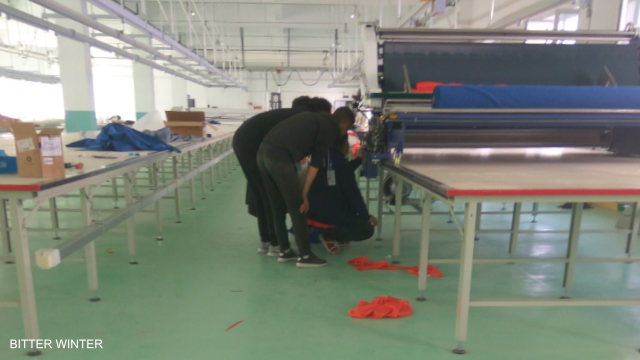
Machines are tested in one of the “suitable work” forced labor factories within the Yining camp.
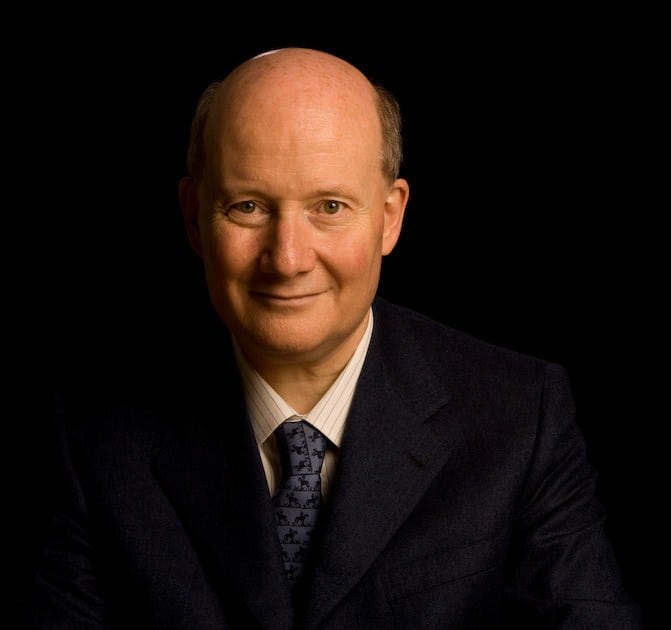
Massimo Introvigne (born June 14, 1955 in Rome) is an Italian sociologist of religions. He is the founder and managing director of the Center for Studies on New Religions (CESNUR), an international network of scholars who study new religious movements. Introvigne is the author of some 70 books and more than 100 articles in the field of sociology of religion. He was the main author of the Enciclopedia delle religioni in Italia (Encyclopedia of Religions in Italy). He is a member of the editorial board for the Interdisciplinary Journal of Research on Religion and of the executive board of University of California Press’ Nova Religio. From January 5 to December 31, 2011, he has served as the “Representative on combating racism, xenophobia and discrimination, with a special focus on discrimination against Christians and members of other religions” of the Organization for Security and Co-operation in Europe (OSCE). From 2012 to 2015 he served as chairperson of the Observatory of Religious Liberty, instituted by the Italian Ministry of Foreign Affairs in order to monitor problems of religious liberty on a worldwide scale.