The strange but important role of a shadowy figure in instigating the prosecution of Bivolaru and MISA in France.
by Massimo Introvigne and Rosita Šorytė
Article 2 of 4. Read article 1.
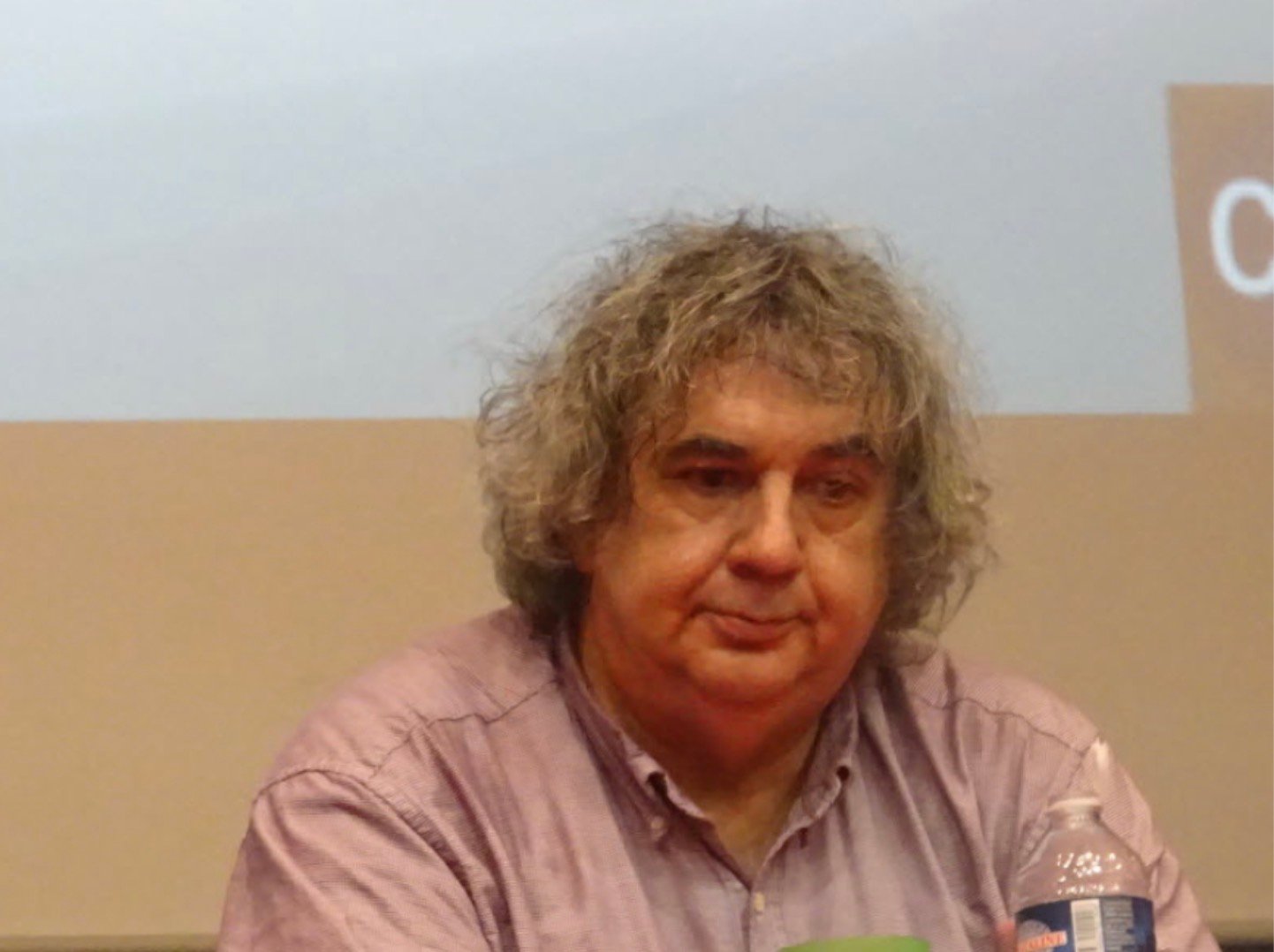
A brief but impactful appearance in the “Twisted Yoga” series is by Hugues Gascan, the shadowy founder of a small French anti-cult organization called GéPS (Groupe d’étude du phénomène sectaire, Study Group of the Cult Phenomenon). The story, as he recounts it in the documentary, is that Gascan “had been involved in fighting against these types of movement and cults for many years. So that’s how I began to be interested in MISA. I wanted to understand the modus operandi, what was going on with MISA in France. And I started to read and slowly investigate.” “I put in some keywords on my computer: Paris, Romania, Guru, Cult. And I quickly found this article in Australian newspapers,” guiding him to Ashley, one of the “victims” we will meet in the next article of this series. “So, I was in touch with Ashley and transmitted this testimony to the Department of Police in charge of what is going on in terms of cults in France,” Gascan reports. Thus began the French investigation. Or so he claims.
Anyone who has watched the recent wave of true‑crime‑meets‑spiritual‑panic TV series will recognize the formula: a sinister “cult,” a heroic investigator, a breathless chase across borders, and a final revelation that ties everything together with the neatness of a Netflix storyboard. But reality, as usual, is messier, stranger, and far less obedient to narrative structure.
Before November 2023, GéPS was so obscure that even seasoned observers of the French anti‑cult scene would have struggled to identify it. Yet its roots stretch back more than a decade, to a research laboratory in Angers and a scientist whose professional life took a turn that no screenwriter could have plotted with a straight face.
Gascan was, by all accounts, a respected medical researcher at the University of Angers, publishing in peer‑reviewed journals and collaborating with colleagues such as P.J., a female scientist. Then came a rupture—partly about alternative cancer therapies, partly about personalities, and partly about something more nebulous. Gascan became convinced that P.J. had fallen under the influence of a “cult” called Omalpha, led by the Canadian Tantric teacher Jean Bouchart d’Orval. He went further, claiming that Bouchart d’Orval was entangled with Ashram Shambhala, a sprawling Russian movement whose founder, Konstantin Rudnev, had been sentenced in 2013 in Novosibirsk to eleven years in prison for running a “cult” and sexually abusing followers. After Rudnev’s imprisonment, the movement splintered into dozens of independent offshoots—some denouncing him as a fallen guru, others insisting he was a political dissident framed with fabricated evidence and punished for criticizing the Putin regime. For reasons explained elsewhere, the latter interpretation is not as implausible as it may sound.
The quarrel inside the laboratory escalated to the point that, in 2012, the University of Angers shut down the entire research center. Gascan later portrayed himself as the victim of a “cultic” infiltration. The French courts, however, told a different story. P.J. filed criminal charges for harassment, and Gascan was convicted in the first instance, on appeal, and finally by the Court of Cassation on May 14, 2013. The rulings described behavior that went well beyond professional disagreement: surveillance, pressure, and attempts to coerce colleagues into providing false statements. The Cassation decision noted that P.J. was “not the only one to have borne the brunt of Mr. X [Gascan]’s all‑powerful behavior,” listing multiple colleagues who testified to similar treatment. One research engineer recounted that Gascan had summoned her and suggested she send an email falsely claiming that P.J. had tried to recruit her into a “group,” adding, “That’s the exact word used by Mr. X…,” and that she refused. The judges also cited a forensic psychological evaluation confirming that P.J. was mentally sound, and even the French governmental anti‑cult agency MIVILUDES reported that although it had “elements of concern” about “Omalpha and Mr. D’Orval …, particularly about his conception of democracy… no cultic deviances had been identified” there. Gascan received a suspended four‑month sentence and emerged from the affair with a lifelong hostility toward anything Tantric.
Enter Alban Bourdy, a former member of the Soledad Domec offshoot of Ashram Shambhala, who later reinvented himself as an anti‑cult activist. In his autobiographical book “Un Bisounours au pays des se(x)ctes” (Norderstedt: Book on Demand, 2018), he recounts that in 2015 he received a phone call from Gascan (p. 391), followed by another in December in which Gascan proposed that they join forces to expose Tantric groups. Yet even in this new alliance, Gascan’s fixation on P.J. resurfaced: he accused Bourdy of being in contact with her (p. 393).
Shortly before Christmas 2015, Bourdy visited MIVILUDES in Paris and spoke with a “high representative” of the agency (p. 397). Soon after, both he and Gascan were approached by television journalist Raphaël Tresanini. Then, on February 26, 2016, a development shifted the landscape: Gregorian Bivolaru was arrested in France. Romania wanted him extradited for the Dumitru case (mentioned in the previous article of this series). At the same time, Sweden—where he had been granted political asylum—warned that extradition was legally impossible. MIVILUDES, however, was eager to gather material against Bivolaru. Bourdy realized that the agency’s support depended on his ability to link Ashram Shambhala to MISA. He tried, writing: “Many websites have suggested that the two organizations [MISA and Ashram Shambhala] may be connected. It is a version supported by anti-cult organizations worldwide” (p. 398). The only “connection” he could identify was that the French Tantric teacher Éric Baret had reportedly taught seminars for both Shambala‑derived groups and MISA in Latin America (p. 398). Even if accurate, this was how neo‑Tantric networks operate, not evidence of organizational ties.
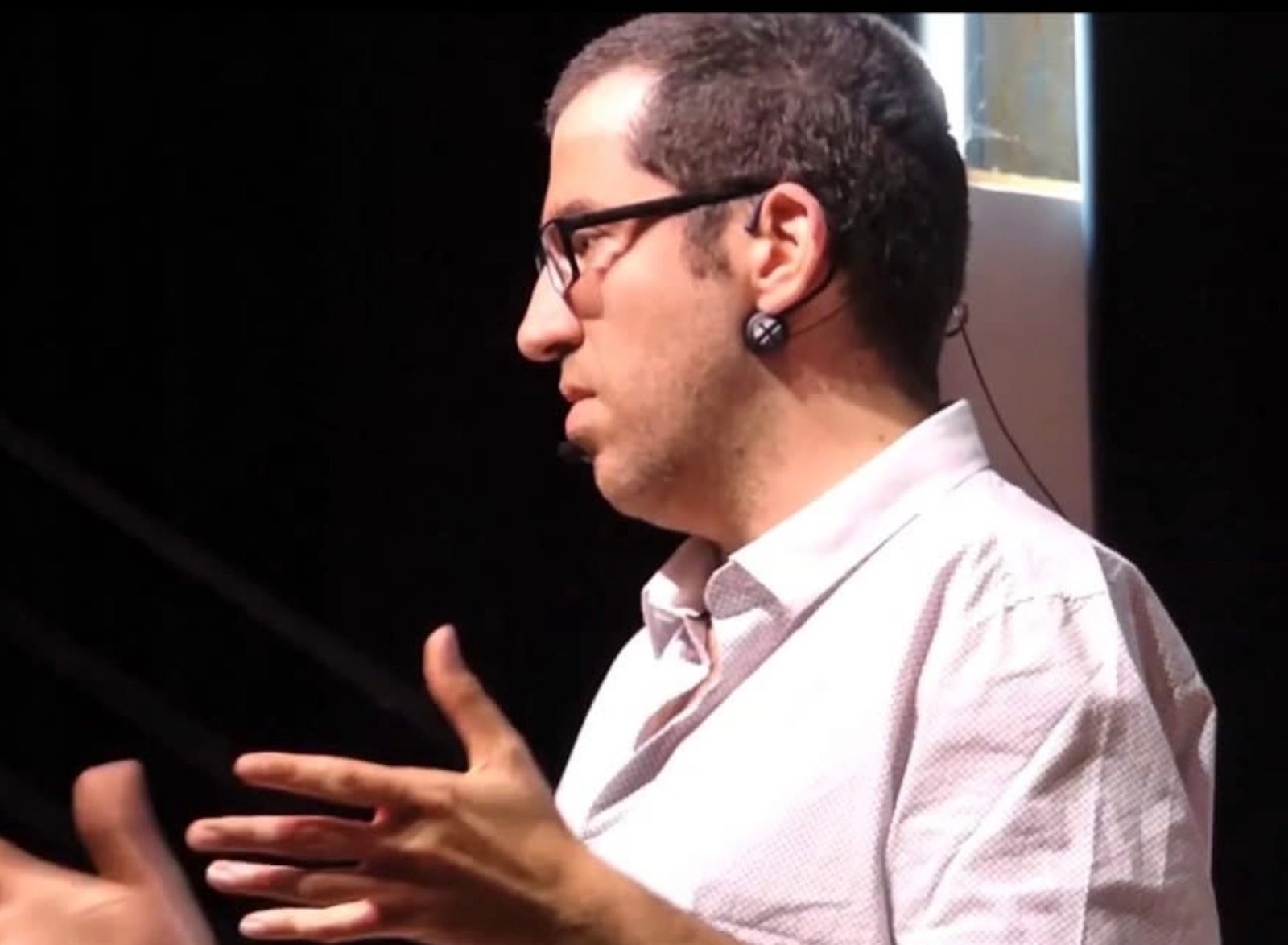
When Tresanini’s TV report aired, Bourdy says MIVILUDES was displeased because it was not sufficiently hostile to Bivolaru, despite including an interview with one of the most embittered former members (pp. 400–01). The agency then steered Gascan and Bourdy toward journalists more attuned to its expectations (pp. 406–07). On July 22, 2016, France extradited Bivolaru to Romania despite Sweden’s objections. MIVILUDES appeared to have achieved its immediate goal, but the story continued.
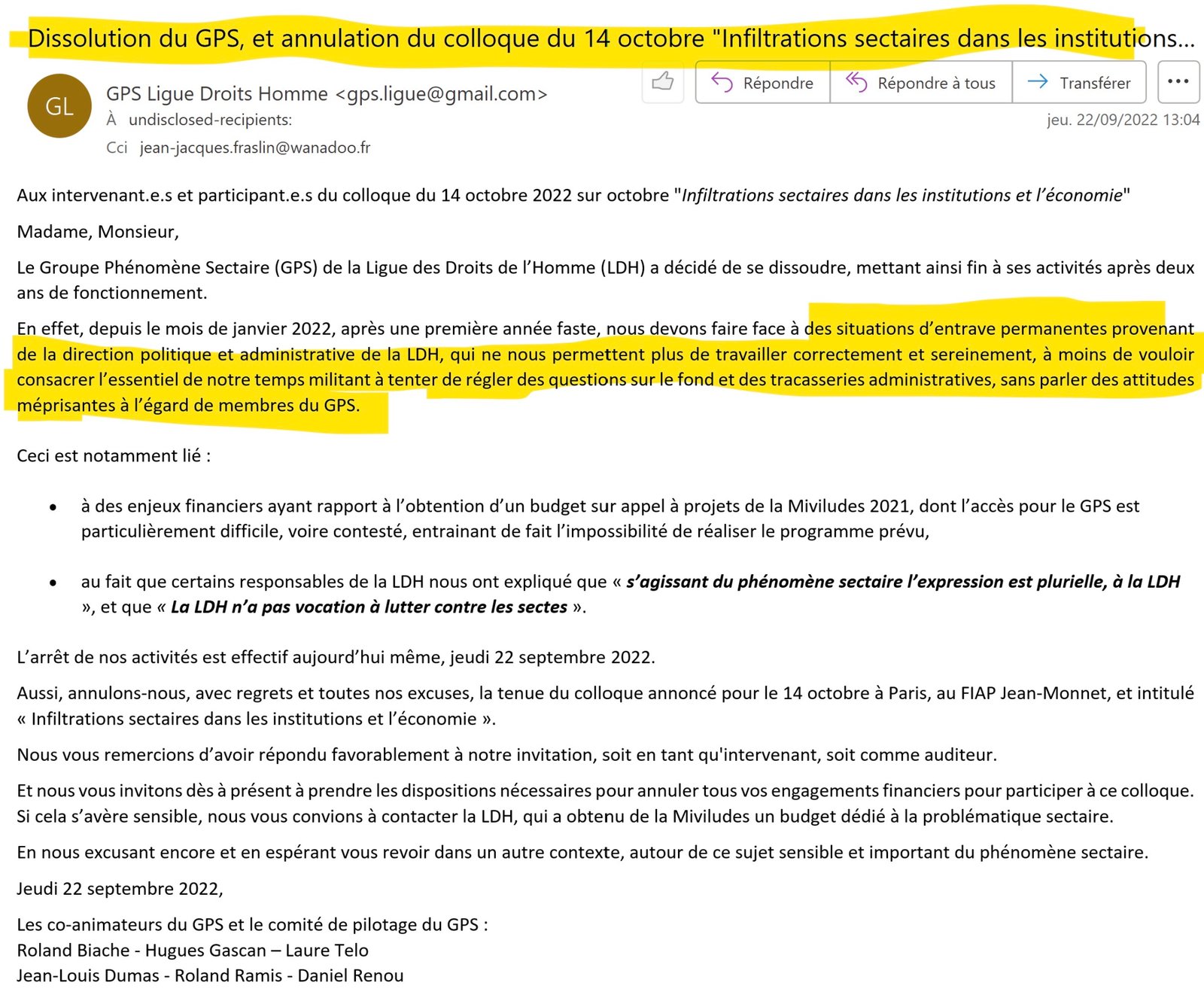
Following the agency’s advice, Gascan approached the Ligue des Droits de l’Homme, the venerable French human‑rights and pro-secularism organization established in 1898. In 2020, he founded the “Groupe Phénomène Sectaire (GPS) de la Ligue des Droits de l’Homme.” The partnership was short‑lived. By 2022, tensions had escalated to the point that the group dissolved. In an email dated September 22, 2022, obtained by “Bitter Winter,” Gascan announced the cancellation of a planned conference and the dissolution of GPS, citing “constant obstructions” from the LDH leadership, difficulties accessing MIVILUDES funding, and the fact that some LDH officials had told him that “the LDH’s vocation is not to fight against cults.” The email’s repeated references to budgets and financial obstacles were a reminder that the French anti‑cult ecosystem is not only ideological but also competitive, with MIVILUDES distributing substantial public funds.
In November 2023, Gascan and several associates founded a new independent anti-cult group: the Groupe d’étude du phénomène sectaire (GéPS). They told the media they would continue focusing on MISA and Bivolaru. In truth, Gascan’s original grievance had been with Omalpha, which he insisted was a branch of Ashram Shambhala—an assertion contradicted by the facts, though Omalpha had indeed organized joint seminars with groups of Shambhala origin. Bouchart d’Orval eventually distanced himself from Rudnev’s main branch, and according to Bourdy, even claimed to have become an expert in deprogramming, offering his services to “liberate” Rudnev’s followers (p. 177), while maintaining close ties with Soledad Domec.
After Bivolaru’s arrest in 2023, Gascan declared that MISA was “a second branch” of Ashram Shambhala, a statement demonstrably false. In the same interview, he contradicted himself by admitting that the two groups “are two movements with shared beliefs but separated apart from a few sporadic points of contact.” Even those “shared beliefs” were tenuous, but MIVILUDES had long been invested in a campaign against Bivolaru, and Gascan’s narrative conveniently aligned with that agenda.
When Finland, following complaints by disgruntled female ex-members, placed Bivolaru on the Interpol most‑wanted list in October 2017, he became a fugitive pursued by multiple police forces. The idea that a small private group like GéPS succeeded where Interpol had not belonged more to folklore than to criminology. Gascan claimed that the method was simple: contacting non‑French women he identified through Google searches who recounted cloak‑and‑dagger stories of being “brainwashed” in their home countries during MISA courses, invited to Paris, blindfolded by drivers, and taken to secret locations in France where they were allegedly forced into sexual encounters with Bivolaru. French media presented this as the fruit of GéPS’s detective brilliance, but these stories had circulated for years. The late Swedish scholar Liselotte Frisk had encountered them in 2018 while investigating the Finnish case and found them difficult to believe. Some of the women had published their accounts online, in books, or in civil litigation. I analyzed these narratives in my own 2022 book on MISA.
French police and other agencies had read these sensational accounts, too. The November 2023 raids bear the imprint of intelligence‑style operations, and the insistence on highlighting GéPS’s “private investigation” raises intriguing questions. Parenthetically, the fact that the French Court of Cassation eliminated from its online database the 2013 embarrassing decision against Gascan just days after “Bitter Winter” has referred to it—a naïve move, since the page survives on archive.org—also suggests that certain forces were at work to protect GéPS against critics.
In France, founding new anti‑cult groups is practically a cottage industry, partly because the government distributes generous funding, and competition is fierce. But why target MISA, which has very few French members? In 2016, the agency needed to support the government’s decision to extradite Bivolaru despite Sweden’s objections. But why continue afterward?
One explanation is that, although sociological studies—including those by the late American scholar Anson D. Shupe—have shown that sexual abuse is statistically more prevalent in mainstream religions than in new religious movements, it is in the interest of MIVILUDES to portray sexual crimes as typical of “cults.” Another explanation is legislative. For years, the agency had been campaigning for a new version of the 2001 About‑Picard law. The original law, intended to target Scientology and Jehovah’s Witnesses, had repeatedly failed against its intended targets. The attempt to criminalize “brainwashing” as “mental manipulation” was struck down on constitutional grounds, and the law settled for punishing “abuse of weakness.” For years, anti‑cult groups pushed for a broader criminalization of “psychological subjection,” which entered a 2023 government bill.
Despite opposition in France and abroad, the amendment ultimately passed in 2024, giving France one of the most expansive legal definitions of psychological influence in Europe. One does not need to indulge in conspiracy theories to notice that the spectacular arrests occurred just days before the parliamentary debate on the new anti‑cult law. As legislators prepared to decide whether to make it easier to prosecute “cults” for “brainwashing,” a group accused of kidnapping and raping women suddenly dominated the headlines. Only a devout believer in coincidence would fail to raise an eyebrow.
Some readers may argue that, regardless of political timing, if the French police rescued women held captive and about to be raped, they deserve praise, and if Bivolaru is guilty, he should be punished. We agree. But the crucial word is “if.” The trial must determine whether the women were actually imprisoned or whether they chose to participate in unconventional erotic practices of their own free will. If they were kidnapped, confined, and assaulted, those responsible should face severe penalties. But we reject the notion that adults who say they freely embraced an alternative erotic path must be dismissed as incapable of consent because they were supposedly “brainwashed” by a “cult.”

Massimo Introvigne (born June 14, 1955 in Rome) is an Italian sociologist of religions. He is the founder and managing director of the Center for Studies on New Religions (CESNUR), an international network of scholars who study new religious movements. Introvigne is the author of some 70 books and more than 100 articles in the field of sociology of religion. He was the main author of the Enciclopedia delle religioni in Italia (Encyclopedia of Religions in Italy). He is a member of the editorial board for the Interdisciplinary Journal of Research on Religion and of the executive board of University of California Press’ Nova Religio. From January 5 to December 31, 2011, he has served as the “Representative on combating racism, xenophobia and discrimination, with a special focus on discrimination against Christians and members of other religions” of the Organization for Security and Co-operation in Europe (OSCE). From 2012 to 2015 he served as chairperson of the Observatory of Religious Liberty, instituted by the Italian Ministry of Foreign Affairs in order to monitor problems of religious liberty on a worldwide scale.