1,000 casualties on the Nepalese side of the border, less than 20 on the Tibetan one, said the CCP. If you dispute the figure, you go to jail.
by Lopsang Gurung
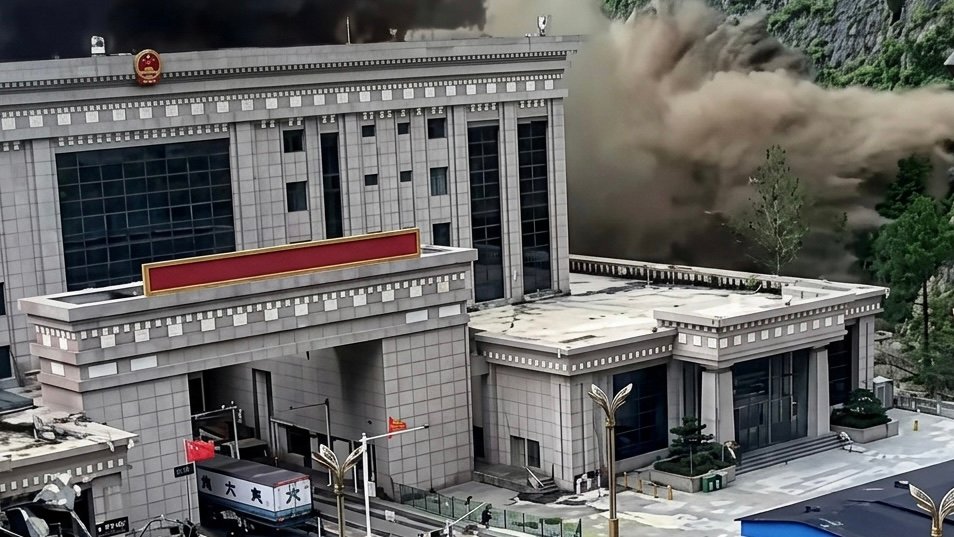
The mudslide at Gyirong Port has produced two parallel tragedies. One is the disaster itself. The other is the campaign launched to silence anyone who dares to estimate its human cost. The authorities have announced that the “Clean Internet 2026” operation is progressing with great vigor, and the list of punished citizens grows longer every day. Ten cases have been released as examples of what happens when ordinary people try to make sense of a catastrophe that unfolded too quickly for official narratives to keep pace.
The punished citizens did not organize a movement. They did not publish investigative reports. They did not leak confidential documents. They posted numbers. Qiu wrote that the news mentioned 1,400 dead between Nepal and Tibet, while he had heard of 3,000 missing. Liu wrote that more than 3,000 had died on the Tibetan side. Tan wrote that several thousand at Gyirong Port lost their lives in an instant. Zhang wrote that more than a thousand had been swept away and that the number of workers, tourists, and travelers easily exceeded a thousand. Pan wrote that the mudslide buried more than 1,000 people. Yi wrote that the disaster might have killed around 500 and that the missing were probably gone. Zhou wrote that he had heard of tens of thousands dead and that a whole village had disappeared. Guo wrote that there must be at least a thousand victims on the Tibetan side. Yang wrote that the number of missing had risen to 826. Another Yang mentioned a different death toll in a comment section.
Each of these posts was met with the same formula: the local public security organ has imposed an administrative penalty. The phrase appears as regularly as a stamp on a bureaucratic form. The penalties are presented as routine measures to maintain order. The law behind them is Article 29 of the Public Security Administration Punishments Law, which allows detention of up to five days for spreading false information. Once detained, a citizen may be accused of consciously fabricating false information under Article 291‑1, paragraph 2 of the Criminal Code, which opens the door to formal arrest and prosecution with a possible three‑year prison sentence. The Party has spoken. If you question the official death toll, you risk losing your freedom.
The official figures remain low. The authorities mention fewer than 20 confirmed deaths and fewer than 600 missing. The numbers have not changed for days. Meanwhile, Nepal’s reporting on its side of the border mentions more than 1,000 confirmed deaths. Satellite images show destruction consistent with a large‑scale event. Tibetan residents who tried to share videos saw their posts disappear. Independent researchers abroad have collected testimonies that describe a scene of devastation that does not match the official narrative. These accounts cannot be published inside China without consequences.
The satirical element emerges naturally from the contrast between the disaster’s gravity and the seriousness with which authorities pursue those who typed estimates on their phones. A mudslide destroys homes, roads, and lives. A citizen writes that he heard of a thousand victims. The police respond with an administrative penalty. Another citizen writes that she heard of tens of thousands. Perhaps she exaggerates, but again the police respond with an administrative penalty. The repetition creates a rhythm that resembles a ritual. The disaster becomes secondary. Preserving the official version becomes the central task.
The campaign is framed as a fight against rumors. In this case, the definition of rumor is simple. A rumor is any number that does not match the official number. The disaster occurred in Tibet, a region where information is treated as a strategic resource. The authorities manage the narrative with the same precision they apply to border controls. The government’s figures are treated as the only acceptable truth. Any deviation is treated as a threat to stability. The result is a landscape where families cannot rely on public information to understand what happened to their relatives, and where citizens who express fear or grief may be detained.
The mudslide buried the land. The campaign is burying the voices of those who try to describe what they saw. The ten punished citizens are presented as examples of wrongdoing. They are examples of something else. They show how dangerous it has become to count the dead in a disaster zone. They show how estimating casualties has become an offense. They show how the authorities treat numbers as political statements. The disaster at Gyirong Port has taken many lives. The “Clean Internet 2026” campaign is taking away the freedom to speak about them.

Uses a pseudonym for security reasons.