After an international conference celebrating the wisdom and poetry of Tsangyang Gyatso, Beijing repeats its falsehoods about Tibetan history.
by Marco Respinti
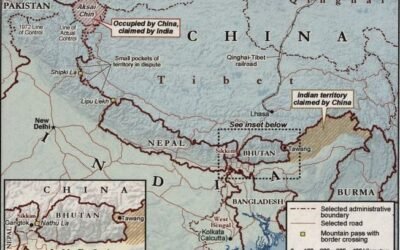
In Asia, very few have heard of Tsangyang Gyatso. Though unconventional, the Sixth Dalai Lama (1683–1706) was one of the most remarkable religious figures, leaving an indelible mark on the minds and hearts of the Himalayan people. Born at the end of the 17th century, in Urgyeling, in today’s Tawang district of the federal state of Arunachal Pradesh, India, he lived his first years in Monyul, a Tibetan expression meaning “low lands” and still indicating today the mountainous region of Eastern Himalaya known also as “the Land of the Monpa,” or the ethnic group, mainly adhering to Tibetan Buddhism, that inhabits the area. It has been Indian territory since 1914, when the boundary between Tibet and India was agreed upon and delineated.
Why was Tsangyang Gyatso such an exceptional Dalai Lama? First of all, as Tibetan Buddhists report, since childhood, he possessed extraordinary powers, in particular the ability to leave his footprint in rocks or to appear at different places at the same time. Still, he was a great poet and a religious leader close to the ordinary people.
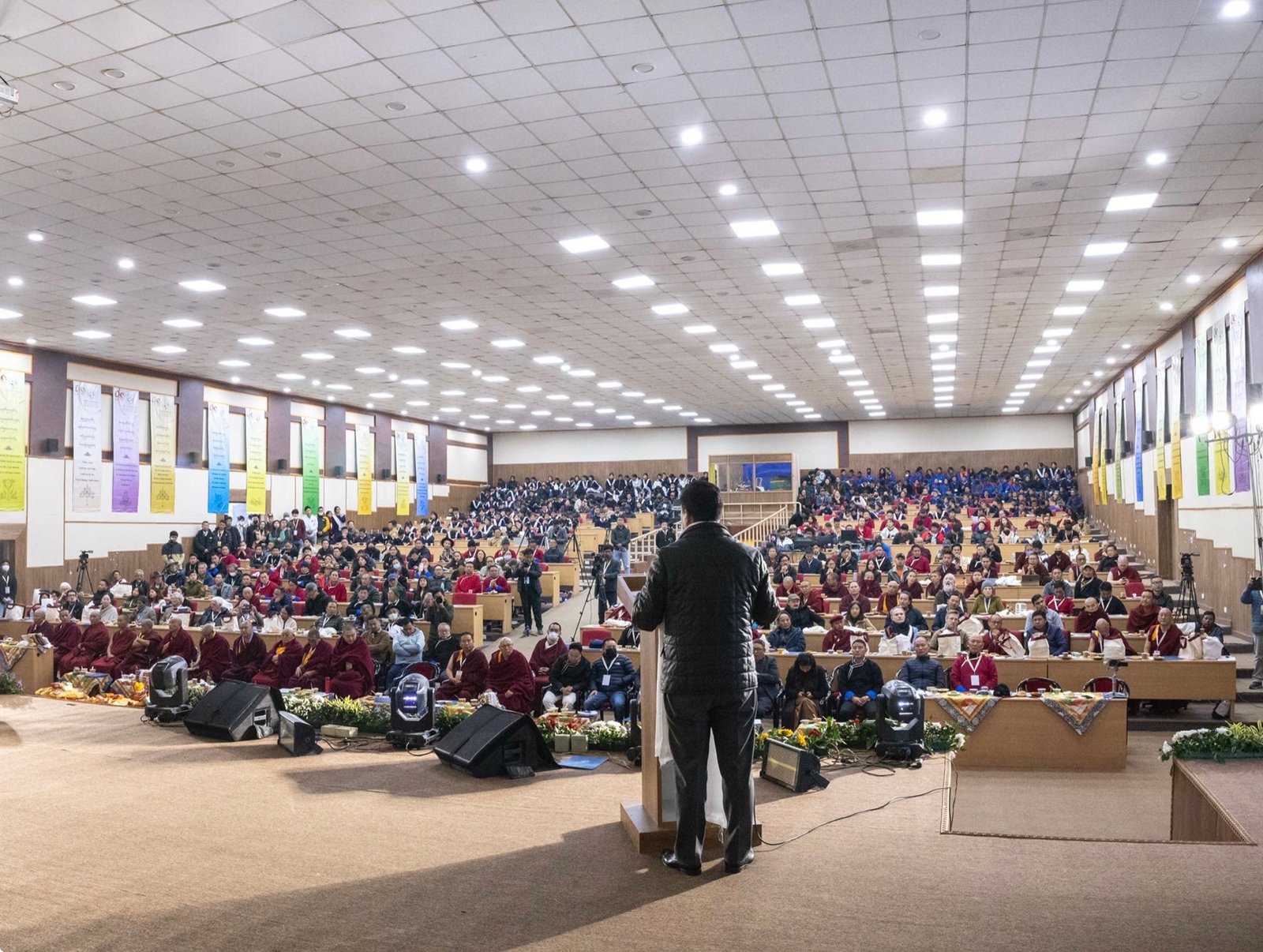
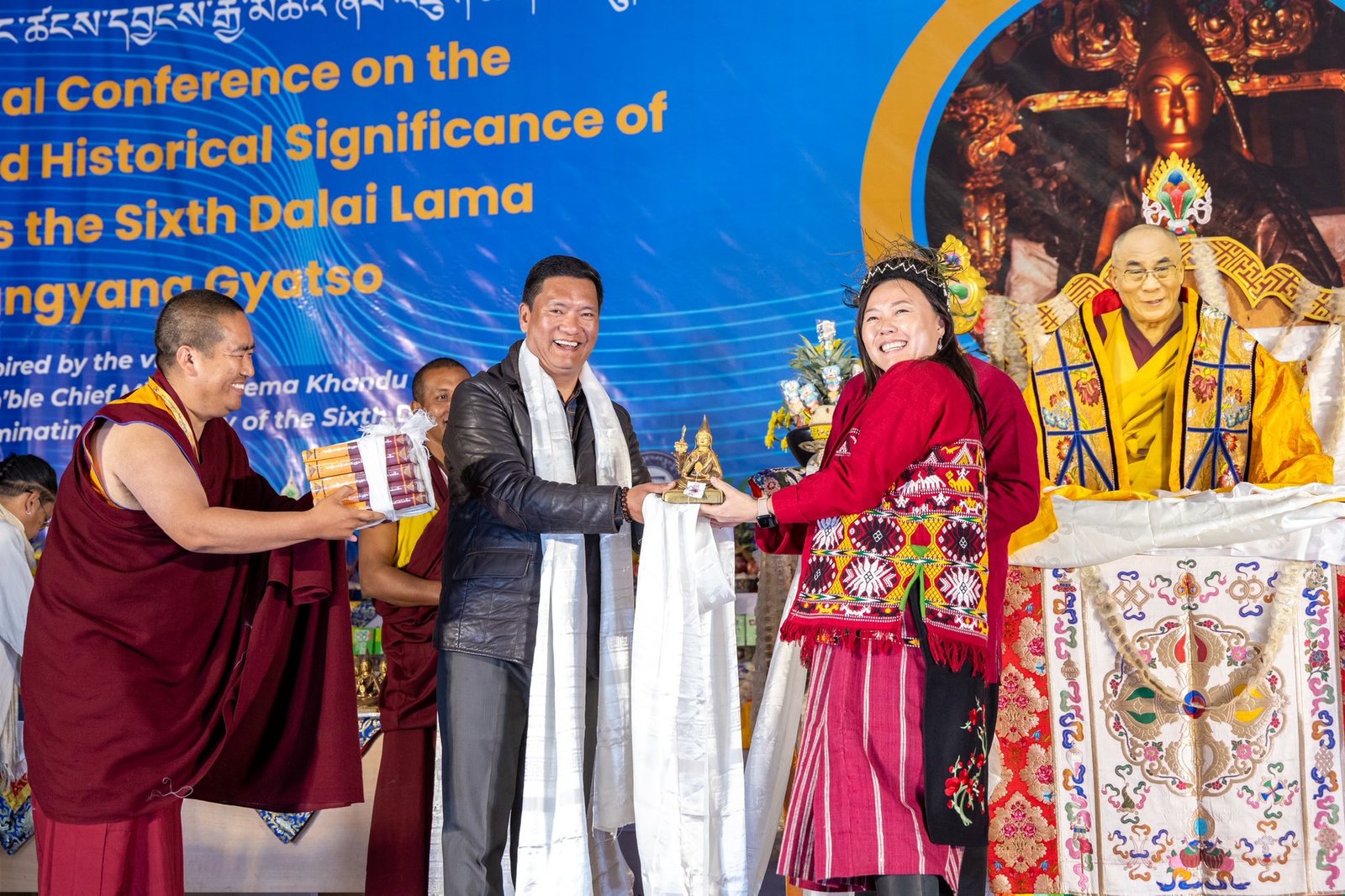
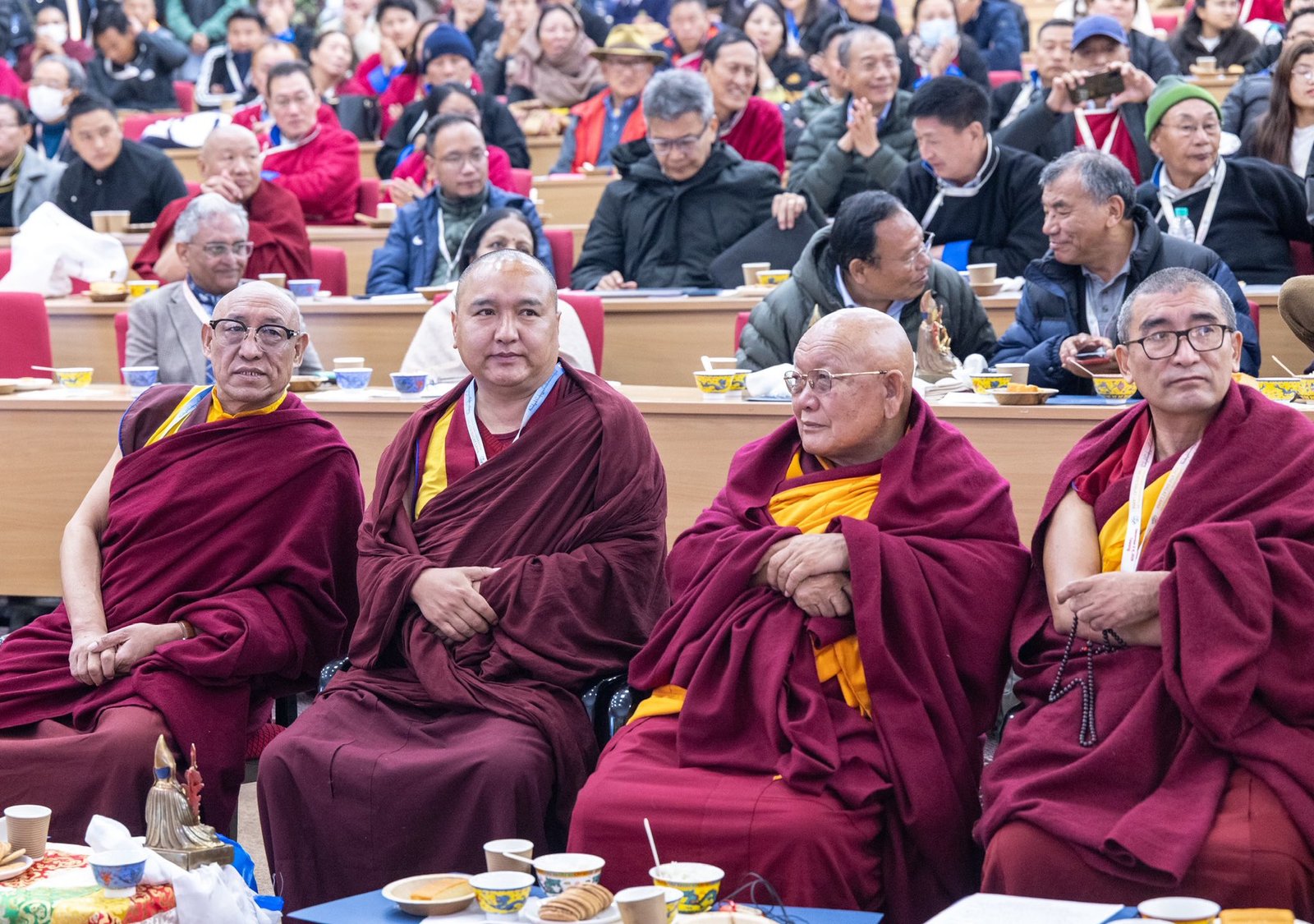
A four-day international conference on the “Cultural and Historical Significance of His Holiness the Sixth Dalai Lama, Gyalwa Tsangyang Gyatso”was organised last month in Tawang. Inaugurating the conference, Arunachal Pradesh Chief Minister Pema Khandu welcomed rinpoche (or reincarnated lamas), geshe (or doctors of Buddhist philosophy), monks, and lay scholars from India and several foreign countries.
In a post on X, Khandu said, “Tawang […] today becomes the centre of a global dialogue on his cultural, historical, and spiritual legacy. […] His Holiness [the Sixth Dalai Lama] continues to inspire humanity through his timeless teachings, poetry, and compassion.”
Gyalwa Tsangyang Gyatso’s exquisite poetry is still sung by all Tibetans and Mon (the ethnic group living in Southeast Asia, not to being confused with the afore mentioned Monpa) during long evenings around a fire after a few cups of chang, the alcoholic drink common in Arunachal Pradesh, but this is not enough to pay homage to his relevance. In another post, Chief Minister Khandu remarked: “This gathering marks a global effort to build a clearer and well-researched understanding of his life, legacy, and timeless relevance. […] The world remembers his poetry, but not the fullness of his teachings and wisdom. It is time that changes.”
In his 1989 study “Hidden Treasures and Secret Lives: A Study of Pemalingpa, 1450-1521, and the Sixth Dalai Lama, 1683-1706,” British scholar Michael Aris, husband of Aung San Suu Kyi, the Burmese Nobel Peace Prize laureate, quoted Sir Charles Bell (1870–1945), the British representative in Lhasa. He was told by the Thirteenth Dalai Lama that the Sixth “used to have his body in several places at the same time, e.g., in Lhasa, in Kongpo (a province seven days’ journey east of Lhasa), and elsewhere. Even the place whence he retired to the Honourable Fields (i.e., died) is uncertain; one tomb of his is in Alashan in Mongolia, while there is another in the Rice Heap monastery [Drepung].” These multiple appearances had only one objective: to promote the Buddhadharma, or the corpus of the teachings of SiddharthaGautama (563-483 BC?), the historical Buddha.
The Sixth Dalai Lama left behind splendid and profound poems reflecting on his human experiences, including those in Monyul. He likely realized that this was one of the most effective ways to teach about life and death, samsara (the ongoing cycle of birth, death, and rebirth), and nirvana (the third of the “Four Noble Truths” in original Buddhism, which refers to a state beyond suffering attained by eliminating its ultimate cause, namely ignorance). Many legends still revolve around Urgyeling.
As Sangye Gyatso (1653–1705), the sixth regent of Ngawang Lobsang Gyatso (1617–1682), the 5th Dalai Lama was keen to complete the Potala Palace—the winter residence of the Dalai lamas in Lhasa, the capital of Tibet—a task assigned to him by the Fifth Dalai Lama, he did not reveal to anybody that the latter was no more, fearing that intrigues would start as soon as the news of his passing would be known. But a series of divinations and special pujas (worship rituals of offering devotional homage and prayer to one or more deities) had given the regent the certitude that the reincarnation of the deceased Dalai Lama was born in Monyul.
When the delegation searching for the reincarnation of the Fifth Dalai Lama reached Urgyeling, Tsewang Lhamo, the mother of the future Sixth Dalai Lama, asked her son to get a piece of wood and fix it in the soil to tie a cow. Instead of planting the stick in the soil, the young Tsangyang made a hole with his finger in a big stone and stuck the stick inside it. It is one of the many miracles he is said to have performed. The stone is still visible in Urgyeling.
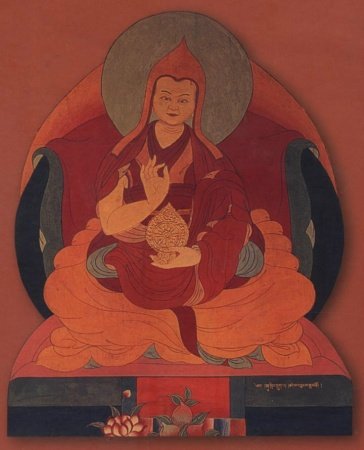
At a young age, Tsangyang was taken away to Tsona, the main monastery on the other side of the border, where he was kept for several years under the tight surveillance of the local governors, his real identity not being revealed to anybody. He was already an adolescent when he finally left for Nagartse near Lhasa where his guru, Sönam Choklang (1439–1504), the Second Panchen Lama, enthroned him as the Sixth Dalai Lama.
Tsangyang loved freedom; he was probably suffocating in the dark rooms of the Potala, which housed thousands of peaceful and wrathful gods. He also felt uncomfortable amid the power struggles and intrigues between aristocrats in the Tibetan government in Lhasa and the Mongol chieftains. His last poem before his presumed death is known by all. It announced his return as the Seventh Dalai Lama: “Oh White Crane! Lend me your wings, I shall not fly far, From Lithang, I shall return.” Two years later, a young boy, Kalsang Gyaltso, was born in Lithang, in Eastern Tibet; he would soon be recognised as the Seventh Dalai Lama.
The People’s Republic of China has been quick to react to the December 2025 conference in Tawang. “The South China Morning Post” (SCMP) mirrored the words of Beijing observers: “The fragile rapprochement between China and India faces a fresh test as New Delhi looks to promote its links with the sixth Dalai Lama.” The journal, based in Hong Kong, even described Tawang as “a mountain town in an area that India governs as the border state of Arunachal Pradesh and China claims as Zangnan or southern Tibet.”
Yet the claim does not make any historical sense, since India and Tibet agreed on a common border in 1914, sealing their agreement on a map known as the McMahon Line. Batting for Beijing, the SCMP asserted: “[Tawang] was ceded to India in 1914 by the Tibetan government under the 13th Dalai Lama, following an agreement with the British colonial government.”
The journal forgets to mention the fact that Che Ivan (Yifan, 1870‒1919), the Chinese plenipotentiary, participated in the Convention Between Great Britain, China, and Tibet, commonly known as the Simla Conference, or the official event that produced a treaty on boundaries between PRC, Tibet and the United Kingdom, from October 1913 to July 1914, proving that he and Beijing were fully aware of the Indo-Tibet border agreement.
The Hong Kong newspaper continues: “China has long rejected the McMahon Line, the de facto eastern border agreed by Tibet and British India. Beijing calls it ‘illegal’ and ‘unacceptable.’”
Also, Lin Minwang, vice dean at the Institute of International Studies at Fudan University in Shanghai, told the SCMP that the Dalai Lama’s succession plan was likely to be on the minds of the local authorities in India: “On one hand, India is trying to consolidate its control in the region, while on the other, it is trying to lay the groundwork in advance for the post-Dalai era.”
But the idea that India’s development of its territory would be wrong only holds if one accepts the PRC’s narrative—a state well known for “correcting” history and geography to suit its expansionist will—and it ultimately reveals the Chinese communist regime’s attempt to advance its claims over the region.
Attendees of the Tawang conference noted that what stood out during the event was the exceptionally attentive and sizable participation of both younger and older Monpas, who filled the hall and auditorium for four days. For them, the very town of Tsangyang was, and is, synonymous of freedom, something that does not exist in occupied Tibet today.
Beijing is indeed nervous that the Fifteenth Dalai Lama, flying on a white crane’s wings will “return” to Monyul. It explains the regime’s strong reaction to that meaningful and successful international conference.

Marco Respinti is an Italian professional journalist, member of the International Federation of Journalists (IFJ), author, translator, and lecturer. He has contributed and contributes to several journals and magazines both in print and online, both in Italy and abroad. Author of books and chapter in books, he has translated and/or edited works by, among others, Edmund Burke, Charles Dickens, T.S. Eliot, Russell Kirk, J.R.R. Tolkien, Régine Pernoud and Gustave Thibon. A Senior fellow at the Russell Kirk Center for Cultural Renewal (a non-partisan, non-profit U.S. educational organization based in Mecosta, Michigan), he is also a founding member as well as a member of the Advisory Council of the Center for European Renewal (a non-profit, non-partisan pan-European educational organization based in The Hague, The Netherlands). A member of the Advisory Council of the European Federation for Freedom of Belief, in December 2022, the Universal Peace Federation bestowed on him, among others, the title of Ambassador of Peace. From February 2018 to December 2022, he has been the Editor-in-Chief of International Family News. He serves as Director-in-Charge of the academic publication The Journal of CESNUR and Bitter Winter: A Magazine on Religious Liberty and Human Rights.