Sheffield Hallam University, under Chinese pressure, ordered a leading professor to stop research on forced labor in the Uyghur region.
by Massimo Introvigne
By now, we have grown accustomed to the idea that speaking truth to power comes with consequences. But when a British university quietly shelves human rights research because Beijing raised an eyebrow—and a lawsuit—one begins to wonder whether academic freedom is just another endangered species.
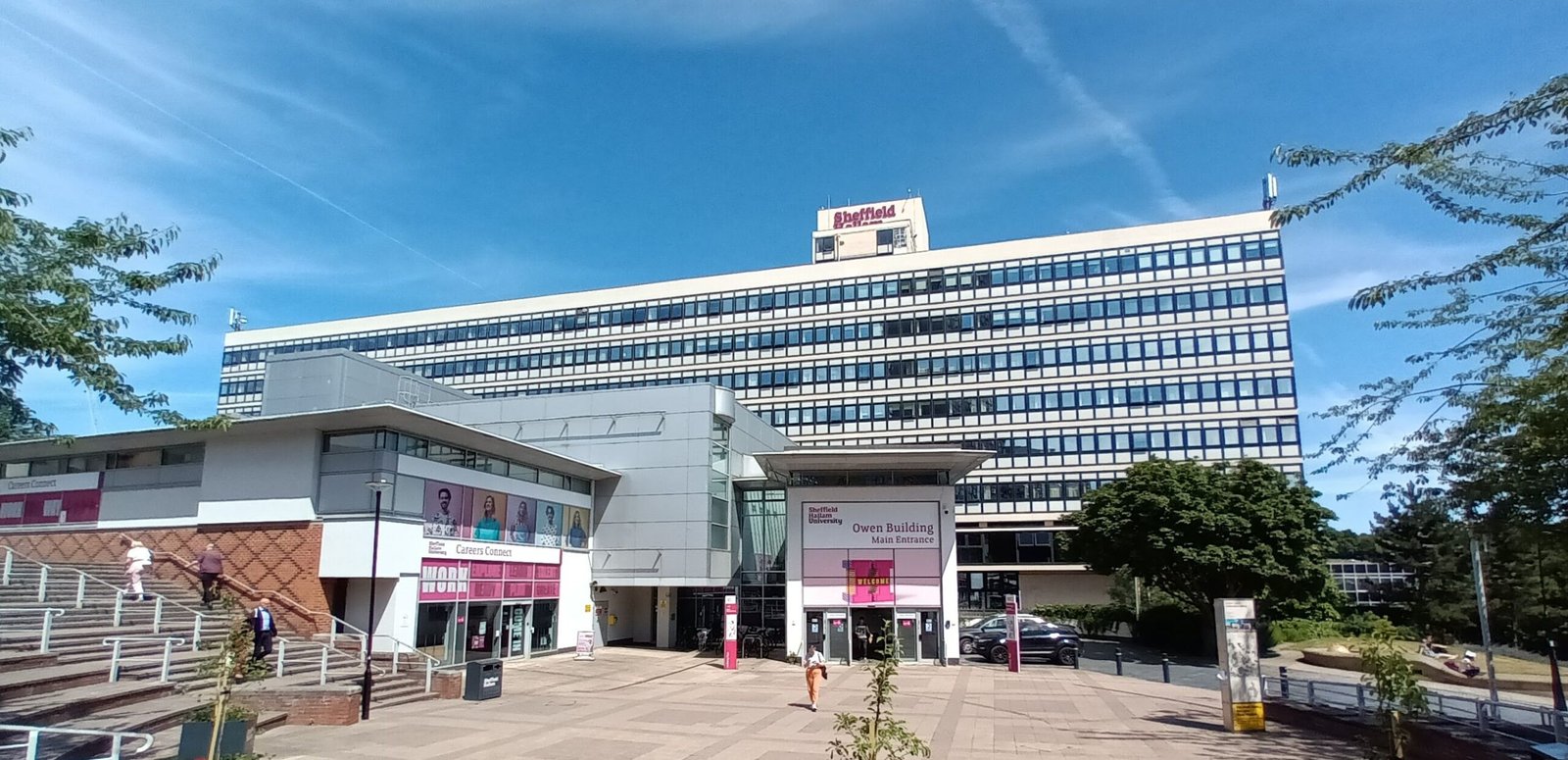
Welcome to the curious case of Sheffield Hallam University, where the pursuit of justice collided head-on with the machinery of international intimidation. The university’s Helena Kennedy Centre for International Justice (HKC), once a proud beacon of human rights research, has now become a cautionary tale in how not to handle pressure from authoritarian regimes.
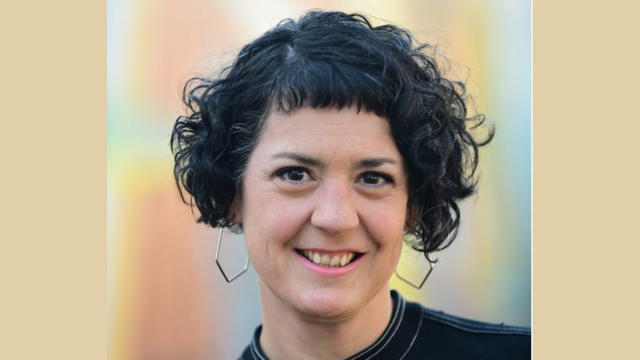
The drama began with Professor Laura Murphy, whose work on forced labour in China—specifically the exploitation of Uyghur Muslims in supply chains—has been cited by the UN, U.S. Congress, and various European bodies. Her research was rigorous, impactful, and, apparently, too honest for comfort. In February 2025, Sheffield Hallam ordered her to stop—not pause, not revise: stop.
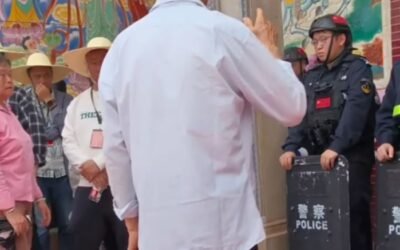
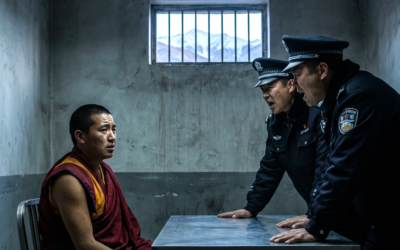
Why? Because Beijing asked nicely—if by “nicely” you mean sending three state security officers to interrogate staff at the university’s Beijing office for two hours. According to internal documents, the tone was “threatening” and the message “clear.” It was the academic equivalent of a horse’s head in the bed.
The pressure was also legal. Enter Smart Shirts Ltd, a Hong Kong-based garment supplier named in a December 2023 report by Sheffield Hallam’s Forced Labour Lab. The company sued for libel, and in December 2024, a UK High Court ruled the report was “defamatory”—a preliminary finding, with the full trial still pending.
Now, lawsuits are part of life. But when they are wielded by powerful companies with ties to a government known for silencing critics, they become something else: lawfare. That is the strategic use of legal systems to intimidate, silence, and punish dissent.
And it worked. The university’s insurers promptly dropped coverage for defamation claims linked to its Social and Economic Research Institute. Translation: speak out, and you are on your own. Faced with the financial risk and diplomatic heat, Sheffield Hallam folded like a cheap umbrella in a Beijing monsoon.
The incident goes beyond one university. It’s about the chilling effect that authoritarian regimes can exert on global academia, the erosion of intellectual independence under the guise of “risk management,” and the uncomfortable truth that even in liberal democracies, money and fear can trump principle.
Sir Chris Husbands, the university’s former vice-chancellor, once wrote about taking “perverse satisfaction” when being singled out by China. That satisfaction, it seems, has curdled into silence.
So the next time someone tells you that universities are bastions of free thought, ask them how much that freedom costs—and who’s footing the bill.
UPDATE (November 6): After widespread domestic and international criticism, Sheffield Hallam University has now apologized to Professor Murphy and promised to allow her to continue her research, although under which conditions remains unclear.

Massimo Introvigne (born June 14, 1955 in Rome) is an Italian sociologist of religions. He is the founder and managing director of the Center for Studies on New Religions (CESNUR), an international network of scholars who study new religious movements. Introvigne is the author of some 70 books and more than 100 articles in the field of sociology of religion. He was the main author of the Enciclopedia delle religioni in Italia (Encyclopedia of Religions in Italy). He is a member of the editorial board for the Interdisciplinary Journal of Research on Religion and of the executive board of University of California Press’ Nova Religio. From January 5 to December 31, 2011, he has served as the “Representative on combating racism, xenophobia and discrimination, with a special focus on discrimination against Christians and members of other religions” of the Organization for Security and Co-operation in Europe (OSCE). From 2012 to 2015 he served as chairperson of the Observatory of Religious Liberty, instituted by the Italian Ministry of Foreign Affairs in order to monitor problems of religious liberty on a worldwide scale.