The Section 22 Committee is a new invention to establish a bureaucratic control of churches.
by Massimo Introvigne
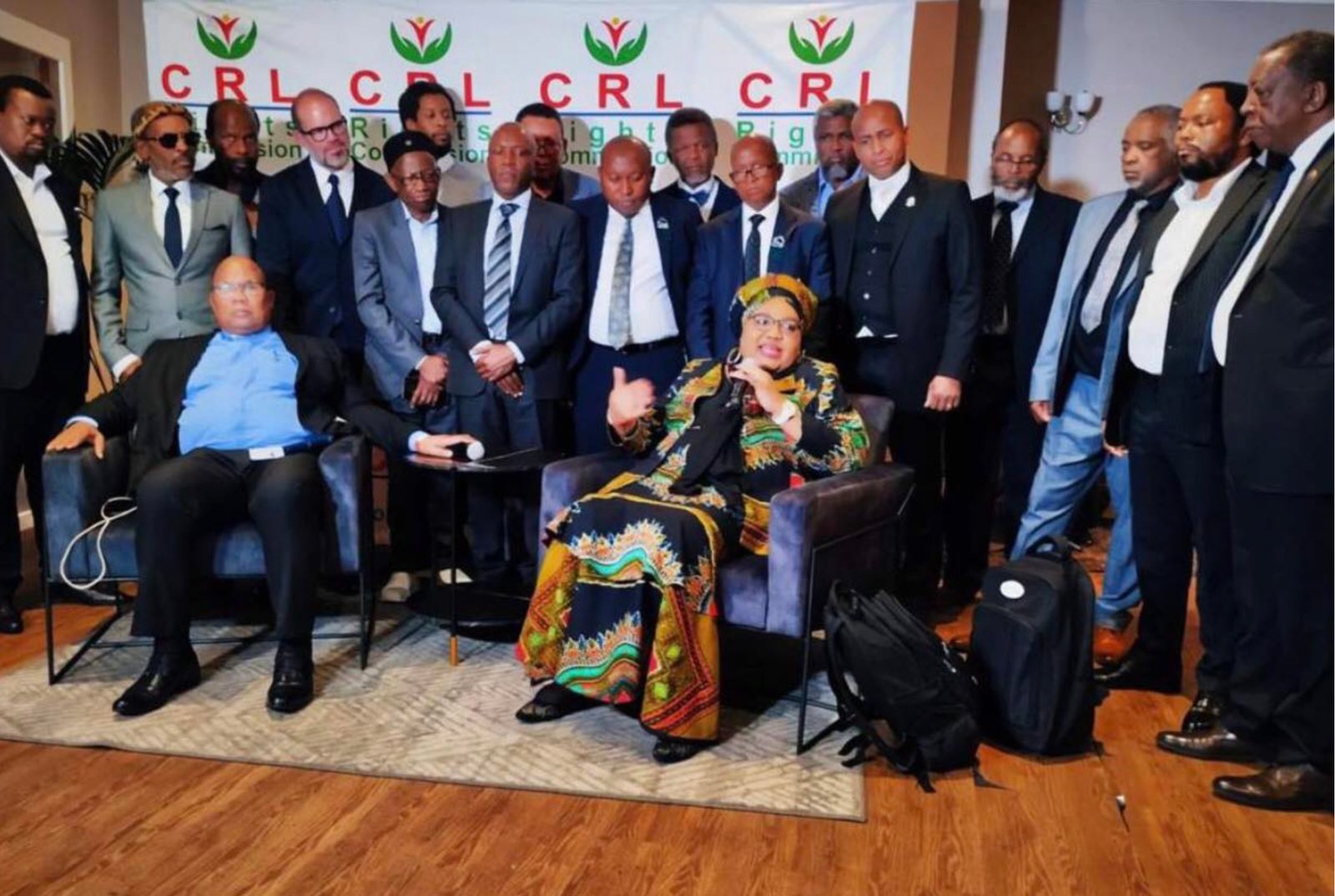
South Africa has always prided itself on its constitutional miracle: a system that enshrines freedom of religion, belief, and opinion in terms so sweeping that even the most unpopular prophet can claim protection. Yet lurking beneath this pluralist promise is a bureaucratic invention that threatens to unravel it—the Section 22 Committee, a creation of the CRL Rights Commission that now finds itself in the dock, accused of bias, overreach, and outright abuse of power. The Commission for the Promotion and Protection of the Rights of Cultural, Religious and Linguistic Communities (CRL) was established in 2002 as an independent institution under Chapter Nine of the South African Constitution. In 2015, it decided that its mandate extended to checking whether religious institutions were beneficial or harmful to South African communities.
The South African Church Defenders (SACD) have taken the matter of the newly created Section 22 Committee to the High Court, arguing that the committee is not merely unconstitutional but dangerous. Their case is simple: the CRL has no authority to invent a parallel tribunal of “spiritual crimes.” Fraud, assault, exploitation—these are already covered by criminal and civil law. To conjure a new category of religious infractions is to arrogate powers that belong to Parliament and the judiciary. In short, the Section 22 Committee is a shadow state within the state, a clerical police force masquerading as “self-regulation.”
The CRL’s justification for this experiment is familiar. South Africans still recall the lurid headlines: pastors ordering congregants to eat grass, drink petrol, or chew snakes. These spectacles were grotesque, but they were also isolated—and punishable under existing law. Yet the CRL seized on them as evidence of a broader “commercialization of religion,” a phrase that has become its mantra.
The problem is that “commercialization” is not a crime. It is a rhetorical device, one that allows regulators to paint churches as businesses, pastors as profiteers, and congregants as dupes. Once religion is redefined as commerce, it becomes subject to licensing, oversight, and closure. The Section 22 Committee thus positions itself as the arbiter of legitimacy, deciding which churches may exist and which pastors may preach. Rather than regulation, this is theological gatekeeping by bureaucratic fiat.
For those of us who have followed the CRL’s trajectory, the Section 22 Committee is not a surprise. In our book “The Revelation Spiritual Home” (Cambridge: Cambridge University Press, 2-25), Rosita Šorytė and I dissected the CRL’s earlier 2017 report, which proposed forcing all religious organizations into umbrella bodies modeled on China’s system of “patriotic associations.” Each umbrella would be controlled by the CRL, effectively nationalizing religion under state supervision.
That plan, mercifully, did not prosper in Parliament. But the Section 22 Committee is its revenant—a subtler, procedural resurrection of the same authoritarian impulse. Instead of umbrellas, we now have a committee. Instead of overt nationalization, we have “self-regulation.” Yet the logic is identical: religion must be corralled, homogenized, and subordinated to state power.
Critics have noted that the Section 22 Committee is not only authoritarian but also biased. Its membership is handpicked, overwhelmingly male, and dominated by certain groups. Minority faiths, independent churches, and women are conspicuously absent.
This is not accidental. It reflects a deeper suspicion of religious diversity, a desire to privilege “respectable” institutions while marginalizing the unruly, charismatic, and unconventional. In effect, the committee enacts a cultural hierarchy disguised as regulation, reinforcing patriarchal and denominational power structures under the banner of “rights.”
South Africa is not China. Yet, in a country where Chinese influence is often felt, the CRL’s proposals echo Beijing’s model of religious management, where faith communities are tolerated only if they submit to state-controlled umbrellas. The temptation is clear: authoritarian regimes thrive on the rhetoric of protection. They claim to defend citizens from exploitation, abuse, or extremism, but in practice they defend the state from dissent.
The Section 22 Committee is a local manifestation of this global trend. It dresses itself in the language of rights while hollowing them out. It claims to protect congregants while infantilizing them. It insists on accountability while evading its own.
This is not pluralism. It is paternalism. And paternalism, once institutionalized, becomes authoritarianism.
The SACD’s High Court challenge is therefore more than a technical dispute. It is a test of South Africa’s constitutional soul. If the court allows the Section 22 Committee to stand, it will set a precedent for state-sanctioned religious policing. If it strikes it down, it will reaffirm the principle that freedom of religion is not conditional, not licensed, not subject to bureaucratic whim.
The stakes are high. For minority faiths, independent churches, and unconventional spiritual movements, the difference between freedom and regulation is the difference between survival and extinction.
The CRL Rights Commission presents itself as a guardian of rights. Yet its Section 22 Committee is a Trojan horse, smuggling authoritarian control the citadel of constitutional freedom. South Africa’s Parliament wisely did not adopt the CRL’s umbrella scheme. The courts must now reject its committee.
Religion in South Africa does not need a regulator. It needs the protection of the law, the vigilance of civil society, and the humility of a state that recognizes its limits. To allow the Section 22 Committee to proceed is to invite the authoritarian temptation into the heart of the country’s democratic miracle.
And miracles, once compromised, are hard to recover.
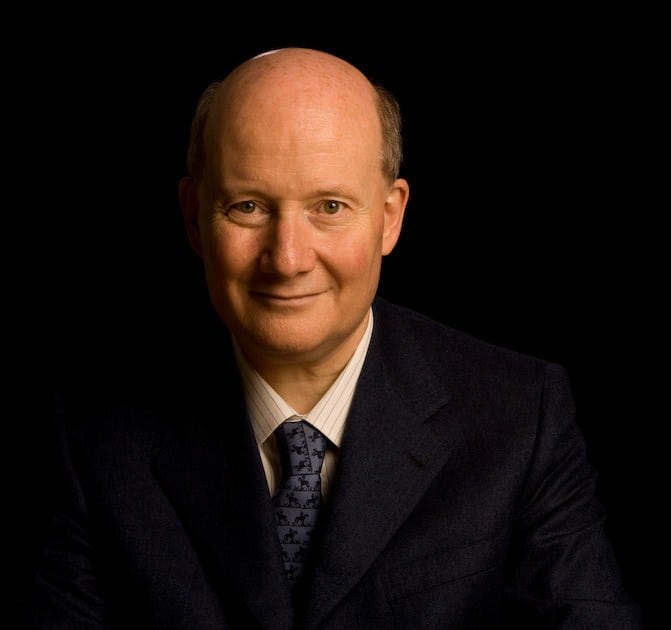
Massimo Introvigne (born June 14, 1955 in Rome) is an Italian sociologist of religions. He is the founder and managing director of the Center for Studies on New Religions (CESNUR), an international network of scholars who study new religious movements. Introvigne is the author of some 70 books and more than 100 articles in the field of sociology of religion. He was the main author of the Enciclopedia delle religioni in Italia (Encyclopedia of Religions in Italy). He is a member of the editorial board for the Interdisciplinary Journal of Research on Religion and of the executive board of University of California Press’ Nova Religio. From January 5 to December 31, 2011, he has served as the “Representative on combating racism, xenophobia and discrimination, with a special focus on discrimination against Christians and members of other religions” of the Organization for Security and Co-operation in Europe (OSCE). From 2012 to 2015 he served as chairperson of the Observatory of Religious Liberty, instituted by the Italian Ministry of Foreign Affairs in order to monitor problems of religious liberty on a worldwide scale.