In a searing interview, the well-known Russian scholar and former church insider calls Kirill’s organization “a cheap para-religious cult” serving Putin.
by Massimo Introvigne
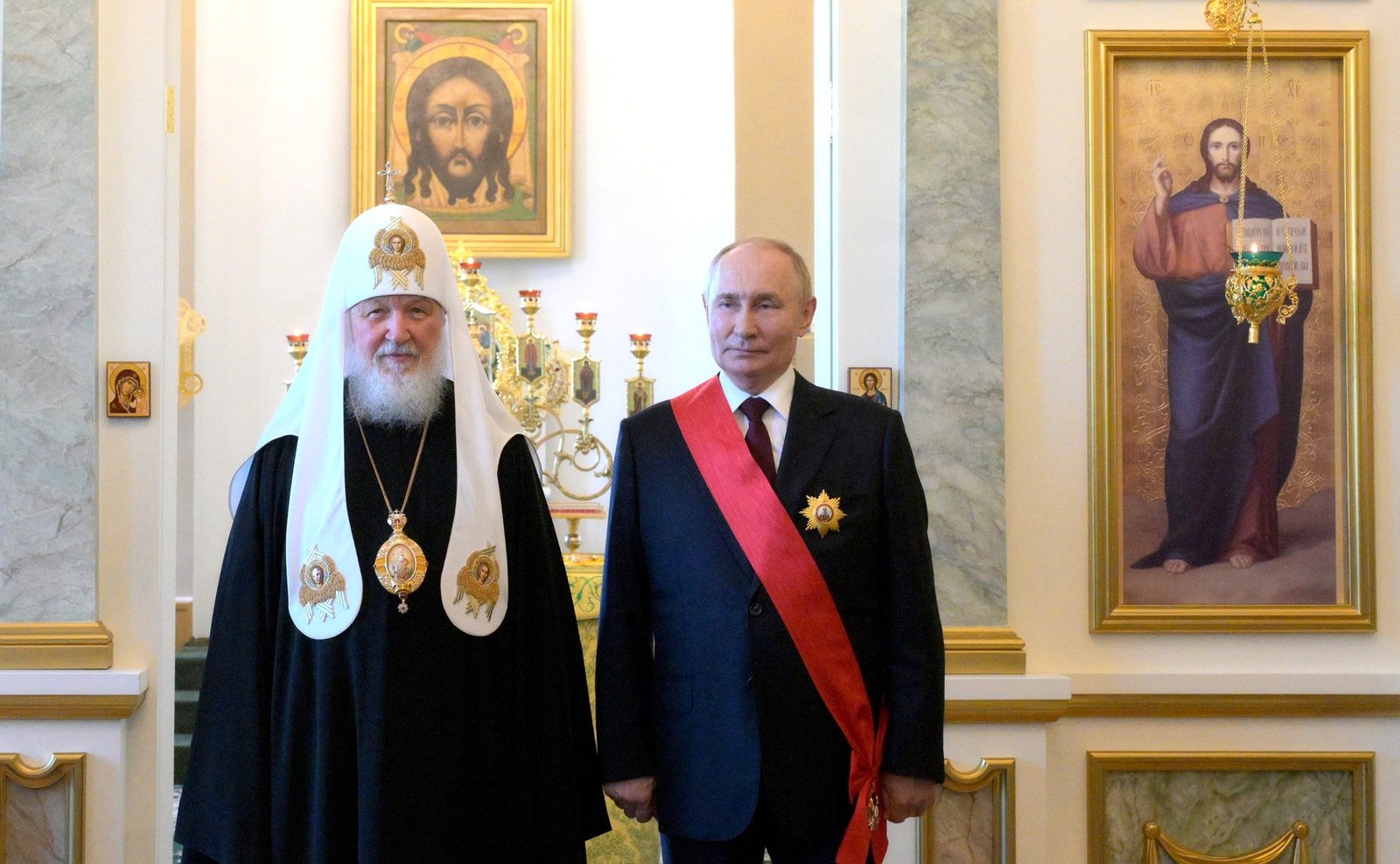
In an interview of January 20 that “Bitter Winter” readers will recognize as both bold and overdue, Sergei Chapnin delivers a harsh critique of the current state of the Russian Orthodox Church. Once a senior insider, serving as the editor of the Journal of the Moscow Patriarchate, deputy chief editor of the Church Herald, lecturer at St. Tikhon’s Orthodox University, and secretary of the Inter-Conciliar Board, Chapnin now shares his views from exile as the director of communications at the Orthodox Christian Studies Center at Fordham University in New York. His statements reflect deep experience and feelings of betrayal.
“The Russian Orthodox Church has effectively stopped being part of the Christian world and has become a tool of power,” he states. Chapnin refers to it as a “spiritual catastrophe.” He argues that the Church no longer follows the Gospel but instead supports war, repression, and violence. “The Church of Russia is no longer Christian.”
This is a motivated theological assessment. Chapnin’s discussion with journalist Yevgeny Kiselyov was triggered by several events: the Russian Foreign Intelligence Service labeling Patriarch Bartholomew as “the Antichrist” and “the devil in the flesh,” Putin’s Christmas speech where he called Russian soldiers “saviors,” and Patriarch Kirill’s comments describing critics of the regime as “traitors to the Motherland.” These events show a deeper change. “Modern Russian Orthodoxy under Patriarch Kirill and Putin is a cheap quasi-religious cult. Its goal is not faith, but serving state and geopolitical interests.” We do not use the word “cult” at “Bitter Winter,” but understand what Chapnin means.
Chapnin stresses this is a complete abandonment of Christian tradition, spiritual values, and theological heritage. The Church has shifted “from the Gospel to propaganda.” The language of demonization, he warns, “destroys the very essence of Christianity.” When the Church supports war and labels dissent as treason, it stops being a Church. “This is no longer a Church; it is a structure that supports war and power.”
Chapnin believes the turning point was the full-scale invasion of Ukraine. From that moment, the Church “finally stopped relying on the Gospel.” He acknowledges there are still individual believers and priests, “but the official Church? No. It has strayed.” What remains is an ideological tool of the Kremlin—one that justifies killing, repression, and aggression.
Chapnin also highlights the silence around Metropolitan Tikhon Shevkunov, often referred to in the media as Putin’s spiritual advisor. Shevkunov has retreated from public attention, purportedly due to his connections with former Deputy Defense Minister Timur Ivanov, who was recently sentenced to 13 years in prison. Shevkunov had publicly defended Ivanov, praising him as “a decent man” and expressing hope for a positive outcome.
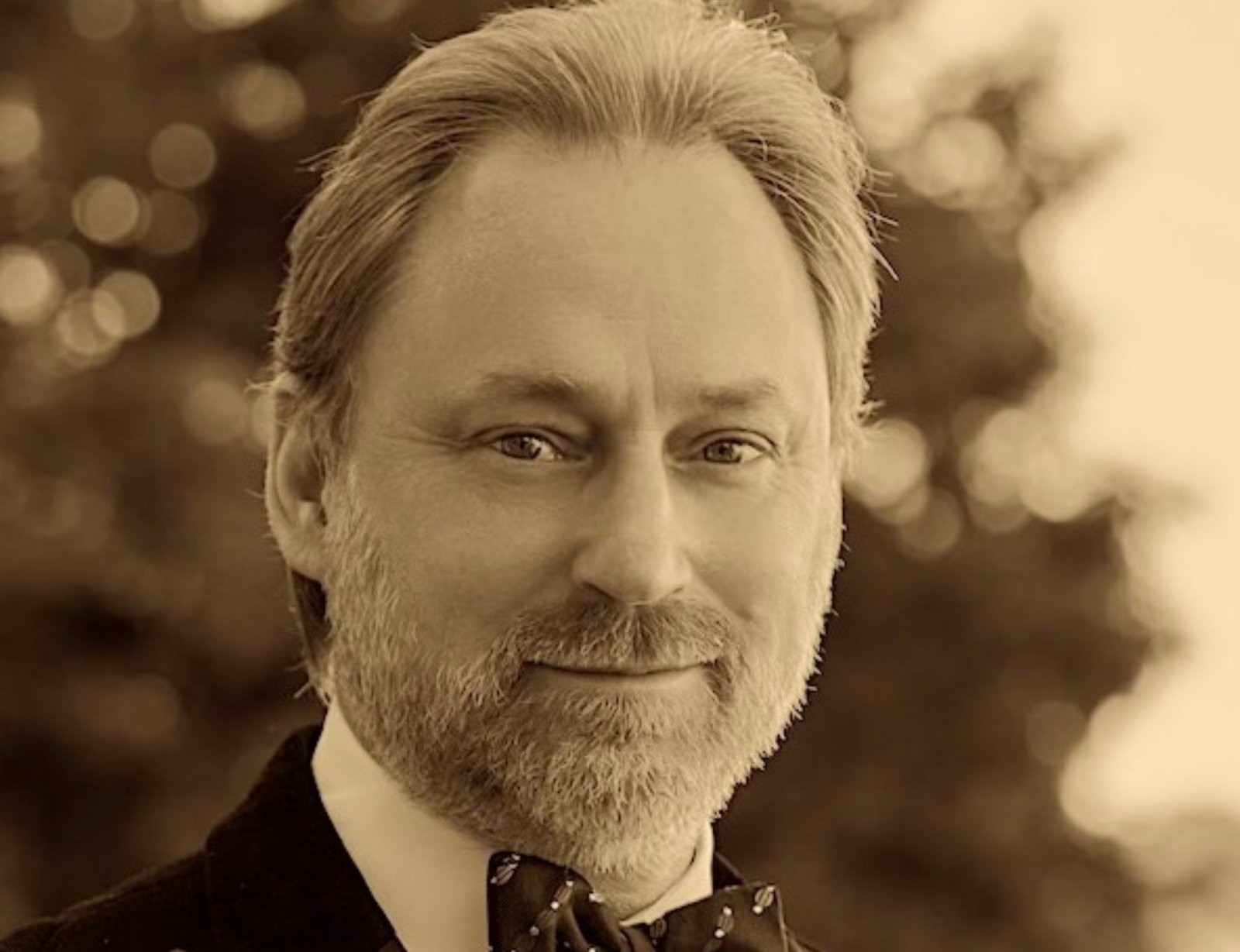
Chapnin concludes that “Today’s Church in Russia is not religion or spirituality; it is part of the state machinery.” His statements are not the lament of a disillusioned outsider. They are the insights of a former insider who has seen the Church he once served become a cog in the system of authoritarianism. Therefore, he asserts, “we can speak of the actual departure of the Russian Orthodox Church from Christianity.”
Chapnin rightly distinguishes between the sincere “individual communities that remain Christian, that strive to live in a Christian way” and “the official Church. The latter is the Church that has fallen away.”
“Bitter Winter” has consistently documented the merging of religious institutions with authoritarian governments. Chapnin’s interview confirms what many have suspected but few have articulated openly. The Russian Orthodox Church, not in its sincere, innocent believers but in its hierarchy, as it exists today, is no longer a Church. It is an accessory to the regime. Its high bureaucrats’ departure from Christianity is doctrinal, structural, and complete.

Massimo Introvigne (born June 14, 1955 in Rome) is an Italian sociologist of religions. He is the founder and managing director of the Center for Studies on New Religions (CESNUR), an international network of scholars who study new religious movements. Introvigne is the author of some 70 books and more than 100 articles in the field of sociology of religion. He was the main author of the Enciclopedia delle religioni in Italia (Encyclopedia of Religions in Italy). He is a member of the editorial board for the Interdisciplinary Journal of Research on Religion and of the executive board of University of California Press’ Nova Religio. From January 5 to December 31, 2011, he has served as the “Representative on combating racism, xenophobia and discrimination, with a special focus on discrimination against Christians and members of other religions” of the Organization for Security and Co-operation in Europe (OSCE). From 2012 to 2015 he served as chairperson of the Observatory of Religious Liberty, instituted by the Italian Ministry of Foreign Affairs in order to monitor problems of religious liberty on a worldwide scale.