Between the end of the seventeenth century and the third decade of the eighteenth century the possibility that vampires exited was first admitted but finally ruled out by the imperial authorities.


Between the end of the seventeenth century and the third decade of the eighteenth century the possibility that vampires exited was first admitted but finally ruled out by the imperial authorities.

Nel Seicento, il tedesco “nachzehrer” e il greco “vrykolakas” sono precursori dei vampiri. Sulla loro possibile esistenza, inizia un dibattito fra eruditi e teologi.
In the seventeenth century, the German “nachzehrer” and the Greek “vrykolakas” were precursors of vampires that started interesting theologians and scholars.

Denied by some art historians, the influence of the Theosophical Society (which in turn rejected his artistic theories as too complicated) remained crucial until the Dutch painter’s last days. .
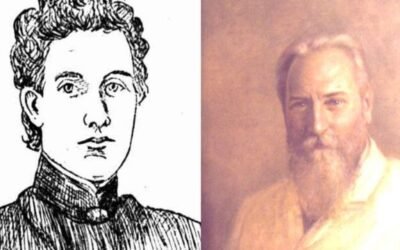
The strong experiences of the Australian artist with the Theosophical Masters and her involvement in the Leadbeater case led her to spend twenty years in a psychiatric hospital.

The American abstract painter’s deep relationship with both Theosophy and Mondrian oriented all her life, which she concluded as a devout Buddhist.

A reading of Tai Ji Men and the Tai Ji Men case based on the “transition studies” of French author Serge Raynaud de la Ferrière.

The Italian ceramist, who lived in a tower within Rome’s Aurelian Walls, created occult rituals for firing ceramics with Theosophical, Etruscan, and Tolstoian elements.

Dozens of different movements throughout the world “proceed” from the teachings of the French esoteric master: a map.

The French Theosophist’s esoteric ideas were crucial for the approach to spirituality of several leading Belle Époque’s artists.